
Business
Access HoldCo: Roosevelt Ogbonna Quits Board in compliance with CBN regulations
Beyond his role as CEO, Mr. Ogbonna sits on the boards of Access Bank’s subsidiaries in the UK and South Africa and represents the bank on the boards of the Africa Finance Corporation and CSCS Plc.


Access Holdings has confirmed the resignation of Mr. Roosevelt Ogbonna as Non-Executive Director from its Board after three and a half years of dedicated service, but remains Access Bank’s MD/CEO.
The Company Secretary, Sunday Ekwochi, said that Mr. Ogbonna will continue in his role as the Managing Director and Chief Executive Officer of Access Bank Plc, the Group’s flagship banking subsidiary.
The company explained that his resignation became necessary to ensure compliance with the Central Bank of Nigeria’s Corporate Governance Guidelines for Financial Holding Companies (2023), which limit the number of directors on a financial holding company’s board to nine.
The board appreciates Mr. Ogbonna for his outstanding and continued contributions to the Access Group,” the statement read.
Mr. Ogbonna was appointed Managing Director and Chief Executive Officer of Access Bank Plc in May 2022, after serving as Deputy Managing Director from 2017 and Executive Director from 2013.
He joined Access Bank in 2002 from Guaranty Trust Bank and has over two decades of experience in the banking sector.
A Fellow of the Institute of Chartered Accountants of Nigeria (FCA), an Honorary Member of the Chartered Institute of Bankers (HCIB), and a CFA charter holder, Mr. Ogbonna holds an MBA from IMD Business School in Switzerland, an LL.M in International Corporate & Commercial Law from King’s College London, and an Executive MBA from Cheung Kong Graduate School of Business.
He also earned a B.Sc. in Banking and Finance from the University of Nigeria, Nsukka, and completed the Senior Executive Fellow programme at Harvard Kennedy School of Government.In 2015, he was recognised by the Institute of International Finance as one of its Future Global Leaders.
Beyond his role as CEO, Mr. Ogbonna sits on the boards of Access Bank’s subsidiaries in the UK and South Africa and represents the bank on the boards of the Africa Finance Corporation and CSCS Plc.
As of August 2025, the Board of Access Holdings Plc is chaired by Aigboje Aig-Imoukhuede, with Bolaji Olaitan Agbede serving as Acting Group CEO and Lanre Bamisebi as Executive Director.
The independent non-executive directors include Abubakar Aribidesi Jimoh, Fatimah Bintah Bello-Ismail, and Ibironke Adeyemi, while other members are Ojinika Nkechinyelu Olaghere and Olusegun Babalola Ogbonne.


Business
History of Naira Revaluation and Devaluation (1973–2026) (Part 1)
Why was the naira devalued?
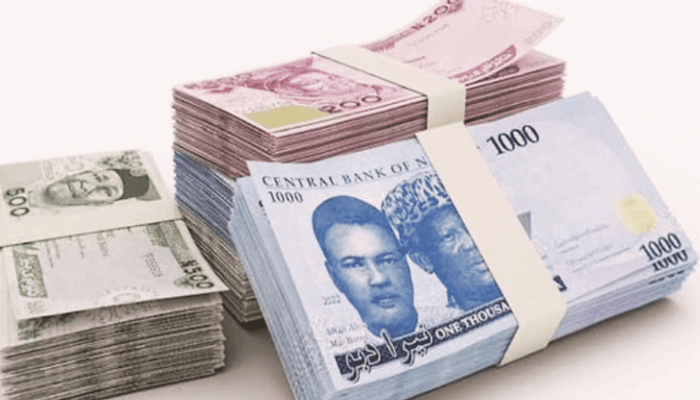
The history of the Nigerian naira is marked by two major developments: periods when the currency gained value or was officially strengthened, and prolonged periods when it lost value against major international currencies, particularly the US dollar.
Since its introduction in 1973, the naira has undergone several exchange-rate policy changes, including fixed exchange rates, currency devaluations, foreign-exchange market liberalisation, attempts to unify exchange rates and market-driven depreciation.
The Central Bank of Nigeria (CBN) has played a central role in managing these changes.
- Introduction of the Naira in 1973
Nigeria introduced the naira on January 1, 1973, replacing the Nigerian pound.
The conversion rate was:
£1 Nigerian pound = ₦2.
₦1 = 10 shillings under the old currency system.
₦1 = 100 kobo.
The new currency was introduced during a period of expanding oil revenues and economic growth.
Nigeria initially maintained a relatively strong, managed exchange rate, supported by foreign-exchange controls and the country’s oil earnings.
The introduction of the naira was a currency change, not a devaluation.- The 1970s: A Relatively Strong Naira
During the 1970s, rising oil revenues strengthened Nigeria’s foreign-exchange position.
The government maintained a controlled exchange-rate system, initially linking the naira to the US dollar before moving to a basket of currencies representing major trading partners in 1978.
The oil boom provided foreign exchange for imports, infrastructure and public expenditure.
However, Nigeria’s dependence on crude oil revenues left the economy vulnerable to fluctuations in international oil prices.
Key development: The naira benefited from a relatively strong external position, although its exchange rate was managed by the authorities rather than determined by an unrestricted market.- The Early 1980s: Mounting Pressure on the Naira
The economic situation deteriorated in the early 1980s as oil revenues weakened and foreign-exchange shortages intensified.
Nigeria faced several economic challenges:
• Declining oil receipts.
• Rising import bills.
• Pressure on foreign reserves.
• Growing external debt and trade arrears.
• Increasing demand for foreign currency.
The government maintained controls on foreign exchange, but the official rate became increasingly disconnected from the rate at which foreign currency could be obtained in the parallel market.
This created pressure for exchange-rate reform.
The crisis set the stage for the introduction of the Structural Adjustment Programme (SAP) in 1986.- 1986: Major Naira Devaluation Under SAP
September 26, 1986, marked a turning point in the history of the naira.
Under the military government of General Ibrahim Babangida, Nigeria introduced the Second-Tier Foreign Exchange Market (SFEM) as part of the Structural Adjustment Programme.
The objective was to allow market forces to play a greater role in determining the naira’s exchange rate.
According to an International Monetary Fund account, the naira’s value was discounted by approximately 66 per cent at the inaugural SFEM auction.
The exchange rate moved from about ₦1.60 per US dollar under the previous administered rate to approximately ₦4.60 per dollar at the initial auction.
Why was the naira devalued?
The policy was intended to:
•Reduce the overvaluation of the naira.
•Improve the allocation of scarce foreign exchange.
•Encourage non-oil exports.
•Improve the competitiveness of Nigerian products.
•Reduce distortions in the foreign-exchange market.
However, the weaker currency also increased the naira cost of imported goods and production inputs.
The 1986 reform began a prolonged period of exchange-rate adjustments.- …To be continued
Business
Obasanjo Accuses Tinubu : “You Made Every Nigerian Poor By 300% Naira Devaluation”
The former President also rejected the argument that Tinubu needed more time to complete his reforms, saying he did not see the economy improving.

Image: AI generated
Former President Olusegun Obasanjo has accused President Bola Tinubu of making every Nigerian poor by 300 per cent through the devaluation of the naira.
Obasanjo spoke on Wednesday during the Financial Times Africa Summit 2026 in London, United Kingdom.
He said that the naira lost its value overnight due to economic reforms undertaken by the Tinubu administration in 2023.
“We do not live in isolation as a country. We interact with the rest of the world. And overnight, you devalue the currency by 300 per cent. The naira went from N500 to a dollar to N1,500 to a dollar. What that meant was that every Nigerian is made poor by 300 per cent.”
Obasanjo said that had made Nigeria “the poverty capital of the world,” which he said meant the country had the largest number of poor people in the world.
“You cannot say to me that that is good for Nigeria. You cannot say to me that that is good for us in any sense,” he noted.
The former President also rejected the argument that Tinubu needed more time to complete his reforms, saying he did not see the economy improving.
Business
CBN Licences Abbey Bank to Start Full Commercial Banking in November 2026
Adewumi said: “The year 2026 represents a defining moment in the history of Abbey. Our approval to transition to commercial banking is a testament to the work invested in building this institution and the confidence placed in us by our regulators, shareholders, customers and employees.”

The Central Bank of Nigeria (CBN) has approved Abbey Bank Plc to begin operation as a regional commercial bank, effectively from November 2026.
The licence opens retail banking, small and medium-sized enterprise lending, trade finance and corporate banking to the lender.
Abbey Bank had operated as a mortgage bank for more than three decades.
The commercial banking licence was issued in June 2026 after the bank completed its capital-raising process.
Managing Director and Chief Executive Officer Mobolaji Adewumi said the bank began internal discussions on the transition in 2023 and submitted a formal application in 2024.
He said regulatory approval arrived in October 2024.
Adewumi said: “The year 2026 represents a defining moment in the history of Abbey. Our approval to transition to commercial banking is a testament to the work invested in building this institution and the confidence placed in us by our regulators, shareholders, customers and employees.”


History of Naira Revaluation and Devaluation (1973–2026) (Part 1)

JUST IN: 1 Dead, 3 Rescued in Fadeyi Building Collapse, Lagos

Obasanjo Accuses Tinubu : “You Made Every Nigerian Poor By 300% Naira Devaluation”

BREAKING: Lagos Govt Declares Today, Thursday Work-Free to Mark 2026 Ìṣẹ̀ṣe Day

Tech Expert, Zuckerberg trains with UFC champions, Adesanya, Alexander

Organ Trafficking: Ekweremadu bags 10 years in UK prison
-

 Business2 days ago
Naira Exchange Rates Wednesday, October 21, 2026
-
 Business2 days ago
Currency Words You Should Know
-

 Business2 days ago
NCC, CBN To Warn Companies By Flagging Fraudulent Phone Numbers
-
 Business2 days ago
JPMorgan Eyeing Entry Into Nigeria’s Banking Industry
-

 Business2 days ago
RMRDC Taking 2027 Africa Raw Materials Summit To Kenya
-

 Politics2 days ago
NDC Plans Fresh Congresses To Replace Defector Members
-

 Health2 days ago
Ebola In Nigeria: Symptoms, Spread and How To Protect Yourself
-

 News2 days ago
JUST IN: Gas Emissions Hit Ogun Schools, Hundreds of Pupils Hospitalised