
Health
BREAKING: Abuja: Former Minister Of State For Health Hands Over Office

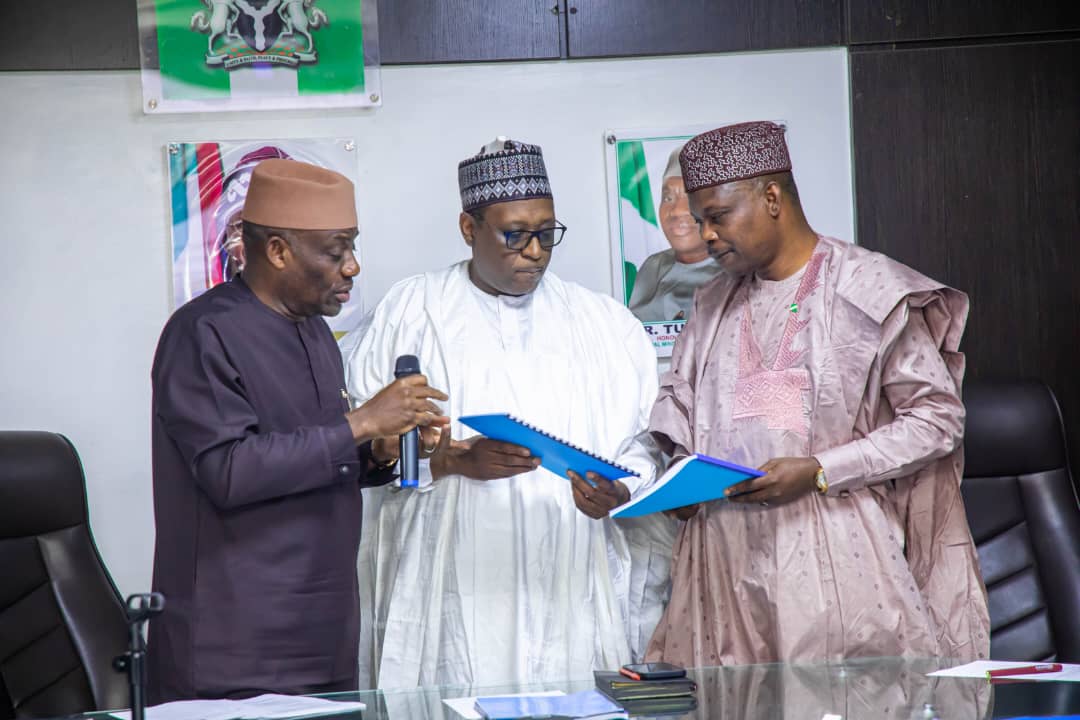
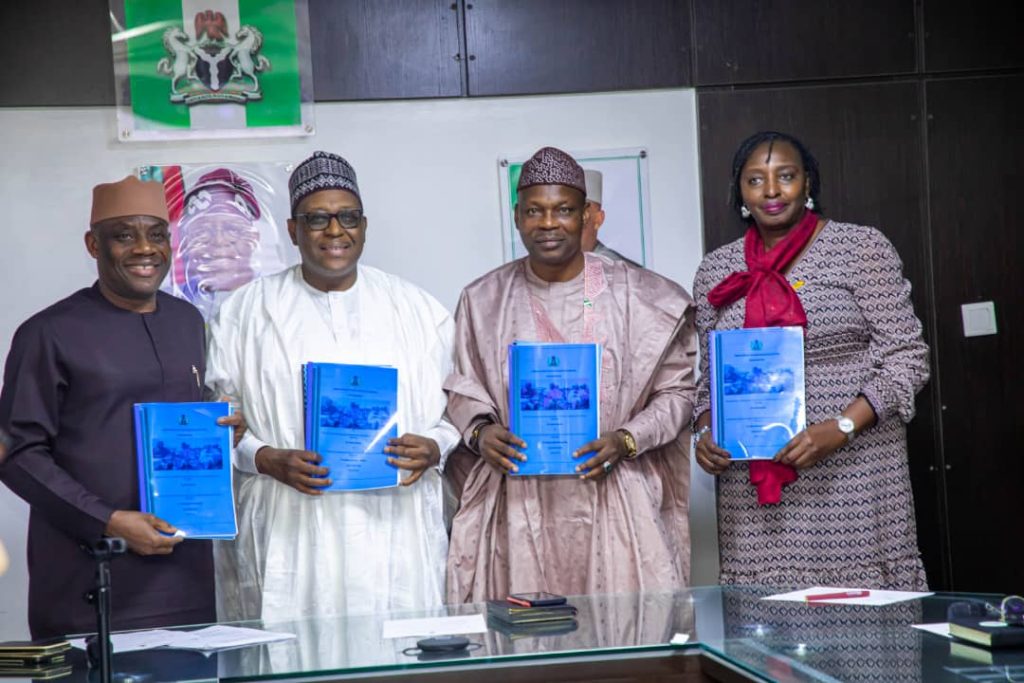
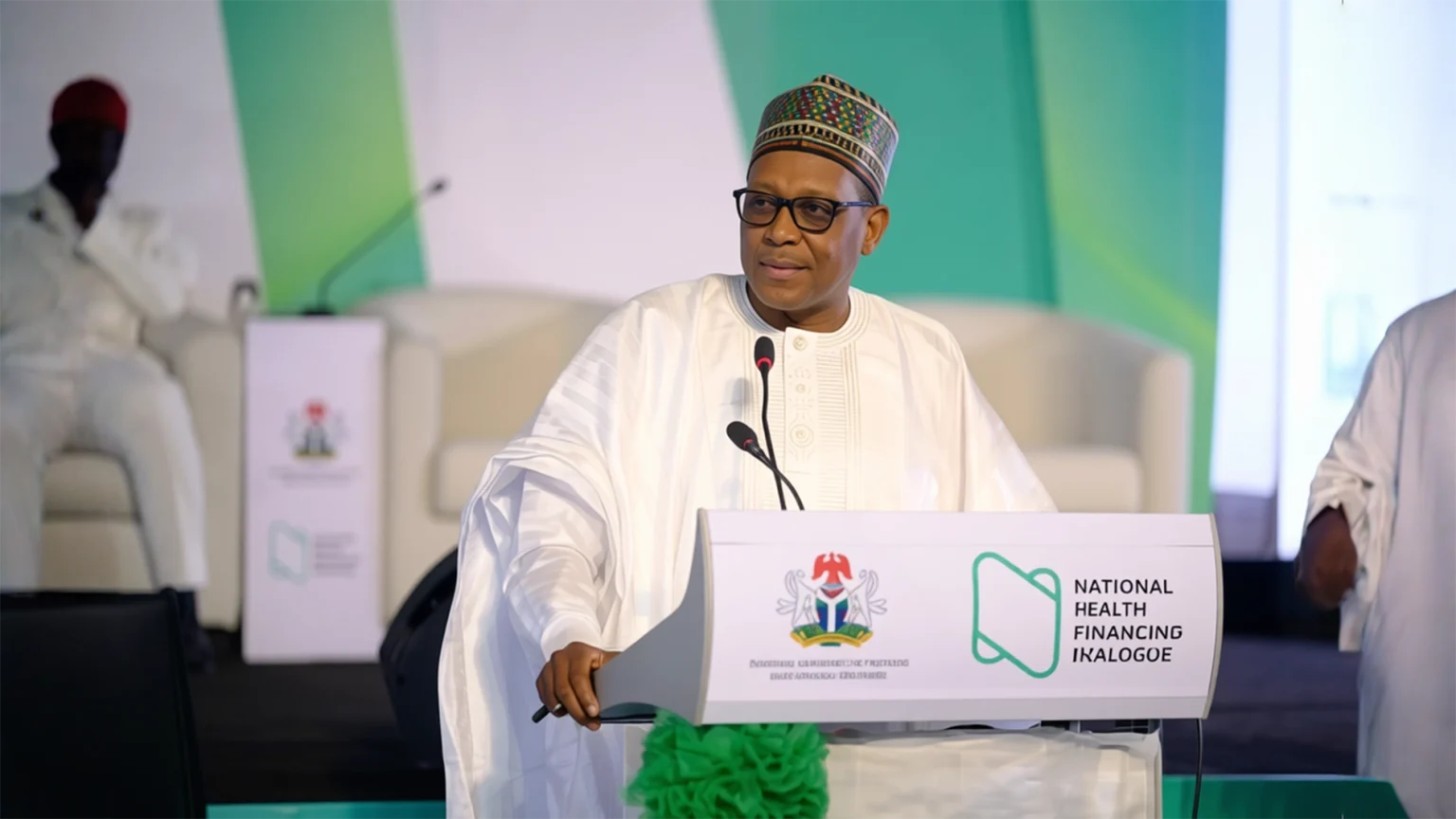
In a significant transition ceremony, Dr. Tunji Alausa has officially handed over his position as Minister of State for Health and Social Welfare to Dr. Salako Adekunle Adeboye.
Held at the Ministry of Health and Social Welfare headquarters in Abuja, the event marked Dr. Alausa’s redeployment to the Ministry of Education, a move praised by the Coordinating Minister for Health and Social Welfare Professor Ali Pate lauding Alausa’s contributions, describing his transfer as a recognition of his “good and exceptional work” within the health sector.
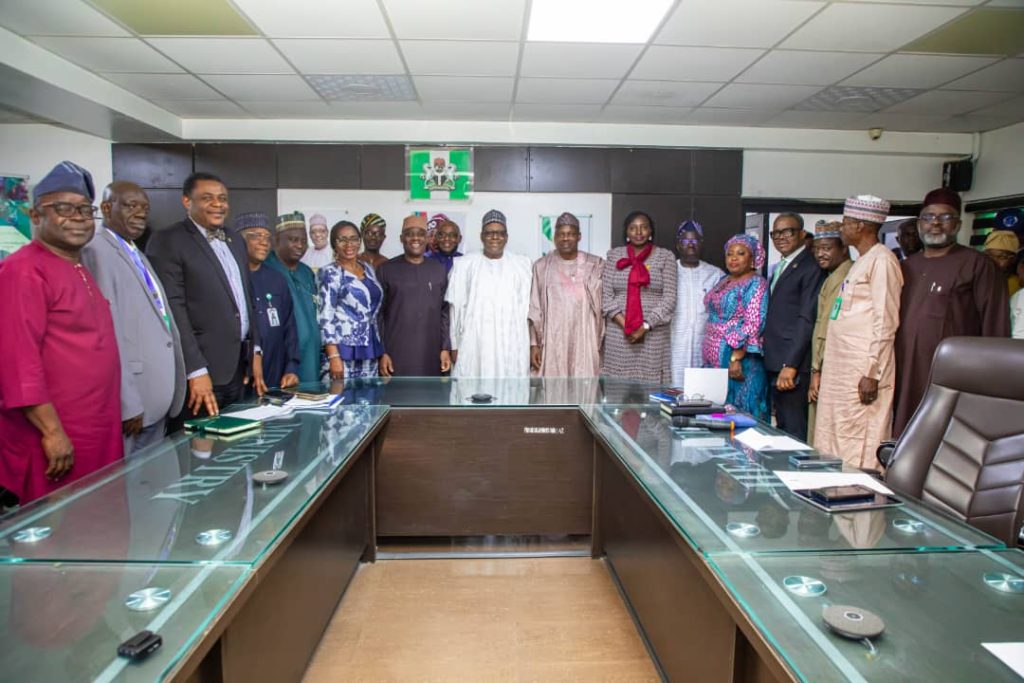
Reflecting on his time with Dr. Alausa, Prof. Pate commended his former colleague’s dedication and teamwork. “Dr. Alausa is a man of capacity and commitment.
“His contributions have strengthened our mission of providing efficient, optimal healthcare for Nigerians.
” Prof. Pate emphasized that Alausa’s work laid foundational blocks for transformative growth in the healthcare sector.
Dr. Alausa’s redeployment to the Ministry of Education, Prof. Pate observed, signifies the government’s confidence in his abilities.
“The reward for work is more work“
The reward for good work is even more work. So I am not surprised.”
This, he added, aligns with the Renewed Hope Agenda of President Bola Tinubu, which emphasizes effective governance across ministries.
The incoming Minister of State, Dr. Salako Adekunle Adeboye, was warmly welcomed by Prof. Pate, who underscored the importance of continuity and collaboration.
“We are eager to work together and build upon the milestones we have achieved,” Pate stated, expressing optimism about the health sector’s advancement under Adeboye’s leadership.
During the ceremony, Dr. Alausa took a moment to encourage the new minister, expressing confidence in his successor.
“Dr. Adeboye has the vision and expertise to take us further“
I am confident he will build on our progress and help steer the ministry toward new achievements.
”In addition to the formal handover, Dr. Alausa fulfilled a final duty by presenting appointment letters to ten newly appointed Medical Directors, including those for newly established Federal Medical Centres in Misau, Bauchi State; Ikole-Ekiti, Ekiti State; and Epe, Lagos State.
Addressing the directors, Alausa stressed the importance of prudent management, saying, “To whom much is given, much is expected.
”Dr. Alausa urged the new appointees to focus on projects that could swiftly benefit citizens, highlighting the importance of impactful governance.
“Any amount of money the government releases into healthcare, we want our citizens to feel the impact,” he said, underscoring the need for tangible improvements in healthcare delivery.
As Dr. Alausa embarks on his new role in the Ministry of Education, colleagues and ministry officials, including Permanent Secretary Kachollom Daju, extended their best wishes, appreciating his contributions and commitment to public service.






Health
Gov Mbah Invest in world-class Enugu International Hospital
The hospital, equipped with state-of-the-art medical equipment and advanced digital and electronic systems, is expected to attract top medical professionals from Nigeria and around the world.


Enugu State Governor, Peter Mbah, says the Enugu International Hospital is designed to provide world-class healthcare services to people across all socioeconomic classes.
The Enugu International Hospital is located at Rangers Avenue, Independence Layout, Enugu.
Mbah stated this during a pre-launch tour of the facility ahead of its official commissioning.
The hospital, equipped with state-of-the-art medical equipment and advanced digital and electronic systems, is expected to attract top medical professionals from Nigeria and around the world.
The governor expressed satisfaction with the quality of the equipment installed at the facility, saying the investment would help position Enugu as a medical tourism hub in Nigeria.
He said the hospital would also help reduce the number of Nigerians travelling abroad for specialist medical treatment while creating an environment that would encourage Enugu-trained medical professionals to return home.
According to Mbah, several Enugu-qualified medical practitioners based abroad have already reached out to express interest in working at the international hospital and contributing to the development of the state’s health sector.
The governor further said the facility would create job opportunities for medical graduates, healthcare professionals and other workers, with the potential to boost economic activity in the state.
During the tour, Mbah inspected several specialist units, including the Precision Oncology and Nuclear Medicine Unit, specialised surgery theatres, intensive care units, advanced diagnostics and imaging, and renal care and dialysis facilities.
He also toured the cancer, heart and vascular, nuclear medicine and molecular imaging, neuroscience, and renal centres.
Accompanied by the Director of the facility, Professor Sam Agwu, and other specialists, the governor received briefings on the various services and specialist care the hospital is expected to provide.
The Enugu International Hospital operates as a comprehensive quaternary care facility with more than 300 beds and was established to provide world-class specialist healthcare.
The facility is expected to strengthen access to advanced medical care, support medical professionals, create employment and contribute to Enugu State’s emergence as a destination for medical tourism.
Health
Bayer to establish reproductive health commodities plant in Nigeria
The plant is expected to manufacture family planning commodities locally, reducing Nigeria’s dependence on imported products, creating jobs and contributing to economic growth.
•The Minister of Health and Social Welfare, Prof. Muhammad Pate
Global pharmaceutical company, Bayer, is to establish a reproductive health commodities manufacturing plant in Nigeria, with the facility currently under construction in Anambra State.
The plant is expected to manufacture family planning commodities locally, reducing Nigeria’s dependence on imported products, creating jobs and contributing to economic growth.
The Minister of Health and Social Welfare, Prof. Muhammad Pate, disclosed this in Abuja at the inauguration of the High-Level Inter-Ministerial Platform (IMP) on Family Planning, Health, Human Capital and Sustainable National Development.
Pate described the investment as evidence that President Bola Tinubu’s Executive Order on the pharmaceutical sector was beginning to attract significant investments in local pharmaceutical manufacturing, diagnostics and health technology.
Also speaking, the Managing Director of FP2030 West and Central Africa Office, Dr Alain Damiba, described the initiative as a major step towards strengthening cross-sector collaboration to improve health outcomes and accelerate Nigeria’s socio-economic development.
Damiba commended the Federal Government for adopting a whole-of-government approach, noting that the new platform demonstrated that health and family planning were national development priorities and not issues that should be left to the health sector alone.
“Health, including family planning, is a smart investment in human capital and Nigeria’s future,” Damiba said.
Source: The Guardian Nigeria
Health
Medical Oxygen Killing More Than 600,000 Nigerians Annually
The project started its first phase by carrying out intervention work in three industrial areas of the state: quarry industrial site in Onueke, rice mill in Abakaliki, and timber market

•Professor Jesse Uneke
The Vice Chancellor of David Umahi Federal University of Health Sciences (DUFUS), Ebonyi State, Professor Jesse Uneke, has estimated that more than 600,000 Nigerians died yearly due to issues relating to the administration of medical oxygen.
Uneke, who is the Nigerian and State Lead/Principal Investigator for the EQUI-RESP Africa Research Project, disclosed this in Abakaliki, during the First Stakeholders’ Engagement Event/Co-Creation Workshop on Medical Oxygen Economy organised by the university in conjunction with the University of Edinburgh, UK, supported by the National Institute for Health and Research (NIHR), UK.
He explained that the administration of medical oxygen issues was happening because there was no platform where stakeholders in the medical oxygen space could come together to discuss the research-policy interface and see how to contextualise some of the strategies against the problems for the country.
“That is why, in this phase of this project, we have decided to start with this kind of stakeholders’ engagement. I am excited that we have every key stakeholder in the medical oxygen space represented here,” Uneke said.
He opined that the project started its first phase by carrying out intervention work in three industrial areas of the state: quarry industrial site in Onueke, rice mill in Abakaliki, and timber market.
This project has to do with respiratory health, and the idea is to come up with strategies that will lead to interventions that will improve health outcomes as far as respiratory health is concerned.


I will concede defeat if 2027 election is credible — Obi

JUST IN: One Dead, Many Feared Trapped as Two-Storey Building Collapses in Lagos

Trump promises $5,000 ‘dividend’ to U.S. citizens if Republicans win midterms

Tech Expert, Zuckerberg trains with UFC champions, Adesanya, Alexander

Organ Trafficking: Ekweremadu bags 10 years in UK prison

SAINT OBI: Between his marriage and his death
-

 Business3 days ago
NAFDAC Goes After Chinese Logistics Firms Over Products Counterfeiting
-

 International2 days ago
Kenya gives foreign workers 90 days to formalise status or leave
-

 News3 days ago
JUST IN: Traffic Chaos Expected on Lagos-Ibadan Expressway From Tuesday
-

 Sports3 days ago
Falconets lose World Cup opener to Spain
-

 Entertainment3 days ago
Ikenga becomes highest-grossing Igbo film of all time
-

 Politics3 days ago
2027: Tompolo flags – off campaign for Tinubu with 34 Campaign Vehicles
-
 Business3 days ago
After South Africa, Kenya Cracks Down on Foreign Traders, Retailers
-
 Business3 days ago
Dangote woos ordinary Nigerians to own shares in oil refinery as IPO opens September 14