
Health
JUST IN: Medical Laboratory Scientists of Nigeria Protest Over Unlawful appointment of ‘Unqualified’ Board Chairman

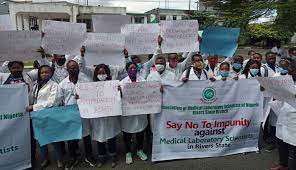
The Association of Medical Laboratory Scientists of Nigeria (AMLSN) has raised valid points regarding the qualifications and the potential implications of the appointment of Dr. Babajide Salako as the Chairperson of the Board of the Medical Laboratory Science Council of Nigeria (MLSCN).
Their argument is anchored on the law, tradition, and the potential consequences for the quality of medical laboratory testing in Nigeria. They contend that Dr. Salako’s appointment deviates from the established qualifications outlined in the relevant legislation governing the MLSCN.
The argument is looking more like a fresh crisis is brewing in the health sector as the association said Salako, CEO at Dialysis Care Centers Inc, Homer, Illinois, United States does not qualify for such position.
The AMLSN’s call for action includes:
- Appeal to the National Assembly: They urge the legislative body to investigate the appointment, highlighting the perceived disregard for laws enacted by the legislature.
- Appeal to the Attorney-General of the Federation (AGF) and Minister of Justice: They seek guidance from the AGF to prevent the sector from descending into controversy and potential catastrophe.
- Appeal to Senator Bola Ahmed Tinubu and the Presidency: They call upon President Tinubu and the Presidency to rectify the situation by adhering to the law and retracting the appointment of Dr. Salako. Additionally, they request an investigation into the circumstances surrounding the appointment and appropriate sanctions for those responsible.
The AMLSN’s stance emphasizes their commitment to upholding the rule of law and ensuring the integrity of medical laboratory testing in Nigeria. It remains to be seen how the relevant authorities will respond to these appeals and address the concerns raised by the association.
AMLSN said they hope that the above-listed steps and pleas will be acted upon to avert any further action of the Association in seeking redress

Health
WHO Confirms 1,300 deaths in Europe heatwaves
At least 191 million people are forecast to endure temperatures of at least 35 °C on Sunday in Europe, with the heat particularly intense in Germany, the Czech Republic, Hungary and Poland, according to AFP estimates.


The World Health Organisation (WHO) confirmed that more than 1,300 people have died in Europe since June 21 in connection with the record-breaking heatwave roasting much of the continent.
WHO chief Tedros Adhanom Ghebreyesus said on X that tens of millions have been braving the extreme temperatures in Europe as a deadly heatwave moves eastwards, with some countries announcing rising death tolls and health services warning of saturation.
On Sunday morning, French health officials said there had been around 1,000 more deaths than expected in that country just since Wednesday.
“Heat stress is often called the ‘silent killer’ – and European homes, workplaces and schools were not built for these temperatures,” he said.At least 191 million people are forecast to endure temperatures of at least 35 °C on Sunday in Europe, with the heat particularly intense in Germany, the Czech Republic, Hungary and Poland, according to AFP estimates.
Health
How 100 hospitals in Romania switched to pen and paper to defeat a national cyber-attack
Cutting off 100 hospitals in Romania from the internet stopped the hackers in their tracks, buying time to work out how bad the attack was.
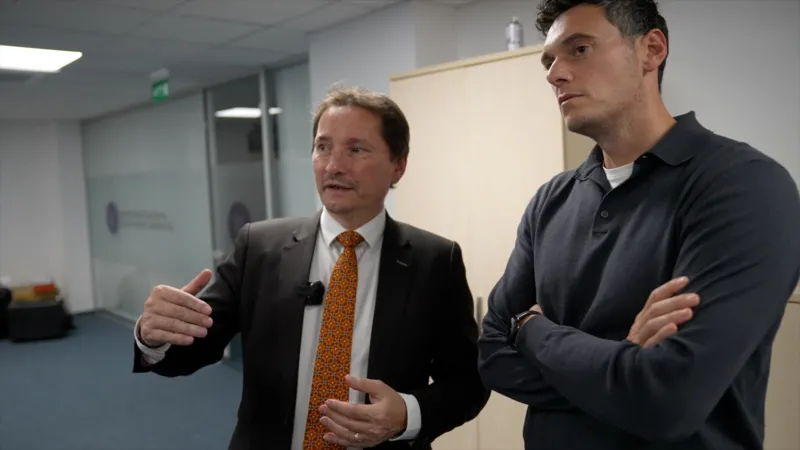
Photo: Head of Romania’s Cyber-Security Directorate Dan Cimpean (L) was in charge of co-ordinating the crisis response
One after another the calls came in from hospitals; criminals were infecting computer networks in a mass hack that was putting countless lives at risk.
At Bucharest’s national cyber-security centre (DNSC) they watched helplessly as the hackers spread across Romania through a popular piece of medical software.
Cyber-chief Dan Cimpean had a tough decision to make, but it was the only option they had.
The order went out to more than 100 hospitals. Disconnect from the internet, now.
The cyber-attack on Romania’s hospitals in February 2024 is one of the worst to target healthcare systems around the world, but these incidents are becoming increasingly common.
Healthcare is now the most targeted area of critical national infrastructure, the FBI has said recently.
Cutting off 100 hospitals in Romania from the internet stopped the hackers in their tracks, buying time to work out how bad the attack was.
But it meant no connected devices, emails or web browsers.
Medical staff had to switch to pen and paper, improvising workarounds to protect patients while IT teams scrambled and the national cyber response centre tried to find out how the hackers had got in – and how they could stop them.
Their actions over four days from 10 February 2024, and those of the doctors and nurses, have been widely praised.
How they reacted and how they coped has become a test case for disaster planners internationally, as officials look for advice on responding to a mass hospital hack.
(Credit: BBC News)
Health
214 Nigerians die of Lassa fever in 2026
The outbreak has spread across 23 states and 109 Local Government Areas since January 2026.
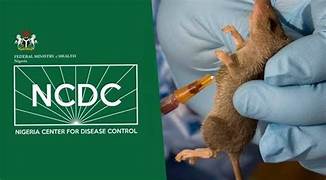
The Nigeria Centre for Disease Control and Prevention (NCDC) recorded 214 Lassa fever death between January to June this year.
The agency said that the Case Fatality Rate was climbing to 25.0 percent from 18.9 percent during the same period in 2025.
This is contained in the NCDC Lassa Fever Situation Report for Week 23 (June 1 to June 7).
Said the report: “New confirmed cases held steady in week 23, matching the count from week 22.“Infections were reported in Edo, Ondo, Bauchi and Ebonyi. No new healthcare worker infections were reported during the week.
“The outbreak has spread across 23 states and 109 Local Government Areas since January 2026,” it said.


A Review of Akwa Ibom State Government’s July Delivery Meeting

Explosion rocks Apapa tank farm; NPA, NIMASA move to curtail spread

FG slams 8-count charges on Adeyemi over fake agency ” I’m not a criminal”, he defends

Tech Expert, Zuckerberg trains with UFC champions, Adesanya, Alexander

Organ Trafficking: Ekweremadu bags 10 years in UK prison

SAINT OBI: Between his marriage and his death
-
 Business3 days ago
Naira Exchange Rates Thursday July 2, 2026
-
 News3 days ago
NIPSS: Gunmen attacks again, one killed
-

 News3 days ago
FG Launches Digital Education Database, Seeks Full School Participation
-

 Politics3 days ago
Atiku appoints Kenneth Okonkwo as spokesperson
-
 Business3 days ago
Issue: Cloning Nigerian Investment Promotion Commission (NIPC)
-

 News3 days ago
FG Hails End of Oyo Teacher’s Strike
-

 International2 days ago
General Hydrocarbons Floors FBN as S’Court Sets Aside Appeal Court Ruling
-

 Sports2 days ago
Cape Verde faces defending world cup champions , Argentina today