
International
Turkey Supports Sweden’s Nato membership

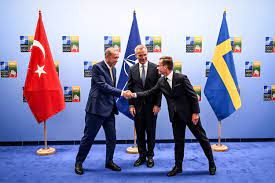
Turkey’s President Recep Tayyip Erdogan has agreed to support Sweden’s bid to join Nato, the military alliance’s chief Jens Stoltenberg says.
He said the Turkish leader would forward Sweden’s bid to parliament in Ankara and “ensure ratification”.
Meanwhile, Swedish Prime Minister Ulf Kristersson said: “I am very happy, it is a good day for Sweden.”
Turkey had previously spent months blocking Sweden’s application, accusing it of hosting Kurdish militants.
As one of Nato’s 31 members, Turkey has a veto over any new country joining the group.
Reacting to the news, US President Joe Biden said he welcomed the commitment by President Erdogan to proceed with “swift ratification”.
“I stand ready to work with President Erdogan and Turkey on enhancing defence and deterrence in the Euro-Atlantic area. I look forward to welcoming Prime Minister Kristersson and Sweden as our 32nd Nato ally,” a White House statement said.
German Foreign Minister Annalena Baerbock tweeted: “At 32, we’re all safer together.” British Prime Minister Rishi Sunak said Sweden joining would “make us all safer”.
Mr Stoltenberg announced the agreement late on Monday following talks between the Turkish and Swedish leaders in the Lithuanian capital Vilnius.
The Nato chief described it as a “historic step”, but stressed that a “clear date” could not be given for when Sweden would join the military alliance – as this relied on the Turkish parliament.
Sweden and its eastern neighbour Finland, both long considered as militarily neutral, announced their intention to join Nato in May last year, several months after Russia launched its full-scale invasion of Ukraine. Finland formally joined in April.
Mr Stoltenberg said Turkey and Sweden had addressed “Turkey’s legitimate security concerns” and as a result Sweden had amended its constitution, changed its laws, expanded its counter-terrorism operation against the PKK (Kurdistan Workers’ party) and resumed arms exports to Turkey.
Turkey and Hungary are currently the only two Nato members yet to ratify Sweden’s membership application.
Hungarian Foreign Minister Peter Szijjarto said on Tuesday that ratification of Sweden’s bid is now “only a technical question”.
On Monday, President Erdogan had also appeared to link Turkish support for Sweden’s Nato bid to the EU re-opening frozen membership talks with Ankara.
EU officials were quick to reject the demand, saying those were two separate issues.
But in a statement after the deal was announced, Nato said Sweden would actively support efforts to “reinvigorate Turkey’s EU accession process” and this would include “modernisation of the EU-Türkiye customs union and visa liberalisation”.
Turkey first applied to join the EU way back in 1987, but its drift towards authoritarianism under President Erdogan brought the accession process to a halt.
However since Russia’s invasion of Ukraine, Mr Erdogan has also played a unique role as a Nato leader with influence in Moscow.
He helped broker last year’s Black Sea Grain Initiative, which enables Ukraine to export agricultural products from its ports.
Turkey has helped keep the deal alive, despite frequent Russian threats to withdraw.
But Turkey has also angered the Kremlin by supplying armed drones to Ukraine.
International
Mum rescued from Venezuela rubble with newborn baby tells BBC how he helped her survive
Tens of thousands more are missing in what the country’s interim president has described as the “most brutal natural catastrophe” in Venezuela’s history.


A mother who was pulled from the rubble of her wrecked home in Venezuela with her 18-day-old baby has told the BBC of how her son helped keep her alive.
Dayana Patino said her son Juan David gave her “motivation to be awake and alert”.
“As long as he was alive, I was going to be alive. Every now and then I was touching his nose for proof that he was still breathing,” she said.
Footage of the rescue has been shared around the world, with Juan David becoming a symbol of hope in Venezuela, which has been devastated by the twin earthquakes that hit the country on Wednesday – killing at least 1,450 people.
Tens of thousands more are missing in what the country’s interim president has described as the “most brutal natural catastrophe” in Venezuela’s history.
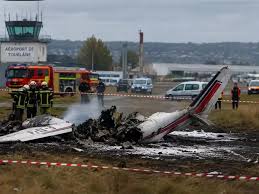
A civilian aircraft carrying skydivers plummeted from the sky and crashed near the eastern French town of Tomblaine on Sunday, killing everyone on board in one of the country’s deadliest light aircraft disasters in years, authorities said.
All 11 people aboard — believed to include the pilot and 10 skydivers — died in the crash, local officials confirmed. Emergency services rushed to the scene after reports of the downed aircraft, but found no survivors.
The aircraft went down in a rural area close to Tomblaine, in the Meurthe-et-Moselle department, shortly after takeoff on what was reportedly a routine skydiving excursion. Debris was scattered across the crash site, and a large emergency operation involving firefighters, police, and medical teams is underway.
French authorities have launched a full investigation into the cause of the tragedy. The National Bureau of Investigation and Analysis for Civil Aviation Safety (BEA) has been notified and is expected to lead the probe, examining factors such as mechanical failure, weather conditions, or human error.
“This is a terrible tragedy that has shocked the entire community,” a local official told reporters at the scene. “Our thoughts are with the families and friends of those who lost their lives today.”
Skydiving operations are popular in the region, but light aircraft accidents remain rare. Sunday’s crash ranks among France’s worst involving small planes in the past decade.
More details are expected as the investigation progresses. This is a developing story.
International
Zimbabwe’s Parliament Approves Bill to Extend Presidential Terms To Seven Years
Critics say the bill is a ruse for Mnangagwa to stay in power for longer, though its backers say it will strengthen accountability and foster political stability.
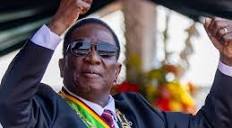
• Current President Emmerson Mnangagwa
Zimbabwe’s upper house of parliament has approved a bill to extend presidential terms from five to seven years, which will allow current President Emmerson Mnangagwa to remain in office until 2030.
75 senators voted in favour of the draft legislation while four voted against it, above a threshold needed for a two-thirds majority.
The bill, which also includes a provision for the president to be elected by parliament rather than by direct popular vote, will become law when Mnangagwa signs it.
Evidence that 83 years old Mnangagwa wanted to stay in power beyond the end of his second term in 2028 emerged about two years ago, when his supporters started chanting slogans at ZANU-PF rallies that he needed more time to complete his agenda.The ruling party last year resolved to change the constitution to prolong presidential terms, and the plan received cabinet backing in February.President Mnangagwa came to power after a 2017 military coup ousted longtime leader Robert Mugabe, who had been in power since independence in 1980.
Critics say the bill is a ruse for Mnangagwa to stay in power for longer, though its backers say it will strengthen accountability and foster political stability.


BREAKING: Court Grants Sowore N200 Million Bail, With Fresh Conditions

Lagos NSCDC Parades Five Suspected Vandals, Two Foreigners From Togo

FG Supports Tomato, Pepper Sellers Too, Not Just ‘Akara’ — Remi Tinubu

Tech Expert, Zuckerberg trains with UFC champions, Adesanya, Alexander

Organ Trafficking: Ekweremadu bags 10 years in UK prison

SAINT OBI: Between his marriage and his death
-
 Business1 day ago
Naira Exchange Rates Monday, 29 June 2026
-

 Health1 day ago
WHO Confirms 1,300 deaths in Europe heatwaves
-

 News1 day ago
JUST IN: Two Trucks, Car Collide on Lagos Expressway, Several Injured
-

 News3 days ago
NDLEA, Army, NAFDAC, Agunechemba, Others Rally Against Drug Abuse in Anambra
-
 Politics1 day ago
2027: Atiku Alleged Plot To Keep ADC Off Ballot
-
 News3 days ago
Sanwo-Olu Addresses PSP Operator’s Challenges , Announces Measures to Boost Waste Management (Photos)
-
 News1 day ago
FG bans motorcycles, tricycles on Lagos-Calabar Coastal Highway
-
 News2 days ago
SGF Akume Condemns Killing of MACBAN Chairman in Benue