
Business
Geregu power plant : Otedola sells majority shares to MA’AM Energy Limited for $750 million
Geregu Power is currently valued at N2.85 trillion, trading at N1,140 per share and remains one of the most capitalised and profitable firms on the Nigerian Exchange.


• Femi Otedola
Femi Otedola has sold out his majority shares in Geregu Power Plc to an indigenous firm, MA’AM Energy Limited, an Abuja-based integrated energy company engaged in electricity generation and supply, energy trading and marketing.
The deal is valued at $750 million deal.
The power plant uploaded the filing on the Nigerian Exchange (NGX) website.
According to the details cited, the transaction was consummated through the sale of Otedola’s 95 percent stake in Amperion Power Distribution Company Limited to MA’AM Energy Limited.
According to the NGX filing, Amperion Power Distribution Company Limited, the majority shareholder of Geregu Power, has undergone a significant restructuring of its ownership.
The document confirms that “MA’AM Energy Ltd has acquired a 95 per cent equity interest” in Amperion Power, effectively making it the new controlling shareholder of Geregu Power Plc.Consequently, the indirect controlling interest previously held by Calvados Global Services Limited and Otedola “has been transferred to MA’AM Energy.”
The transaction, which closed yesterday, was financed by a consortium of Nigerian banks led by Zenith Bank, with Blackbirch Capital acting as financial advisers.
While the sale involved Otedola’s stake in Amperion, Geregu Power clarified that this “does not involve the direct sale or transfer of shares of Geregu Power Plc,” meaning the company’s public shareholding structure on the NGX remains unchanged.
Geregu Power is currently valued at N2.85 trillion, trading at N1,140 per share and remains one of the most capitalised and profitable firms on the Nigerian Exchange.

PARALLEL MARKET RATES
₦1382 DOLLAR (USD)
₦1815POUND (GBP)
₦1515EURO (EUR)
₦970DOLLAR (CAD)
₦65RAND (ZAR)
₦350DIRHAM (AED)
₦190YUAN (CNY)
₦100G.CEDI (GHS)
₦2300CFA F.(XOF)
₦2200CFA F.(XAF)
₦850AUSSIE (AUD)
OFFICIAL CBN EXCHANGE RATES
DOLLAR (USD)₦1346.26
POUND (GBP)₦1803.58
EURO (EUR)₦1503.23
SWISS FRANC (CHF)₦1634.20
JAPANESE YEN (JPN)₦8.56
CFA FRANC (XOF)₦2.28
WEST AFRICAN UNIT OF ACCOUNT (WAUA)₦1821.09
CHINESE YUAN (CNY)₦202.35
SAUDI RIYAL (SAR)₦358.71
SOUTH AFRICAN RAND (ZAR)₦80.67
Business
African Energy Bank Headquarters Operation in Nigeria
The $5bn financial institution is designed to fund oil, gas and other energy projects across Africa as traditional international lenders reduce financing for fossil fuel investments.

Pic:L-R: Sen. Heineken Lokpobiri, Hon. Minister for State Petroleum Resources (Oil), Federal Government of Nigeria, Dr. George Elombi, President and Chairman of the Board of Directors at Afreximbank and Hon Mamadou Sangafowa-Coulibaly, Minister of Mines, Petroleum and Energy of Côte d’Ivoire during the first General Meeting of the Africa Energy Bank in Abuja, Nigeria.
African Export-Import Bank and the African Petroleum Producers’ Organisation have formally announced the establishment of the Africa Energy Bank (AEB).
The $5bn financial institution is designed to fund oil, gas and other energy projects across Africa as traditional international lenders reduce financing for fossil fuel investments.
The announcement was made during the AEB’s inaugural general meeting held in Abuja, Nigeria, on 31 October 2026.
The bank will provide financing for petroleum exploration, production, transportation, refining and distribution, while supporting Africa’s efforts to reduce dependence on imported petroleum products.
Afreximbank and APPO estimated the continent’s energy investment requirements at `$200bn, indicating a substantial funding gap that the new institution is expected to help address.
Business
Why Cement Is Expensive in Nigeria – PAMA
Using Dangote Cement as a case study, Ajayi-Kadir disclosed that the company operates in about 11 African countries, with an installed production capacity of 55 million tonnes.
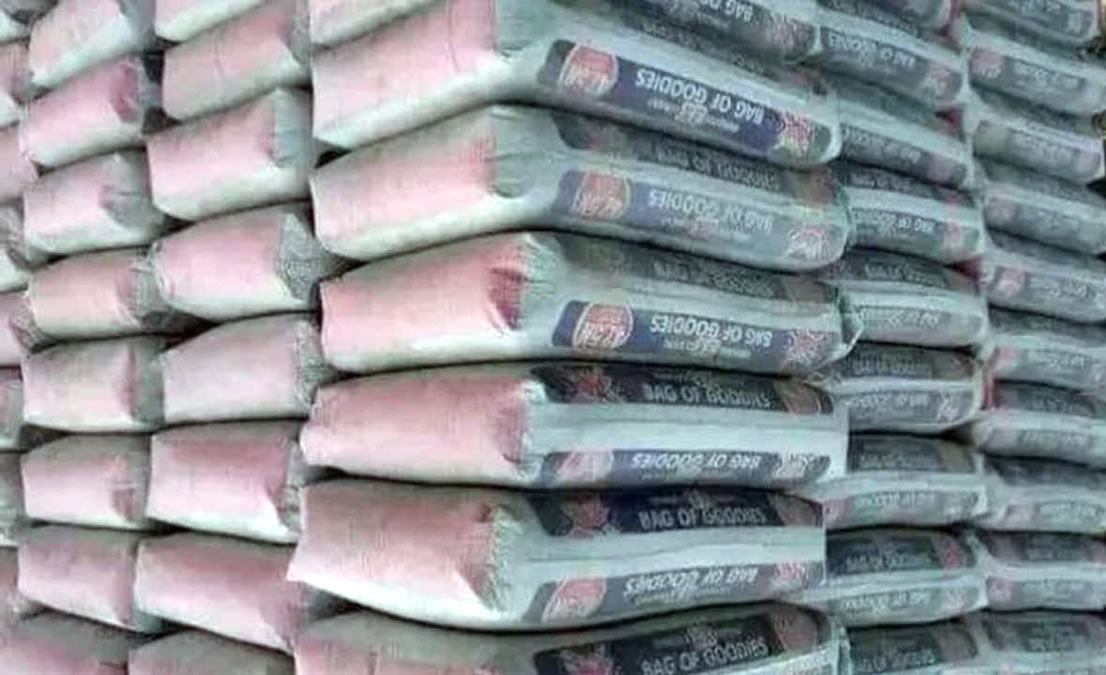
The Pan-African Manufacturers Association (PAMA) has attributed the rising prices of cement in Nigeria to a combination of production, energy, foreign exchange, financing and distribution challenges confronting manufacturers.
As of October 2026, the retail price of a standard 50kg bag of cement in Nigeria generally ranges between ₦11,000 and ₦15,000, depending on the brand, location and volume purchased.
While Dangote Cement sells between ₦12,000 and ₦15,000 per bag, BUA Cement goes for between ₦11,500 and ₦14,500. Lafarge Africa (HBM) sells between ₦10,500 and ₦13,500.
Co-Interim Secretary-General of PAMA, Segun Ajayi-Kadir, explained that cement manufacturers face numerous production and distribution challenges, which contribute significantly to the rising prices of the commodity across the country.
According to him, beyond tariffs, infrastructure deficits, exchange-rate volatility and high interest rates, cement manufacturing is inherently energy-intensive, capital-intensive and relatively expensive to transport.
“Raw materials are often locally available, but energy, maintenance, equipment, logistics and finance can materially affect the economics of production. Scale also matters because fixed costs must be spread across sufficient output,” he said.
Using Dangote Cement as a case study, Ajayi-Kadir disclosed that the company operates in about 11 African countries, with an installed production capacity of 55 million tonnes.
In 2025, the company produced 26.79 million tonnes and sold 27.47 million tonnes of cement and clinker.
Energy Costs Drive Manufacturing Expenses
An examination of the company’s financial statements provides an insight into the cost pressures confronting cement manufacturers.
Dangote Cement’s manufacturing costs stood at ₦1.634 trillion in 2025, with fuel and power accounting for ₦681.9 billion, representing approximately 42 per cent of total manufacturing expenses.
Materials accounted for about 24 per cent, plant maintenance 10 per cent, salaries and related expenses nine per cent, while depreciation and amortisation represented another nine per cent.
Using the 2025 average official exchange rate of approximately ₦1,555 to the dollar, the company’s total manufacturing costs amounted to roughly $1.05 billion, equivalent to about $39 per tonne produced.
Fuel and power alone accounted for approximately $439 million, or $16.4 per tonne.
The figures underscore the significant influence of energy costs on cement production.
For instance, a 20 per cent increase in fuel and power expenses, assuming other variables remain unchanged, would add approximately $88 million to the company’s manufacturing costs, equivalent to an additional $3.3 per tonne.
This would increase manufacturing costs per tonne by approximately eight per cent.
The implication is that addressing energy costs requires more than reducing electricity tariffs. Manufacturers must also explore energy efficiency, alternative fuels, captive power generation, improved production processes and a more diversified energy mix.
Ultimately, reliable and affordable energy remains essential to competitive industrial production.
Foreign Exchange and Local Sourcing
Foreign-exchange exposure is another major consideration.
Dangote Cement operates across several African countries with different currencies, while its consolidated financial statements are reported in naira.
Consequently, imported machinery, spare parts and other production inputs expose the company to exchange-rate fluctuations, which can increase operating costs.
However, the company’s procurement strategy offers an indication of how local sourcing can help reduce such exposure.
In 2024, more than 75 per cent of its procurement expenditure went to local vendors, reflecting efforts to reduce import dependence and foreign-exchange risks.
Nevertheless, local sourcing can only improve manufacturing competitiveness when domestic suppliers are capable of delivering quality materials at competitive prices and in sufficient quantities.
The priority, therefore, should be to develop competitive domestic supplier networks and strengthen local productive capacity rather than merely replacing imports without building the necessary industrial capabilities.
Transportation and Distribution Challenges
Logistics also play a significant role in determining the final price of cement.
Dangote Cement’s 2025 administration and selling expenses increased to ₦943.9 billion, with higher haulage costs identified as a major contributing factor.
Given the weight and bulk of cement, transportation costs are particularly significant. Factory locations, road infrastructure, access to ports, proximity to raw materials and distance to major consumer markets all influence the final delivered price.
The company’s expansion across African markets also illustrates the importance of production location in reducing distribution costs.
Its three-million-tonne-per-annum grinding plant in Côte d’Ivoire, commissioned in 2025, increased its group production capacity to 55 million tonnes.
The facility sold 60,400 tonnes during its initial production ramp-up period.
The investment demonstrates how establishing production facilities closer to regional markets can improve supply efficiency and reduce dependence on transporting products over long distances from a single production base.
The Policy Imperatives
The cost structure of cement manufacturing highlights the need for a more targeted industrial policy response.
Governments should prioritise reliable and affordable industrial energy, efficient road and port infrastructure, predictable foreign-exchange and trade policies, access to long-term industrial financing and the development of competitive domestic suppliers.
Regional economic integration also offers opportunities to improve manufacturing efficiency by enabling companies to access larger markets, increase production volumes and achieve economies of scale.
For Nigeria, the challenge goes beyond making cement available at affordable prices. It involves creating an industrial environment in which manufacturers can produce competitively, expand capacity, invest in technology and deliver products to consumers at reasonable costs.
Rather than relying excessively on incentives, policymakers must address the underlying structural constraints driving production and distribution expenses.
Reducing these costs is essential not only to making cement more affordable but also to supporting construction, infrastructure development, housing delivery and Nigeria’s broader industrialisation agenda.


INEC : We Are Already Cleaning Up Our Register of AI-Generated Photos

Tens of thousands protest against Narendra Modi regime in Delhi

Nigeria Thumbs up CAF For Samson’s Appointment As Secretary-General

BREAKING: Lagos Govt Declares Today, Thursday Work-Free to Mark 2026 Ìṣẹ̀ṣe Day

Tech Expert, Zuckerberg trains with UFC champions, Adesanya, Alexander

Organ Trafficking: Ekweremadu bags 10 years in UK prison
-
 Business3 days ago
Debt: Does Nigeria Lend Money To Other Countries?
-

 Business3 days ago
Naira Rates To Dollar, Pound , Euro… Friday, October 30
-

 Entertainment3 days ago
Davido Releases ‘Already Falling’ Video Featuring Chioma
-

 Business3 days ago
Trade Unions Bicker Over N70,000 Tinubu”s transport allowances
-

 Business3 days ago
OTL Africa Downstream Conference project Nigeria’s modular refineries to 83,000 bpd 2027
-

 Politics3 days ago
Rochas Okorocha: 90% Of Nigerian Politicians Would Not Hold Office Under True Democracy
-

 Business3 days ago
President Tinubu defends $21.7bn fresh loan
-

 Business3 days ago
Crypto giant Binance hit by $6.3bn hack