
News
Bill Gates to Spend Majority of $200 Billion Pledge on Africa’s Future
At the end of 20 years, the foundation will sunset its operations.


ADDIS ABABA (June 2, 2025 :
In an address today in Nelson Mandela Hall at the African Union, Gates Foundation Chair Bill Gates , announced that the majority of his $200 billion spending over the next 20 years will go to Africa with a focus on partnering with governments that prioritize the health and well-being of their people.
Gates therefore urged African leaders to seize the moment to accelerate progress in health and development through innovation and partnership, despite current headwinds.
“I recently made a commitment that my wealth will be given away over the next 20 years.
The majority of that funding will be spent on helping you address challenges here in Africa.”
Addressing over 12,000 government officials, diplomats, health workers, development partners, and youth leaders in person and online, he underscored the critical role of African leadership and ingenuity in driving the continent’s health and economic future.
“By unleashing human potential through health and education, every country in Africa should be on a path to prosperity – and that path is an exciting thing to be part of,” Gates said.
Following his address, Gates joined Paulin Basinga, the foundation’s Africa director, in a fireside chat to discuss Africa’s development agenda and the investments and partnerships needed to drive future progress.
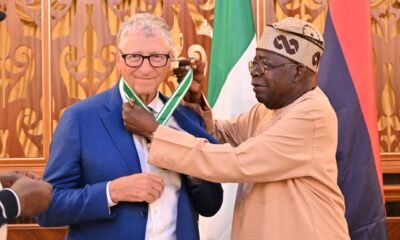
From Addis Ababa, Gates will travel to Nigeria, where he will meet with President Bola Ahmed Tinubu and engage with federal and state leaders to discuss Nigeria’s primary health care reforms.
Calls for collaboration and shared responsibility were delivered by prominent African leaders, including Dr. Ngozi Okonjo-Iweala, director-general of the World Trade Organization, and Amina J. Mohammed, deputy secretary-general of the United Nations.
Renowned advocate for women and children, Mrs. Graça Machel, described the current situation as “a moment of crisis” and emphasized the importance of enduring partnerships in Africa’s development journey.
“Mr Gates’ long-standing partnership with Africa reflects a deep understanding of these challenges and a respect for African leadership, ideas and innovation,” she said.
“We are counting on Mr Gates’ steadfast commitment to continue walking this path of transformation alongside us.”
Dr. Ngozi Okonjo-Iweala emphasized that Africa’s health progress is a result of strong government leadership, resilient communities, and partnerships that deliver results.Gates called for prioritizing primary healthcare, emphasizing that “investing in primary healthcare has the greatest impact on health and wellbeing.”
“With primary healthcare, what we’ve learned is that helping the mother be healthy and have great nutrition before she gets pregnant, while she is pregnant, delivers the strongest results. Ensuring the child receives good nutrition in their first four years as well makes all the difference.”
Gates highlighted how countries like Ethiopia, Rwanda, Zimbabwe, Mozambique, Nigeria, and Zambia are showing what’s possible when bold leadership harnesses innovation.
From expanding frontline health services and using data to cut child mortality to deploying advanced tools against malaria and HIV, and safeguarding primary healthcare despite fiscal strain—these country-led efforts are driving scalable, homegrown progress.
Reflecting on more than two decades of engagement on the continent, Gates said, “I’ve always been inspired by the hard work of Africans even in places with very limited resources.”
He added, “The kind of fieldwork to get solutions out, even in the most rural areas, has been incredible.”Gates spoke about the transformative potential of artificial intelligence, noting its relevance for the continent’s future.
He praised Africa’s young innovators, saying he was “seeing young people in Africa embracing this, and thinking about how it applies to the problems that they want to solve.”
Drawing a parallel to the continent’s mobile banking revolution, he added, “Africa largely skipped traditional banking and now you have a chance, as you build your next generation healthcare systems, to think about how AI is built into that.”
He pointed to Rwanda as an early example of this promise, noting, “Rwanda is using AI to improve service delivery. E.g. AI-enabled ultrasound, to identify high-risk pregnancies earlier, helping women receive timely, potentially life-saving care.”
In Ethiopia and Nigeria this week, Gates will see first-hand the state of health and development priorities in the wake of foreign aid cuts, and he will affirm his and the foundation’s commitment to supporting Africa’s progress in health and development over the next 20 years.
“Our foundation has an increasing commitment to Africa,” Gates said. Our first African office was here in Ethiopia about 13 years ago. Now we have offices in South Africa, Kenya, Nigeria and Senegal.
That’s a great way for us to strengthen partnerships.”While in Ethiopia, Gates met with Prime Minister Abiy Ahmed and heard how Ethiopia is sustaining the momentum on critical reforms, expanding essential services, and remaining resilient amid shifting global aid dynamics.
Gates also took part in a roundtable with the Ethiopian Public Health Institute on the country’s iodine-folic acid double-fortified salt initiative.
From Addis Ababa, Gates will travel to Nigeria, where he will meet with President Bola Ahmed Tinubu and engage with federal and state leaders to discuss Nigeria’s primary health care reforms.
He will also participate in a Goalkeepers Nigeria event focused on Africa’s innovation future and meet with local scientists and partners shaping Nigeria’s national AI strategy and scaling up health solutions.
Gates’s trip follows the foundation’s historic announcement on May 8 that it would spend $200 billion over the next 20 years to advance progress on saving and improving lives and Gates’ commitment to giving away virtually all of his wealth to the foundation in that timeframe.
Over the next two decades, the foundation will work together with its partners to make as much progress as possible towards three primary goals: end preventable deaths of moms and babies; ensure the next generation grows up without having to suffer from deadly infectious diseases; and lift millions of people out of poverty, putting them on a path to prosperity.
At the end of 20 years, the foundation will sunset its operations. Over the last two decades, the Gates Foundation has worked alongside African partners to save lives, develop vaccines, and strengthen systems.
It has helped catalyze more than 100 innovations and contributed to saving more than 80 million lives through Gavi and the Global Fund to Fight AIDS, Tuberculosis, and Malaria.





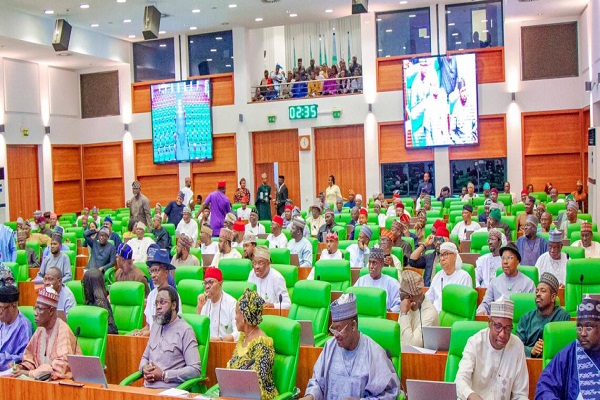
.... As Agbedi Emerges House Minority Leader, and Dasuki as Deputy
The House of Representatives has officially announced a new minority leadership, effectively resolving weeks of uncertainty and intense horse-trading within the opposition caucus.
Hon. Fred Agbedi of the Peoples Democratic Party (PDP), representing Sagbama/Ekeremor Federal Constituency of Bayelsa State, has emerged as the new Minority Leader.
Hon. Abdulsamad Dasuki of the African Democratic Congress (ADC), representing Kebbe/Tambuwal Federal Constituency of Sokoto State, was named Deputy Minority Leader, while Hon. Manu Mansur Soro of the Action Peoples Party (APM), representing Darazo/Ganjuwa Federal Constituency of Bauchi State, emerged as Minority Whip.
The announcement, which followed a unanimous agreement among opposition lawmakers on the filling of key principal positions, brings to a close recent leadership disputes and competing claims within the minority caucus.
The new leadership lineup is expected to provide stronger coordination and direction for the opposition in the House of Representatives.
News
JUST IN: Nigerians evacuated from South Africa arrives Lagos
The evacuation comes amid growing concerns over the safety of Nigerians residing in South Africa following reports of violence and attacks on foreign-owned businesses and communities.
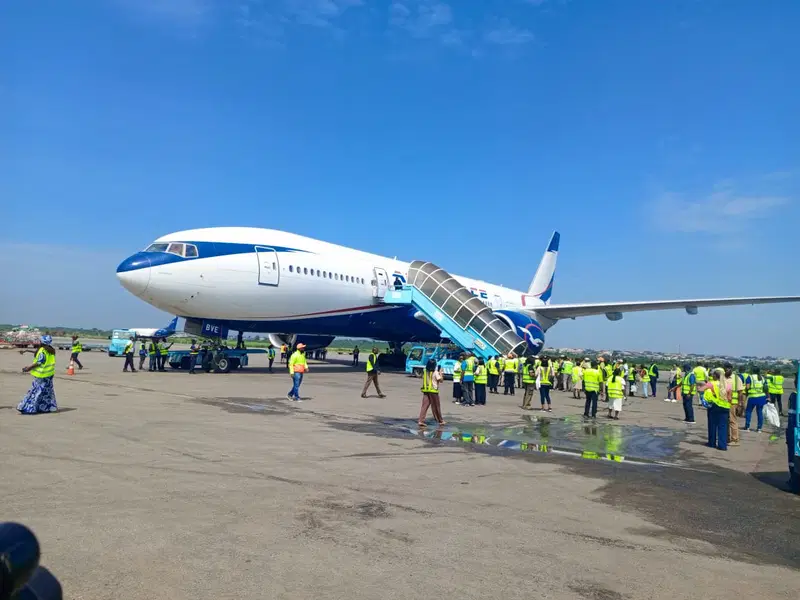
Nigerians evacuated from South Africa have arrived this morning safely in Lagos.
The evacuation comes amid growing concerns over the safety of Nigerians residing in South Africa following reports of violence and attacks on foreign-owned businesses and communities.
The evacuees arrived at the Murtala Muhammed International Airport, Lagos, at about 10:15 a.m. on Thursday aboard an Air Peace aircraft.
The return flight is part of a coordinated evacuation effort by the Federal Government in response to renewed attacks targeting foreign nationals in South Africa.
The Minister of State for Foreign Affairs, Ambassador Sola Enikanolaiye, was expected to receive the returnees upon arrival at the airport.
The Federal Government had earlier assured that it would continue to engage South African authorities to ensure the protection of Nigerians and prevent further escalation of tensions.
News
NLC President Joe Ajaero wins Arthur Svensson International award for worker’s rights
Speaking at the award ceremony in Oslo, Norway, yesterday , Ajaero said that the honour was not a personal achievement but recognition of the struggles of workers across Nigeria.
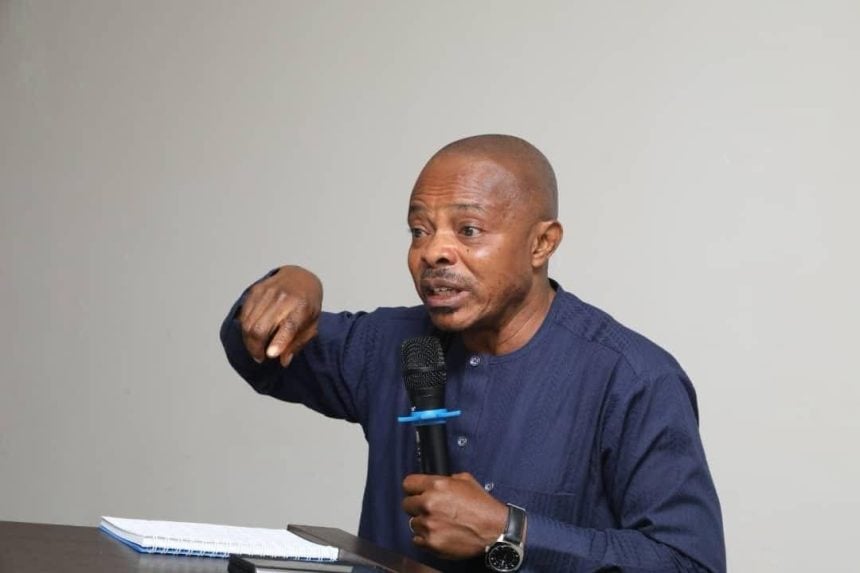
•Joe Ajaero
President of the Nigeria Labour Congress (NLC), Joe Ajaero, has been honoured as the 2026 laureate of the Arthur Svensson International Award for his courage and commitment to defending workers’ rights.
The award is presented to individuals who have demonstrated exceptional courage, strategic acumen and an unwavering commitment to defending workers’ rights and trade union freedoms worldwide.
Speaking at the award ceremony in Oslo, Norway, yesterday , Ajaero said that the honour was not a personal achievement but recognition of the struggles of workers across Nigeria.
“I stand before you today not as a man, but as a symbol, a true symbol of millions of Nigerian workers who wake up every morning not just to the smell of tear gas, the sound of sirens, and the cold silence of a state that preys on its own people but who go to work hungry and come back hungrier more emasculated than before they left for work,” he said.


World Cup 2026 kicks off today June 11

Davido uses W’Cup stage to demand action for abducted Nigerian pupils

BREAKING: House of Reps Unveils New Minority Leader

Tech Expert, Zuckerberg trains with UFC champions, Adesanya, Alexander

Organ Trafficking: Ekweremadu bags 10 years in UK prison

SAINT OBI: Between his marriage and his death
-

 Politics3 days ago
2027: Lagos APC picks Damilola as Hamzat ‘s Deputy Governor
-

 Business1 day ago
UBA wins 2026 ‘Banker Technology’ award for AI innovation
-

 News3 days ago
BREAKING: Three Feared Dead, Several Injured as Train Derails in Agbor, Delta State
-
 News3 days ago
FG Approves Payments To 1,240 Contractors, Targets SMEs With Verified Claims
-

 News2 days ago
Nigerian labour leader dies while attending Geneva conference
-
 Health1 day ago
Ebola: President Tinubu approves N10bn to strengthen NCDC preparedness
-
 Sports1 day ago
Olympic qualifier: Comoros to face Super Falcons following 30-0 victory over Sudan
-

 Business2 days ago
Exchange Rates Today Tuesday June 9,2026