
International
64 dead in Papua New Guinea tribal violence

by Wale Ewedimi
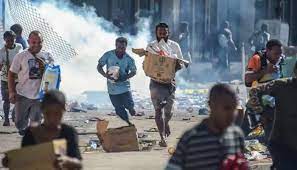
Sixty-four bloodied bodies have been found along a stretch of road in Papua New Guinea’s remote highlands, police said Monday, a gruesome escalation of long-running violence between local warring tribes.
The victims were believed to be tribal fighters who were ambushed by a rival group in the early hours of Sunday.
The incident occurred near the town of Wabag, about 600 kilometres (370 miles) northwest of the capital Port Moresby.
The rugged and lawless area has for years been the scene of tit-for-tat mass killings between rival Sikin, Ambulin, Kaekin and other tribesmen.
Graphic police images from the scene showed stripped and bloodied bodies lying by the side of the road and piled up on the back of a flatbed truck.
Some men had limbs hacked and were left naked by the road with beer bottles or cans placed on their chests.
Police on Monday said gunfights were ongoing in nearby valleys and bodies were still being recovered from bushland near the road.
“We believe there are still some bodies… out there in the bush,” Assistant Commissioner of Police Samson Kua said.
Clans have fought each other in Papua New Guinea’s highlands for centuries, but an influx of mercenaries and automatic weapons has made clashes more deadly and escalated the cycle of violence.
Kua said the gunmen had used a veritable armoury, including SLR, AK-47, M4, AR15 and M16 rifles, as well as pump-action shotguns and home-made firearms.
– Mass killings –
The province’s acting police commander Patrick Peka said many of the dead were believed to be mercenaries — men who roam the countryside offering to help tribes settle scores with their rivals.
“The police and government cannot do much when leaders and educated elites supply arms, ammunitions and engage the services of gunmen from other parts of the province,” Peka said.
Papua New Guinea’s government has tried suppression, mediation, gun amnesties and a range of other strategies to control the violence, with little success.
The military had deployed about 100 troops to the area, but their impact has been limited and the security services remain outnumbered and outgunned.
The killings often take place in remote communities, with attackers launching raids or ambushes in revenge for previous attacks.
– ‘Very disturbing’ –
Civilians, including pregnant women and children, have been targeted in the past.
The murders are often extremely violent, with victims hacked with machetes, burned, mutilated or tortured.
Police privately complain that they do not have the resources to do the job, with officers so badly paid that some of the weapons that end up in the hands of the attackers have come from the police force.
Opponents of Prime Minister James Marape’s government on Monday called for more police to be deployed and for the force’s commissioner to resign.
Papua New Guinea’s population has more than doubled since 1980, placing increasing strain on land and resources and deepening tribal rivalries.
Anthony Albanese, the prime minister of neighbouring Australia, on Monday described the incident as “very disturbing”.
“We are providing considerable support, particularly for training police officers and for security in Papua New Guinea,” he told public broadcaster ABC.
“We remain available to provide whatever support we can.”






International
Brazil’s Lula Wins Fourth Term In Presidential Runoff
Flávio Bolsonaro rejected the runoff result, describing it as “inexplicable” and calling for the election to be annulled.


Brazil’s left-wing President Luiz Inácio Lula da Silva has won a fourth term in office after defeating right-wing challenger Flávio Bolsonaro in a closely fought presidential runoff.
The 80-year-old secured just under 52 per cent of the vote, overturning Bolsonaro’s first-round lead in a surprise victory that runs against a wider shift towards right-wing leadership across Latin America.
Addressing cheering supporters in São Paulo, Lula thanked voters for what he described as their defence of Brazilian democracy.
The victory follows a bitter election campaign between the veteran left-wing leader and Bolsonaro, whose father, former President Jair Bolsonaro, is serving a prison sentence under house arrest for plotting a coup after losing the previous presidential election.
Flávio Bolsonaro rejected the runoff result, describing it as “inexplicable” and calling for the election to be annulled.

Four Philippine Air Force pilots died Friday after two SF-260 trainer aircraft collided mid-air during a training flight and crashed at Fernando Air Base in Lipa City, Batangas, south of Manila, the air force confirmed Saturday.
The accident occurred at about 3:51 p.m. local time on October 23, 2026. Both single-propeller planes went down within the base perimeter. No other casualties were reported on the ground.
Philippine Air Force spokesman Colonel Alvin Capinguian (also referred to as Alvin Jay Capinguian) said the aircraft were involved in a training flight. Officials with knowledge of the incident, speaking anonymously, and local reports confirmed the planes collided while flying at low altitude. Some accounts noted they were part of a larger formation or flyby rehearsal, with other aircraft landing safely.
The air force described it as an “aviation accident” and said an investigation is underway to determine the cause. As a precaution, the entire fleet of SF-260 aircraft has been temporarily grounded. The air force is coordinating assistance with the families of the deceased and asked the public to respect their privacy. One of the pilots was later identified in some reports as 1st Lt. Angeleo Adrian Peñaflor.
The SF-260 is a light Italian-designed trainer used by the Philippine Air Force. The incident is the latest fatal crash involving the type; two pilots were killed in a similar SF-260 training accident in Benguet province in May.
International
“Mother of all bombs,” Trump Plans To Hit Iran
The 21,600-pound airburst weapon is designed to affect surface targets over a wide area and has so far not been deployed by the U.S. in previous strikes on targets inside Iran. It was used in Afghanistan in 2017 during the previous Trump administration.
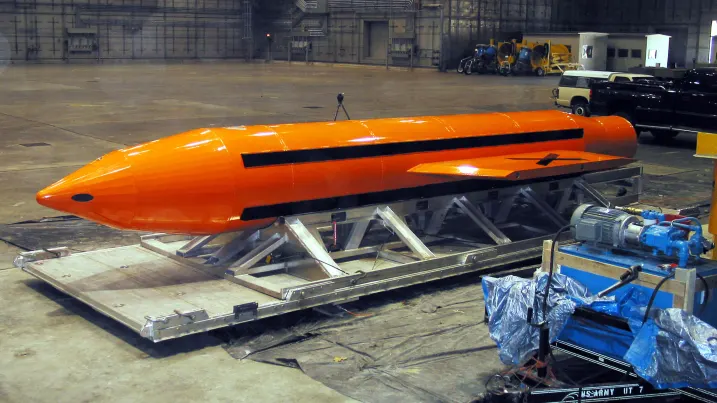
The U.S. military is considering use of the GBU-43/B Massive Ordnance Air Blast (MOAB) bomb if it resumes strikes inside Iran, CNN reported Thursday, citing U.S. officials.
The 21,600-pound airburst weapon is designed to affect surface targets over a wide area and has so far not been deployed by the U.S. in previous strikes on targets inside Iran. It was used in Afghanistan in 2017 during the previous Trump administration.
Trump said Oct. 8 that he would not resume U.S. strikes on Iran before the Nov. 3 midterm elections, while attacks on shipping near the Strait of Hormuz and deadly Houthi strikes in Saudi Arabia have raised regional tensions.
Iranian Parliament Speaker Mohammad Bagher Ghalibaf said Tehran will combine military capabilities and negotiations to press its demands.


Nigeria’s First Imported Ebola Patient Moved to Switzerland

Dangote Refinery’s IPO Ends Tomorrow

Ebola: Nigeria Sends Back Swiss Woman Via Medivac Plane

BREAKING: Lagos Govt Declares Today, Thursday Work-Free to Mark 2026 Ìṣẹ̀ṣe Day

Tech Expert, Zuckerberg trains with UFC champions, Adesanya, Alexander

Organ Trafficking: Ekweremadu bags 10 years in UK prison
-

 Politics3 days ago
2027 presidential election: Tinubu’s Northern test begins today
-
 Health3 days ago
Ebola patient in Abuja showing signs of recovery – FG
-

 News21 hours ago
BREAKING: Former Arise News Anchor, Constance Ikokwu Appointed NDC National Campaign Council Spokesperson
-

 Business19 hours ago
Dangote Visit London Stock Exchange Ahead of November Cement Listing
-

 Health1 day ago
EBOLA: Lagos Heightens Watch at Airports After Abuja Case
-

 Business20 hours ago
Naira To Dollar, Pound, Euro…Rate Monday, October 26
-

 Entertainment3 days ago
JUST IN: Another Nollywood Actor, Dies After Brief Illness
-

 International3 days ago
JUST IN: Four Pilots Die After Mid-Air Collision of Military Planes in Philippine