News
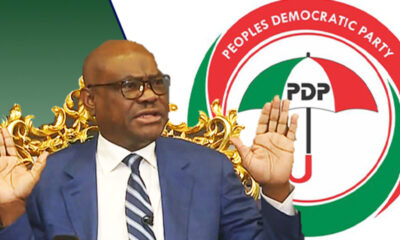
We are ready to receive Wike into APC says Party chieftain
A chieftain of the All Progressives Congress, APC, in Rivers State, Chief Tony Okocha has said the party is “ready to receive” the immediate past governor of the state, Nyesom Wike when he decides to defect to the ruling party.
This is coming amid speculations that Wike who apparently worked to ensure the victory of President Bola Tinubu during the February 25 presidential election, is getting set to dump the Peoples Democratic Party, PDP.
Wike and some of his loyalists in the opposition party had been accused of lobbying for ministerial positions in Tinubu’s government.
The former governor had also confirmed that he is ready to serve if appointed by President Tinubu.
Tony Okocha, a former Chief of Staff, Rivers State Government House, who made the remarks about Wike’s possible defection at a news briefing in Port Harcourt on Thursday, said the former governor has the right to join any party of his choice.
“In the leadership of the Tinubu family in Rivers State, we are at peace 100 per cent with His Excellency, Barr Nyesom Wike, the immediate past Governor of Rivers State as our leader”, he added.
Business
Dangote, NMDPRA CEO’s Feud: Ahmed disclaims Reaction in the News
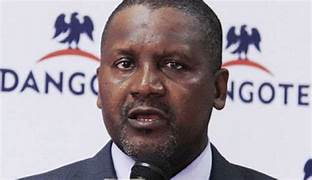
Engr. Farouk Ahmed, Chief Executive of the Nigerian Midstream and Downstream Petroleum Regulatory Authority (NMDPRA), has issued a disclaimer distancing himself from a purported response circulating online regarding recent corruption allegations levelled against him by billionaire businessman Aliko Dangote.
In a statement titled “DISCLAIMER/CLARIFICATION” personally signed by Ahmed, he categorically denied authoring or authorising any prior public response to the claims.
He said: “My attention has been drawn to a purported response I was said to have made on the recent allegations against my person,” the statement read.
“I hereby state categorically that the so-called statement did not emanate from me.
“Ahmed acknowledged awareness of what he described as “wild and spurious allegations” targeting him and his family, which have sparked significant public attention. However, citing his role as regulator of a sensitive industry, he said he has deliberately avoided engaging in public exchanges or “brickbats.”
“Thankfully, the person behind the allegations has taken it to a formal investigative institution,” Ahmed noted. “I believe that would provide an opportunity to dispassionately distill the issues and to clear my name.
“The disclaimer comes amid escalating tensions in Nigeria’s petroleum sector. Dangote, president of Dangote Industries Limited, recently petitioned the Independent Corrupt Practices and Other Related Offences Commission (ICPC) to investigate Ahmed over claims of living beyond legitimate means, including alleged multi-million-dollar expenditures on his children’s education abroad.
The ICPC has confirmed receipt of the petition and stated it will be duly investigated.Ahmed’s statement signals his preference for the matter to be resolved through official channels rather than media debates.
News
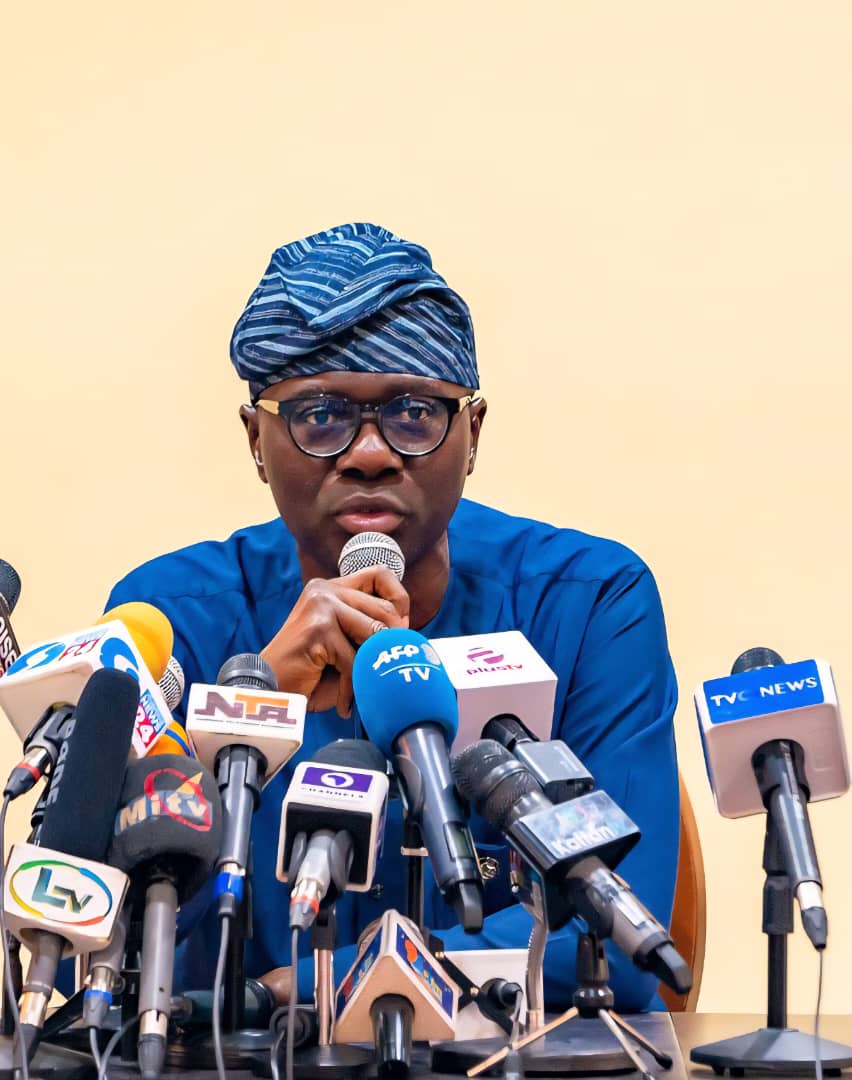
TIME Honors Lagos Governor Sanwo-Olu with Africa Special Award – Spotlight on Innovation and Leadership
agos has long been one of Africa’s most complex and ambitious urban experiments — a megacity whose growth, pressures, and potential reflect the broader story of a rapidly urbanizing continent.
Today, more than 24 million people call Lagos home, making it not only Nigeria’s economic heartland but one of the most influential urban centres anywhere in the Global South.
Managing such a city requires more than routine governance; it demands vision, long-term planning, and a willingness to confront structural challenges head-on.
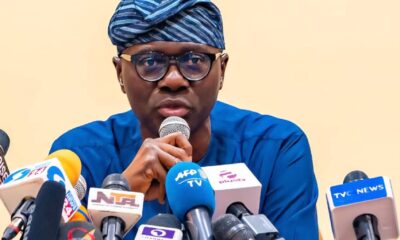
It is against this backdrop that TIME Africa presents the 2025 Special Recognition Award to His Excellency Babajide Olusola Sanwo-Olu, Governor of Lagos State.
The award honours his administration’s sustained contributions to infrastructure modernisation, urban renewal, and the ongoing transformation of Lagos into a globally competitive, 21st-century megacity.
Sanwo-Olu’s leadership has been guided by a wide-ranging development blueprint — the T.H.E.M.E.S.+ Agenda — which stands for Traffic Management & Transportation; Health & Environment; Education & Technology; Making Lagos a 21st Century Economy; Entertainment, Tourism & Culture; Security & Governance.
Together, these pillars have represented a holistic approach to modernising a city whose pace of growth could otherwise overwhelm its potential.
What Lagos has achieved in the past six years is not simply incremental improvement; it is structural and generational. And, increasingly, it offers a continent-wide roadmap for how African megacities can transition from overburdened to future-ready.
Re-Engineering Mobility: The Blueprint for a Modern African Transit System
Nowhere is Lagos’ transformation more visible than in its transportation sector — historically one of the city’s greatest pressure points.
The Lagos Rail Mass Transit: A Landmark for West Africa
The launch of the Lagos Rail Mass Transit (LRMT), beginning with the Blue Line, marks one of the most significant achievements in Nigerian infrastructure in decades. The rail system has already moved millions of passengers, reducing reliance on road traffic and offering an affordable, efficient alternative to the informal transport networks that have dominated Lagos for generations.
The Blue Line — fully powered by an independent electricity system — has become a proof of concept that large-scale rail is viable in West Africa. As new phases advance, the LRMT is expected to evolve into a multi-line network that will reshape commuting patterns for decades to come.
Road Expansion and Modernisation at Unprecedented ScaleSince 2019, the Sanwo-Olu administration has delivered hundreds of kilometres of new and rehabilitated roads, bridges, and linkways. These include:
172 completed roads across Lagos by mid-2024, 61 additional roads and five bridges were commissioned in 2025
Major interventions such as the Abiola-Onijemo Link Bridge, access roads in Lekki, upgrades in Ikorodu, Alimosho, Surulere, and Epe.
The ongoing transformation of the Lagos–Badagry Expressway, a strategic corridor connecting Nigeria to the wider West African region
Crucially, these projects were not centralised in wealthy districts. Local councils and historically underserved areas have received road renewals, showing a commitment to equitable infrastructure distribution.
A Model for Other African CitiesAcross Africa, cities are struggling with congestion, exponential population growth, and inadequate transport systems. Lagos demonstrates that:
Rail cannot be optional — megacities need multimodal transit.
Road investments must be strategic – linking economic nodes and residential clusters.Inclusive transport planning – reduces social disparities and widens economic access. Lagos is proving that transport reform is not only possible but essential for sustainable urban futures.
Health, Education & Social Infrastructure: Building a City for PeopleThe T.H.E.M.E.S.+ agenda extends beyond construction into the social fabric of Lagos, where population density places enormous pressure on public systems.Strengthening Public Health Capacity.
The administration has overseen significant expansions in healthcare access, including: Upgraded maternal and child-care facilities.
New emergency and trauma centresGreater investment in medical equipment, specialist training, and diagnostic capacity.
Environmental sanitation reforms and climate resilience programmes.
For a city that faces both communicable and non-communicable disease burdens, these reforms are foundational to long-term resilience.
Education & Digital Future-Readiness
Lagos has also prioritised education and digital advancement. Key achievements include:
Classroom construction and rehabilitation across multiple districtsIntroduction of new technology learning toolsInvestments in teacher training.
The expansion of tech hubs and digital infrastructureNotably, the state has attracted over US$1.2 billion in digital infrastructure investment, including data centres and broadband expansion — positioning Lagos as a future African tech capital.
Economic Transformation: Steering Lagos Toward a 21st Century Economy
Lagos accounts for a significant share of Nigeria’s GDP, yet the city continues to pursue deeper diversification and global competitiveness.
Industrial Expansion & Job Creation Under Sanwo-Olu’s leadership:
New industrial facilities and logistics hubs have been launched across Ikorodu, Badagry, Lekki and Epe. Creative industries — from film to tourism — have been supported through targeted investment and infrastructure.
Government reforms aim to improve ease of doing business and reduce bureaucratic bottlenecks.
These initiatives align with Lagos’ ambition not only to expand its economy, but to shift into higher-value sectors that can withstand global shocks.
A Governance Model Focused on Inclusion
The state’s budgeting approach — with recent proposals labelled the Budget of Shared Prosperity — highlights a deliberate move toward balancing growth with human development. The focus is on:
Infrastructure consolidation, Youth Empowerment, Community revitalisation, Public safety, Digital transformation, Governance reforms have modernised public service delivery and strengthened transparency, aiming to rebuild confidence in state institutions.
Lessons for the Continent: Lagos as a Playbook for African Megacities Urbanisation in Africa is accelerating faster than anywhere else on Earth. By 2050, African cities will house more than one billion people.
The challenges facing Lagos today are the challenges others will face tomorrow.
Sanwo-Olu’s Lagos offers several transferable lessons:
1. Integrated Urban Mobility Is Non-NegotiableCities like Nairobi, Kinshasa, Dar es Salaam, Cairo, Addis Ababa and Johannesburg can draw from Lagos’ multimodal strategy. A combination of rail, modernised roads, BRT, ferry services and last-mile connectivity is key to reducing congestion and improving productivity.
2. Urban Renewal Must Be HolisticTransport alone cannot stabilise a megacity.Lagos shows that health, education, environmental policy, flood control, and economic development must advance together.
3. Public–Private Partnerships Are CatalystsLagos’ ability to attract global digital infrastructure investment demonstrates how public policy can unlock private sector capacity.
4. Infrastructure Must Reach the UnderservedUrban inequality is one of Africa’s biggest challenges. By distributing road upgrades, bridges, and public services across multiple districts, Lagos illustrates the importance of equitable development.
5. Long-Term Vision MattersThe T.H.E.M.E.S.+ agenda provides a structured, multi-year roadmap — a model many African cities lack.Continuity of policy is essential for large-scale infrastructure success.
A City Still in Motion
While Lagos has made significant strides, its transformation is still unfolding. Challenges remain — from population pressure to maintenance demands, environmental risks, and the complexity of sustaining megacity-scale infrastructure. But the foundations being laid today will determine the city’s trajectory for decades.
Sanwo-Olu’s administration has positioned Lagos as a laboratory of African urban possibility: a place where large-scale public projects are delivered, where ambition is matched by execution, and where the future of African megacities is being imagined in real time.
Conclusion: Why TIME Africa Honours Governor Babajide Sanwo-Olu
The TIME Africa Special Recognition Award is presented to Governor Babajide Olusola Sanwo-Olu for: aaHis leadership in delivering large-scale, high-impact infrastructureHis commitment to a more inclusive, modern Lagos.
His role in steering one of the world’s most dynamic megacities toward global competitiveness.
His administration’s multidimensional approach to urban governance, mobility, health, technology, and economic growthIn elevating Lagos, Sanwo-Olu is contributing to a broader continental narrative: Africa’s cities are not waiting to be defined by the world — they are defining themselves.
Lagos’ transformation is far from complete, but its trajectory is unmistakable. As African nations look ahead to an era of unprecedented urbanisation, Lagos stands as both a model and an inspiration — a city proving that with vision, strategy, and sustained investment, the future can be reshaped for millions.
News
Ex -Chief Justice Muhammad Tanko is dead
Muhammed died at a hospital in Saudi Arabia, about two weeks to his 72 birthday on December 31.
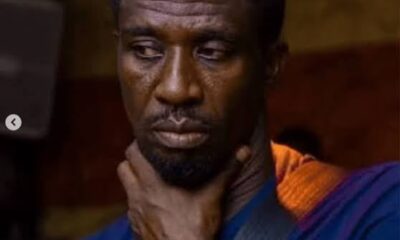
A former Chief Justice of Nigeria ( CJN), Justice Ibrahim Tanko Muhammad, is dead. He was aged 71.
Muhammed died at a hospital in Saudi Arabia, about two weeks to his 72 birthday on December 31.
Born on 31 December 1953 in Doguwa, Giade Local Government Area of Bauchi State, Justice Muhammad was a Fulani and a native of Bauchi State.
His judicial career spanned more than four decades, during which he served at various levels of Nigeria’s judicial system.
Bauchi state governor, Bala Mohammed, confirmed Muhammad’s passing in a condolence message issued by his special adviser on media and publicity, Mukhtar Gidado.
“Justice Ibrahim Tanko Muhammad exemplified the qualities of a patriotic Nigerian who devoted his life to the service of justice and the advancement of our great nation.
His passing is a significant loss, not only to Bauchi State but to the Nigerian judiciary and the rule of law,” the statement reads.
-
News2 days agoSupreme Court rules Tinubu has the constitutional power to declare a state of emergency
-
Business2 days agoHow To Maintain Electricity Availability in 2026 – CPPE
-
Business2 days agoDangote appoints ex-CBN director Mahmud Hassan, as chief economist
-
News3 days agoBREAKING: Private Jet crash Lands in Kano (Video)
-
Entertainment2 days agoCity FM 105.1 Unveils Plans for Praise in the City 2025
-
Sports2 days agoAFCON 2025: Super Eagles hit the ground running in Cairo training camp
-
News20 hours agoNews Commentary: Senator Godswill Akpabio ” Kpai in London”, Another Fake News
-
News15 hours agoTranscorp Hotels Plc Appoints Dr. Awele Elumelu as New Board Chair