
News
Understanding Property Titles and Documents in Nigeria by Dennis Isong


Being a property owner in Nigeria is a big accomplishment and a wise investment.
But managing the complexity of property ownership necessitates a thorough comprehension of papers and property titles. These records are vital for preserving property rights since they act as official proof of ownership.
This article explores the several kinds of property titles and documents that are available in Nigeria, their significance, and the ways in which they support safe real estate transactions.
1. Certificate of Occupancy (C of O):
A Certificate of Occupancy is perhaps the most crucial document when it comes to land ownership in Nigeria.
It is issued by the state government and serves as proof of ownership and the right to use the land for a specific purpose.
The process of obtaining a C of O involves the applicant submitting an application to the state government, which then conducts due diligence to verify the legitimacy of the claim to the land. Once issued, the C of O grants the holder exclusive rights to use and develop the land.
2. Deed of Assignment:
A Deed of Assignment is a legal document that transfers ownership of property from one party to another.
It typically outlines the details of the transfer, including the names of the parties involved, a description of the property, and any conditions or considerations attached to the transfer. This document is crucial for formalizing the sale or transfer of property rights and should be duly executed and registered with the appropriate government authority to ensure its validity.
3. Deed of Conveyance:
Similar to a Deed of Assignment, a Deed of Conveyance is used to transfer ownership of property. However, unlike the Deed of Assignment, which is commonly used for the transfer of leasehold interests, the Deed of Conveyance is used for the transfer of freehold interests.
It is typically executed between the seller (grantor) and the buyer (grantee) and includes details such as the purchase price, description of the property, and any covenants or warranties.
4. Survey Plan:
A Survey Plan is a document that shows the accurate boundaries and measurements of a piece of land. It is prepared by a licensed surveyor and is essential for verifying the exact location and dimensions of a property.
A Survey Plan is often required during the process of obtaining a C of O or when transferring property ownership to ensure that there are no boundary disputes or encroachments.
5. Power of Attorney:
A Power of Attorney is a legal document that grants someone else the authority to act on behalf of the property owner. It is commonly used in situations where the property owner is unable to handle their affairs due to illness, absence, or other reasons.
A Power of Attorney can be limited or general in scope, depending on the specific powers granted to the attorney-in-fact.
The Significance of Property Titles: Safeguarding Your InvestmentLegal Ownership:
Property titles serve as incontrovertible evidence of legal ownership.
They establish the rightful owner of the property and delineate the boundaries of their ownership rights. Without a valid title, one cannot claim ownership of a property, leaving them vulnerable to disputes and challenges regarding ownership.
Protection of Property Rights:
Property titles provide protection against encroachments and unauthorized claims to the property.
They offer a legal shield against potential disputes, ensuring that the owner’s rights are recognized and respected by others.
With a clear title, property owners can confidently assert their ownership rights and defend against any attempts to infringe upon them.
Without a valid title, one cannot claim ownership of a property, leaving them vulnerable to disputes and challenges regarding ownership.
Facilitation of Transactions:
Clear and valid property titles facilitate smooth and efficient real estate transactions. When buying or selling property, a clean title provides assurance to both parties that the transaction is legitimate and free from any encumbrances or defects. It instills confidence in buyers and lenders, making it easier to secure financing and close the deal.
Legal Certainty:
Property titles provide legal certainty by establishing a chain of ownership that can be traced back through time. They document the history of the property, including previous transfers of ownership, mortgages, liens, and other encumbrances.
This historical record ensures transparency and clarity regarding the property’s status, enabling informed decision-making by prospective buyers and lenders.Access to Legal Remedies:In the event of a dispute or legal challenge regarding property ownership, a valid title provides the basis for seeking legal remedies and resolution.
Property owners with clear titles can avail themselves of legal avenues to defend their rights and rectify any discrepancies or irregularities affecting their ownership.
This access to legal recourse is essential for protecting investments and preserving property rights.Peace of Mind: Perhaps most importantly, property titles offer peace of mind to owners, knowing that their investment is secure and their ownership rights are legally recognized.
With a clear title in hand, property owners can confidently enjoy the benefits of homeownership, such as occupancy, development, and transferability, without fear of adverse claims or challenges.
The Implications of Not Acquiring Property Titles in Nigeria: Risks and Consequences
● Lack of Legal Ownership:
One of the most significant implications of not acquiring property titles is the lack of legal ownership. Without proper documentation, individuals cannot assert their ownership rights over the property, leaving them vulnerable to claims by other parties. This lack of legal ownership can lead to disputes, litigation, and the loss of investment in the property.
● Insecurity of Tenure:
Property titles provide security of tenure, guaranteeing the owner’s right to occupy and use the property without fear of eviction or interference. Without proper titles, individuals face uncertainty regarding their tenure, making them susceptible to arbitrary eviction or displacement by third parties claiming ownership rights. This insecurity of tenure can disrupt lives, businesses, and communities, leading to social and economic instability.
● Difficulty in Transacting:
Acquiring property titles is essential for facilitating real estate transactions, such as buying, selling, or leasing property. Without clear titles, individuals encounter difficulties in transacting, as potential buyers or lenders may be reluctant to engage in deals involving properties with uncertain ownership status. This can impede economic development and hinder investment in the real estate sector.
● Limited Access to Credit:
Property titles serve as collateral for obtaining loans and credit from financial institutions. Without proper titles, individuals have limited access to credit, as lenders are unwilling to accept properties with unclear ownership as collateral. This lack of access to credit hampers economic growth and development, as it constrains individuals’ ability to invest in property development and other productive ventures.
● Vulnerability to Fraud and Exploitation:
In the absence of property titles, individuals are vulnerable to fraud and exploitation by unscrupulous actors seeking to exploit their lack of legal protection. Fraudulent schemes such as land grabbing, forgery of documents, and illegal sales thrive in environments where property titles are not properly established. This exposes unsuspecting individuals to financial loss and legal entanglements.
● Legal and Regulatory Risks:
Failure to acquire property titles exposes individuals to legal and regulatory risks, as they may be in violation of laws and regulations governing property ownership and transactions. Government authorities may take enforcement actions against individuals occupying or developing property without proper titles, leading to fines, penalties, or even demolition of structures.
▪︎Dennis Isong is a TOP REALTOR IN LAGOS.
He Helps Nigerians in Diaspora to Own Property In Lagos Nigeria STRESS-FREE.
For Questions WhatsApp/Call 2348164741041


Former Delta State Governor Dr. Emmanuel Eweta Uduaghan is dead. He passed away on the morning of Monday, October 19, 2026, at the age of 71, after a period of illness.
A family statement announced his death, describing it as a devastating loss. Uduaghan, a medical doctor, served as Delta State Commissioner for Health (1999–2003) and Secretary to the State Government (2003–2007) before becoming governor from 2007 to 2015. He was known for contributions to infrastructure and human capital development in the state.
Delta State Governor Sheriff Oborevwori has expressed deep sadness over the passing. In a condolence message, he described Uduaghan as a detribalised leader whose service left a lasting mark on Delta State.
Oborevwori extended heartfelt condolences to Uduaghan’s wife, Roli, his children, the Uduaghan family, the Itsekiri nation, and the people of Delta State, praying for the peaceful repose of his soul.
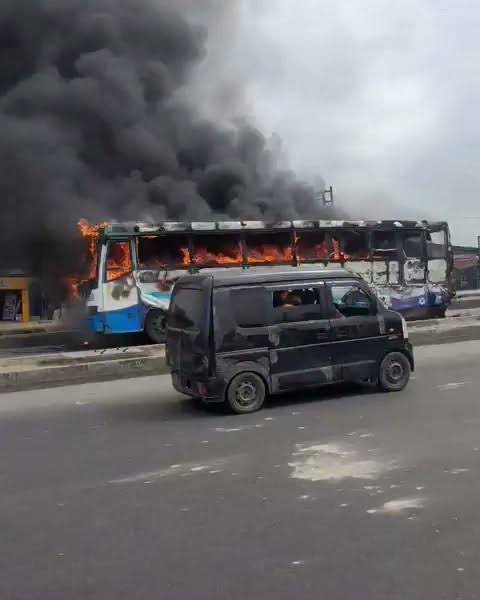
An angry mob has set a Bus Rapid Transit (BRT) bus on fire after it reportedly crushed a commercial motorcyclist to death at Ogolonto Bus Stop along Ikorodu Road in Lagos State.
The incident occurred on Friday, October 16, 2026. Eyewitness accounts and social media reports indicate that the motorcyclist was riding alone along the restricted BRT lane when the collision happened. He died at the scene.
Enraged residents and youths then attacked the bus driver and set the vehicle ablaze. Police officers and officials of the Lagos Neighbourhood Safety Corps (LNSC), who were nearby, intervened promptly and rescued the driver unharmed.
The identity of the deceased motorcyclist and the exact circumstances of the crash had not been officially confirmed at the time of filing this report. It was also unclear whether any arrests had been made in connection with the burning of the bus.
News
ARISE News Wins Seven Honours At Nigerian Broadcasters Merit Awards
The awards recognised the network’s achievements in television journalism and programming, with ARISE News winning the Best TV Channel (Viewer’s Choice) category.


• ARISE News Anchor and host of What’s Trending Ojy Okpe was named Best Newscaster (TV – Female)
ARISE News has emerged as one of the major winners at the just ended Nigerian Broadcasters Merit Awards (NBMA).
ARISE News won seven honours across television broadcasting, news reporting, presentation and production during the ceremony.
The awards recognised the network’s achievements in television journalism and programming, with ARISE News winning the Best TV Channel (Viewer’s Choice) category.
The network’s flagship breakfast programme, The Morning Show, also won the Best TV Talk Show award, further strengthening its recognition in television broadcasting.
ARISE News Anchor and host of What’s Trending Ojy Okpe was named Best Newscaster (TV – Female).
Rufai Oseni was named Nigerian Broadcaster of the Year (Male), while Vimbai Mutinhiri-Ekpeyong received the Nigerian Broadcaster of the Year (Female) award.
The recognition extended to the network’s newsroom, with Ovieteme George winning Best TV News Reporter (Male) for his contributions to television news reporting.
Behind the camera, Sam Adeyemi received the Best Camera Operator/Cinematographer award, recognising his work in television production and visual storytelling.


JPMorgan Eyeing Entry Into Nigeria’s Banking Industry

How I steal ATM users’ PINs, defraud them

NCC, CBN To Warn Companies By Flagging Fraudulent Phone Numbers

BREAKING: Lagos Govt Declares Today, Thursday Work-Free to Mark 2026 Ìṣẹ̀ṣe Day

Tech Expert, Zuckerberg trains with UFC champions, Adesanya, Alexander

Organ Trafficking: Ekweremadu bags 10 years in UK prison
-

 News2 days ago
JUST IN: Ex-Delta Gov Uduaghan Dies at 71, Oborevwori Mourns
-

 Sports2 days ago
Mbappé wins Onze d’Or award for 2025/26 season
-
 Business2 hours ago
Currency Words You Should Know
-

 Sports2 days ago
Ronaldo Gets 30-Day Suspension For Portugal Camp Walkout
-

 Business2 hours ago
Naira Exchange Rates Wednesday, October 21, 2026
-
 Business2 hours ago
NCC, CBN To Warn Companies By Flagging Fraudulent Phone Numbers
-

 Health16 hours ago
BREAKING: Nigeria Confirms First Ebola Case
-
 Business56 minutes ago
How I steal ATM users’ PINs, defraud them