
Business
Top Ten Ponzi Schemes That Have Stolen From Nigerians
From MMM to CBEX, here’s a rundown of the most notable scams that have drained billions from Nigerians since 2016.


Despite repeated warnings by the Securities and Exchange Commission (SEC) and the Central Bank of Nigeria, , Nigerians continue to fall victim to Ponzi schemes promising quick returns.
From MMM to CBEX, here’s a rundown of the most notable scams that have drained billions from Nigerians since 2016.
1. MMM Nigeria (2016)
The most infamous Ponzi scheme in Nigeria’s history, MMM Nigeria promised returns of up to 30% within 30 days. The scheme attracted millions before it crashed in December 2016, leaving countless investors in financial ruin.
2. Ultimate Cycler, Get Help Worldwide, Twinkas, iCharity Club, Loopers Club, Givers Forum (2016)
These platforms emerged in the shadow of MMM’s popularity. Using referral networks and cycling models, they lured thousands with mouthwatering promises, only to vanish within months.
3. NNN Nigeria, MMM Cooperation, GCCH, RevoMoney (2017)
After the MMM crash, copycat schemes took over, rebranding old models with new names. NNN and MMM Cooperation tried to ride on the MMM name, exploiting previous participants who still hoped to recover losses.
4. Bitclub Advantage, Million Money, Helping Hands International (2018)
These schemes masqueraded as crypto-based platforms or charity networks.
They capitalized on the growing interest in digital currencies but delivered the same outcome — massive losses.
5. Loom and Crowd1 (2019)
Viral social media campaigns fueled the rise of Loom and Crowd1. Promoters used WhatsApp and Facebook to promise “double your money” schemes that quickly collapsed when recruitment stalled.
6. InksNation, Lion’s Share, Baraza Multipurpose Cooperative (2020)
InksNation promised a digital currency that would end poverty but was shut down by the SEC. Baraza claimed to be a cooperative but operated like a classic Ponzi, while Lion’s Share mimicked MLM structures.
7. Racksterli, Eagle Cooperative, 86FB (2020–2021)
These platforms used influencer marketing and sports betting gimmicks. 86FB, in particular, gained popularity before crashing spectacularly, taking millions from investors.
8. FINAFRICA, Royal Q (Nigeria version), Ovaioza (2022)
FINAFRICA used the lure of forex trading. Royal Q posed as a crypto trading bot, and Ovaioza claimed to store and sell agricultural produce. All failed to deliver on promised returns.
9. CALA Finance, 6Dollars Investment, Sidra Investment, WealthBuddy, Compoundly (2023–2024)
These new-age platforms were heavily marketed online. Sidra was a clone scam, while others mimicked DeFi and crypto investment trends, using hype and bonuses to attract victims.
10. BitFinance Global and CBEX (2025)
In the latest wave, BitFinance Global and CBEX are among the schemes already causing financial pain in 2025.
They repeat the same patterns — false claims, unrealistic returns, and eventual disappearance.
(Words and Image credit: Vanguard )
Business
Dangote Refinery’s IPO Ends Tomorrow
“The level of investor interest reflects growing confidence in our business and in the strong financial results we have delivered,” the company said.

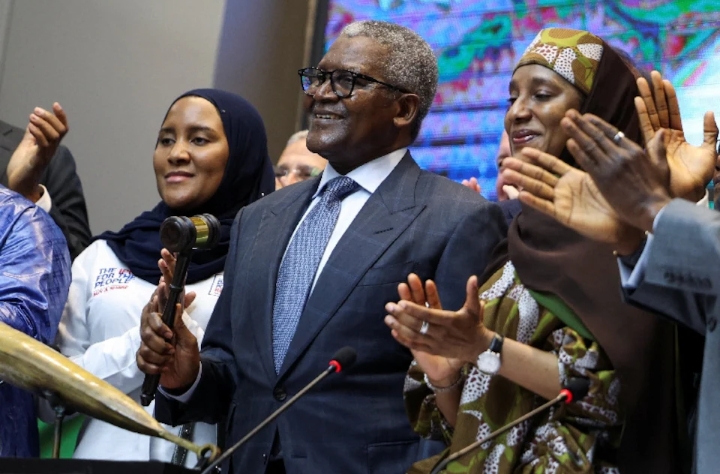
[File photo] Opening ceremony of Dangote Refinery’s IPO on the NGX, September 14,2026
Dangote Petroleum Refinery & Petrochemicals has confirmed that its Initial Public Offering (IPO) will close on Tuesday, 27 October 2026 as scheduled, with no extension.
In a statement, the management said that the IPO has become a historic ownership moment, an opportunity for Africans at home and abroad to own a stake in one of the continent’s most strategic industrial assets.
“Investors recognise that this refinery is not merely an energy asset. It is a platform for industrial growth, foreign-exchange generation, regional trade, energy security and economic development across Africa,” management said.
The offer was structured to ensure ordinary investors participate alongside institutions, broadening ownership of the world-class asset.
“The level of investor interest reflects growing confidence in our business and in the strong financial results we have delivered,” the company said.
Business
Dangote Visit London Stock Exchange Ahead of November Cement Listing
Unlike an initial public offering, a secondary listing would let Dangote Cement, already listed on the Nigerian Exchange, set up an additional presence in London.
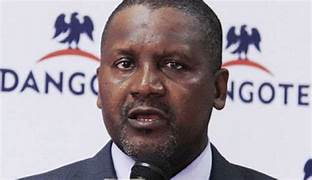
Aliko Dangote visited the London Stock Exchange on Friday, October 23, 2026, as Dangote Cement Plc prepares a proposed $1 billion share sale and a secondary listing in the United Kingdom.
The company is reportedly targeting November 2026 for the listing, subject to market conditions and regulatory approval.
A video circulating on social media captured the visit, with exchange officials and attendees welcoming Africa’s richest man.
The trip is part of efforts to pull international investment into his business empire.
The proposed deal could see Dangote Cement offer about 10% of its equity to international investors, potentially raising roughly $1 billion.
The final timetable is not fixed and remains subject to market conditions and regulatory requirements.
Unlike an initial public offering, a secondary listing would let Dangote Cement, already listed on the Nigerian Exchange, set up an additional presence in London.
That could raise the company’s visibility with international institutional investors, including pension funds, asset managers and other investment firms.
The share sale has not been completed. Its final structure, valuation and pricing are still subject to confirmation.
Business
Olagunju to head JPMorgan’s Proposed Nigerian Merchant Bank
The proposed bank would expand JPMorgan’s presence beyond its representative office in Lagos. It could undertake a broader range of regulated banking activities after securing a final licence.

The Central Bank of Nigeria has granted JPMorgan approval-in-principle to establish a merchant bank in Nigeria.
The regulator also approved Adedapo Adedayo Olagunju as Managing Director of the proposed JPMorgan Merchant Bank Nigeria Limited.
The approval came on Friday, October 23, 2026. The bank has not received its final operating licence.
Olagunju has led JPMorgan’s West African operations since 2018.
He is an Oxford-trained banker with more than two decades of experience in treasury management, financial markets, institutional banking and structured finance.
His appointment puts him in line to head the American bank’s proposed Nigerian merchant bank once final licensing is completed.
The CBN also approved four non-executive directors and three independent non-executive directors for the proposed institution.
The proposed bank would expand JPMorgan’s presence beyond its representative office in Lagos. It could undertake a broader range of regulated banking activities after securing a final licence.


FG Approves ₦70k Transport Allowance for Civil Servants

Suffocation, Overcrowding Kill 37 Niger Miners – Panel

Nigeria’s First Imported Ebola Patient Moved to Switzerland

BREAKING: Lagos Govt Declares Today, Thursday Work-Free to Mark 2026 Ìṣẹ̀ṣe Day

Tech Expert, Zuckerberg trains with UFC champions, Adesanya, Alexander

Organ Trafficking: Ekweremadu bags 10 years in UK prison
-

 News2 days ago
BREAKING: Former Arise News Anchor, Constance Ikokwu Appointed NDC National Campaign Council Spokesperson
-
 Business2 days ago
Dangote Visit London Stock Exchange Ahead of November Cement Listing
-

 International2 days ago
Brazil’s Lula Wins Fourth Term In Presidential Runoff
-
 Health2 days ago
EBOLA: Lagos Heightens Watch at Airports After Abuja Case
-
 Business2 days ago
Naira To Dollar, Pound, Euro…Rate Monday, October 26
-

 Health2 days ago
Ebola: Nigeria Sends Back Swiss Woman Via Medivac Plane
-
 Business2 days ago
History of Naira Revaluation and Devaluation (1973–2026) (Part 2)
-
News2 days ago
Sanwo-Olu: Opebi-Ojota Link Bridge Will Open Before Christmas