
Business
Oyetola Says CVFF Fund to be disbursed through Lending Institutions
The CVFF, established under the Coastal and Inland Shipping (Cabotage) Act of 2003, over two decades, was designed to empower Nigerian shipping companies through access to structured financing for vessel acquisition.

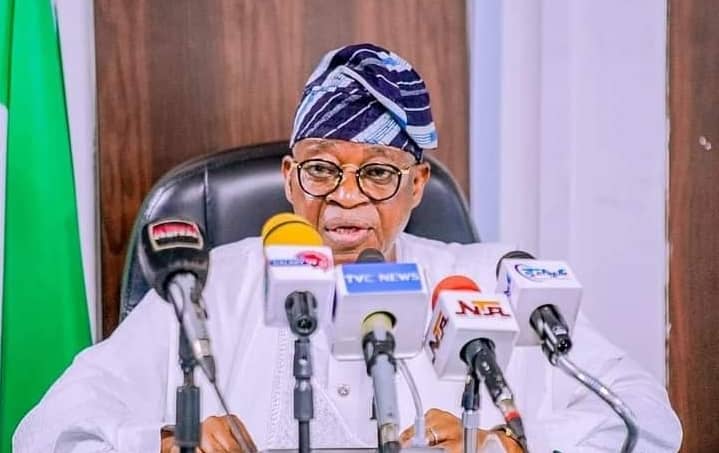
The Minister of Marine and Blue Economy, Adegboyega Oyetola, says that the Cabotage Vessel Financing Fund (CVFF) will be disbursed to eligible shipping companies through the government-approved lending institutions.
Oyetola said: ” Qualified applicants can access up to $25 million each at competitive interest rates to acquire vessels that meet international safety and performance standards.
The fund will be administered in partnership with carefully selected and approved primary lending institutions (PLIs), ensuring professional and efficient disbursement.”
Accordingly, Oyetola has directed the Nigerian Maritime Administration and Safety Agency (NIMASA) to commence the process that will lead to the long-awaited disbursement of the Cabotage Vessel Financing Fund (CVFF).
The CVFF, established under the Coastal and Inland Shipping (Cabotage) Act of 2003, over two decades, was designed to empower Nigerian shipping companies through access to structured financing for vessel acquisition.
However, successive administrations failed to operationalise the fund for indigenous shipping until now.
Oyetola, in a press statement by the Media and Communications Adviser to the Minister, Dr Bolaji Akinola, yesterday, lamented that for over 20 years, the CVFF remained a dormant promise.He said this is not just about disbursing funds but about rewriting a chapter in the nation’s maritime history, saying:
“Today, we are bringing it to life deliberately, transparently and strategically.”NIMASA, in alignment with the Minister’s directive, has already issued a marine notice inviting eligible Nigerian shipping companies to apply. “



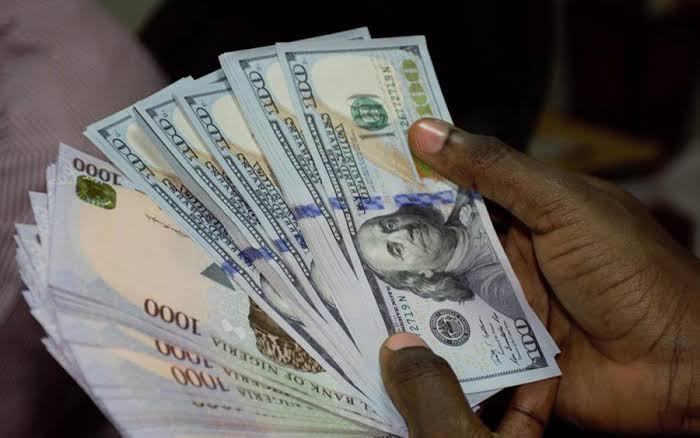
Olayemi Cardoso, Governor of the Central Bank of Nigeria has said that the country’s $54.87 billion foreign exchange reserves is strong enough to withstand pressures on the naira.
Cardoso gave the assurance during the 308th meeting of the Monetary Policy Committee, held yesterday,in Abja.
Responding to concerns about the reserves decline and pressure on the naira, Cardoso said that the movement is a normal and temporary market adjustment.
Cardoso said Nigeria’s reserves, between $54 billion and $55 billion, provide about 10 months of import cover.
That, he said, gives the country a substantial buffer against external shocks.“Buffers remain strong. $54 billion reserves is very substantial,” he said.
He acknowledged that reserves had fallen and the exchange rate had seen volatility.
He argued that the movements were not large enough to undermine Nigeria’s external position.
He assured that the apex bank would keep taking measures to preserve stability.
Cardoso linked part of the pressure to seasonal factors. Portfolio investors are adjusting positions towards the end of the year. Domestic businesses are hedging against possible foreign exchange movements ahead of the new year.
Business
Naira Exchange Rates, Wednesday, 25 Nov 2026
The black market (parallel market) dollar to naira rate is the most searched forex query in Nigeria.
BLACK MARKET RATES
US Dollar =₦1,445
British Pound= ₦1,870
EURO = ₦1,580
Canadian Dollar (CAD) = ₦950
Chinese Yuan (CNY) = ₦190
Ghanaian Cedi =₦100
South African Rand (ZAR)=₦ 70
UAE Dirham =₦ 350
West African CFA franc (XOF) = ₦ 2, 240
Central African CFA franc (XAF)=₦ 2,180
Australian Dollar (AUD)=₦ 820
Business
Naira falls 2.57% despite $1.30bn CBN intervention
The latest decline has raised questions about the effectiveness and sustainability of CBN interventions.
The naira weakened to N1,389.73 per dollar in the official foreign exchange market after a 2.57% weekly depreciation, despite an estimated $1.30 billion intervention by the Central Bank of Nigeria.
The currency had been moving towards N1,400 per dollar, renewing concerns about how long the CBN can defend it.
The decline comes as businesses and households prepare for higher dollar demand during Christmas.
Analysts warn that festive demand and spending ahead of the 2027 general elections could deepen pressure on the naira and push up prices for Nigerians.
CBN data showed the naira depreciated by 2.57% during the week, closing at N1,389.73 per dollar in the official market.
In the parallel market, the currency traded around N1,458 per dollar, with some market reports quoting rates as high as N1,468.
The latest decline has raised questions about the effectiveness and sustainability of CBN interventions.
Despite an estimated $1.30 billion injection into the foreign exchange market, demand from importers, investors and other participants continued to weigh on the currency.


El-Rufai makes u-turn on wiretapping

Katsina Suspends Emir of Daura Over Sexual Allegations By Polish Tourist

Mother, daughter crushed to death by truck in Abuja

BREAKING: Lagos Govt Declares Today, Thursday Work-Free to Mark 2026 Ìṣẹ̀ṣe Day

Tech Expert, Zuckerberg trains with UFC champions, Adesanya, Alexander

Why we Increase the 2025 Budget by ₦700bn – Bichi
-

 News3 days ago
Emir, 92, Under Probe For Alleged Palace Romance
-

 Business3 days ago
Naira Exchange Rates, Monday 23 Nov 2026
-
 News3 days ago
Tinubu Tasks APC on Winning Lagos in 2027 general elections
-

 Sports3 days ago
Zenith Bank/Delta Principals’ Cup kicks off November 26
-
 News2 days ago
Omo-Agege survives assassination attempts at campaign rally in Delta, four dead
-

 Health2 days ago
Medical Academy Warms Nigerians New COVID-19 Variant Spreading
-

 Politics3 days ago
Atiku: I’m in 2027 presidential race to win
-

 Sports2 days ago
Nigeria Lacks Infrastructure To Host FIFA World Cup – Infantino