
News
Tinubu Nominates Three New Board Members For Code of Conduct Bureau


President Bola Tinubu has nominated three new members to fill existing vacancies on the board of the Code of Conduct Bureau (CCB) as part of efforts to strengthen oversight mechanisms.
The nominations were communicated in a formal letter to Senate President Godswill Akpabio and disclosed in a statement by the President’s Special Adviser on Information and Strategy, Bayo Onanuga. The nominees are Alhaji Fatai Ibikunle (Oyo State), Kennedy Ikpeme (Cross River), and Justice Ibrahim Buba, a retired judge of the Federal High Court.
Established in 1979, the CCB oversees integrity within public service and enforces ethical compliance. The Bureau operates with a 10-member board, chaired by Dr. Abdullahi Usman Bello, who was sworn in by President Tinubu on October 23, 2024. Other board members include Barr. Muritala Aliyu Kankia, Hon. E.J. Agbomayinma, Barr. Ben Umeano, Prof. Juwayriyya Badamasiuy, Bulus I. Zephaniah, and Hon. Abdulsalam Taofiq Olawale.
Tribunal Chairmanship Controversy
The nominations come amid a leadership controversy at the Code of Conduct Tribunal (CCT), with allegations of corruption and misconduct against its chairman, Umar Danladi. Both chambers of the National Assembly have moved to address the matter.
Last Wednesday, the Senate, led by Majority Leader Opeyemi Bamidele, cited Section 157 (1) of the Nigerian Constitution to initiate Danladi’s removal. Similarly, the House of Representatives invoked paragraph 17 (3), Part 1, Fifth Schedule of the Constitution to back its call for the chairman’s dismissal.
However, during Tuesday’s plenary, the Senate admitted citing the wrong constitutional provision. Senate Leader Bamidele clarified that the applicable laws are Section 17 (3) of the Nigerian Constitution and Section 22 (3) of the Code of Conduct Bureau and Tribunal Act, 2004. These provisions require a two-thirds majority vote from both legislative chambers to formally advise the President on removing a public officer.
“The Senate erroneously based its resolution on Section 157 (1), which does not apply to the chairman of the Code of Conduct Tribunal. The correct provisions are Section 17 (3) of the Constitution and Section 22 (3) of the Code of Conduct Bureau and Tribunal Act, 2004. We must correct this for the resolution to take legal effect,” Bamidele explained.
The Senate unanimously adopted Bamidele’s motion to amend its resolution. With concurrence from the House of Representatives, the resolution formally advises President Tinubu to remove Danladi from office.
Allegations Against Danladi
Danladi faces allegations of corruption and misconduct, which lawmakers argue undermine the credibility of the CCT. The resolution’s correction and adoption signal a unified push by the legislature to ensure accountability at the Tribunal, even as President Tinubu moves to bolster the CCB’s leadership.





News
Police must pay transport fares, says AIG
” No police officer has the right to enter your vehicle without paying. We should assist one another willingly, not by force,” he said.

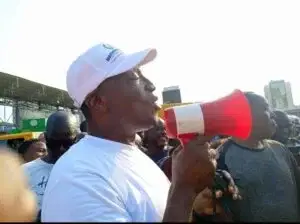
• The Assistant Inspector-General of Police(AIG) in charge of Zone 2 Command, Mr Olohundare Jimoh, speaking with transporters at Obalende garage, Lagos State, on Wednesday.
The Assistant Inspector-General of Police, Zone 2 Command, Mr Olohundare Jimoh, has declared that officers must pay fares before boarding commercial vehicles, warning against abuse of authority.
Jimoh spoke on Wednesday at Obalende garage during a sensitisation meeting with drivers and transport workers marking National Police Day 2026.
He stressed that relations between police and the public must be based on partnership, not coercion, urging both sides to support each other voluntarily.
“No police officer has the right to enter your vehicle without paying. We should assist one another willingly, not by force,” he said.
Jimoh called for stronger cooperation to maintain safety and order on roads, insisting there was no conflict between officers and transport unions.
“I don’t collect money from officers. We don’t arrest people arbitrarily. If you have issues with any officer, report directly to me,” he said.
(Vanguard)
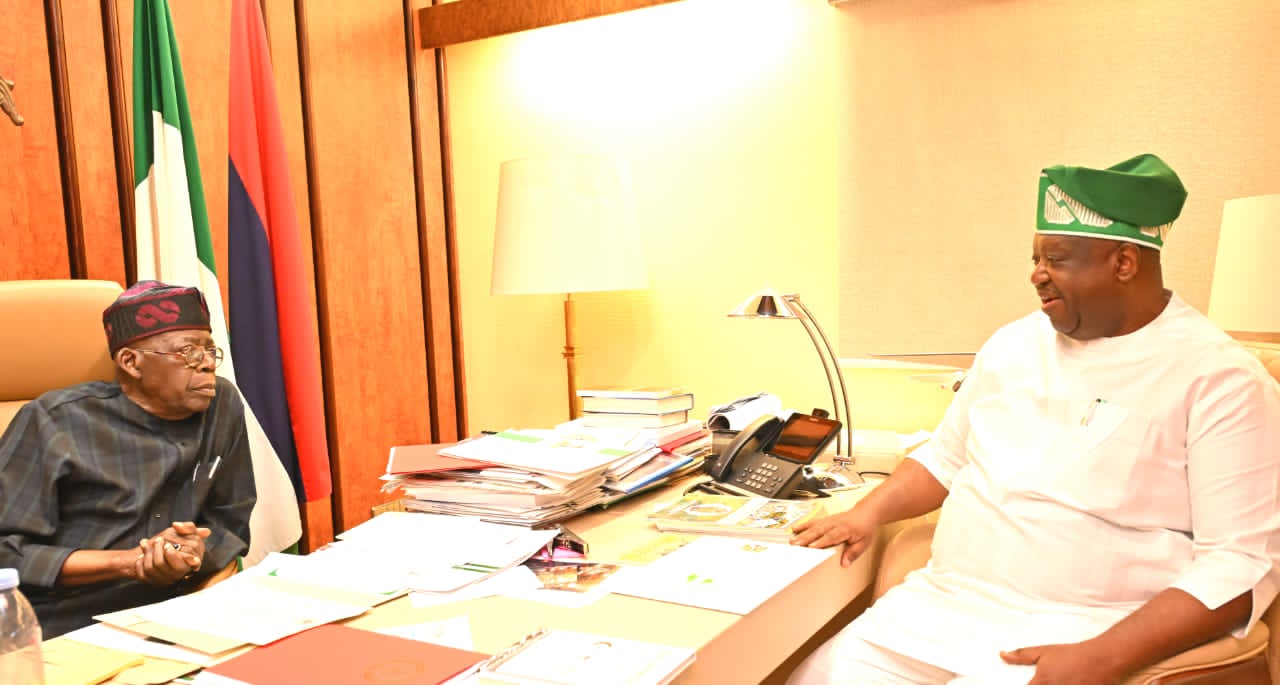
President Bola Ahmed Tinubu will leave for Jos tomorrow to commiserate with the state government and residents over recent deadly gun attacks that lefts dozens dead.
This was following Governor Caleb Mutfwang’s security briefing to the President on the recent violent attack in Angwan Rukuba, Plateau State.
During the meeting on Wednesday at the presidential villa in Abuja, Governor Caleb Mutfwang told Mr President that although security forces have restored calm after fresh disturbances involving looters on Wednesday morning, following the deadly Palm Sunday attack that left more than a dozen dead and many others injured.
He said that investigations are continuing to determine the identities or motives of the attackers who are yet to be apprehended .
Presidency source said that President Tinubu was initially scheduled for a planned trip to Ogun State to flag off operations at the Gateway International Cargo Airport on Thursday.
From Jos, the President will travel to Lagos to observe Good Friday.
On Saturday, April 4, he will visit Ogun State to commission projects including the cargo airport.
He will then return to Lagos during the Easter holiday to commission several state infrastructure projects, including the Ojota/Opebi Link Bridge.
Before heading back to Abuja, the president will visit Bayelsa State on April 10 to commission projects completed under Governor Duoye Diri.
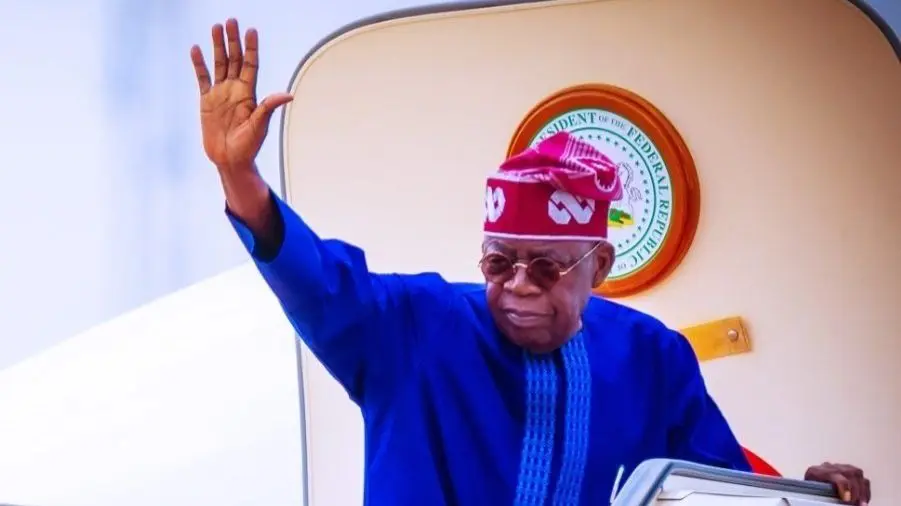
President Bola Ahmed Tinubu will tomorrow embark on a visit to Jos, Plateau State, as the first leg of a five-state tour across the country.
The Presidency announced that the President has postponed his scheduled trip to Ogun State to enable him to commence the series of official visits.
Details of the remaining four states in the tour are expected to be released by the Presidency in due course.
The development comes as President Tinubu continues nationwide engagements aimed at assessing development projects, interacting with stakeholders, and addressing key national issues in the respective states.
Further updates on the itinerary will be communicated as the visits progress.


INEC Dismisses Calls for Chairman’s Removal

Ebonyi: Gunmen Assasinate Another Traditional Ruler

From South Africa to US, ‘Cicada’ COVID-19 variant spreading

Tech Expert, Zuckerberg trains with UFC champions, Adesanya, Alexander

Organ Trafficking: Ekweremadu bags 10 years in UK prison

SAINT OBI: Between his marriage and his death
-
 Business2 days ago
33 Nigerian Banks Beat CBN’s Recapialisation with ₦4.65trn Combined Capital Base
-

 Sports2 days ago
FirstBank Sponsors Samuel Okwaraji U-16 Football Championship 2026
-
 Politics2 days ago
BREAKING: INEC Withdraws Recognition of David Mark’s ADC
-
 News2 days ago
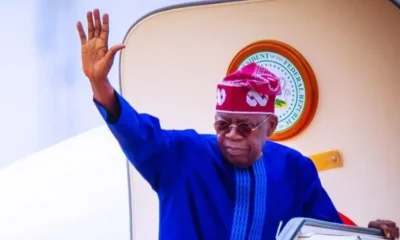
JUST IN: Tinubu Heads to Jos Tomorrow, Postpones Ogun Trip for 5-State Visits
-
 Entertainment2 days ago
Super Eagles Iwobi to launch music album ‘More To Life’
-
 News2 days ago
Easter: FG declares Friday, Monday public holidays
-
 News2 days ago
Gas Leak in Ogun School: 30 Students, Teacher Hospitalised
-
 News3 days ago
JUST IN: El-Rufai Leaves State High Court for Federal High Court in Kaduna