
News
Nigerians React to Reps 31 New States’ Proposal▪︎It’s Ridiculous- Afenifere, ACF
Turning every local government into a state is not the solution to Nigeria’s governance challenges.


The House of Representatives Constitution Review Committee’s proposed creation of 31 additional states besides the country’s 36 existing states has sparked widespread reactions from prominent Nigerians and groups across the country.
The proposal was contained in a letter to the House of Representatives read during Thursday’s plenary by the Deputy Speaker, Benjamin Kalu, who presided over the session in the absence of the Speaker, Tajudeen Abbas.
However, the proposal was rejected by the Yoruba socio-cultural organisation, Afenifere, and its northern counterpart, the Arewa Consultative Forum, which described it as ridiculous.
Reacting, the National Organising Secretary of Afenifere, Abagun Kole Omololu, said: “Instead of addressing the core structural issues plaguing Nigeria, this initiative appears to be a mere political exercise that will further weaken governance and deepen economic inefficiencies.’’
Omololu noted, “The creation of more states without a viable economic foundation will only compound the financial burden on the nation, as many existing states are already struggling to generate sufficient Internally Generated Revenue and rely heavily on federal allocations to survive.
‘’Turning every local government into a state is not the solution to Nigeria’s governance challenges.
The real issue is not the number of states but the dysfunctional federal structure that has concentrated power at the centre, stifling regional development.’
’ Instead of proliferating states that may later be unviable, Afenifere urged the National Assembly to focus on constitutional reforms that would devolve power, return resource control to the regions, and grant states the autonomy to develop at their own pace.
On its part, the Arewa Consultative Forum similarly expressed strong opposition to the proposed creation of 31 new states, describing the idea as unnecessary.
The National Publicity Secretary of the ACF, Prof Tukur Muhammad-Baba, stated that the forum was not in support of the proposed creation of new states, citing the country’s complexity and the potential for creating more problems.
According to him, the more states created, the more demands that will emerge, leading to more acrimonies.
He questioned the economic viability of the existing 36 states, highlighting the administrative burdens and overhead costs associated with governorship and civil service.
The ACF spokesperson, emphasised that creating new states would be too expensive and unnecessary, and would only provide opportunities for the elite to assume leadership positions without necessarily improving the economic viability of the states.
He said, “We have not seen the details of the proposed states, but it’s ridiculous. How long are we going to be creating states and creating problems in this country?
“How many of the 36 states are viable economically? How many of the states can carry the administrative burdens of governorship and all it takes – the civil service and the amount of expenditure on overhead?



News
ARISE News Wins Seven Honours At Nigerian Broadcasters Merit Awards
The awards recognised the network’s achievements in television journalism and programming, with ARISE News winning the Best TV Channel (Viewer’s Choice) category.

• ARISE News Anchor and host of What’s Trending Ojy Okpe was named Best Newscaster (TV – Female)
ARISE News has emerged as one of the major winners at the just ended Nigerian Broadcasters Merit Awards (NBMA).
ARISE News won seven honours across television broadcasting, news reporting, presentation and production during the ceremony.
The awards recognised the network’s achievements in television journalism and programming, with ARISE News winning the Best TV Channel (Viewer’s Choice) category.
The network’s flagship breakfast programme, The Morning Show, also won the Best TV Talk Show award, further strengthening its recognition in television broadcasting.
ARISE News Anchor and host of What’s Trending Ojy Okpe was named Best Newscaster (TV – Female).
Rufai Oseni was named Nigerian Broadcaster of the Year (Male), while Vimbai Mutinhiri-Ekpeyong received the Nigerian Broadcaster of the Year (Female) award.
The recognition extended to the network’s newsroom, with Ovieteme George winning Best TV News Reporter (Male) for his contributions to television news reporting.
Behind the camera, Sam Adeyemi received the Best Camera Operator/Cinematographer award, recognising his work in television production and visual storytelling.
News
Meta removes 3.7 million accounts in West Africa scam crackdown
The joint operation led to 28 arrests, identified more than 30 suspected scam centres and rescued 117 people allegedly trafficked and forced to work in scam compounds in Ghana.

Meta, the parent company of Facebook and Instagram, has removed more than 3.7 million Facebook and Instagram accounts, pages and groups linked to suspected scam networks operating in West Africa.
The joint operation led to 28 arrests, identified more than 30 suspected scam centres and rescued 117 people allegedly trafficked and forced to work in scam compounds in Ghana.
The company announced the crackdown in a statement on Tuesday, October 13, 2026. It involved 14 technology companies and law enforcement agencies from 10 countries.
The United Kingdom’s National Crime Agency coordinated the operation with the US Department of Justice, the Federal Bureau of Investigation and other agencies. Nigerian authorities were involved.
Other countries included Ghana, Australia, Canada, New Zealand and India.Tech companies that took part included Google, Microsoft, OpenAI, Coinbase, Starlink and Adobe.
Meta said the partnership let participants share intelligence across digital platforms, countries and financial systems to identify criminal networks.

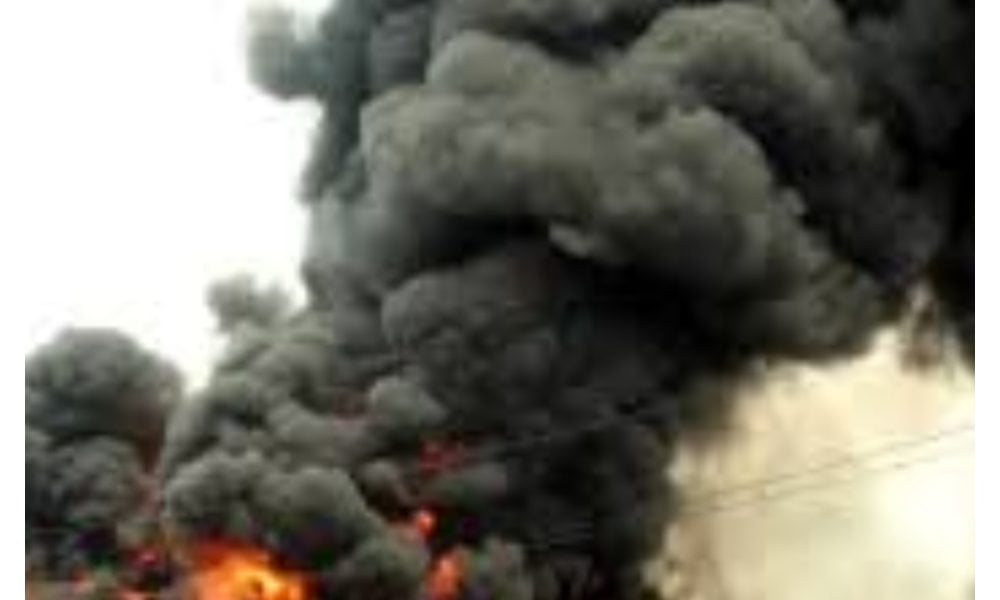
A gas pipeline explosion in Aleto community, Eleme Local Government Area of Rivers State, on Thursday evening has left at least 20 people injured, with about 50 houses destroyed by the resulting fire.
The blast occurred around 5 pm after a pipeline belonging to the Nigeria Gas Company ruptured along Old Bori Road. Several victims were rushed to hospitals. Stalls and a mechanic workshop with parked cars were also affected.
Residents said the pipeline had been leaking for about three weeks. Stanley, a local, stated that community leaders had alerted the company, but no effective action was taken. Most of those hurt were passers-by and people working in the area.
Daniel Chuma, Leader of the Eleme Legislative Council, visited the scene and confirmed the scale of the damage. He said he had earlier written to the company and petitioned NOSDRA and the Rivers State Ministry of Environment, copying the police, after a previous leak on another section of the same pipeline.
“Today, we were called to an explosion at the same Nigeria Gas Company pipeline that has destroyed over 50 houses and cars, with many casualties. People have been rushed to the hospital,” Chuma said. He added that no company representative had arrived at the scene, and community members had cordoned off the area with barrier tape to prevent further harm.
The Youths and Environmental Advocacy Centre (YEAC-Nigeria) also confirmed the incident. Its Executive Director, Dr Fyneface Dumnamene, said several people had been hospitalised and called on the Rivers State Government, the Ministry of Environment, NOSDRA, the Federal Government and other relevant agencies to support the affected residents of Aleto.
The fire was still burning at the time of early reports.


ARISE News Wins Seven Honours At Nigerian Broadcasters Merit Awards

Meta removes 3.7 million accounts in West Africa scam crackdown

Naira Exchange Rates Friday, October 16

BREAKING: Lagos Govt Declares Today, Thursday Work-Free to Mark 2026 Ìṣẹ̀ṣe Day

Tech Expert, Zuckerberg trains with UFC champions, Adesanya, Alexander

Organ Trafficking: Ekweremadu bags 10 years in UK prison
-
 News3 days ago
UNCTAD Warns Debt Burden Threatens Future of 3.7bn People
-
 News3 days ago
Nigeria, AfDB Agree Portfolio Review (Photos)
-
 News3 days ago
NAF Crash: Residents Fear Disease as Body Parts Foul Community River
-

 Business3 days ago
FAO Names 22 African Women Agrifood Heroes, Nigeria Missing
-

 Politics3 days ago
APC Makes Wike, Soludo, Adeleke State’s Campaign Coordinator
-

 Business2 days ago
NAFDAC scolds fake manufacturers: “You are killing Nigerians in order to make money”
-

 Business1 day ago
Naira Exchange Rates For Thursday, October 15
-
 Business2 days ago
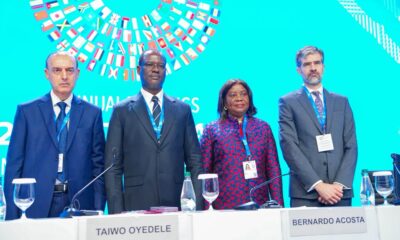
Oyedele Chairs G-24 Call for Fairer Global Financial System, Affordable Development Financing