Business
Nigerians lament as Dangote, PETROAN cite global crude prices for fuel hike

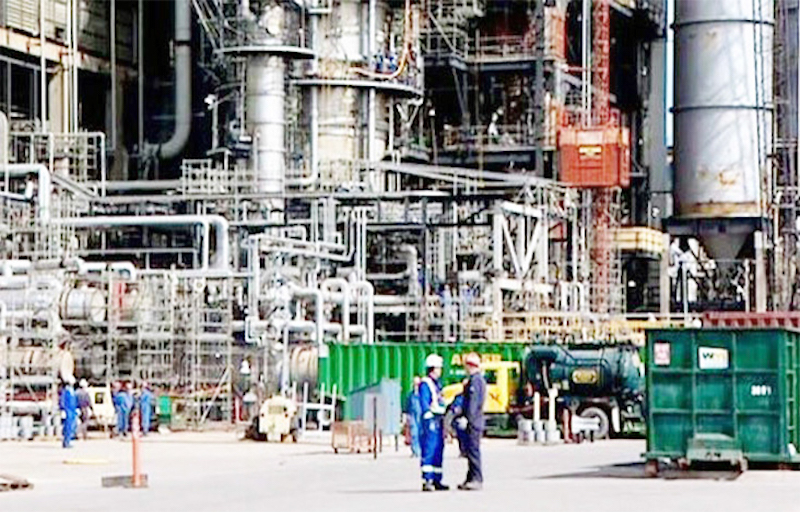
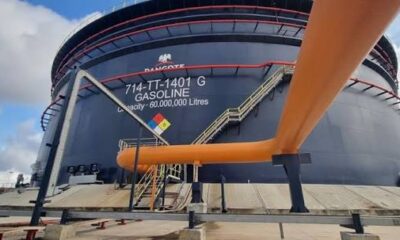
Dangote Refinery and Petroleum Products Marketers have shifted the blame for the recent premium motor spirit price hike to global crude oil prices as Nigerians lament its impact.
This comes as Nigerians express concerns over the effects of the latest fuel price hike.
On Friday, Nigerians woke up to a fresh PMS price nationwide.
Accordingly, the $20 billion Dangote Refinery raised its ex-depot prices from N899.50 per litre to N950 per litre, representing a N50 or 5 percent price hike.
Thereafter, the retail price of petrol rose to between N970 and N1,150 from N935 and N1,100 per litre.
Particularly, in filling stations with direct petrol sale partnerships with Dangote Refinery, such as MRS filling stations, PMS is sold at N970 per litre, up from N935.
Retailer outlets of the Nigerian National Petroleum Company Limited now sell petrol at N999 per litre, up from N965.
In contrast, other filling station outlets sell petrol between N1,040 and N1,150 nationwide.
Dangote Refinery, PETROAN shift blame
Reacting to the latest price hike, Dangote Refinery, in a statement by its spokesperson, Anthony Chijiena, explained that it is due to a significant surge in the global prices of crude.
According to the 650,000-barrels-per-day facility, the rise in domestic petrol prices is linked to Brent crude’s price hike to $82 per barrel from $70.
Dangote Refinery, however, noted that it has absorbed 50 percent of the cost increases in the international oil market.
The company added that the retail price of its petrol would have risen to between N1,150 and N1,200 per litre in some locations, compared to the current price of N970 per litre.
“We wish to clarify that the recent adjustment in our ex-depot price of Premium Motor Spirit (Petrol) is directly related to the significant increase in global crude oil prices.
As crude remains the primary input in the production of PMS, any fluctuation in its international price inevitably impacts the cost of the finished product.
“At Dangote Petroleum Refinery, we recognize the critical importance of affordable fuel for all Nigerians, and we remain committed to offering the best value with guaranteed quality to our customers.
While we have made a 5% adjustment to our ex-depot price from N899.50 to N950 per litre, it is important to note that this increase is considerably lower than the 15% rise in global crude oil prices, which has seen Brent Crude rise from $70 to $82 in a matter of days, in addition to the premium for Nigerian crude (approximately $3 per barrel) in international markets.
Furthermore, Dangote Refinery has maintained the single-point mooring (SPM) ex-vessel price at N895 per litre.
All our partners, including Ardova, Heyden, and MRS Holdings, will offer petrol to Nigerians at a retail price of N970 per litre nationwide.
We have absorbed the increased logistics costs to guarantee uniform pricing across the 36 states of the federation and the Federal Capital Territory (FCT).
“Dangote Refinery has absorbed approximately 50% of the cost increases in the international oil market.
This is due to our unwavering commitment to quality and affordability, as well as the ownership of the refinery by Nigerians, which remains central to our mission.
If Dangote Refinery were to pass on the entire increase in the price of crude oil to the market, the retail price of PMS would be approximately N1,150 to N1,200 per litre in some locations, compared to the current price of N970 per litre.”
On their part, PETROAN, in a statement by its spokesperson, Joseph Obele, also blamed global oil prices for the recent hike in fuel prices.
Quoting the National President of PETROAN, Billy Gillis-Harry, the association noted that international crude oil prices would inevitably affect domestic costs.
“It’s no longer funny; even retail outlet owners are affected by this up-and-down dwindling of prices. It affects our business.”
“Our selling rate always reflects our buying rate. Our members shouldn’t be blamed for the current increase; it’s an external factor,” he stated.
Nigerians lament
Nigerians have bemoaned the latest fuel price hike.
Reacting, the Deputy President of the Nigeria Labour Congress Political Commission, Prof. Theophilus Ndubuaku, said the fresh fuel price hike will affect the already high prices of foodstuff and transportation fares.
“This pump price hike will not only affect foodstuff and fares. There is also the problem of inflation and the value of the naira to contend with,” he stated.
Suleiman Abubakar, a resident of Abuja, said the coming days would be more difficult for Nigerians due to the latest fuel price hike.
“The coming days will be difficult for Nigerians. With the latest fuel hike, food items and transportation are bound to increase.
It is painful that Dangote and petrol marketers are blaming crude oil prices, leaving Nigerians to contend with their fate,” he stated.





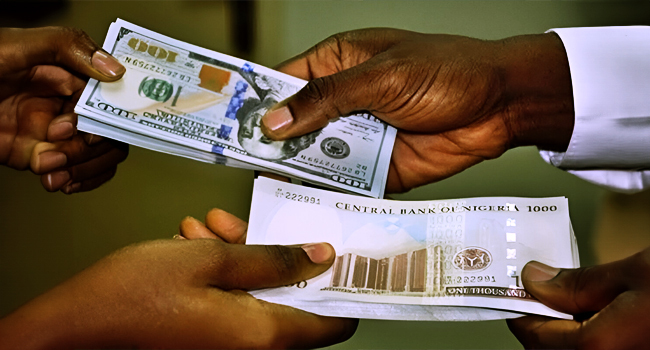
BLACK/ PARALLEL MARKET RATES
₦1370 DOLLAR (USD)
₦1800 POUND (GBP)
₦1510 EURO (EUR)
₦970 CANADIAN DOLLAR (CAD)
₦65 SOUTH AFRICAN RAND (ZAR)
₦350 UAE DIRHAM (AED)
₦190 CHINESE YUAN (CNY)
₦100 GHANAIAN CEDI (GHS)
₦2300 WEST AFRICAN CFA F.(XOF)
₦2200 CENTRAL AFRICAN CFA F.(XAF)
₦850 AUSTRALIAN DOLLAR AUSSIE (AUD)
CBN OFFICIAL RATES
DOLLAR (USD)₦1331.61
POUND (GBP)₦1764.26
EURO (EUR)₦1490.48
SWISS FRANC (CHF)₦1608.23
JAPANESE YEN (JPN)₦8.4
CFA FRANC (XOF)₦2.27
WEST AFRICAN UNIT OF ACCOUNT (WAUA)₦1802.33
CHINESE YUAN (CNY)₦199.01
SAUDI RIYAL (SAR)₦354.83
SOUTH AFRICAN RAND (ZAR)₦80.49
Business
WEF could appoint Lagarde as its next chair, sources say
The WEF’s Board of Trustees, which includes Lagarde herself, was due to meet on November 2 and could elect her as its next chair, said the people close to the organisation, who spoke on condition of anonymity due to the sensitivity of the matter.

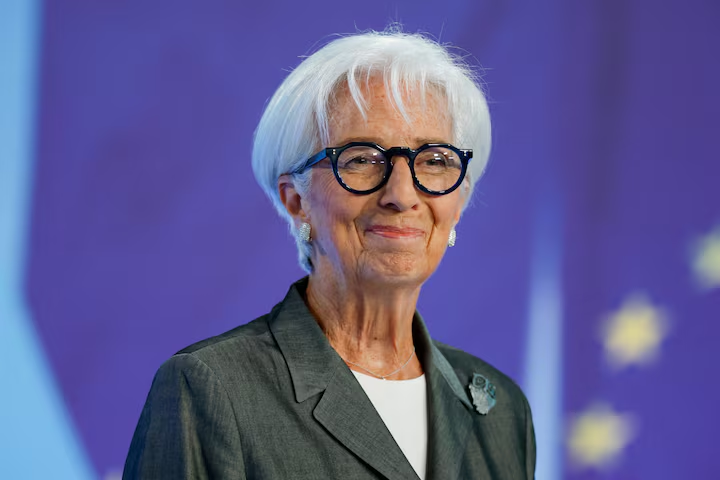
•European Central Bank President Christine Lagarde
The World Economic Forum could appoint Christine Lagarde as its next chair as soon as next month, four people close to the organisation told Reuters, meaning she would step down early as European Central Bank chief and trigger a wider reshuffle at the top of the ECB.Lagarde’s ECB term is scheduled to end in October 2027.
Leaving early would give European Union leaders a chance to pick a new ECB President before France’s spring presidential election, which opinion polls suggest the far-right could win, and could pave the way for a deal involving two other senior ECB roles.
The WEF’s Board of Trustees, which includes Lagarde herself, was due to meet on November 2 and could elect her as its next chair, said the people close to the organisation, who spoke on condition of anonymity due to the sensitivity of the matter.
No final decision has been taken yet, they said.
A spokesperson for the WEF said the forum could not confirm when the next full Board of Trustees meeting would take place, but that the aim was to hold one before the end of the year.
Business
Germany plans tax on sugary drinks
The tax is expected to generate additional revenue for the federal government of €690 million in 2027 and €925 million in 2028.
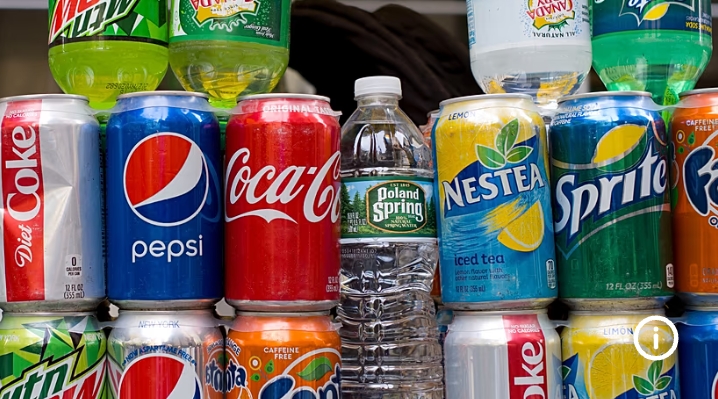
The German cabinet has approved draft legislation to tax sugary drinks in Europe’s biggest economy.
If passed by the German Bundestag, the tax will take effect on 1 July 2027.
The coalition aims to raise revenue for the federal budget while encouraging manufacturers to reduce sugar content and offer healthier products.
The levy is intended to ease pressure on the healthcare system, which faces costs of more than €2 billion every year linked to the high consumption of sugary drinks, which contributes to obesity, diabetes and tooth decay.
According to the federal government, Berlin is using the tax to implement “what associations from the fields of health, science, child protection, and consumer protection have long been demanding.”
The tax is expected to generate additional revenue for the federal government of €690 million in 2027 and €925 million in 2028.


JUST IN: Mob Sets BRT Bus Ablaze After Motorcyclist’s Death in Lagos

BREAKING: DSS Arrests Fugitive Maina Son, Hands Him to EFCC

BREAKING: 5 Arrested Over Imo NYSC Abduction

BREAKING: Lagos Govt Declares Today, Thursday Work-Free to Mark 2026 Ìṣẹ̀ṣe Day

Tech Expert, Zuckerberg trains with UFC champions, Adesanya, Alexander