
Business
Okin Biscuits Set For Comeback After 17 Years, Targets Revival Of Jobs, Local Manufacturing
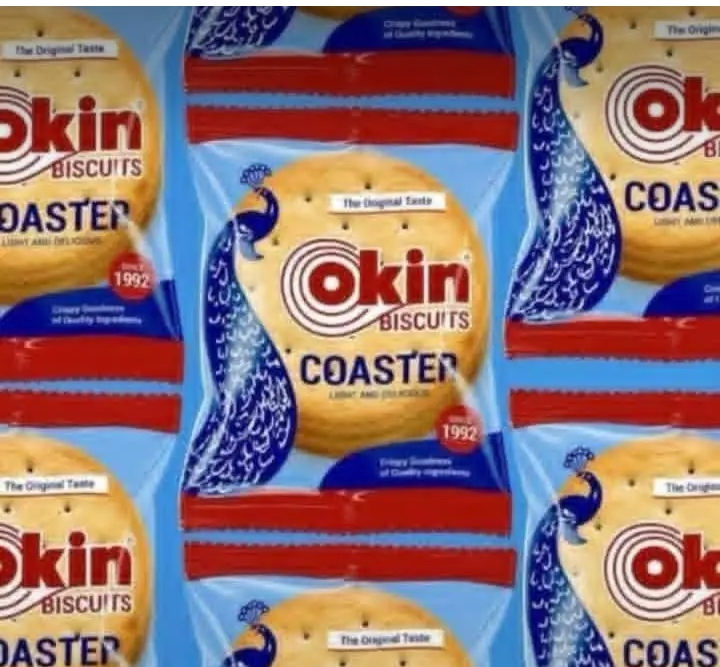
Founded in the 1980s by the late Chief Emmanuel Olatunji Adesoye, an illustrious son of Offa, Okin Biscuits grew into a household name with products including Okin Coasters, Shortcake and Okin Cabin Biscuits.

By Ochefa
After 17 years off the shelves, Okin Biscuits, one of Nigeria’s once-popular indigenous biscuit brands, is set to return to production as efforts intensify to revive the Ijagbo, Kwara State-based factory.
The planned comeback marks a significant attempt to restore one of the country’s old manufacturing brands while potentially reopening a major source of employment and economic activity in the community.
Founded in the 1980s by the late Chief Emmanuel Olatunji Adesoye, an illustrious son of Offa, Okin Biscuits grew into a household name with products including Okin Coasters, Shortcake and Okin Cabin Biscuits.
At its peak, the company provided direct and indirect employment to more than 2,000 people before production was eventually halted in 2009.
The shutdown reflected some of the structural problems that have continued to undermine Nigeria’s manufacturing sector, including harsh operating conditions, intense competition, inadequate infrastructure, vandalism and the theft of critical production equipment.
With the factory no longer producing, its products gradually disappeared from retail outlets and homes in Kwara, Lagos and other parts of the country.
Factory Undergoing Major Rehabilitation
However, the industrial facility is now showing signs of renewed activity.
A visit to the factory in Ijagbo showed that extensive rehabilitation work is underway across the complex.
The main factory building, which houses the production machinery, as well as the administrative block and other facilities, are undergoing comprehensive renovation.
The premises have already assumed a significantly different appearance, suggesting that the revival project has moved beyond plans and into physical reconstruction.
The management recently announced through its official Facebook page that production machinery was being test-run.
It said biscuits rolled off one of the rehabilitated production lines on August 25, 2026, marking the first production from the factory in 17 years.
The development is significant not merely as the return of a nostalgic consumer brand, but as an example of how the rehabilitation of abandoned industrial assets could contribute to renewed domestic production and employment.
For Nigeria, where manufacturers continue to contend with high energy and logistics costs, infrastructure constraints, foreign exchange pressures and strong competition from imported products, the reopening of an existing manufacturing facility could offer a potentially faster route to industrial capacity expansion than building an entirely new factory.
Community Backs Revival
…biscuits rolled off one of the rehabilitated production lines on August 25, 2026, marking the first production from the factory in 17 years.
The planned resuscitation has also attracted strong support from the Offa community.
The Aare Bobaselu of Offa, Chief Abdulatif Adekunle Ajeigbe, described the development as “heartwarming,” linking it to the broader Offa Mega City project championed by the Olora of Offa, Oba Muftau Mohammed Gbadamisi, Esuwoye II.
According to him, members of the community had made several efforts to revive the moribund factory, including exploring the possibility of group financing.
“We did our best to see that the factory came back to life, but it was the children of the late Asiwaju of Offa and the founder of the factory, Chief Emmanuel Olatunji Adesoye, who insisted on carrying on their father’s legacy through the factory,” he said.
Ajeigbe commended the founder’s children for their determination to preserve the family’s industrial legacy and bring the factory back into operation.
More Than A Brand Revival
The return of Okin Biscuits also highlights the wider economic value embedded in Nigeria’s abandoned industrial assets.
The company’s earlier success created employment not only within the factory but across its supply and distribution networks, including raw-material suppliers, transporters, distributors, retailers and other service providers.
A successful reopening could therefore have an economic impact extending beyond the factory gates, particularly if production eventually returns to significant capacity.
The bigger test, however, will be whether the revived company can operate sustainably in an increasingly competitive Nigerian consumer market.
The new investors will have to contend with production costs, energy supply, distribution challenges, consumer purchasing power and competition from both established domestic manufacturers and imported brands.
For Okin, the challenge is therefore not simply to restart the machines, but to build a commercially viable manufacturing operation capable of sustaining production, protecting jobs and reclaiming market share.
If successful, the return of Okin Biscuits could become more than a nostalgic homecoming for Nigerian consumers.
It could provide a practical demonstration that some of the country’s dormant industrial assets can be rehabilitated, modernised and returned to productive use.
After 17 years of silence, the sound of Okin’s production lines running again may therefore signal the beginning of a new chapter for one of Nigeria’s forgotten manufacturing brands.
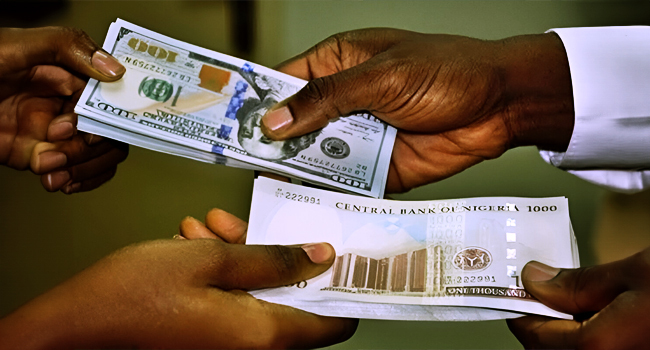
BLACK/ PARALLEL MARKET RATES
₦1370 DOLLAR (USD)
₦1800 POUND (GBP)
₦1510 EURO (EUR)
₦970 CANADIAN DOLLAR (CAD)
₦65 SOUTH AFRICAN RAND (ZAR)
₦350 UAE DIRHAM (AED)
₦190 CHINESE YUAN (CNY)
₦100 GHANAIAN CEDI (GHS)
₦2300 WEST AFRICAN CFA F.(XOF)
₦2200 CENTRAL AFRICAN CFA F.(XAF)
₦850 AUSTRALIAN DOLLAR AUSSIE (AUD)
CBN OFFICIAL RATES
DOLLAR (USD)₦1331.61
POUND (GBP)₦1764.26
EURO (EUR)₦1490.48
SWISS FRANC (CHF)₦1608.23
JAPANESE YEN (JPN)₦8.4
CFA FRANC (XOF)₦2.27
WEST AFRICAN UNIT OF ACCOUNT (WAUA)₦1802.33
CHINESE YUAN (CNY)₦199.01
SAUDI RIYAL (SAR)₦354.83
SOUTH AFRICAN RAND (ZAR)₦80.49
Business
WEF could appoint Lagarde as its next chair, sources say
The WEF’s Board of Trustees, which includes Lagarde herself, was due to meet on November 2 and could elect her as its next chair, said the people close to the organisation, who spoke on condition of anonymity due to the sensitivity of the matter.

•European Central Bank President Christine Lagarde
The World Economic Forum could appoint Christine Lagarde as its next chair as soon as next month, four people close to the organisation told Reuters, meaning she would step down early as European Central Bank chief and trigger a wider reshuffle at the top of the ECB.Lagarde’s ECB term is scheduled to end in October 2027.
Leaving early would give European Union leaders a chance to pick a new ECB President before France’s spring presidential election, which opinion polls suggest the far-right could win, and could pave the way for a deal involving two other senior ECB roles.
The WEF’s Board of Trustees, which includes Lagarde herself, was due to meet on November 2 and could elect her as its next chair, said the people close to the organisation, who spoke on condition of anonymity due to the sensitivity of the matter.
No final decision has been taken yet, they said.
A spokesperson for the WEF said the forum could not confirm when the next full Board of Trustees meeting would take place, but that the aim was to hold one before the end of the year.
Business
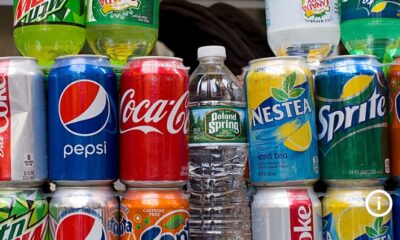
Germany plans tax on sugary drinks
The tax is expected to generate additional revenue for the federal government of €690 million in 2027 and €925 million in 2028.
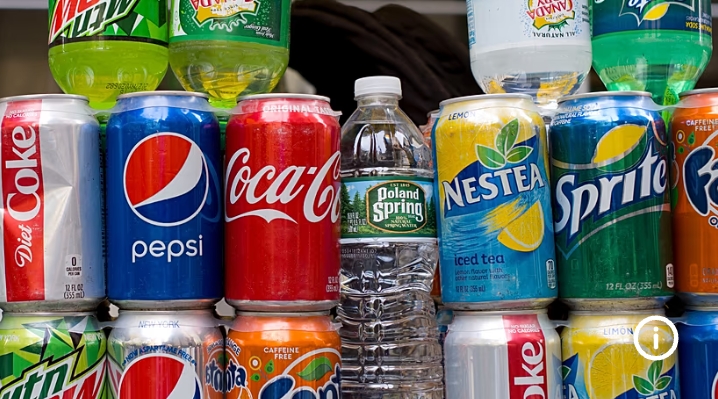
The German cabinet has approved draft legislation to tax sugary drinks in Europe’s biggest economy.
If passed by the German Bundestag, the tax will take effect on 1 July 2027.
The coalition aims to raise revenue for the federal budget while encouraging manufacturers to reduce sugar content and offer healthier products.
The levy is intended to ease pressure on the healthcare system, which faces costs of more than €2 billion every year linked to the high consumption of sugary drinks, which contributes to obesity, diabetes and tooth decay.
According to the federal government, Berlin is using the tax to implement “what associations from the fields of health, science, child protection, and consumer protection have long been demanding.”
The tax is expected to generate additional revenue for the federal government of €690 million in 2027 and €925 million in 2028.


JUST IN: Mob Sets BRT Bus Ablaze After Motorcyclist’s Death in Lagos

BREAKING: DSS Arrests Fugitive Maina Son, Hands Him to EFCC

BREAKING: 5 Arrested Over Imo NYSC Abduction

BREAKING: Lagos Govt Declares Today, Thursday Work-Free to Mark 2026 Ìṣẹ̀ṣe Day

Tech Expert, Zuckerberg trains with UFC champions, Adesanya, Alexander

Organ Trafficking: Ekweremadu bags 10 years in UK prison
-

 Business3 days ago
Naira Exchange Rates For Thursday, October 15
-

 News3 days ago
ASCON To Be Rebranded “National School Of Government”
-
 Sports3 days ago
CAF Increases Annual Funding for Member Federations to $700,000
-
 Business2 days ago
Germany plans tax on sugary drinks
-

 Business2 days ago
WEF could appoint Lagarde as its next chair, sources say
-

 International2 days ago
“Mother of all bombs,” Trump Plans To Hit Iran
-
 Business2 days ago
Naira Exchange Rates Friday, October 16
-
 Crime1 day ago
BREAKING: 5 Arrested Over Imo NYSC Abduction