
Business
MAN Supports 15% Import Tariff on Petrol and Diesel


A Step Towards Strengthening Local Content and the Patronage of Made-in-Nigeria Preamble
The Manufacturers Association of Nigeria (MAN) has commended the Federal Government for its recent approval of a 15% import tariff on petrol and diesel.
In a press release signed by Segun Ajayi-Kadir, Director-General Manufacturers Association of Nigeria, the association recognised gesture as a strategic step and patriotic policy that aligns with the Nigeria First agenda and MAN’s long-standing advocacy for local content development and patronage of Made-in-Nigeria.
It is heartening that this is coming less than one Month after the 53rd AGM of MAN with the theme: Nigeria First: Prioritizing Patronage of Made in Nigeria Products.
The association said the strategic policy has reassured domestic manufacturers that Government is attentive to the imperatives of growing indigenous manufacturing.
It exemplifies governments commitment to halting the perennial bleeding of our patrimony; asserting the sovereignty of the great country; guaranteeing energy sufficiency and security, and improving the overall wellbeing of Nigerians in this regards.
This is a sure step in the promotion of local value addition, strengthening domestic refining capacity, conserving foreign exchange, and advancing Nigeria’s long-term industrialisation objectives.
MAN’s Position:
1. Unfettered implementation of the domestic supply of crude and enshrined in the PIA. This will ensure the Naira for crude arrangement that will ensure effective and reliable supply of crude to the local refineries and reduce the pressure on our scarce foreign exhange.
It will also attract more investors, including the holders of the 30 refininery licenses to commit resources in the sector.
2. There is no better path to fixing Nigeria’s economy than protecting local industries, encouraging local patronage, fostering value addition, and promoting industrial development anchored on local content.
3. Nigeria is blessed with enormous oil resources. Unfortunately, scarce forex in billions of dollars is still being spent on importing refined petroleum.
Supporting local refining capacity through appropriate policy tools will conserve scarce foreign exchange, improve the stability of the Naira, and foster a more favourable macroeconomic environment for investment.
In view of above, MAN duly:
i. recognises the importance, significance, and necessity of the approval of the 15% import tariff on petroleum products — petrol and diesel.
ii. Acknowledges that the tariff is a rightful, deliberately designed policy instrument intended to protect and encourage domestic producers, curb dumping, and create a stable environment for local refiners to thrive.
iii. Notes that the tariff will accelerate operational readiness of domestic refineries, thereby reducing disruptions and stabilising energy supply to industries.
iv. Supports the 15% import tariff as an industrial policy instrument that will:
• Encourage the utilisation of local refining capacity and promote backward integration across the energy value chain.
• Conserve foreign exchange by reducing the nation’s dependence on imported refined petroleum products.
• Strengthen the manufacturing base through a more stable and predictable fuel supply.
• Generate employment opportunities, build technical expertise, and strengthen industrial linkages between refineries and manufacturers.
• Promote local content development and stimulate demand for Nigerian engineering, fabrication and logistics services.
v. MAN views this policy as a vital step in achieving energy independence and industrial sustainability, both of which are prerequisites for Nigeria’s economic transformation.
Call for Transparent and Balanced Implementation:
While supporting the 15% tariff imposition, MAN calls for transparent, efficient, and well-coordinated implementation to ensure its benefits reach both industry and consumers, safeguard competitiveness, and prevent unintended cost burdens.
Specifically, MAN calls for:
i. Transparent price monitoring: Government and regulators (PPPRA, NMDPRA, FCCPC) should closely monitor domestic pricing to prevent excessive mark-ups or anti-competitive behaviour.
ii. Stable transition period: During the initial months of implementation, the government should support local refiners to ensure adequate fuel availability and prevent supply shocks or speculative hoarding, particularly with the festive period approaching.
iii. Reinvestment of tariff revenue: Proceeds from the import duty should be reinvested into energy infrastructure, refinery efficiency, and power support schemes for industries, including credit facilities for industrial energy transition and renewable adoption.
iv. SMIs support measures: Provide targeted incentives or rebatesfor small and medium manufacturers reliant on diesel-powered generators during the transition period.
v. Support the development of more local refineries: The government should create an enabling environment and provide targeted incentives to attract investment in additional modular and conventional refineries, thereby strengthening domestic refining capacity, promoting competition, and ensuring long-term energy security.
vii. Ensure stakeholder harmony in the energy sector: The government should foster continuous engagement among refiners, marketers, regulators, and consumers to prevent disputes, ensure policy coherence, and sustain market stability.
viii. Move speedily to fully privatize the government owned refinery as it is evident that we may never succeed in restoring them to functionality under the current dispensation.
Selling off the refineries will stop the commitment of our scarce financial resources to an evidently irredeemable venture.
MAN acknowledges this major step in the implementation of Nigeria First policy of government. We are committed to supporting the Federal Government’s Nigeria First policy direction, especially on local content development and home grown industrialisation.
MAN believes that this tariff will accelerate the country’s journey toward energy sovereignty, industrial competitiveness, and sustainable economic growth — all anchored on the strength of Made-in-Nigeria.
Business
TIME Names Moniepoint CTO Felix Ike Among 50 Global Executives of the Year
In its citation, TIME said Ike “has helped to establish the business as one of Africa’s leading financial platforms.


TIME magazine has named Felix Ike, co-founder and Chief Technology Officer of Nigerian fintech Moniepoint, to its inaugural Executives of the Year: Tech and Data list.
Ike is the only executive representing an African company among the 50 leaders selected for the 2026 list.
The list, unveiled on Tuesday, September 22, recognises chief information officers, chief technology officers, chief data officers and chief product officers whose decisions are shaping how major organisations deploy technology and use data.
Moniepoint is also the only African company represented on the inaugural list.
Ike was named alongside executives from Netflix, CrowdStrike, Dell, Duolingo, AT&T, OpenAI, Anthropic, Shopify and Reddit, among others.
In its citation, TIME said Ike “has helped to establish the business as one of Africa’s leading financial platforms.
“The recognition follows Moniepoint’s inclusion in TIME’s 2025 list of the 100 Most Influential Companies, giving the Lagos-founded fintech another global distinction.
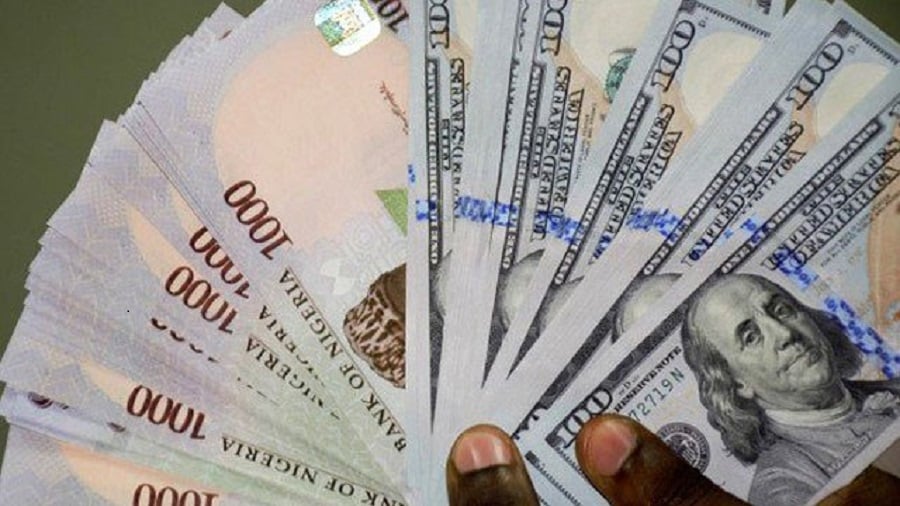
Black Market Rates
₦1382DOLLAR (USD)
₦1855POUND (GBP)
₦1545EURO (EUR)
1000 DOLLAR (CAD)
₦70 RAND (ZAR)
370DIRHAM (AED)
190YUAN (CNY)
₦100G.CEDI (GHS)
₦2350 CFA F.(XOF)
₦2250 CFA F.(XAF)
₦850 AUSSIE (AUD)
Official CBN Exchange Rates
DOLLAR (USD)₦1328.67
POUND (GBP)₦1758.36
EURO (EUR)₦1511.63
SWISS FRANC (CHF)₦1605.45
JAPANESE YEN (JPN)₦8.38
CFA FRANC (XOF)₦2.31
WEST AFRICAN UNIT OF ACCOUNT (WAUA)₦1808.03
CHINESE YUAN (CNY)₦197.92
SAUDI RIYAL (SAR)₦353.86
SOUTH AFRICAN RAND (ZAR)₦81.09
Business
Djibouti, Ethiopia and Dangote to build $660 million petroleum pipeline
In Kenya, Dangote and the government are due to break ground on a new 700,000-barrel-per-day crude oil refinery in Lamu next week.
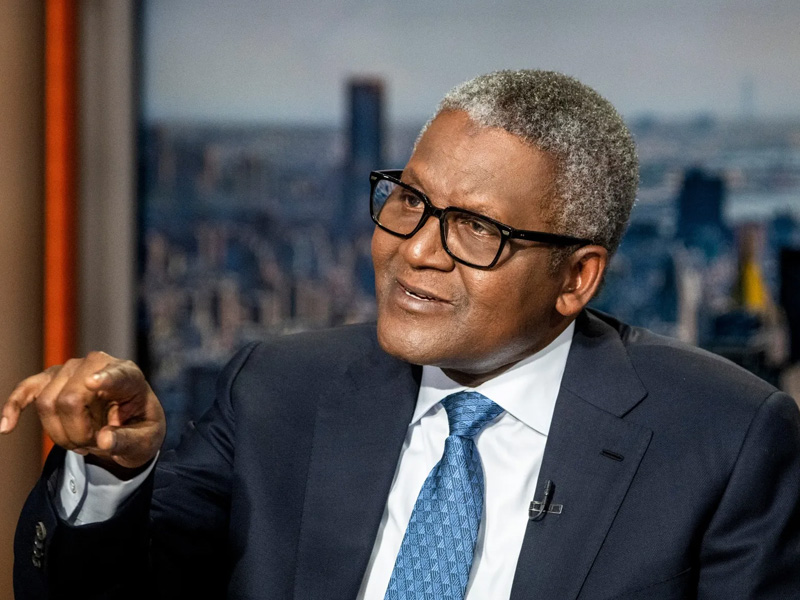
Ethiopia, Djibouti and Nigerian billionaire Aliko Dangote plan to build a $660 million refined petroleum pipeline that will connect Ethiopia and Djibouti, a spokesperson in Ethiopian Prime Minister Abiy Ahmed’s office said on Thursday.
The project will include a 120-km (75-mile) pipeline, as well as approximately 375,000 cubic metres of storage capacity at Damerjog in Djibouti and 800,000 cubic metres at Dewele in Ethiopia, the spokesperson told Reuters, adding it should become operational within 18 months.
Abiy said on his X account the project will be developed through a partnership between Ethiopian Investment Holdings and the Dangote Group, which separately is already building a $4 billion fertiliser pipeline and power plant, and a polypropylene packaging facility, in Ethiopia.
The project aims to reduce logistics costs and delays along the Ethiopia-Djibouti transport corridor, Abiy said.
Developers say the infrastructure will strengthen energy security and improve supply chain resilience for the two countries, he said.
Abiy is on a visit to Djibouti and made the announcement alongside its president, Ismail Omar Guelleh, and Dangote.
In Kenya, Dangote and the government are due to break ground on a new 700,000-barrel-per-day crude oil refinery in Lamu next week.


Congo military plane crash kills 13, including three officers

Manchester City Faces Expulsion For Breaching 114 EPL Financial Rules

TIME Names Moniepoint CTO Felix Ike Among 50 Global Executives of the Year

Tech Expert, Zuckerberg trains with UFC champions, Adesanya, Alexander

Organ Trafficking: Ekweremadu bags 10 years in UK prison

SAINT OBI: Between his marriage and his death
-
 Business3 days ago
FG Engages Stakeholders On Nigeria’s Rice Value Chain
-

 Business3 days ago
Naira To Dollar, Pound , Euro Rate Wednesday September 23
-
 Business3 days ago
Airtel Money Targets October Listing On London Stock Exchange
-
 Business2 days ago
MAN Urges CBN To Consider CRR Cut Next Phase of Monetary Easing
-

 Crime2 days ago
JUST IN: Zamfara LG Chairman Freed After 61 Days in Captivity
-

 Business3 days ago
Cardoso Says Multiple FX Windows Cost Nigeria 3% of GDP, Higher Than Fuel Subsidy
-

 Sports2 days ago
FIFA names Nigerian referee among 81 officials for U-17 World Cup
-

 News2 days ago
VP Shettima, Gov Mbah to address Over 500 editors on 2027 election issues