
Opinions
Let Us Make A New Deal For Nigeria , by Chukwuma Soludo

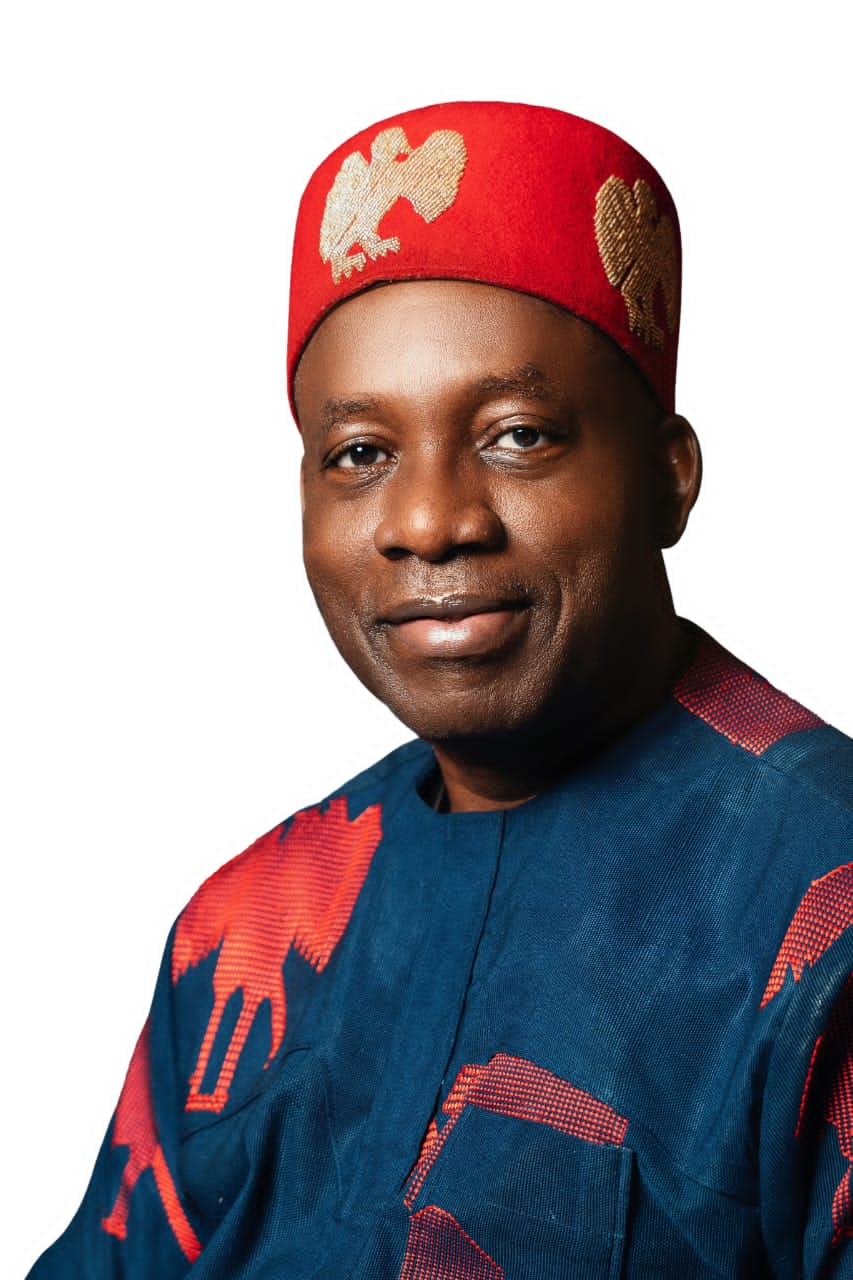
▪︎Being a Convocation Lecture delivered at the Veritas University, Abuja; 7th November, 2024, by Chukwuma Charles Soludo, Governor, Anambra State.
This University is a promising unique experiment in Catholic higher education, and I am glad to celebrate with you on this 13th Convocation ceremony.
This University A Real Centre of Excellence
About 2014, I led a discussion on the financial sustainability of the University under the auspices of the Catholic Bishops Conference of Nigeria’s (CBCN) finance committee.I am therefore thrilled to learn that the University has not only grown phenomenally over the past 10 years in every aspect but has become a real centre of excellence.
Let me salute the vision of the founding fathers as well as the hard work and determination of the successive management of the University to bring it to this spectacular stage.
800 Students Graduate
May I, at this moment, congratulate all the 800 graduating students for having been found worthy in character and learning to deserve the degrees of this University.
Perhaps, commiserations are also in order, and I will come to this later.I confessed to your Vice-Chancellor, Rev. Fr. (Prof.) Hyacinth Ichoku (who was my student) a few days ago that I was not sure what to say to you at this event.
Graduation Speech or Motivational Speeches
Graduation speeches have become a cliche.I am not sure I remembered what was said at my own graduation lecture nor even who delivered it.In sum, they have become motivational speeches on how fresh graduates should seize the moment and conquer the world— with a litany of principles and practical guides to successful living.
There are dozens of self-help books and with phones in your hands, you can Google and educate yourselves better. Or better still, with variants of Artificial Intelligence platforms, AI can help you piece together a better “to-do list” for fresh graduates.
So, increasingly graduation speeches might become a waste of time for everyone. I will, therefore, disappoint you since I will not rehash those “how to succeed” homilies here.
Quite frankly, I expected a near-empty hall for this event!For me particularly, what should a state governor at this moment in Nigeria (governors are largely the butt of many jokes) be telling fresh graduates?
Limited Edition Generation
Second, my generation of the 1960s,1970s and older ones constitute what I describe as the “Limited Edition Generation ” generation.
Someone noted that we are the last generation to listen to and take care of our parents and the first that are forced to listen to and even take care of our children until death.
So, I just wonder whether we should not reverse the roles: you do the talking while I do the listening?
Or can you endure the torture of my boring advisory?
I graduated 40 years ago in 1984
As I stand before you, I can feel some parallels between my own graduation and yours today.
Yes, I graduated 40 years ago in 1984, and I recall the hope and despair we all felt as we came from our various postings for the National Youths Service for the Convocation ceremony.
The military was groping in search of answers to Nigeria’s myriad and seemingly intractable social, political, and economic problems.
It was the year of severe austerity measures, with long queues for the so-called “essential commodities” (rice, salt, milk, vegetable oil, etc) as well as rationing of foreign exchange.
The era of NEPA, NITEL and SAP
The Nigerian Electric Power Authority (NEPA) was derisively described as meaning “Never Expect Power Always,” while the less than 200,000 available telephone lines were largely moribund.
The Federal Government of Nigeria (FGN) removed subsidies on students’ feeding in the universities, and the subsequent Structural Adjustment Programme (SAP) came with all the SAP-related riots and protests.
ASUU strikes closed universities for months/years. That was the beginning of an era when jobs for university graduates could no longer be taken for granted.
Which Way Nigeria?
There was an acute scarcity of basics with rising inflation, unemployment, and poverty while the War Against Corruption and Indiscipline was launched. This was the year we all thought that Nigeria had fallen apart.
Sonny Okosun summed up the collective despair and hopelessness in his famous song entitled: “Which Way Nigeria?”
Please Google and listen to the song—40 years ago!Fast-forward to today, 40 years after. You are all graduating in 2024—the year that Nigeria finally summoned the courage to end decades of debilitating and destructive petrol subsidies as well as forex and electricity subsidies, with all the consequential shocks including, once again, rising headline and food inflation as well as poverty and unemployment.
Criminality Becomes The “ New Economy”
It is also the year of the big floods which have affected 34 states and displaced nearly two million Nigerians. Criminality has become the “new economy”—banditry, kidnapping and drug epidemic. Much of our public service is transactional rather than transformational, and it is increasingly becoming difficult for people to render service except it benefits them personally.
The quest for money as an end is deafening, and for a growing percentage of our youths, their motto in life is: “Get rich young or die trying.”
For many, it is increasingly difficult to maintain balance, especially in a culture where virtue has little currency.
The global megatrends are such that only those who have scalable skills and continuously innovate and adapt will thrive.
The United States has just elected Donald Trump as president with some trepidations and hopes for what it portends for the world. Soon, you will face some uncomfortable truths.
Your Dream Jobs Are Not There
For starters, your dream jobs are not there, and about 80% of you will not practise what you studied. It is scary and I am not sure how adequately the University has prepared you for survival in chaotic times.
As I draw the parallels between my time of graduation and yours, I am not sure whether to say congratulations or commiserations.
But what you make of the current situation depends on whether you see it as a challenge or an opportunity.
For me, Nigeria remains the Black man’s greatest opportunity. National Youth Service The next year–your one year of National Youth Service may be the year for re-setting.
You will meet new people; you will stumble on new ideas—good and bad; and you may even try some adventures.
Community Service
One day a week, you will have what we used to call a day for “community service.”
Make that day count! It might be your rehearsal for selfless public service. Start with Volunteerism: volunteer to serve at every opportunity.
Do something good for the benefit of society from which you do not expect to be paid. It is a pivotal year, your balcony moment, and you must make it count.
During my youth service at the then University of Ife (now Obafemi Awolowo University, Ife), I attended all M.Sc classes in the Department of Economics—though I was not a registered student.
Perhaps, part of the impetus for me to resign from Coopers and Lybrand after five months to go back for post-graduate studies may have come from my NYSC experience.
My tailor in Abuja, Mr. Adekunle from Osun State, is a graduate of Geology from the University of Maiduguri.
He sold used clothes during his NYSC in Akwa Ibom and, from there, learned tailoring during the same service.
Today, he has more than 150 tailors, 30 graduates in Management, and other staff—all totalling over 200, working for him.I can cite over 100 similar examples. Thus, what happens in this one year of your ‘national service’ might determine whether Nigeria ends up as a half-empty or half-full glass for you.
Still, on your personal survival, let me add a little digression. Many of you probably only studied/read seriously while preparing for examinations, and believe that henceforth, the torture is over.
Bad News for You
I have bad news for you. Your bachelor’s degree (B.A.) might mean “Begin Again.”In today’s world, there is a connection between continuous learning and earning.
If you stop learning, you start decaying, or you can sum it up in a slogan: learn more to earn more! I have heard several of the richest people in the world brag about how many non-fiction books they read in a year.
I will not say more.As you venture into the uncertain world, you will need all the help you can get. You will need all the networks and partnerships you can get. Success in life is not just about what you know but even more so about whom you know.
As the saying goes, if you want to go fast, go alone, but if you want to go far, go together. So, you will need the help of others to get ahead.
“Anything” Cannot Take You “Anywhere”
Soon, you will start looking for jobs or other ‘help’ from people to jumpstart a new life.
For some decades, I always had young people approach me to help them find a job, and when you ask, ‘What do you want to do,’ a common answer was, “Anything.” Of course, “anything” cannot take you “anywhere” because as the saying goes, “if you don’t have a destination in mind, any road will take you there.”
So, my only tip to you on this occasion is to always seek intentionally to add value. Before you approach someone for help, there is a minimum investment/preparation you must make to be ready to be “helped.”
When you approach people, start with what value you will bring to the table—how you intend to ‘help them.’ This might sound counterintuitive. Paradoxically, that is also how you make money. Making money cannot be an objective; adding value is what makes money.
The Richest People in The World
Think of it for a moment. The richest people in the world (through enterprise, and not through rent or criminality) are those who set out to solve specific problems for society and money followed as a reward—naturally!. Think of the inventors, the software developers who set out to connect people socially (Facebook, Twitter, etc), industrialists, consultants, tailors, traders, or anyone seeking to create value for customers, and how money followed them consequently.
So, the next time you approach someone for help, start by telling them what you can also do for them, and you will see that they are more likely to listen to you than if you approach them for charity.
When You Are Applying for a Job
When you are going to apply for a job, spend time researching how you can help to improve the fortune of the company.
Instead of just “applying for a job,” write them a proposal on what you can offer, and you will see the difference.
Try it! Sorry, I veered off into advisory which I promised not to get into. Let me share some statistics that may jolt you to action.
Without a doubt, the first need of man is survival and safety. Maslow prioritized human needs as physiological needs (air, food, drink, shelter, clothing, sleep, and health), safety, love and belonging, esteem, and self-actualization.
Incomes Distribution
Again, the reality is that given Nigeria’s current income distribution, more than 60% of you may not go beyond satisfying the first need –physiological needs. When I was Governor of the Central Bank, we had a study that gave us a casual inference about the income distribution/inequality in Nigeria (beyond the Gini coefficient).
We discovered that 92% of the millions of depositors in Nigerian commercial banks had bank balances of N300,000 or less. But this 92% of depositors controlled about 7% of the total deposits, while the 8% that had over N300,000 controlled 93% of the total deposits.
I understand that a similar exercise was repeated several years later with a threshold of N500,000 and the distribution was largely unchanged.
Someone can crudely interpret this to mean that about 8% of the population controls 93% of the income, while 92% of the people control just 7% of income.
Crude as the statistics may seem but it tells a thousand stories and highlights the context of a society in which our new graduates must thrive and excel.
Unemployed or underemployed
I know many of you will already be casting and binding and praying that it is not your portion to end up among the 92% or among the many who may remain unemployed or underemployed for several years after your national service.
The point, however, is that if we all do not work to alter the meta-level architecture that produces such outcomes, much of our efforts at individual survival might be circumscribed.
My Core Message to YOU
This brings me to my core message to you: the current situation in Nigeria is not destiny. Everyone—I mean, everyone including you, the new graduates, can and must do something about it. Nation-building is too serious a business to be left to the politicians or public servants alone. A new social contract with basic socio-economic rights is possible.
Mission of Veritas University
Luckily, you are graduates of Veritas University—whose mission broadly interpreted is to mould new Nigerians that will create a new Nigeria. Let me bore you by reminding you of the Mission of your University, as boldly stated on the school’s website as follows:
“The mission of Veritas University is to provide its students with an integral and holistic formation that combines academic and professional training with physical, moral, spiritual, social and cultural formation together with the formation of Christian religious principles and the social Teachings of the Catholic Church…
Based on Christian inspiration and Christ’s sacrificial witness, the University shall promote authentic human and cultural development modelled on the person of Christ and shall champion the cause of justice and uprightness in society, work to empower the weak and the marginalized and promote dialogue and collaboration in human relationships at various levels and among various cultures and religions…..
Thus, graduates from Veritas University, Abuja, after successfully completing their studies, should be able to use the knowledge for the upliftment of themselves and the Nigerian society…
”Wow! The public-purpose mission of your university is a bold statement of progressive social thought. Combine the Catholic Social Teachings with Rick Warren’s book “The Purpose Driven Life” and laced with Chapter Two of the 1999 Constitution of Nigeria (“Fundamental Objectives and Directive Principles of State Policy”), and you have a robust Progressive ideology and manifesto.
I pray that these documents can be mandatory readings in one of the ‘General Studies’ courses at your university. If your students/Nigerians take them as their compass in pursuit of private and public good, a new Nigeria will indeed be on the way.
These documents motivate us to a life driven by purpose above self and remind us that to serve is to live. Selfless public service is the greatest form of philanthropy.
I am in love with pragmatic progressivism, particularly Chapter Two of our Constitution, which provides a compass to a competitive yet humane and compassionate society where no one is left behind. It seeks to establish the social contract between the State and the citizens, although this contract is adjudged non-justiciable.
Making much of the aspirational contents of Chapter Two of the Constitution justiciable will create a new generation of Nigerians who feel a great debt of gratitude and, therefore, are fired by an intense sense of nationalism/patriotism to want to “give back to society.”
Increasingly, I meet young people who argue that they do not feel any sense of obligation/duty to the country.
They do not feel that the country has invested in them to demand patriotism and duty to the country. Unlike my generation, the nation did not offer them qualitative and tuition-free education at all levels. Why, after pulling themselves by their own bootstraps, should they care for Nigeria that has not cared for them? Sometimes it is difficult to respond appropriately without bringing God into the conversation.
Often, my answer is to remind everyone that if God, in His infinite wisdom, decided to make us Nigerians, there must be a purpose—and that purpose must be for us to contribute to His creation by leaving the country better than we met it. I must admit that this Homily, ennobling as it sounds, is not enough.
We must collectively do something to give every Nigerian a stake in the future of the country. Nigeria is undergoing a fundamental and disruptive reset. Hopefully, we have ended the debilitating scam called fuel subsidy as well as the forex and electricity subsidies. We have entered a “muddling-through” phase which we must navigate carefully. Soon we must migrate from the destructive subsidies that benefitted largely the urban elite to a productive social contract that creates opportunity for all.
Take education for example. I am a beneficiary of tuition-free, qualitative primary, secondary and university education in public schools.
We even had subsidized meals at the public University until the government could no longer afford them.
If there was nothing else that the military regimes used our first and second oil booms for, at least I can attest to their investment in education.
My generation will remain grateful, and for some of us, much of our life, especially in public service, is payback time.
As we muddle through the shocks occasioned by the needed disruptive changes, we must sit and craft a pragmatic New Deal for Nigeria plus an emergency national infrastructure plan akin to the U.S. Marshall Plan for Europe after the Second World War.
In the 21st and 22nd centuries driven by digitalization, only societies that intentionally mine their human capital will triumph.
A New Deal for the U.S. was a “series of programs, public works projects, financial reforms, and regulations enacted by President Franklin D. Roosevelt in the U.S. between 1933 and 1938 to rescue the U.S. from the Great Depression”.
Some elements of the New Deal, such as the Minimum Wage legislation, Draft Tax Reform Bill, planned cash transfers, etc, as well as the audacious Lagos-Calabar Coastal Highway and Lagos-Skoto highway, are positive signs.
This moment calls for historic coordination between the federal and state governments to agree on the critical elements of the augmented New Deal and Marshall Plan as well as their implementation to deliver outcomes within the shortest possible time. A key issue will be the ‘national plan’ for the deployment of the apparent “fiscal/subsidy windfall.”
I say “apparent” windfall because much of the nominal increase in fiscal revenues is largely a money illusion.
In both US dollar terms and real purchasing power terms, much of the current revenue windfall is still far lower than in previous years.
For example, a state that received N5 billion or US$43.4 million as monthly FAAC allocation in 2007/8 when the exchange rate was N118 to the dollar and a bag of cement sold for a few hundred Naira would need to receive at least N77 billion a month at current exchange rate and prices to be restored to its 2007/8 position.
Infrastructure for the 21st and 22nd Centuries
But the state does not get even a third of such. Fixing the oil output will be a critical game changer in the short to medium term.
However minuscule or even non-existent the windfall in real terms, the federation must be seen to intentionally execute a new Deal that pragmatically coheres with our peculiar federalism while urgently addressing the needs of the people.
Besides the humongous investment to build infrastructure for the 21st century, we urgently need to prioritize our national investment in human capital— to transform our abundant human resources into productive capital.
In the 21st and 22nd centuries driven by digitalization, only societies that intentionally mine their human capital will triumph.
Deploying our depleting natural resources to invest in the bridge to the future—human capital—will not only give our teeming population a stake in society but also secure their future.
As a country, we must aim to remember this time in our history as the moment when we dared to remove the negative subsidies but deployed a part of the windfall to benefit our children and youths—via their education and health.
At the minimum, we should set a national target to bring out-of-school children to zero within 5-8 years and qualitative tuition-free secondary education to all Nigerian children within 10 years while mainstreaming selected centres of excellence for the exportable labour force.
As pragmatic progressives, we are trying the experiment in Anambra State.
Within our two and half years in office, we have kept our eyes on creating this future we desire.
Besides the historically unprecedented investment in transport networks especially to communities/local governments that never saw tarred roads/bridges/flyovers, aggressive urban regeneration, state-wide pipe-borne water revolution, three new cities including an entertainment/leisure city (fun-city) and an industrial city, breaking the 33-year old jinx of giving Anambra a government house/governor’s lodge, reforming and strengthening the public service, massive investment in security, law and order; etc, we have prioritized human capital development as our beacon to the future. We aim for human capital that is productive at home and exportable abroad.
There is an ongoing infrastructure revolution in our public hospitals—building/modernizing and equipping 326 primary health centres in 326 wards in the state; remodelled and equipping three general hospitals and completing/equipping five new general hospitals; pioneering telemedicine; building best-in-class trauma centre in our tertiary hospital as well as a world-class college of nursing sciences, etc.
Our health policy offers free antenatal services (with drugs) as well as free delivery (including CS surgeries) to pregnant women in all public hospitals. So far over 60,000 women have benefitted and with near zero mortality rate.
On education, besides the massive infrastructure upgrade of primary and secondary schools (with some migrating to smart education), we set out to end the era of schools without teachers by employing 8,115 new teachers.
We now have free education—free of tuition and all levies—in all public primary and secondary schools in Anambra.
We also subsidize Mission primary and secondary schools by posting thousands of government teachers to their schools, costing the government over N1.3 billion per month as a subsidy them. We also make grants to them as well as grants to Mission tertiary institutions.
Within the first nine months of the programme, enrolment in public schools increased by 18.7% and out-of-school children dropped to 2.9% — the lowest in Nigeria among the thirty-six states and FCT. Currently, we are aiming for zero out-of-school children.
One Youth, 2Skills Programme
Our investment in youths, with our innovative ‘One Youth, 2Skills Programme’— which the FGN has now adapted into the national curricula, has created over 5,000 new entrepreneurs, with an additional 8,300 soon to complete their apprenticeship and will be empowered to become an entrepreneur.
Our innovation district— our own Silicon Valley—aims to create a One Million digital tribe army, and so far, tens of thousands have received digital training including Coding skills.
Many are already employed in the digital space. We are very intentional in this drive to empower the next generation to take charge of their lives and move Nigeria forward.
Our goal is to break the dynasties of poverty by making education the ladder of opportunity for the poor to break the vicious circle.
When I was growing up, the children of the rich and the poor attended the same school and were taught by the same teacher. If the children of the poor were brilliant, they had a chance to do better than the children of the rich.
Today, not anymore! The children of the rich now attend expensive and well-resourced private schools while the children of the poor, especially the poorest of the poor attend poorly resourced public/community schools.
With poor learning outcomes, these children of the poor end up with no skills/opportunities and end up poor while their own children end the same way. Poverty, therefore, becomes a dynasty.
All of us must intentionally work to break this vicious cycle. A new national social contract can intentionally eliminate illiteracy and upscale the labour force within a generation. Yes, it is possible!
The year 2050 Expectations
By 2050, it is expected that there will be more than 400 million Nigerians and by the end of this century, Nigeria will be the third most populated country in the world after India and China.
With an ageing Europe and North America, Nigeria must opportunistically prepare to become the number one supplier of labour to the rest of the world.
Probably by then, the export of labour will be Nigeria’s largest source of export earnings. So, the Nigerian state must deliberately prioritize and invest in the people—especially their health and education.
We may have to rethink the current structure and model of education in the country. We must now conclude.
The governing elite has a state of emergency in our hands, and we must not fail the country. Every citizen is called to duty. God did not make a mistake in making us Nigerians.
To our young graduates, Veritas University has imbued you with knowledge, skills, and social thought to mobilize you for the public good. The future you seek is in your palms, and only those who plan can control the future.
As I look into your eyes, I can see hope. Yes, Nigeria may not have offered you much, but in fulfilment of your divine purpose on earth, you will be expected to give more than you have received.
I therefore urge you all to show up and participate in shaping the destiny of this nation.
We are Nigerians and this country belongs to all of us. We are all birds of passage but each of us must account to our Creator what we did while at our pilgrim post here on earth.
As I look around, I do not see many of the doyens of Nigeria’s first, second and even third republics.
Let no one tell you that you are the leaders of tomorrow.
That tomorrow is here: take it and shape it so that Nigeria can realize its manifest destiny as the greatest Black power and the leader in the 22nd century.
May your road be rough, and let us get it done, together!

Opinions
Human Capital Africa Statement For International Day of the Girl Child 2026
UNICEFs 2026 estimates show that about one in five girls worldwide is married before 18.
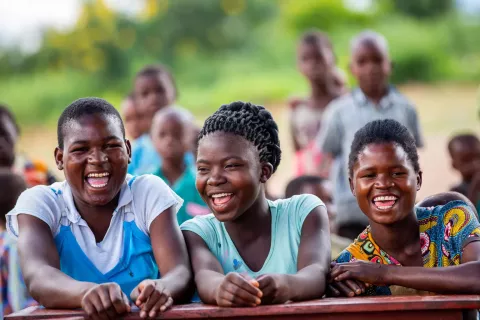
Image credit : UN
By Obiageli ObyEzekwesili
A girl who learns is a girl who is not a bride.
Today the world is asked to end child marriage and invest in girls rights.
I join that call wearing three hats: as a member of the advisory council behind Columbia University’s report Accelerating Efforts to End Child Marriage; as Civil Society Representative on the Steering Committee of the African Unions Decade of Accelerated Action for the Transformation of Education and Skills Development in Africa (20252034); and as the leader of Human Capital Africa, an organisation that has spent years arguing that Africas human capital crisis begins in the early-grade classroom.
The numbers are clear.
UNICEFs 2026 estimates show that about one in five girls worldwide is married before 18.
That adds up to roughly 650 million women and girls alive today who were married as children.
More than 12 million girls are still married each year, about one every three seconds, and sub-Saharan Africa has the highest prevalence at 31 per cent
.In Nigeria, 23.6 million women and girls were married before 18, the largest number in West and Central Africa.
In parts of the North the situation is a national emergency: in Jigawa, 78 per cent of women were first married before 18, and 63 per cent of women left school to marry.
The cost of inaction is high. Our Columbia report includes new analysis by the Center for Global Development.
It estimates losses of up to $175 billion a year, or almost $2.5 trillion by 2040, from lost productivity and higher health risks caused by child marriage.
The report also warns that aid cuts, weakening global commitment to womens rights, and rising conflict could slow or reverse progress.
Child marriage is not a side issue in development. It drains a nations human capital directly.Progress is possible.
An estimated 68 million child marriages have been averted over the past 25 years, through girls education, legal reform and social protection.
In parts of the North the situation is a national emergency: in Jigawa, 78 per cent of women were first married before 18, and 63 per cent of women left school to marry.
The evidence on what works is strong: Each year of secondary education lowers a girls chance of marrying before 18 by five percentage points or more.
In Niger, when the government removed the direct costs of middle school for rural girls, each additional year in secondary school was associated with a 19 percentage point lower probability of marriage.
If every African girl completed secondary education, child marriage could be almost eliminated.
Where HCAs mission and this campaign meet.
A girl cannot stay in secondary school if she never learned to read.
Today, 89 per cent of children in sub-Saharan Africa are in learning poverty, unable to read and understand a simple text by age ten.
A girl who cannot read by ten falls behind, then drops out.
Once she is out of school, she is at the greatest risk of marriage. That is why we say schooling is not learning.
Foundational literacy and numeracy are the first and cheapest protection a girl has.
At the Columbia launch I said that community programmes and advocacy are not enough on their own. Governments must lead.
On this Day of the Girl, Human Capital Africa calls on African governments to:
1. Make foundational learning a girl-protection policy. Every girl should be reading with comprehension by age ten, using proven methods such as structured pedagogy and Teaching at the Right Level.
2. Guarantee the move into secondary school. Remove fees, uniform and transport costs for girls, especially in rural communities with high rates of child marriage.
3. Enforce 18 as the minimum age of marriage in law and in practice, in every state and every community, with traditional and religious leaders as partners.
4. Fund this domestically. As foreign aid shrinks, African budgets and African philanthropy must take over.
5. Measure and publish.
Track girls learning, their transition to secondary school, and child marriage rates in national accountability systems.
The AU Decade of Education gives Africa ten years and a continental mandate.
As a member of its Steering Committee, I will press for girlslearning and retention to be at the centre of how the Decades success is measured.
A Decade that does not end child marriage will not have transformed African education.
The Columbia report sets a realistic target: cutting child marriage prevalence from one in five to one in seven within five years.
Africa can lead the way to that target, but only if we treat every girls classroom as the place where her childhood is protected.
Any girl-child should be a student, not a bride. She should learn, then lead.
• Obiageli ObyEzekwesiliFounder, Human Capital Africa | Former Nigeria’s Minister of Education and Vice President for Africa Region, World Bank.
Opinions
The Girl Who Was Almost Married at 10 Is Taking Her Story to the United Nations
On September 4 this week…Sierra Leone’s First Lady is expected to stand before the United Nations General Assembly with a proposal aimed at protecting millions of girls from the same fate.

• Sierra Leone’s First Lady, Fatima Maada Bio
By Ahmed Sahid Nasralla (De Monk)
AT about 10 years old, Fatima Maada Bio already knew who she was expected to marry.
She was a child, but an adult decision had been made about the direction her life should take. Somehow, she escaped that future.
On September 4 this week, many, many years after that little girl could have been sent into a marriage she did not choose, Sierra Leone’s First Lady is expected to stand before the United Nations General Assembly with a proposal aimed at protecting millions of girls from the same fate.
She is expected to present a draft resolution seeking the proclamation of November 27 as an ‘International Day for the Elimination of Child, Early and Forced Marriage’. The proposal is new.
The date is not yet an official UN observance. It is a call for the international community to give the issue a permanent place on its calendar and, with it, sustained attention and action.
There is something deeply personal about that journey.
According to briefing material from the Office of the First Lady of Sierra Leone, she knew at around the age of 10 who she was expected to marry and narrowly escaped child marriage.
That experience did not become a footnote in her life. It became part of the reason she has spent years speaking about the rights and protection of women and girls.
The First Lady’s public advocacy has taken her from communities in Sierra Leone to some of the world’s most important international forums.
Her flagship ‘Hands Off Our Girls’ campaign has focused on ending rape, early marriage and violence against women and girls, while her work has also extended into girls’ education, women’s health and other issues affecting vulnerable communities.
However, her return to the United Nations this time carries a particularly personal weight.
She is taking a subject that could have defined her own childhood and asking the international community to give it greater and lasting attention.
It is not her first attempt to put child protection on the UN agenda.
In 2022, she spearheaded the effort that led the General Assembly to proclaim November 18 as the ‘World Day for the Prevention of and Healing from Child Sexual Exploitation, Abuse and Violence’.
“She is expected to present a draft resolution seeking the proclamation of November 27 as an ‘International Day for the Elimination of Child, Early and Forced Marriage’. The proposal is new.”
UNAIDS describes her as having championed the adoption of that first-ever World Day.
The United Nations has also continued to strengthen its attention to child, early and forced marriage.
In December 2024, the General Assembly adopted a resolution addressing the issue.
Sierra Leone has been moving on the national front too. The country enacted legislation in 2024 prohibiting marriage involving anyone under 18.
So when Fatima Maada Bio walks into the General Assembly this week, she will be carrying a story that has travelled through several stages: from the experience of a young girl, to a national campaign, to legislation, and now to another attempt to secure a place for the issue on the global calendar.
The numbers behind the issue are sobering.
The United Nations and other international organisations have consistently described child marriage as a major barrier to girls’ education, health, economic opportunity and personal autonomy.
Behind every statistic, though, there is a girl whose childhood is being shortened.
There is a school she may leave, friends she may lose, choices she may never get to make, and a future that may be decided for her before she is old enough to understand what that future means. That is why the personal history of the woman making this proposal is important.
Fatima Maada Bio knows what it means for adults to imagine a future for a girl before she has had the opportunity to imagine one for herself. She also knows what it means to get away.
That gives her advocacy a particular human quality. The issue is something she encountered as a child and has carried into her public life as an adult.
The fight has also taken her beyond child marriage. Last week, OncoDaily named her among its 100 Influential Women in Oncology for 2026, recognising her work in women’s health and cancer prevention.
The publication highlighted her partnership with the Merck Foundation, which has supported specialist medical training in Sierra Leone, including scholarships that contributed to the development of the country’s cancer-care workforce.
It also noted her advocacy for breast cancer awareness and early detection and her participation in discussions around the WHO Global Breast Cancer Initiative.
It is another part of a public role that has increasingly stretched beyond the traditional image of a First Lady.
Then there is child protection, and women’s health.
There is girls’ education, and the wider question of how countries protect women and children who often have the least power over decisions affecting their lives.
The international recognition in oncology is significant for another reason.
It shows that her advocacy is being noticed in fields far removed from the political spotlight in which First Ladies are usually seen.
Nonetheless, the child-marriage campaign remains different. It brings her public work unusually close to her own childhood.
Sierra Leone, as a country, has its own reason to pay attention to what happens in New York this week.
The country has already taken the important step of outlawing marriage involving children under 18.
The First Lady has been one of the most visible voices pushing the protection of girls into the national conversation.
Her campaign has also received international recognition, including her appointment by UNAIDS as a champion for the empowerment and engagement of adolescent girls and young women.
Now she is taking the conversation back to the United Nations. The proposed international day would not, by itself, end child marriage.
A date on the UN calendar cannot keep a girl in school, or protect her from an abusive household or change the circumstances that make families vulnerable to marrying off their daughters.
Those things require laws, enforcement, education, economic opportunity, social protection and changes in attitudes that can take generations.But international days can keep issues alive.
They create opportunities for governments, schools, civil society organisations, communities and international agencies to return to a problem every year, measure progress and remind themselves of what remains unfinished. That is the opportunity behind November 27.
This may also be the reason why the story of the little girl who nearly became a child bride is worth remembering when Fatima Maada Bio enters the General Assembly. She is no longer that girl.
She got education and became a journalist, an actress, an advocate, a mother, and Sierra Leone’s First Lady. She also became the President of the Organisation of African First Ladies for Development.
She is now asking the world to give millions of girls something she was fortunate enough to have: the chance to grow up and become all of that and even more before someone else decides what their lives should become.
That is what, on behalf of Sierra Leone and the world, she is carrying into the United Nations on September 4.
Not a speech or a title. She is carrying a powerful story the General Assembly should listen and act on.
• Ahmed Sahid Nasralla is the Ex-Officio and Immediate Past President of the Sierra Leone Association of Journalists (SLAJ), and the Chairman of the Federation of African Journalists (FAJ) Working Group on Climate Change.
Opinions
Is Dangote Refinery Playing the Giraffe by Leaving Domestic Oil Supply to Marketers?
Is Nigeria gradually returning to a situation where imported petrol is competing with locally refined PMS, even as Dangote Refinery has the capacity to supply a substantial portion of domestic demand?
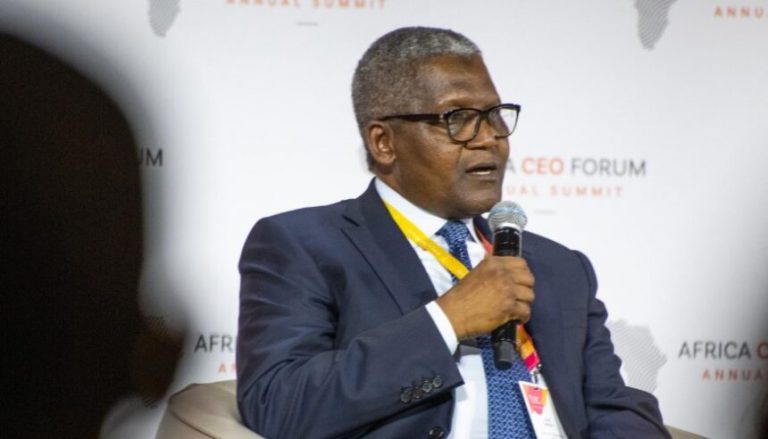
[File Photo] Aliko Dangote
By Ochefa
WHEN I was younger, bedtime storytelling was one of my favourite pastimes in my family. After the evening meal, my mother would usually gather us together for this special treat.
Of all the fables she told us, one that has remained indelibly etched in my memory to this day was Why the Giraffe Eats from Tall Trees.
The story portrayed the giraffe as a humble and considerate animal. Because of its long neck, it could reach the leaves and branches of tall trees, leaving the grasses and shorter vegetation for sheep and goats whose shorter necks could not reach the higher branches.
So, what is the point?
Could the Dangote Petroleum Refinery be playing the giraffe in Nigeria’s downstream petroleum market—leaving marketers to supply the domestic market with imported Premium Motor Spirit (PMS), while it increasingly exports its refined products to other countries?
Recent developments in the petroleum industry appear to lend some credence to this question.
The management of Dangote Petroleum Refinery recently attributed its increased export volumes to rising imports of petrol into Nigeria.
The refinery said the decision to focus more on exports should not be interpreted as a lack of commitment to the Nigerian market.
“Rather, exports are a prudent operational response to the realities of a market where imported products continue to compete with locally refined fuel despite the availability of sufficient domestic refining capacity,” the refinery said.
Figures from the Nigerian Midstream and Downstream Petroleum Regulatory Authority (NMDPRA) appear to support the changing supply pattern.
According to the regulator’s recent report, Dangote Refinery’s supply of PMS to the domestic market fell by 21 per cent to 25.8 million litres per day in July, from 32.5 million litres per day in June.
The monthly factsheet showed that the refinery produced about 25.9 million litres of PMS per day in July and exported 3.4 million litres per day.
The July domestic supply figure was reportedly the lowest recorded by the refinery in 2026.
At the same time, petrol imports rose by nine per cent to 19.7 million litres per day, from 18.1 million litres per day in June.
These figures raise an important question: Is Nigeria gradually returning to a situation where imported petrol is competing with locally refined PMS, even as Dangote Refinery has the capacity to supply a substantial portion of domestic demand?
Dangote Refinery has expressed concern about the continued issuance of import licences for petroleum products. It maintains that it has demonstrated sufficient capacity to meet, and even exceed, Nigeria’s domestic PMS requirements.
The refinery said that although it remains committed to Nigeria’s energy security and uninterrupted fuel availability, the continued inflow of imported PMS has created uncertainty around domestic demand forecasting and inventory management.
According to the refinery, it has consistently maintained sufficient inventories and reserved product volumes to guarantee steady supplies to the Nigerian market since commencing operations.
That commitment, it said, has involved substantial investment in storage facilities, logistics and working capital to protect consumers from supply disruptions and market volatility.
Why Dangote Says It Is Exporting More
The refinery’s major concern appears to be the lack of transparency over the volume of imported petrol expected to enter the country.
Without reliable information on future import volumes, it argues, it becomes increasingly difficult to plan production and manage inventories efficiently.
Maintaining large stocks of petrol that may not be absorbed by the domestic market also comes with significant storage and financing costs.
“As a responsible energy provider, we have always endeavoured to keep adequate reserves to satisfy local demand at all times,” the refinery said.
However, where significant quantities of imported PMS continue to enter the market through licences issued by the regulator, and there is limited visibility on future import volumes, the refinery says it becomes commercially unsustainable to hold excess inventory indefinitely.
Its argument is straightforward: when locally refined products cannot be absorbed by the domestic market because of competing imports, the surplus must be moved elsewhere.
Hence, the increased exports.
The refinery insists that this does not mean Nigeria’s domestic market cannot be supplied. Rather, it says the exports are a response to market uncertainty created by competing imports.
It also warned that if supply shortages eventually occur because of market distortions caused by excessive importation and the resulting difficulty in forecasting domestic demand, such shortages should not automatically be blamed on Dangote Refinery.

The company maintains that it remains ready and capable of meeting and exceeding Nigeria’s petroleum product requirements.
Dangote’s Transparency Concern Is Genuine—Expert
Oil and gas expert Dr Ayodele Oni believes Dangote Refinery’s concern over transparency is legitimate.
According to him, Section 317 of the Petroleum Industry Act contemplates the issuance of import licences where there is a demonstrable shortfall.
But, he argued, a shortfall determination that is not published cannot easily be scrutinised.
“NMDPRA should publish, ex ante, the aggregate volume of import authorisations it has approved for each quarter and the shortfall assessment behind them. That is a modest reform and it costs the regulator nothing,” he said.
However, Oni cautioned against simply shutting out imports.
He pointed to the performance of the country’s government-owned refineries, noting that NNPC’s three refineries produced nothing in July.
“A single plant supplying nearly the entire national market, with imports switched off, is a structural risk, not an achievement,” he argued.
He added that the Federal Competition and Consumer Protection Act exists to address such situations, stressing that regulatory policy should not be based on the assumption that a single refinery will never experience an unplanned outage.
According to him, the solution is structural: a transparent shortfall methodology, published quarterly import quotas, and the development of genuine second and third domestic refineries.
“Everything else is noise,” he said.
” The government cannot simultaneously encourage domestic refining, allow substantial imports without clearly communicating the basis for them, and expect refiners to maintain costly inventories indefinitely.”
Imports or Domestic Refining?
Another industry analyst and former Managing Director of 11PLC, formerly Mobil, Otunba Adetunji Oyebanji, believes Dangote Refinery is within its rights to export.
He argued that the government must retain the flexibility to import petroleum products whenever there is a potential shortfall.
“This is an internationally traded product,” he said, pointing out that even countries with substantial refining capacity, including the United States, continue to import petroleum products.
His argument is that economics, rather than sentiment, ultimately determines where petroleum products are bought and sold.
“We heard that Dangote exported to America. Don’t they have refineries?” he asked rhetorically.
For him, pricing remains a major determinant.
And therein lies the real issue.
The giraffe in my mother’s story was not merely tall; it was considerate. It reached the leaves that other animals could not reach and left the lower vegetation for them.
But Nigeria’s petroleum market is not a fable. Dangote Refinery is a commercial enterprise, not a charitable institution. It must make economically rational decisions, just as marketers and importers do.
The bigger question, therefore, is not whether Dangote Refinery should export.
It is whether Nigeria’s petroleum regulatory framework is creating the right conditions for locally refined products to compete fairly, while ensuring that consumers are protected and the country is not exposed to the risks of relying too heavily on a single refinery.
If Dangote has the capacity to meet domestic demand but finds it more commercially sensible to export because imported PMS is competing with its products at home, then the problem may be bigger than Dangote.
It may point to a regulatory and market-structure problem that requires urgent attention.
The government cannot simultaneously encourage domestic refining, allow substantial imports without clearly communicating the basis for them, and expect refiners to maintain costly inventories indefinitely.
There must be transparency.
There must also be competition.
And, most importantly, Nigeria needs more functioning refineries capable of supplying the domestic market.
Perhaps, then, the lesson from the giraffe is not that Dangote should leave the “grass” to the marketers.
It is that the rules of the forest must be clear enough for every animal to know where it stands.


JUST IN: Mob Sets BRT Bus Ablaze After Motorcyclist’s Death in Lagos

BREAKING: DSS Arrests Fugitive Maina Son, Hands Him to EFCC

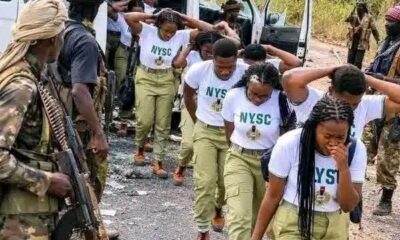
BREAKING: 5 Arrested Over Imo NYSC Abduction

BREAKING: Lagos Govt Declares Today, Thursday Work-Free to Mark 2026 Ìṣẹ̀ṣe Day

Tech Expert, Zuckerberg trains with UFC champions, Adesanya, Alexander

Organ Trafficking: Ekweremadu bags 10 years in UK prison
-
 Business3 days ago
Naira Exchange Rates For Thursday, October 15
-
 Sports3 days ago
CAF Increases Annual Funding for Member Federations to $700,000
-
 News3 days ago
ASCON To Be Rebranded “National School Of Government”
-

 Business2 days ago
Germany plans tax on sugary drinks
-

 International2 days ago
“Mother of all bombs,” Trump Plans To Hit Iran
-
 Business2 days ago
WEF could appoint Lagarde as its next chair, sources say
-

 Business2 days ago
Naira Exchange Rates Friday, October 16
-
 Crime1 day ago
BREAKING: 5 Arrested Over Imo NYSC Abduction