
International
Lagdom Dam: Nigeria gears up for looming flood disaster

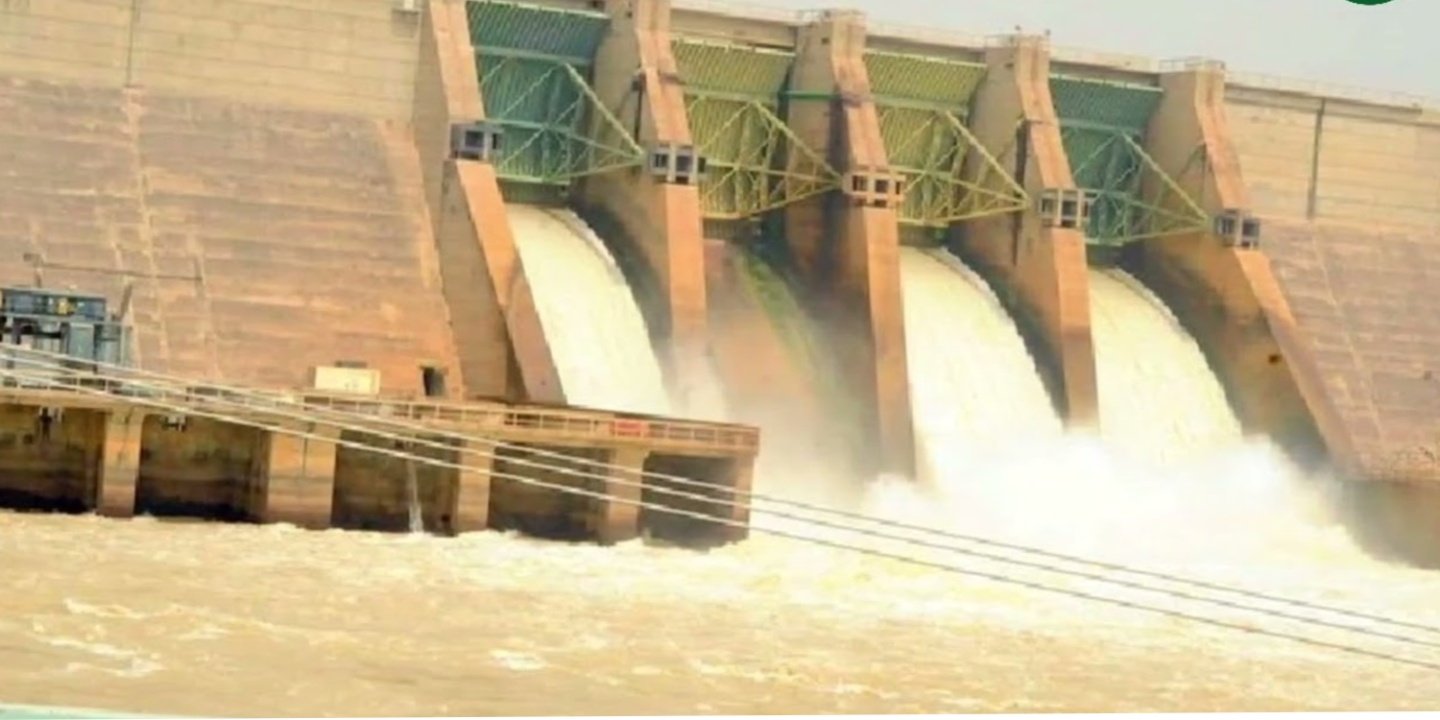
A few days ago, the National Emergency Management Agency, NEMA, alerted Nigerians of impending flooding along the River Benue Basin.
According to the alert, the Cameroonian Government has plans to “open the flood gates of the Lagdo Dam on the Benue River”.
Recall that a Memorandum of Understanding, MoU, was signed in 2016 between Nigeria and Cameroon regarding the release of water from the dam, in which Cameroon will always inform Nigeria before it opens the gates to the dam.
In a letter addressed to Nigeria’s Ministry of Foreign Affairs, the Cameroonian government warned of its intention to release water from the Lagdo dam and asked the agency to take precautionary measures.
Over the years, the massive flooding in many states across the country was attributed to the release of water from the Lagdo Dam.
It was reported that the dam located along River Benue in the Republic of Cameroon has a history of over-flooding some Nigerian states along its navigation ways. These states include Benue, Adamawa, Taraba, Nasarawa, Kogi, Anambra, Enugu, Edo, Delta, Rivers and Bayelsa.
However, in 2019, the dam was opened without prior notification, resulting in flooding in Adamawa, Taraba, Benue, Kogi, and the Niger Delta regions during October and November of that year. There was also flood devastation in 2022, leading to the loss of lives and properties worth billions of naira.
NEMA had recently disclosed in its report that the 2022 flood disaster claimed no fewer than 665 lives, while 2,437,411 and 4,476,867 persons were displaced and affected, respectively.
The agency also announced, “As of August 9, data collated regarding 2023 flooding so far showed that 10 States have been affected, while 33,983 and 7,353 persons were affected and displaced, respectively.
“The breakdown also showed that 75 persons were injured while five deaths were recorded, including 1,679 damaged houses and 866 hectares of damaged farmlands.”
Reacting to the development, NEMA said the notice is not new, noting that it had since informed state governors of impending floods, including that from the Lagdo Dam.
The agency’s spokesperson, Manzo Ezekiel said it was time for the affected state governors to take action and secure lives and properties in collaboration with NEMA.
Ezekiel assured Nigerians that NEMA was working with critical stakeholders, including federal, state and local governments to ensure that the release did not cause negative impacts, asking Nigerians not to fear the opening of the Lagdo Dam.
“Information available from the flow level of River Benue at Nigeria Hydrological Services Agency (NIHSA) gauging station in Makurdi stood at 8.97 meters as of August 25, compared to 8.80 meters on the same date in 2022.
“In contrast, NIHSA has also provided that the flow level of the River Niger system, specifically at Niamey, Niger Republic, remains stable at a normal level of 4.30 meters.
“Similarly, inland dams, including Kainji, Jebba, and Shiroro, reported consistent flow regimes.
“With regards to the hydrological station downstream, the confluence of the Niger and Benue rivers in Lokoja, Kogi are currently within normal limits,” he said.
However, the Lagos State Emergency Management Authority, LASEMA, has restated the state government’s preparedness to tackle any possible emergency from the impending flood.
The Permanent Secretary of LASEMA, Dr Femi Oke-Osanyintolu, disclosed that the state government had provided LASEMA with 144 units of facilities that could accommodate 5,000 Internally Displaced Persons, IDPs, in the event of any emergency.
He noted that Lagos was well prepared, as LASEMA has changed from management to holistic emergency management.
“We have carried out risk analyses, resource mappings, and opened directories in each council to know the vulnerable people in emergencies. All these measures are geared towards ensuring swift, prompt, and effective responses,” he said.
In the same vein, the Delta State government has also expressed its preparedness.
It said it is taking proactive steps to mitigate the effect of flooding in the state, saying it will not hesitate to set up Internally Displaced Persons, IDPs, camps in the event of severe flooding.
“We are already opening drainages and demolishing illegal structures blocking the waterways,” a government official said.
On his part, the president of the Nigeria Society of Engineers, Tasiu Gidari-Wudil, also advised the government to construct flood control dams along the Rivers Niger and Benue to avert flooding that might occur from the opening of the Lagdo Dam.
Gidari-Wudil, in a press conference in Abuja on Monday, called for the dredging of major rivers to reduce siltation and sedimentation.
He lamented that the recommendations by the committees set up by the government after the 2012 and 2022 flood disasters had not been implemented.
Meanwhile, the Presidential Committee, set up by President Bola Tinubu, says it will implement various policies and rescue missions to mitigate the flood’s impacts from Lagdo Dam.
The Minister of Humanitarian Affairs and Poverty Alleviation, Dr Betta Edu, who spoke at a briefing in Abuja at the instance of the committee, urged the Governors’ Forum to step up actions by ensuring the immediate evacuation of Nigerians from flood-prone communities to safer destinations.
She stated that the President had directed that all relevant ministries meet to find a solution to the flooding issue.
In an interview, an environmental remediation expert, Dr Moses Paul stated that relevant stakeholders should prioritise the safety and well-being of the affected population to mitigate the damage that the flood may cause.
Paul, also the Convener of Free Nigeria Movement/YELL OUT Nigeria, believes that the President and state governors should collaborate with relevant stakeholders and allocate resources effectively to manage the situation to prevent further harm.
According to him, the government should also improve early warning systems for floods, which he said could involve the installation of weather monitoring stations, flood forecasting models, and communication networks to provide timely alerts to vulnerable communities.
The environmental expert also urged relevant stakeholders to ensure that psychosocial support services, including mental health support and counselling services, would be available for those affected by the flood.
“The number one priority of government and leadership anywhere in the world is the focus in ensuring a rapid and effective response, particularly anything that will bring to safety the life and property first and foremost of her citizens.
“Therefore, the major concerns and advice for the Nigerian President and state governors in such a scenario as we face today would include establishing effective communication channels, such as mobile alerts or community networks, to disseminate early warning messages and information to at-risk communities to help ensure timely preparedness and evacuation.
“Ensuring residents’ prompt and safe evacuation in the affected areas is crucial. This includes preparing and coordinating relief efforts to provide food, clean water, medical aid, and other essential supplies to flood victims.
“The long-term should include planning for rehabilitation and reconstruction to aid affected communities in their recovery.
“In addition, it is important to ensure that psychosocial support services are available for those affected by the flood, as many individuals may experience trauma, loss, or displacement. Mental health support and counselling services should be activated to help individuals cope with the emotional and psychological impact.
“Encouraging collaboration among multiple stakeholders, including government agencies, NGOs, and local communities, is vital for effective disaster response. Coordinated efforts and the pooling of resources will enhance the overall response capacity.
“It is equally important for the Nigerian President and state governors, particularly those bordering the River Benue, to prioritise the safety and welfare of the affected population, work in collaboration with relevant stakeholders, and allocate resources effectively to manage the situation and prevent further harm by integrating climate change projections into long-term flood management strategies for riverine areas in the country.
“These can be achieved if the government can consider the following steps in addition:
“The government should assess the vulnerability of riverine areas to floods and the potential impacts of climate change. This assessment should consider factors such as population density, land use patterns, infrastructure, and socio-economic conditions.
“The government should incorporate climate change scenarios into its flood risk assessments, including projections of increased frequency and intensity of extreme weather events. This would help in understanding the potential future flood risks in riverine areas.
“Moreover, it is wise for the government to enforce strict regulations on land-use planning in flood-prone areas. This can involve restricting construction in high-risk zones and promoting sustainable land-use practices that minimise the exposure and vulnerability of communities to floods.
“Another aspect is to prioritise the construction of climate-resilient infrastructure in riverine areas. This can include building flood-resistant roads, bridges, and buildings and implementing nature-based solutions such as restoring wetlands and constructing floodplains.
“Aside from the above, the government should engage with local communities to raise awareness about climate change impacts and flood risks. This can include organising workshops, training programs, and public campaigns to educate communities on flood preparedness, early warning systems, and evacuation plans.
“In conclusion, the Nigerian government should collaborate with international organisations and partners to access technical expertise, funding, and knowledge-sharing platforms. This collaboration can help develop and implement effective flood management strategies based on climate change projections.
“By integrating climate change projections into long-term flood management strategies, the Nigerian government can enhance riverine areas’ resilience and minimise future floods’ impacts on communities and infrastructure,” he said.









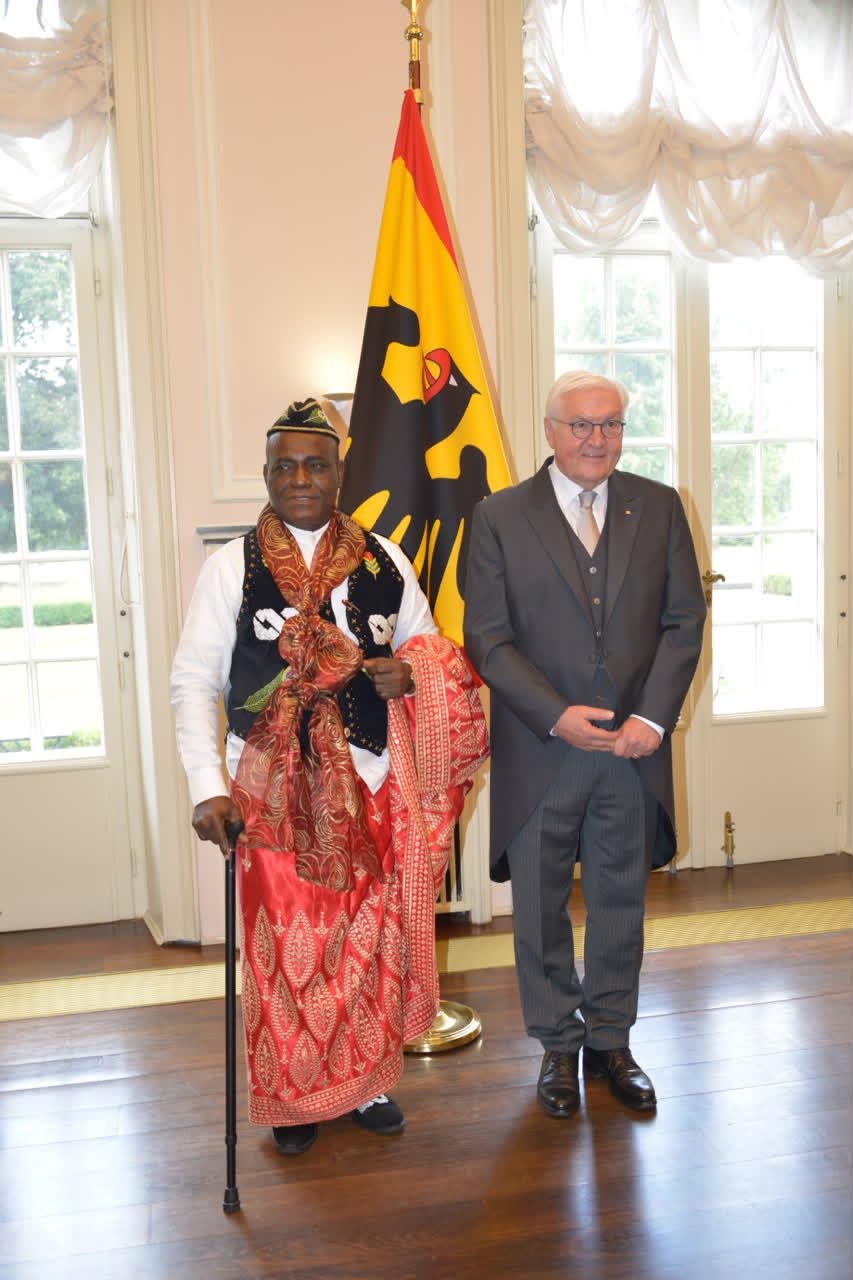
Senator Ambassador Ita Solomon Enang, LLD, OFR, has formally presented his Letters of Credence to the Federal President of Germany, His Excellency Frank-Walter Steinmeier, in Berlin.

The solemn ceremony, conducted in accordance with diplomatic tradition, included a welcome parade by the German military, the signing of the Accreditation Register at the Presidency, and the formal presentation of credentials. President Steinmeier subsequently received Ambassador Enang for bilateral discussions.
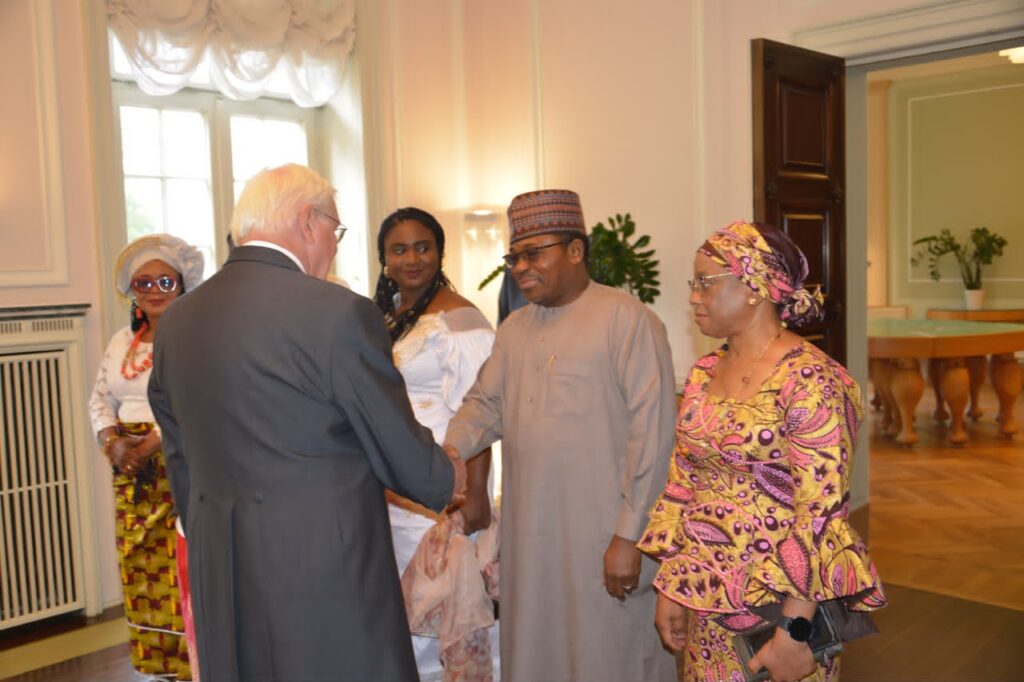
Ambassador Enang expressed deep gratitude to President Bola Ahmed Tinubu, GCFR, for the honour of his appointment as Nigeria’s Ambassador to Germany.
During the talks, President Steinmeier commended the excellent relations between Nigeria and Germany. He recalled state visits and meetings on the sidelines of multilateral forums, and noted the swift processing of Germany’s incoming Ambassador to Nigeria.

Discussions focused on strengthening economic ties, particularly in the power sector, including off-grid technology and Siemens projects; agriculture and food security; citizen diplomacy; and migration and consular matters. Emphasis was placed on opportunities for skilled Nigerians in medicine, technology, IT, artificial intelligence and other fields under a proposed formal Nigeria-Germany migration agreement.
The two sides also addressed Nigeria’s leadership role in ECOWAS and the importance of engaging Sahelian states that have left the regional body for improved security coordination. Other topics included attracting German automobile assembly plants to Nigeria to promote local manufacturing, technology transfer and job creation, rather than continuing imports of fully assembled vehicles.
They reviewed Germany’s role as guarantor of the Green Tree Agreement following the International Court of Justice ruling on the Nigeria-Cameroon land and maritime boundary, including issues related to Bakassi and population displacements. Interest from German firms in capturing flared gas in the Niger Delta for electricity generation, as well as Nigerian oil’s place in the German economy, was also discussed.
Ambassador Enang conveyed the Federal Government of Nigeria’s appreciation for the humanitarian aid donation announced by German Foreign Minister Johann Wadephul during a courtesy call on Nigeria’s Minister of Foreign Affairs, Ambassador Bianca Ojukwu, on 22 July 2026.

Both sides noted the strong personal relations between President Tinubu and President Steinmeier and discussed the value of further high-level state visits. The audience was attended by designated federal ministers and named members of the German Federal Government.
The meeting concluded with an exchange of memorabilia involving officials of the German Federal Foreign Office, the Nigerian Mission in Berlin and the visiting delegation. Ambassador Enang was accompanied by Deputy Head of Mission Ambassador Bashir, Head of Chancery H.E. Dr (Mrs) Chioma Haidara, his wife H.E. Dr (Mrs) Rosemary Ita Enang, his son Mr Charles Ita Enang and his daughter Engr Dr Roses Ita Enang.
As the ceremony closed, a detachment of the German military rendered honours while the Nigerian flag was simultaneously hoisted at the Presidency of the Federal Republic of Germany.
International
Trump threatens Iran bridges, power plant in latest Hormuz attacks
Trump told reporters that he was “not finished” with a war that has already cost Washington $37.5 billion.

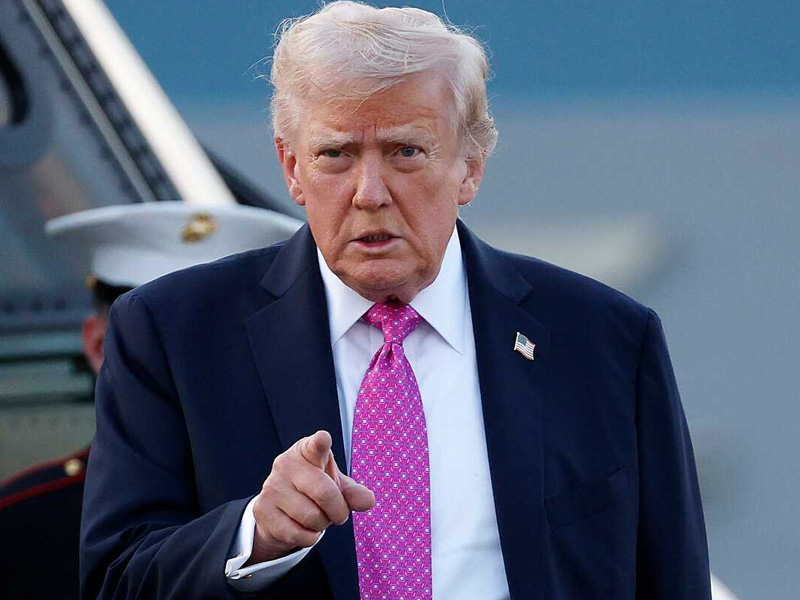
US President Donald Trump threatened on Wednesday to bomb Iranian bridge or power plant each time Theran attack ship in the Strait of Hormuz.
The latest round of escalation began on July 18.
Trump told reporters that he was “not finished” with a war that has already cost Washington $37.5 billion.
Fighting over the strait led to the collapse of a preliminary deal between the United States and Iran, and Tehran has reimposed its blockade on the strategic conduit for oil and gas shipments, firing on vessels that seek to transit.
The blockade has rattled markets and sent oil prices climbing, adding to the pressure on Trump to find an off-ramp to a conflict that has hit Americans’ pocketbooks heading into closely-fought midterm elections.
International
Zelensky sacks Ukraine’s top army commander after days of protests
Syrskyi was replaced by Mykhailo Drapatyi, 43, who is a popular, battle-hardened general.

•Zelensky
Ukrainian President Volodymyr Zelensky has dismissed the country’s army commander-in-chief, Oleksandr Syrskyi.
It comes just days after the removal of popular Defence Minister Mykhailo Fedorov – a move that triggered street protests across the country.Initial rumours that the end of Fedorov’s tenure was related to a conflict between him and Syrskyi were soon confirmed.
Fedorov, 35, has been widely praised for energising the ministry and transforming the armed forces, as well as leading a drive against corruption.
Syrskyi, 60, is seen by many in Ukraine as a Soviet-school commander reluctant to implement radical changes in the army.
Syrskyi defended his record in a farewell address, writing on Telegram: “An army that was fighting a difficult defensive campaign two years ago is now on the offensive.””I am handing over to my successor an army that is not only holding the line but is advancing… I sincerely hope this offensive will continue.”
Syrskyi was replaced by Mykhailo Drapatyi, 43, who is a popular, battle-hardened general.
” I will work responsibly, with full focus, and with respect for the people who are defending our country today,” Drapatyi said on Facebook
BBC


Security Forces Rescue 9, Neutralise Terrorist in Kwara

Nigeria’s Enang Presents Credentials to German President Steinmeier (Images)

Zamfara LG Chairman Abduction: Security operatives intensify rescue efforts

Tech Expert, Zuckerberg trains with UFC champions, Adesanya, Alexander

Organ Trafficking: Ekweremadu bags 10 years in UK prison

SAINT OBI: Between his marriage and his death
-

 Business3 days ago
Naira Exchange Rates Thursday, 23 July
-

 News2 days ago
311 lawmakers say “YES!” to establish state police
-

 Sports3 days ago
Nigeria’s NSC Chiefs Lead Team to 2026 Commonwealth Games in Glasgow
-
 Politics3 days ago
Fashola declares, “I’m not interested in becoming President of Nigeria”
-
 Politics2 days ago
Timi Frank says Trump’s letter not political ‘endorsement’ of Tinubu
-

 Business2 days ago
Naira Exchange Rates Across Black Market, CBN, Commercial Banks Friday, July 24
-

 Business2 days ago
US subjects imports from Nigeria to 12.5% tariff
-

 News2 days ago
Soludo’s daughter bags First Class from UK university