
News
Kogi guber: Signage agency issues guidelines on use of campaign materials, bans posters in Lokoja metropolis, others

The Kogi State Signage and Advertisement Agency has issued some guidelines on the use of campaign materials, with a view to ensuring hitch-free, level-playing ground, sanity and protect the environment from defilement before, during and after the November 11, 2023 governorship election in Kogi State.
According to a statement signed on Tuesday by the General Manager of the agency, Osaseyi Richard, all political parties, gubernatorial candidates, politicians and supporters are to abide by the guidelines.
The agency noted that the development is in accordance with its mandate to control and regulate advert displays in the State, as provided under Section 5(1)(a-o) of the Kogi State Signage and Advertisment Law, 2022.
While warning that defaulters, or anyone involved in any form of impunity, lawlessness in the deployment of political campaign materials would be made to face the consequences of their actions, the agency banned campaign posters of all candidates in Lokoja metropolis, Kabba/Bunu, ljumu, Yagba West, Ankpa, Idah, Ayingba, Adavi, Okene and Okehi towns.
KOSSAA disclosed that it was poised to assisting all political parties, politicians, and supporters in ensuring hitch-free and level playing ground in the use of political campaign and advertising materials in the State and strongly urged everyone to comply with the guidelines to ensure sanity and to protect the environment from defilement, visual blight and other adverse effects of uncontrolled deployment and display of political campaign materials within the State before, during and after the poll.
“These guidelines are issued without prejudice to any political party, association or Candidate as it is the Agency’s intention to ensure fairness among all participants while judiciously performing its duties and applying the rules without sentiment or bias.
“The following are the guidelines as they apply to all Political parties before, during and after the November 11, 2023 Gubernatorial elections in Kogi State.
“Political Campaign Materials on billboards may be deployed on existing structures owned and operated by outdoor advertising practitioners who are duly registered with the Agency and have obtained permits for such sites and structures.
“Each billboard erected must be made of standard and sturdy materials to ensure they do not fall or block the roads or constitute risk to Citizenry and commuters.
“Posters must not be pasted on public utility structures such as Street lamps, poles, Transformers, the Ganaja fly-over and other unauthorized surfaces except as duly authorized by the Agency upon payment of relevant fees.
“In addition to the sum of N5,000,000.00 fee payment to the Agency by Political Parties wishing to deploy campaign materials within the State, each billboard erected by Parties, Candidates or Supporters attracts fee of N2,000,000.00
“The sum of N1,000,000.00 will be charged as fee payable to the Agency by Political Parties for every banner displayed in public places.
“A refundable Caution fee of N50,000,000.00 (Fifty Million Naira only) shall be charged by the Agency for the deployment of all campaign materials before, during and after the election.
“Campaign posters of all Candidates are hereby banned in the following parts of Kogi State: Lokoja Metropolis, Kabba/Bunu, ljumu, Yagba West, Ankpa, Idah, Ayingba, Adavi, Okene, Okehi.
“All Political parties and Candidates must remove the campaign materials not more than Ten (10) days after the Gubernatorial elections on November 11, 2023.
“Parties, Candidates and Supporters must refrain from the use of unsavory languages on opponents and to be mindful of the contents of their campaign materials.
“Please note that all Participants are strongly advised to adhere strictly to these guidelines as defaulters, or anyone involved in any forms of impunity, lawlessness in the deployment of political campaign materials will be made to face the consequences of their actions,” the statement read.

News
UK court jails Nigerian man for masturbating in front of a woman
British Transport Police said Odutola approached a woman on the train, looked her up and down and became aggressive when she refused to engage with him. He then exposed himself while sitting in a wheelchair and began masturbating while staring at the woman and telling her to “come over”

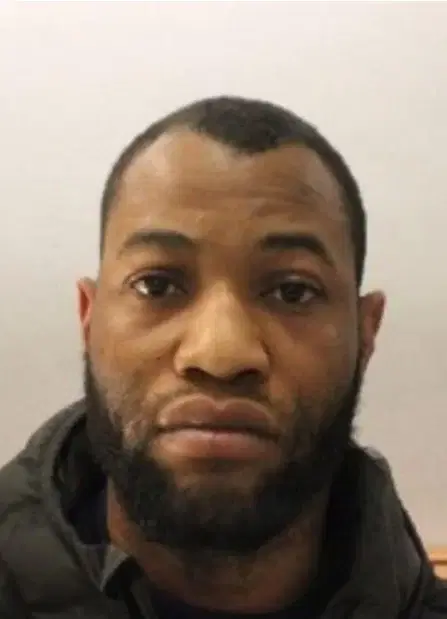
•A Nigerian man and registered sex offender, Babatunde Odutola
A Nigerian man and registered sex offender, Babatunde Odutola has been jailed in the UK after exposing himself and masturbating in front of a woman on a train travelling towards Manchester.
Odutola, 36, of no fixed address, was sentenced to 44 weeks in prison at Manchester Magistrates’ Court on Monday, September 14, after pleading guilty to outraging public decency and breaching a suspended sentence order.
The incident occurred around 7pm on Friday, September 11, on a train travelling through Cheshire towards Manchester Piccadilly railway station.
British Transport Police said Odutola approached a woman on the train, looked her up and down and became aggressive when she refused to engage with him. He then exposed himself while sitting in a wheelchair and began masturbating while staring at the woman and telling her to “come over”.
A fellow passenger intervened and escorted the distressed woman from the carriage.
According to police, CCTV footage showed Odutola continued masturbating as other passengers walked through the carriage.
British Transport Police officers arrested him after the train arrived at Manchester Piccadilly. He was subsequently prosecuted and jailed within 72 hours of the incident
News
Digital Economy Minister Says NDPC Now Properly Functional With New HQ
” An asset recovered on behalf of the Nigerian people has now been returned to productive use for the Nigerian people. That is reform made tangible,” he said .

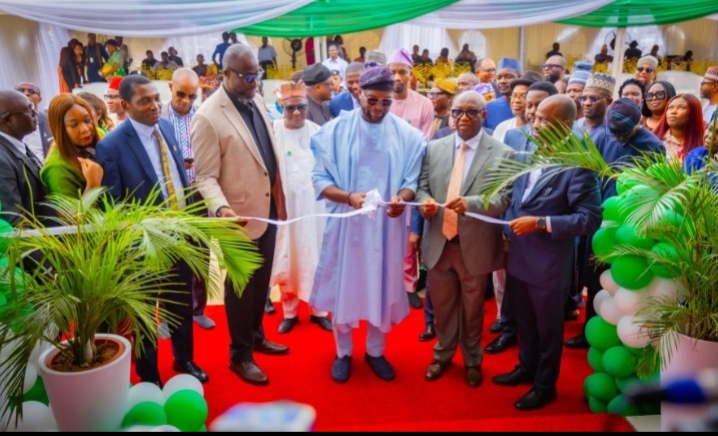
Abuja| NDPC new headquarters commission , Tuesday, 15 September,2026.
An EFCC-recovered property allocated to the Ministry of Communications, Innovation & Digital Economy, has been transformed to the new headquarters of the Nigeria Data Protection Commission (NDPC) in Abuja, as its headquarters.
Speaking during the commissioned ceremony of the building, the Honourable Minister incharge of the ministry, Dr. ‘Bosun Tijani, described the facility as a tangible demonstration of the visionary leadership of President Bola Ahmed Tinubu, and his commitment to building strong institutions that can support Nigeria’s growing digital economy.
The Minister emphasised that said the occasion represented more than the opening of a new office, but a reflection of the administration’s commitment to strengthening the institutions required to protect Nigerians and build trust in the country’s digital economy.
Dr. Tijani said, “Shortly after assuming office in 2023, President Tinubu signed the Nigeria Data Protection Act into law, giving the NDPC the appropriate legal foundation and authority to protect the data and privacy rights of Nigerians.
The President also directed Ministries, Departments and Agencies of the Federal Government to comply with established data protection laws and frameworks, demonstrating that government must lead by example in upholding the standards it expects from citizens and businesses.”
He added, “In the early days of the Commission, it was difficult to ask an institution to protect the data of over 200 million Nigerians and support one of Africa’s largest digital economies without the institutional resources to do so.
President Tinubu recognised this challenge and moved to solve it, approving the resources required for the NDPC to become properly operational and functional, while building towards becoming a sustainable institution in its own right.
He also directed that an EFCC-recovered property be allocated to the Commission as its headquarters.
“An asset recovered on behalf of the Nigerian people has now been returned to productive use for the Nigerian people. That is reform made tangible,” he said .

Boko Haram has strongly denied reports of a ceasefire agreement with the Federal Government and insisted that it will continue its campaign of attacks.
In a statement released by the group, the militants dismissed claims of any truce or negotiated pause in hostilities, describing such reports as false and misleading.
The group reaffirmed its commitment to ongoing operations against government forces and other targets, vowing that its attacks will persist without interruption.
The denial comes against the backdrop of persistent insecurity in the northeast and other affected regions, where the group has maintained a long-standing insurgency.
Security sources note that the latest statement appears aimed at clarifying the group’s position and rejecting any suggestion of dialogue or de-escalation with the authorities.
Military and government officials have not issued an immediate detailed response to the claim, though security operations against the militants remain active. Authorities continue to urge vigilance as the group signals its intention to sustain violence.


Macron Hosts Tinubu for Private Dinner at Élysée Palace (Photos)

Madonna Returns To MTV Video Music Awards, After 23 years

Emir Sanusi mobilises Kano People “Buy Dangote Refinery’s Shares Now”

Tech Expert, Zuckerberg trains with UFC champions, Adesanya, Alexander

Organ Trafficking: Ekweremadu bags 10 years in UK prison

SAINT OBI: Between his marriage and his death
-

 Health2 days ago
Ondo ‘Monkey Tail’ herbal drink kills 49
-

 Business2 days ago
Nigerians Speak As Petrol sells N1,500/litre
-
 Business2 days ago
Emir Sanusi mobilises Kano People “Buy Dangote Refinery’s Shares Now”
-
 News2 days ago
Digital Economy Minister Says NDPC Now Properly Functional With New HQ
-
 News2 days ago
UK court jails Nigerian man for masturbating in front of a woman
-
 Entertainment2 days ago
Madonna Returns To MTV Video Music Awards, After 23 years
-
 International1 day ago
Macron Hosts Tinubu for Private Dinner at Élysée Palace (Photos)