
News
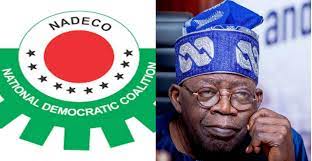
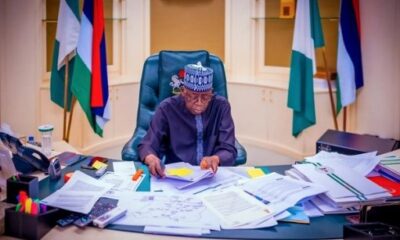
JUST IN: NADECO Congratulates President Tinubu, on his confirmation as president of Nigeria by the supreme court

……calls on Tinubu to act on APC manifesto and El-Rufai panel recommendations
The National Democratic Coalition, NADECO has congratulated President Bola Ahmed Tinubu on his judicial victory confirmation by the Supreme Court of Nigeria in its October, 26, 2023 verdict on the election petition s filed by political opponents against his declared victory by the Independent National Electoral Commission, INEC after the February 2023 Presidential Election.
NADECO said though their preference was for the Nigerian State to first organize the necessary and desirable return to Federal Constitutional Governance upon which Nigeria secured her independence, they are gratified that the partisan politicians have locked horns, campaigned, contested, won and lost election and have exhausted all the legal remedies available for whatever redress they deemed fit in the circumstances of the elections.
According to NADECO, now is the time to deliver the much expected services in the socio-economic and political sphere through well thought out and rightly directed policies desirable to quickly alleviate the unacceptable level of suffering, poverty, economic misery and neglect to which Nigerians have been subjected by immediate past rulers and leaders, for many years now.
NADECO again restates for emphasis that while they strongly desire an immediate upliftment in the standard and quality of living of Nigerians, they expect much more than the necessary bread and butter economic gains.
Their statement reads: NADECO believes that the President Bola Tinubu Government must equally prioritize the process of implementing the APC manifesto particularly in Article 7, pages 3, 7, 29, 37:
”Under the aims and objectives of its article 7, the APC Constitution commits the party to firstly, promote and foster the unity, political stability and national consciousness of the people of Nigeria, and secondly, to promote true federalism in the Federal Republic of Nigeria”.
”In the foreword to its vision for a New Nigeria (page 3, second paragraph), the APC Manifesto commits the party to ‘implement efficient public financial management strategies and ensure true federalism” as well as “restructure governance in a way that kick starts our political economy so that we can begin to walk the path of our better future”. Also, in its manifesto (page 7), APC entered into an “Honest Contract” with Nigeria to create a federalism with “more equitable distribution of national revenue to the states and local governments because this is where grassroots democracy and economic development must be established.”
”In its Commitment to Restore Good Government (page 29, last paragraph), the APC Manifesto again stresses reliance on enhancing federalism through a two-pronged approach that consists of i) devolving control of policing and local prisons to the states and giving the right to nominate State Police Commissioners to Governors; and ii) Expanding the role of the Council of States to act as a consultation and negotiating forum between the Federal and State governments to agree on joint economic and social initiatives”.
”Finally, under its promised Reforms and “a Government You Can Trust” (page 37, last paragraph), the APC Manifesto pledges to “devolve more revenue and powers to the States and Local Governments so that decision making is closer to the people” and pledge to “bring the government closer to the people through political decentralization including local policing”.
”The El-Rufai Committee’s Report recommended for a start the following among others that the APC Government should take immediate steps to return Nigeria to Federal Constitutional Governance upon which the country secured her independence;
Devolution of powers to State
- Resource control
- Making Local Government Affairs an affair of the states
- Constitutional amendments to allow merger of States
- State Police
- State Court of Appeal
- Independent Candidacy
The above were the promises upon which people voted for APC in 2015. TIME IS OF ESSENCE because the necessity for a return to FEDERALISM is a critical existential matter that has overall bearing as to the continued co- mutual existence of the country.
NADECO also wishes to restate again that, the so called “NADECO USA” is a FRAUD, and a DECEPTION being promoted by elements that were not in any of our structure while NADECO operated globally. We have denounced this farcical group, reminding them that NADECO at its November 1999 properly convened meeting in Virginia, USA, presided over by its National Leader, Chief Anthony Enahoro, the organization announced that it was winding down its overseas operations. There had been no reversal of that decision.
NADECO recognizes the fundamental rights of Nigerians to hold personal opinion and to express them in persons or in groups. What is deeply objectionable is for elements who were not part of NADECO while it was losing its sweat, its blood, liberty, possession, and even martyred to suddenly start appropriating the good name and reputation earned through a lot of pain and sacrifice by NADECO for their transient pursuit of partisan objectives.
President Bola Tinubu as a Critical Stakeholder in the highest structure of NADECO, who expended his resources and network together with others while we were in the trenches should prove beyond reasonable doubts that he remains faithful and committed towards restoring Nigeria to the NEGOTIATED FEDERAL CONSTITUTION. No one needs to remind Mr. President that the current warped, skewed, and lopsided national structure must be reconfigured in order to give hope and sense of belonging to all Nigerians that they are equal joint stakeholder in the Nigerian Project.
NADECO wishes President Bola Tinubu divine guidance, robust health, necessary tact and discipline to deliver exemplary services to Nigerians during his tour of duty.
It said: ”THIS GOLDEN OPPORTUNITY MUST NOT BE LOST, AS THE BLACK RACE HAS WAITED FOR TOO LONG FOR NIGERIA AS THE MOST POPULOUS BLACK NATION TO PROVIDE LEADERSHIP FOR THE BLACK WORLD IN THE COMMITTEE OF NATIONS”.





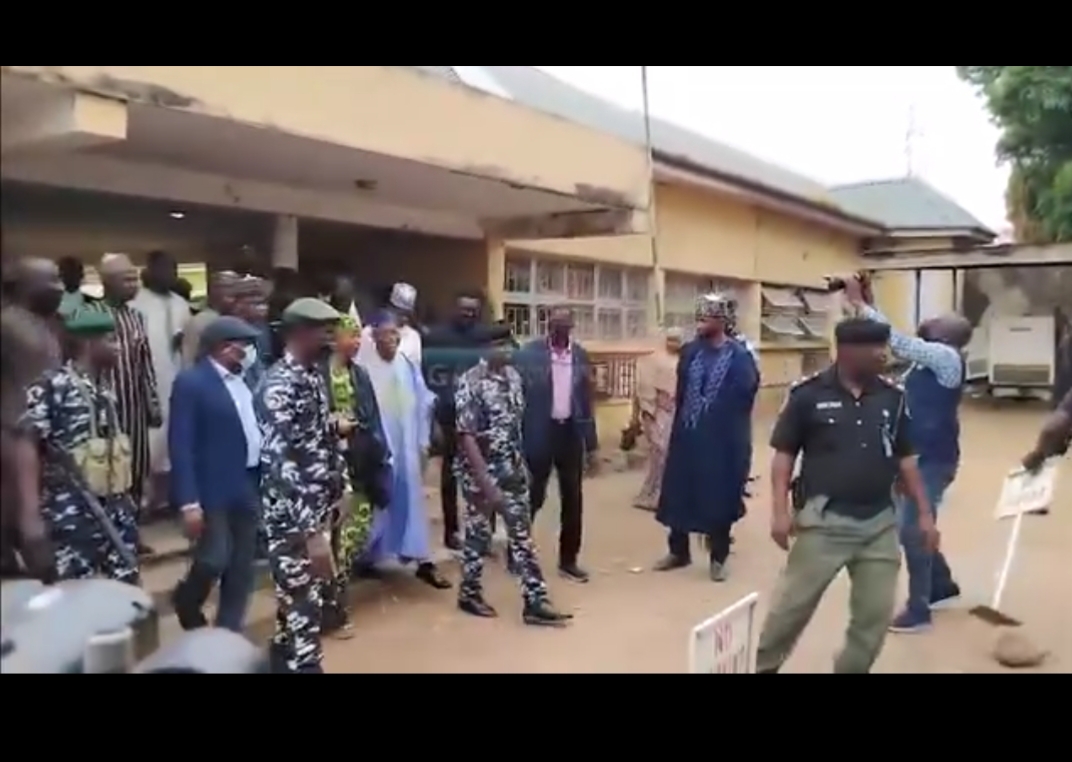
Former Kaduna State Governor, Nasir El-Rufai, has concluded proceedings at the State High Court in Kaduna and is now proceeding to the Federal High Court for the continuation of another suit.
El-Rufai, who was earlier present at the State High Court for the continuation of his trial, left the premises after the sitting ended.
He is expected to appear before the Federal High Court in Kaduna for further proceedings related to another case.
Security presence remained visible around both court premises as proceedings attracted attention from observers and supporters.
Details of the proceedings at the Federal High Court are expected to emerge as the matter continues.
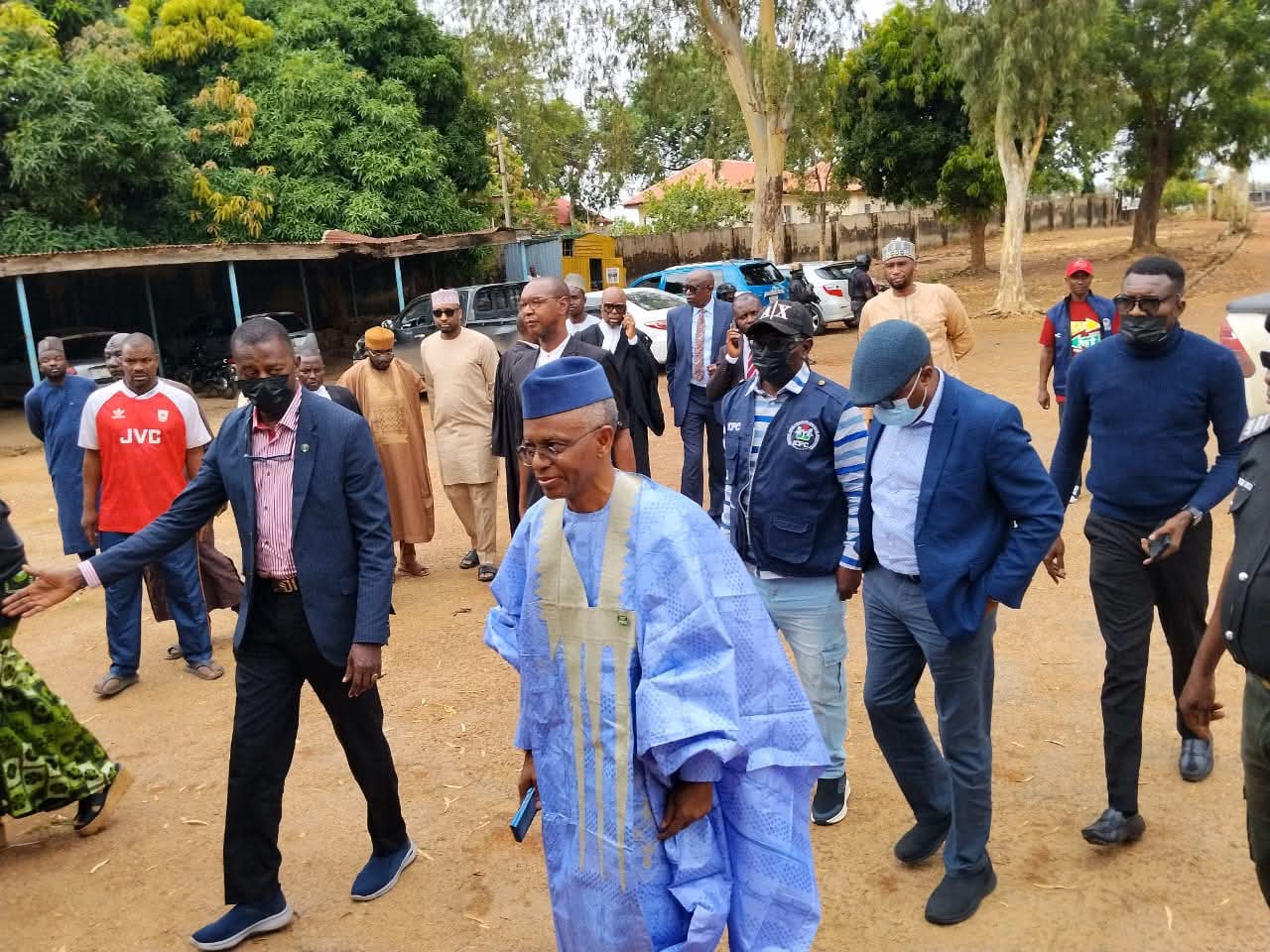
The former Kaduna State Governor, Nasiru El-Rufai, on Tuesday morning arrived at the Kaduna State High Court for the trial, and there after he is expected to proceed to the Federal High Courtfor continuation of his proceedings.
The former governor arrived at the Kaduna State High Court amid tight security presence, as legal teams from both sides prepare to continue hearing in the matter. El-Rufai is also scheduled to appear before the Federal High Court for continuation of related legal processes.
The case continues to attract significant public attention, with observers closely monitoring developments across both courts.
Details of the matters to be addressed in both courts have not been fully disclosed, but outcomes from the hearings are expected to influence the direction of the trial.
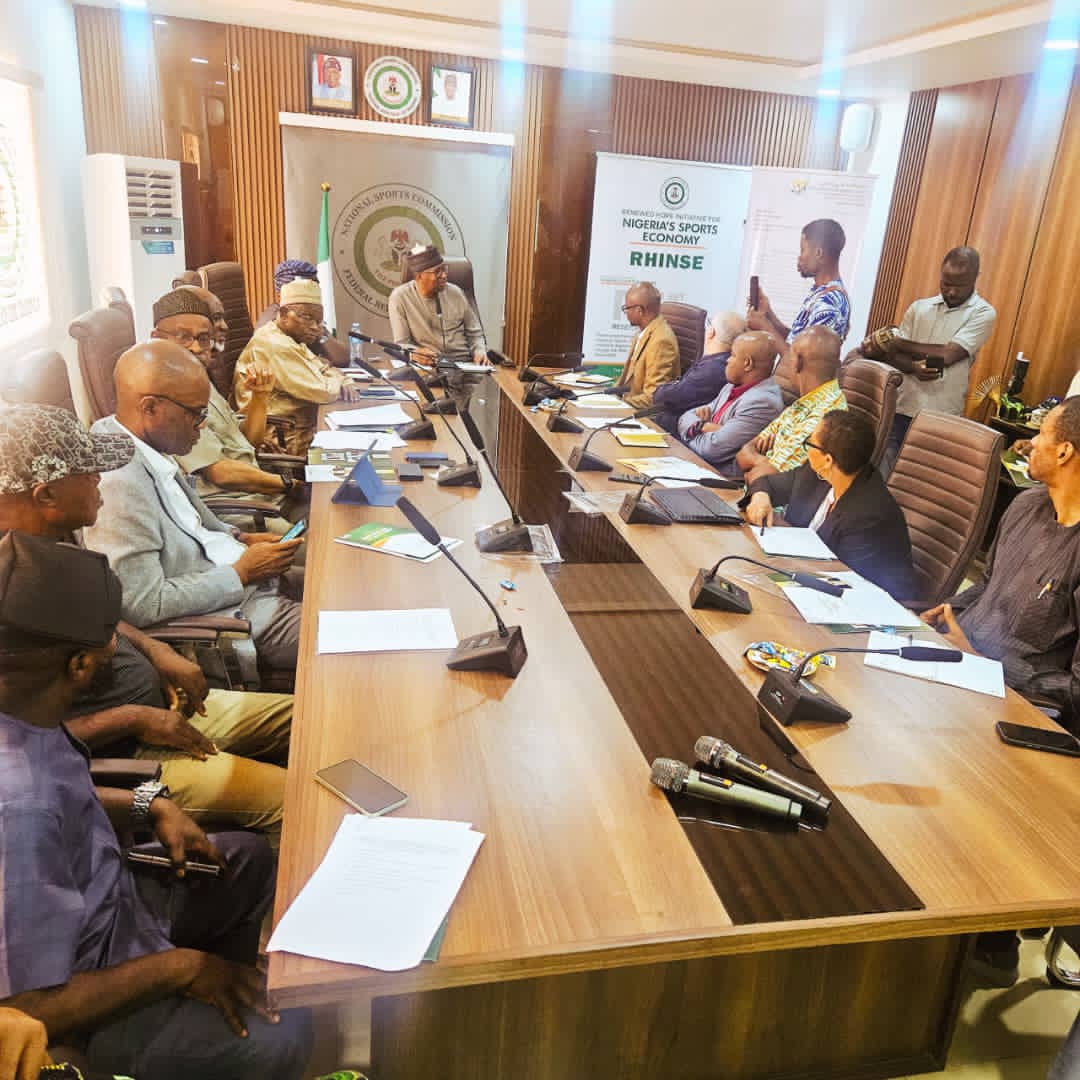
Nigeria officially welcomed the African Games Bid Evaluation Committee on Monday, marking a significant step in the nation’s quest to host the 2031 African Games.
The delegation, led by Dr. Decius Chipande, was received by top officials of the National Sports Commission (NSC) and treated to a comprehensive and compelling presentation showcasing Nigeria’s readiness, capacity, and vision to host a memorable Games.
Chairman of the NSC, Mallam Shehu Dikko, in his remarks, reaffirmed the solid support of the Federal Government for the bid.
He emphasized that hosting the African Games remains a national priority, backed by strong political will and a commitment to deliver world-class infrastructure, seamless organization, and a lasting legacy for African sports.
Director General of the Commission, Hon. Bukola Olopade, presented Nigeria’s strategic sponsorship and marketing framework, outlining innovative approaches to funding and commercial partnerships.
He noted that Nigeria’s large market, vibrant sports culture, and growing private sector interest provide a solid foundation for a financially successful Games.
Providing further depth to the bid, ace broadcaster and Bid Coordinator, Mainasara Ilo, delivered an engaging presentation on legacy, highlighting how the Games would catalyze youth development, infrastructure expansion, and community impact across the country.
On the technical front, former Director of Medicine at the Commission, Dr. Paul Onyedo, detailed Nigeria’s preparedness in sports medicine and its scientific approach to anti-doping, testing, and athlete health management, aligning with international best practices.
In addition, Dr. Emmanuel Igbinosa presented the country’s comprehensive welfare framework, assuring the Committee of Nigeria’s readiness to provide a safe, secure, and athlete-centered environment throughout the Games.
The Evaluation Committee commended Nigeria’s presentation, noting the clarity of vision, depth of planning, and strong alignment between government and private sector stakeholders.
The Committee commenced inspection of key facilities on Monday, with further assessments on Tuesday.
Nigeria remains confident that its compelling bid, backed by experience, infrastructure, and national commitment, positions the country strongly to host a historic and impactful African Games.


Afreximbank Leads $4bn Financing for Dangote Refinery with $2.5bn Commitment

JUST IN: El-Rufai Leaves State High Court for Federal High Court in Kaduna

El-Rufai Appear in State High Court, after Mother’s death, as Trial Continues

Tech Expert, Zuckerberg trains with UFC champions, Adesanya, Alexander

Organ Trafficking: Ekweremadu bags 10 years in UK prison

SAINT OBI: Between his marriage and his death
-
 Business2 days ago
Governor Otti Commissions Ultimum Manufacturing Plant in Aba
-
 Sports2 days ago
CAF appoints Nigeria’s Samson Adamu as acting secretary general
-
 Politics3 days ago
JUST IN: Kwankwaso Set to Join ADC on Monday
-
 News2 days ago
President Tinubu at 74, Donates Salaries to Armed Forces Welfare Fund
-
 Politics2 days ago
PDP will contest 2027 polls, says Wike
-

 Politics2 days ago
PDP Leadership Crisis: Faction Heads to Supreme Court as Tussle Deepens
-
 Business15 hours ago
BUA Foods Plc Reports Strong 2025 Performance with ₦1.77 Trillion Revenue, Proposes Record ₦28 Dividend per Share
-
 Business2 days ago
OPay launches new office in Jos