
News
IPOB Condemns Supreme Court Ruling Overturning Nnamdi Kanu’s Acquittal on Terrorism Charges


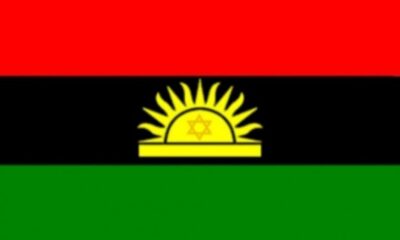
The Indigenous People of Biafra (IPOB) has strongly criticized the Supreme Court of Nigeria for overturning the discharge of its leader, Nnamdi Kanu, from terrorism charges filed by the federal government.
Previously, a panel of three Justices at the Court of Appeal unanimously dismissed the charges against Kanu, ruling that his abduction from Kenya and subsequent return to Nigeria violated local and international laws. The court ordered his release on those grounds.
However, following an appeal by the federal government, the Supreme Court set aside the Court of Appeal’s decision. The apex court ruled that the manner of Kanu’s return to Nigeria was irrelevant and ordered that his trial continue.
In a statement issued on Friday and signed by Barrister Onyedikachi Ifedi, IPOB’s Directorate of Legal Affairs & Global Communications, the group denounced the Supreme Court’s ruling, accusing it of undermining constitutional protections and enabling executive overreach.
The statement read in part:
“We condemn in the strongest terms the Supreme Court’s betrayal of the Constitution in FRN vs. Nnamdi Kanu. By overturning a lawful discharge based on state-sponsored kidnapping, the Court has violated non-derogable rights, annulled the constitutional ban on double jeopardy, and reduced the judiciary to an instrument of executive lawlessness.”
IPOB argued that the Court’s introduction of a “national security” exception to fair trial rights is a fraudulent reinterpretation of the Constitution, noting that Section 36(9) explicitly prohibits retrial after acquittal.
The group further stated:
“The Court of Appeal’s discharge was a final acquittal. The Supreme Court’s revival of dead charges serves state impunity. Courts lack jurisdiction where a defendant is procured through state abduction. The judgment rewards kidnapping as state policy, isolating Nigeria’s judiciary among civilized nations.”
IPOB condemned the ruling for violating Nigeria’s international obligations under the ICCPR and the African Charter and described the decision as “tyranny disguised as jurisprudence.”
The group called on the global community to withhold full engagement with Nigeria until Nnamdi Kanu is freed and constitutional rule restored. IPOB declared the Supreme Court’s ruling null and demanded Kanu’s immediate release.
Additionally, IPOB urged for the reversal of the Supreme Court’s decision and requested that the International Criminal Court investigate Nigerian officials for crimes against humanity related to abduction and denial of fair trial, urging sanctions against those responsible.








The Federal Capital Territory (FCT) Police Command has dismissed as false and misleading a viral video claiming terrorists were advancing on Abuja with heavy gunfire.
In a statement on Thursday, the Command said there was no terrorist attack or security breach anywhere in the Federal Capital Territory.
Commissioner of Police, Ahmed Sanusi, described the video as a deliberate attempt to incite panic and spread misinformation.
According to the Police Public Relations Officer, SP Josephine Adeh, preliminary investigations revealed that the gunshots in the footage were manipulated and edited from an unrelated source, then superimposed on visuals of buildings under construction at an unidentified location.
The Commissioner has ordered a full forensic analysis to trace the origin of the video and identify those responsible for prosecution.
The FCT Police warned content creators and social media users against spreading false information that could cause fear and public disorder.
Residents were urged to disregard the video and refrain from sharing unverified content.
The Command reassured residents of its commitment to maintaining safety and security in the FCT.
News
US Declares 23 Nigerian States High-Risk for Citizens
Southern and Southeastern states were not spared. The Department urged caution in Abia, Anambra, Bayelsa, Delta, Enugu, Imo, and Rivers (excluding Port Harcourt), citing crime, kidnapping, and violent protests.

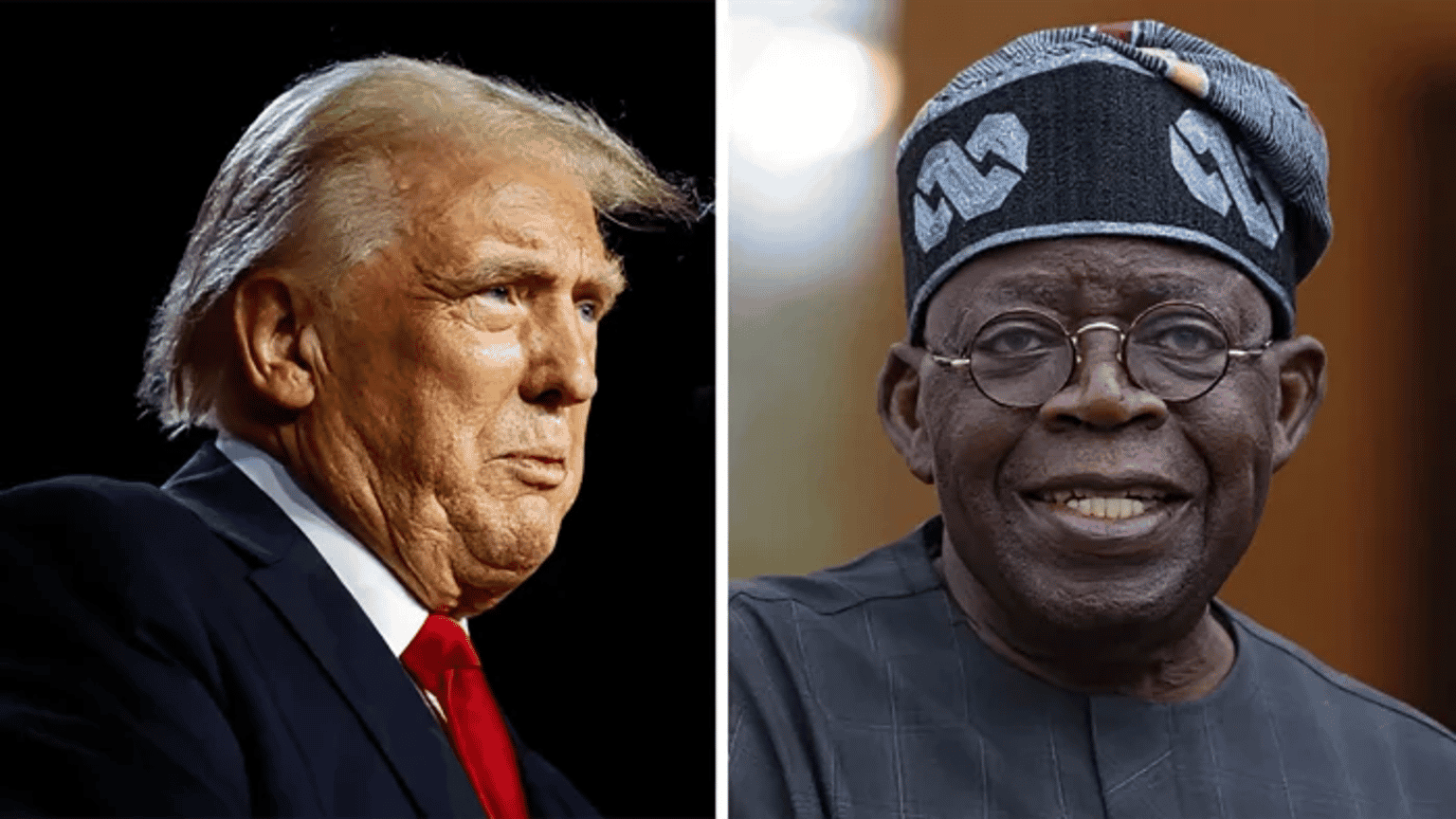
Photo: President Donald Trump; President Bola Tinubu
The United States Department of State has classified 23 Nigerian states “High Insecurity Risks” for its citizens to go , work and live.
In an updated travel advisory issued on Wednesday, the Embassy in Nigeria urged Americans to reconsider travel to Nigeria, with certain states classified under “Level 4: Do Not Travel” due to heightened security risks.
Plateau, Jigawa, Kwara, Niger, and Taraba were added to the list, bringing the total to 23 states where travel is strongly discouraged.
In Northern Nigeria, the advisory highlighted Borno, Jigawa, Kogi, Kwara, Niger, Plateau, Taraba, Yobe, and northern Adamawa as particularly high-risk, citing terrorism, kidnapping, and violent crime.Bauchi, Gombe, Kaduna, Kano, Katsina, Sokoto, and Zamfara were also flagged due to civil unrest, widespread crime, and kidnappings.
“The security situation in these states is unstable and uncertain due to civil unrest. Widespread violence between communities and armed crime, including kidnapping and roadside banditry.
“Security operations to counter these threats may occur without warning,” the advisory warned.
Southern and Southeastern states were not spared. The Department urged caution in Abia, Anambra, Bayelsa, Delta, Enugu, Imo, and Rivers (excluding Port Harcourt), citing crime, kidnapping, and violent protests.
“Crime is widespread in Southern Nigeria. There is a high risk of kidnapping, violent protests, and armed gangs,” the advisory stated.
News
INEC releases updated voters registration figure nationwide
Youth participation remained dominant, with citizens aged between 18 and 34 accounting for 2,354,768 registrants, representing 68.43 per cent of the total figure.

The Independent National Electoral Commission has recorded over 3.4 million new voters in the ongoing second phase of the Continuous Voter Registration exercise nationwide.
The figure is disclosed by the Commission in its week 13 update released on Wednesday in Abuja.
” A total of 3,441,121 registrations have been completed as of April 3, covering both online pre-registrations and physical walk-ins,” said INEC .
Given the breakdown, INEC explained that 2,068,384 citizens completed their registration online, while 1,372,737 others registered physically at designated centres across the country.
State-by-state data showed that Jigawa recorded the highest number of registrants with 201,047, representing 5.84 percent of the total.
Lagos followed with 181,095, while Kano ranked third with 177,681 registrations.Youth participation remained dominant, with citizens aged between 18 and 34 accounting for 2,354,768 registrants, representing 68.43 per cent of the total figure.
Gender distribution indicated a higher turnout among women, with females accounting for 1,922,143 registrations (55.86 percent), compared to 1,518,978 males (44.14 percent).


Police Debunk Viral “Terror Attack” Video in Abuja, Launch Investigation

Tinubu Mourns Soldiers Killed in Benisheikh Terror Attack

US Declares 23 Nigerian States High-Risk for Citizens

Tech Expert, Zuckerberg trains with UFC champions, Adesanya, Alexander

Organ Trafficking: Ekweremadu bags 10 years in UK prison

SAINT OBI: Between his marriage and his death
-

 International3 days ago
Oil Prices Rise, Stocks Fall as Trump’s Iran Deadline Looms
-

 Entertainment3 days ago
The New Masquerade’s actor ‘Clarus’ is dead
-

 News3 days ago
Abiodun Presents Ceremonial Sword to Tinubu, Urges Sustained War on Crime
-

 Politics2 days ago
Atiku, Obi, Kwankwaso, Aregbesola, Storm INEC Hqtrs in Protests
-
 News3 days ago
Kebbi Assembly Speaker Muhammad Usman Zuru dies in Egypt
-

 News3 days ago
BudgIT appoints Nigeria Country Director
-
 Politics3 days ago
Gbenga Hashim resigns from PDP, citing “Things Fall Apart, the center can’t hold”
-
 Politics3 days ago
JUST IN: ADC Faces Fresh Crisis as New Faction Emerges, rejects David Mark-led coalition