
Crime
Hunting down those who kill people to sell their body parts for ‘magic charms
“I was working with some big, big politicians in Guinea, Senegal and Nigeria. We have our team. Sometimes during election time, at night, this place is full of people.”

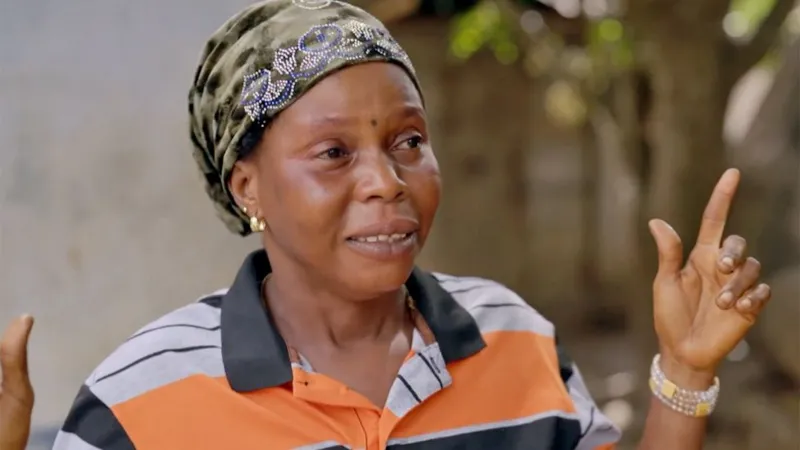
• Picture of Papayo’s mother Sally Kalokoh / BBC.
With many families left traumatised by killings apparently linked to supposed magic rituals in Sierra Leone, BBC Africa Eye looks into those behind the trade in human body parts.
The mother of an 11-year-old boy murdered as part of a suspected black magic killing four years ago is devastated that no-one has yet been brought to justice for his death.
“Today I’m in pain.They killed my child and now there is just silence,” Sallay Kalokoh told BBC Africa Eye, explaining how her son Papayo was found with parts of his body removed, including his vital organs, eyes and one arm.
He had gone out to sell fish at the market and never came back.His family searched for him for two weeks – and finally found his mutilated corpse at the bottom of a well.
“We always tell our children to be careful. If you are selling, don’t go to a corner or take gifts from strangers. It happens frequently in this country,” Ms Kalokoh said.
This murder in my hometown of Makeni, in central Sierra Leone, has haunted me as we often hear of reports of killings linked to black magic, also known as juju, that are never followed up or properly investigated by the authorities.
In Papayo’s case, the police did not even confirm that it was a “ritual killing” – when a person is murdered so that parts of their body can be used in so-called magic rituals by illicit juju practitioners.
They promise things like prosperity and power to clients who pay large sums in the false belief that human body parts can make such charms more potent
.But with the authorities severely under-resourced – there is only one pathologist in a country that has a population of 8.9 million – it is often impossible to gather the evidence needed to track down the culprits.
Belief in witchcraft is also so deeply ingrained in Sierra Leone, even among many police officers, that there is often a fear of pursuing cases further – and most go unsolved.
Our BBC Africa Eye team was able to find two people who claimed they were juju practitioners and offered to obtain body parts for ritual purposes.
Both said they were part of much larger networks – and one boasted that he had powerful clients across West Africa.
The BBC was unable to verify these claims.
One member of our team went undercover, using the name Osman, to pose as a politician who wanted to achieve power through human sacrifice.
We first travelled to a remote area of Kambia district, in the north of the country near the Guinean border, to meet the juju man in his secret shrine – an area in dense bush where he consulted with his clients.
“When Osman specified that he wanted limbs from a woman to be used in a ritual, Kanu got down to business: “The price of a woman is 70m leones [£2,500; $3,000].”
Calling himself Kanu, he wore a ceremonial red mask covering his whole face to conceal his identity and boasted of his political connections.
“I was working with some big, big politicians in Guinea, Senegal and Nigeria. We have our team. Sometimes during election time, at night, this place is full of people,” he claimed.
Election season is regarded by some as a particularly dangerous time when parents have been warned to take special care of their children because of the heightened risk of abductions.
On a second visit, Kanu became more confident and showed Osman what he said was evidence of his trade – a human skull.
“You see this? This belongs to someone. I dried it for them. It is a woman’s skull. I am expecting the person to pick this up today or tomorrow.”
He also pointed to a pit behind his shrine:
“This is where we hang human parts. We slaughter here, and the blood goes down there… Even big chiefs, when they want power, come here. I give them what they want.
“When Osman specified that he wanted limbs from a woman to be used in a ritual, Kanu got down to business: “The price of a woman is 70m leones [£2,500; $3,000].”
Anxious not to put anyone at risk, we did not meet Kanu again. He may have been a scammer, but we handed over our evidence to the local police to investigate further.
Such juju men sometimes refer to themselves as herbalists, the name given to healers who use traditional medicine often made from local plants to treat common illnesses.
Crime
Ex-senatorial candidate jailed 10 yrs for selling petrol to Boko Haram
He knelt before the court throughout the proceedings, pleading for leniency.

A former senatorial candidate in Borno State, Babagana Habeeb, was sentenced on Friday to 10 years in prison for selling petrol to Boko Haram terrorists.
Habeeb, who contested the 2015 election, was convicted by the Federal High Court in Abuja on a one-count charge of aiding and abetting terrorism.
Trial Justice Peter Lifu held that the Federal Government had successfully established its case against him.
The convict, a fuel dealer in Maiduguri, Borno State, admitted in open court that insurgents had obtained fuel from his station, claiming that his attendants had carried out the sales.
He knelt before the court throughout the proceedings, pleading for leniency.
According to Habeeb, he has two wives and six children who depend on him.
He added that he had been unable to see or communicate with any family members for over 10 years while in detention.
The prosecution counsel, Mr. David Kaswe, from the Federal Ministry of Justice, opposed the convict’s plea for leniency.
Kaswe insisted that the logistical support Habeeb rendered to terrorists had led to the deaths of several people and the destruction of homes and properties.
While acknowledging that Habeeb had been in detention for over 10 years, the government lawyer urged the court to impose a 20-year jail term.
He maintained that Boko Haram would not have been able to use their motorcycles to launch attacks on innocent people and escape into the bush without fuel supplies.
In delivering judgment, Justice Lifu held that there was no evidence Habeeb was a Boko Haram member or had received weapons training.
The judge added that the sole accusation against him was the sale of fuel to the terrorists.
Justice Lifu further noted that the Federal Government did not refute Habeeb’s claim of having spent 10 years in pre-trial detention.
Consequently, he sentenced Habeeb to 10 years’ imprisonment, to run from the date of his arrest and detention.
The court ordered Habeeb’s release upon the signing of his release warrant, to enable him to undergo extensive rehabilitation.
(VANGUARD)

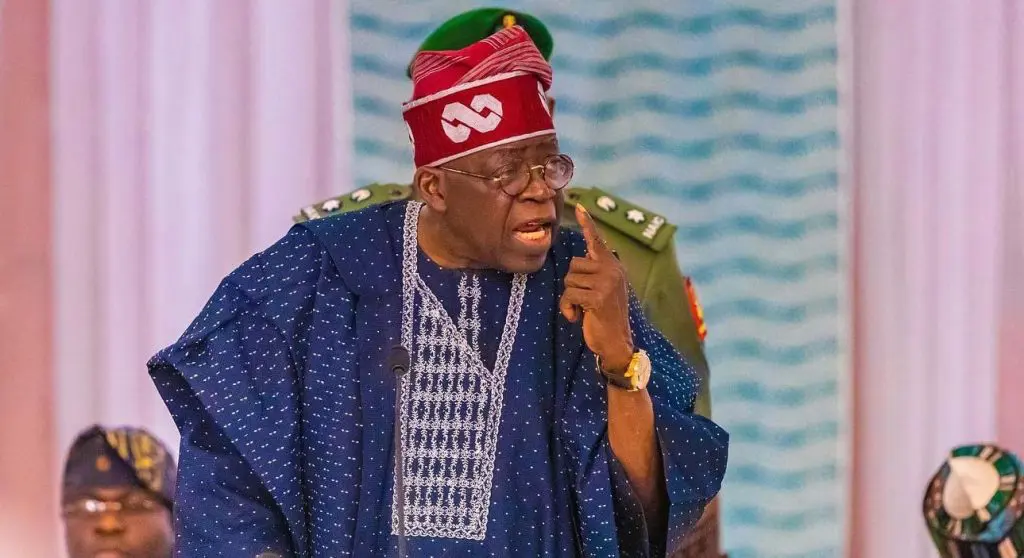
Describes Them as ‘Unforgettable Heroes’
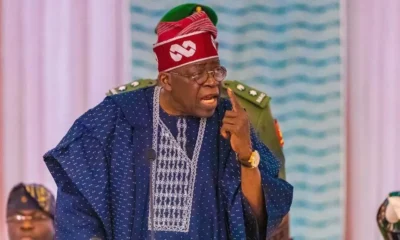
President Bola Tinubu has expressed deep sadness over the deaths of soldiers from the 29 Task Force Brigade, Operation HADIN KAI, who were killed during a coordinated terrorist attack on their camp in Benisheikh, Borno State, early on Thursday, April 9, 2026.
In a statement issued by his Special Adviser on Information and Strategy, Bayo Onanuga, the President extended heartfelt condolences to the families of the fallen troops, the military leadership, and the people of Borno State.
Tinubu particularly condoled with the family of Brigadier-General Oseni Omoh Braimah, who led the troops and made the ultimate sacrifice in the defence of the nation.
The President praised the gallant soldiers for fighting valiantly to repel the attackers and prevent Boko Haram from overrunning protected communities. He described the insurgents’ counterattack as “a sign of desperation” amid sustained military offensives.
“Our armed forces have been conducting intense land and air operations, neutralising many terrorists and their commanders,” Tinubu said.
He urged the military not to be discouraged, assuring them of continued government support in equipment and welfare. He also called on Nigerians and the media to stand firmly with the Armed Forces.
“These soldiers are our heroes unforgettable and irreplaceable. We should desist from celebrating or condoning attacks against our troops,” the President stressed.
Tinubu added that the sacrifices of the fallen soldiers will not be in vain and reaffirmed the government’s resolve to defeat terrorism and achieve lasting peace in collaboration with the Borno State Government.
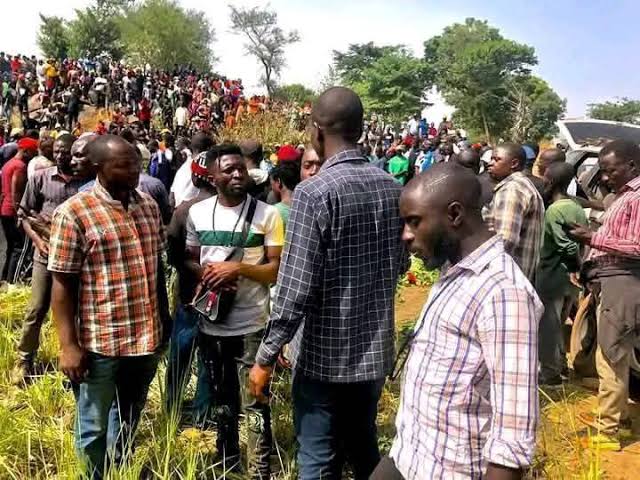
The attack comes 48 Hours After Bola Tinubu Visit.
Three people have been killed and one injured in a fresh attack in Nyamgo Gyel, Jos South LGA of Plateau State, raising fresh concerns over insecurity in the area.
The attack occurred just 48 hours after President Tinubu’s visit to Plateau, where he met stakeholders on security.
The victims, Luka Sandu Pam (36), Samuel Davou (38), and Deme Saidu (36) were ambushed around 7 p.m. on Friday while returning from Gero on a motorbike.
They were part of a group of about 15 youths heading home from a mining site. Eyewitnesses say the group was attacked by suspected armed herdsmen, forcing others to flee.
Gyel Youth Leader, Dung Davou, confirmed the incident, while Chairman of the Berom Youth Moulders.
Association, Barrister Solomon Dalyop, described the killings as a sign of worsening insecurity. He noted the victims had gone to observe Good Friday before the attack.
Police spokesperson SP Alfred Alabo could not be reached for comment as of press time.
Watch video below:


Ex-senatorial candidate jailed 10 yrs for selling petrol to Boko Haram

Breaking: INEC postpones voter revalidation exercise till after 2027 elections

Supreme Court Overturns Appellate’s Ruling on $2bn Debt Recovery Battles Nestoil /Neconde Energy vs FBNQuest Merchant Bank

Tech Expert, Zuckerberg trains with UFC champions, Adesanya, Alexander

Organ Trafficking: Ekweremadu bags 10 years in UK prison

SAINT OBI: Between his marriage and his death
-

 Business3 days ago
Crude Oil Prices Drop Below $95 After US-Iran Ceasefire
-
 Politics3 days ago
Atiku, Obi, Kwankwaso, Aregbesola, Storm INEC Hqtrs in Protests
-
Politics3 days ago
Coalition Leaders Rouse Nigerians to Reject ‘One Party ‘Rule’, Warning INEC “Don’t kill Democracy”
-
 Politics3 days ago
Rep Dasuki Joins ADC, says INEC Chair Becoming Threat to Nigeria’s Multi-party Democracy
-

 News1 day ago
CBN Debunks Viral Fake News of ₦5,000 Banknote Featuring President Tinubu’s Image
-

 International3 days ago
Iran reopens Strait of Hormuz following two-week cease-fire agreement with Trump
-

 News2 days ago
INEC releases updated voters registration figure nationwide
-
 Crime2 days ago
Tinubu Mourns Soldiers Killed in Benisheikh Terror Attack