Business
Global trade set to hit record $33 trillion by year-end

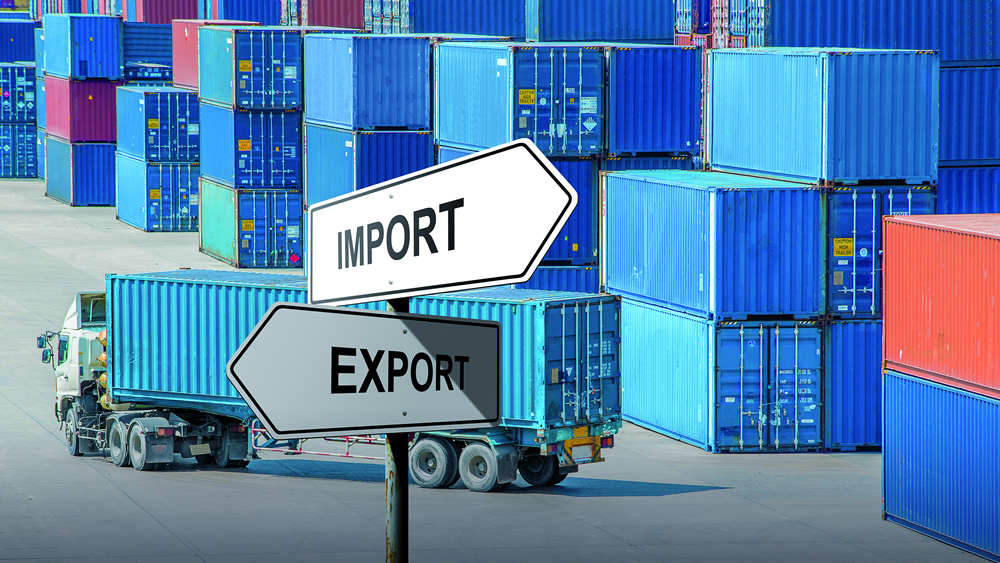
Global trade is set to reach a record $33 trillion in 2024, according to the latest Global Trade Update published by UN Trade and Development (UNCTAD).
This $1 trillion increase, reflecting 3.3% annual growth, highlights resilience in global trade despite persistent challenges.
Robust growth in services trade, up 7% for the year, accounted for half of the expansion, while goods trade rose 2% but remained below its 2022 peak. Opportunities amidst uncertainty
Developing economies, traditionally strong drivers of global trade, faced headwinds in 2024, with imports contracting 1% and South-South trade falling by the same margin in the third quarter.
In contrast, developed economies led Q3 growth, with stable demand driving a 3% rise in imports and 2% in exports.
Despite these challenges, opportunities remain for developing economies to capitalize on high-growth sectors.
ICT and apparel trade surged, with increases of 13% and 14%, respectively, in the third quarter 2024.
This growth underscores the potential for diversification and entry into value-added industries.
Stable global growth forecasts and easing inflation also present a chance to build resilience in 2025.
Sectoral pressures and growth prospects While ICT and apparel showed strong momentum, traditional sectors critical to developing economies faced declines.
Energy trade fell 2% for the quarter and 7% for the year, while metals trade contracted by 3% both quarterly and annually.
Automotive trade dropped 3% in Q3 but is expected to end the year with modest 4% growth.
A call for strategic action
UNCTAD urges developing economies to adopt targeted policies that enhance trade diversification and invest in high-value sectors to mitigate risks.
The organization underscores that trade is a cornerstone of sustainable development.
To capitalize on opportunities in 2025, developing economies require coordinated support to navigate uncertainty, reduce dependencies and strengthen global market links.
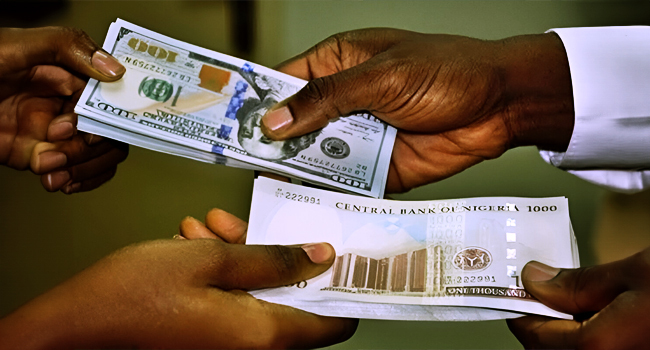
BLACK/ PARALLEL MARKET RATES
₦1370 DOLLAR (USD)
₦1800 POUND (GBP)
₦1510 EURO (EUR)
₦970 CANADIAN DOLLAR (CAD)
₦65 SOUTH AFRICAN RAND (ZAR)
₦350 UAE DIRHAM (AED)
₦190 CHINESE YUAN (CNY)
₦100 GHANAIAN CEDI (GHS)
₦2300 WEST AFRICAN CFA F.(XOF)
₦2200 CENTRAL AFRICAN CFA F.(XAF)
₦850 AUSTRALIAN DOLLAR AUSSIE (AUD)
CBN OFFICIAL RATES
DOLLAR (USD)₦1331.61
POUND (GBP)₦1764.26
EURO (EUR)₦1490.48
SWISS FRANC (CHF)₦1608.23
JAPANESE YEN (JPN)₦8.4
CFA FRANC (XOF)₦2.27
WEST AFRICAN UNIT OF ACCOUNT (WAUA)₦1802.33
CHINESE YUAN (CNY)₦199.01
SAUDI RIYAL (SAR)₦354.83
SOUTH AFRICAN RAND (ZAR)₦80.49
Business
WEF could appoint Lagarde as its next chair, sources say
The WEF’s Board of Trustees, which includes Lagarde herself, was due to meet on November 2 and could elect her as its next chair, said the people close to the organisation, who spoke on condition of anonymity due to the sensitivity of the matter.
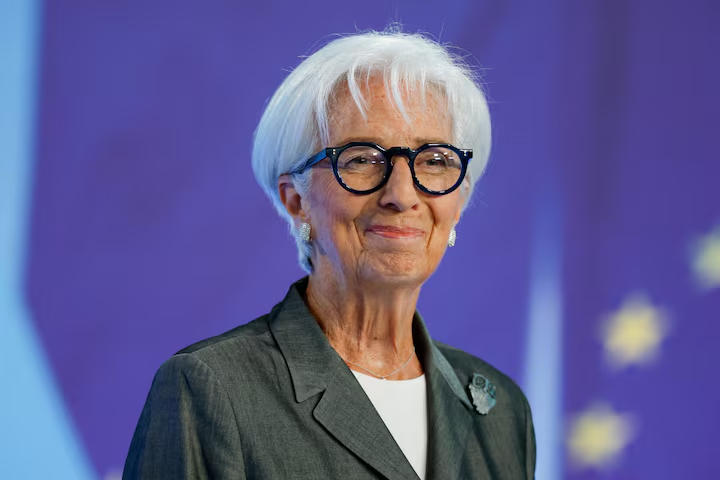
•European Central Bank President Christine Lagarde
The World Economic Forum could appoint Christine Lagarde as its next chair as soon as next month, four people close to the organisation told Reuters, meaning she would step down early as European Central Bank chief and trigger a wider reshuffle at the top of the ECB.Lagarde’s ECB term is scheduled to end in October 2027.
Leaving early would give European Union leaders a chance to pick a new ECB President before France’s spring presidential election, which opinion polls suggest the far-right could win, and could pave the way for a deal involving two other senior ECB roles.
The WEF’s Board of Trustees, which includes Lagarde herself, was due to meet on November 2 and could elect her as its next chair, said the people close to the organisation, who spoke on condition of anonymity due to the sensitivity of the matter.
No final decision has been taken yet, they said.
A spokesperson for the WEF said the forum could not confirm when the next full Board of Trustees meeting would take place, but that the aim was to hold one before the end of the year.
Business
Germany plans tax on sugary drinks
The tax is expected to generate additional revenue for the federal government of €690 million in 2027 and €925 million in 2028.
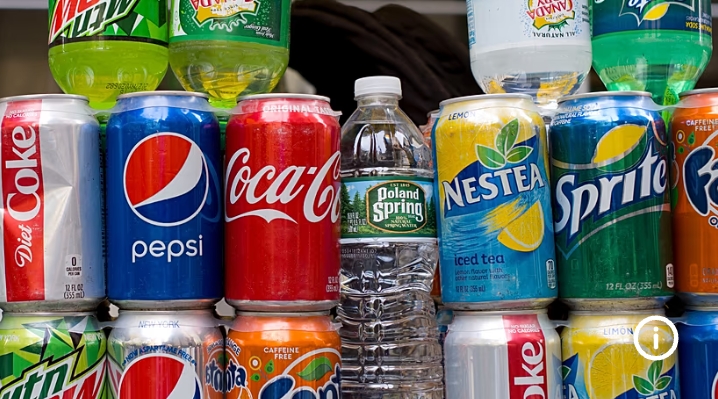
The German cabinet has approved draft legislation to tax sugary drinks in Europe’s biggest economy.
If passed by the German Bundestag, the tax will take effect on 1 July 2027.
The coalition aims to raise revenue for the federal budget while encouraging manufacturers to reduce sugar content and offer healthier products.
The levy is intended to ease pressure on the healthcare system, which faces costs of more than €2 billion every year linked to the high consumption of sugary drinks, which contributes to obesity, diabetes and tooth decay.
According to the federal government, Berlin is using the tax to implement “what associations from the fields of health, science, child protection, and consumer protection have long been demanding.”
The tax is expected to generate additional revenue for the federal government of €690 million in 2027 and €925 million in 2028.


Mbappé wins Onze d’Or award for 2025/26 season

Ronaldo Gets 30-Day Suspension For Portugal Camp Walkout

JUST IN: Ex-Delta Gov Uduaghan Dies at 71, Oborevwori Mourns

BREAKING: Lagos Govt Declares Today, Thursday Work-Free to Mark 2026 Ìṣẹ̀ṣe Day

Tech Expert, Zuckerberg trains with UFC champions, Adesanya, Alexander