
Business
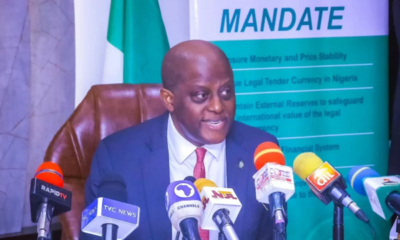
CBN reveals stance on revoking licenses of Wema, Polaris, Unity Banks


The Central Bank of Nigeria has said there is no plan to revoke the licenses of Wema, Polaris and Unity Banks.
The acting Director of the Corporate Communications Department, Mrs Hakama Sidi Ali, on Monday, made this clarification in a statement.
Recall that a circular made the round on Monday suggesting that the apex bank has dissolved the boards of the three banks barely after revoking the license of Heritage Bank.
However, the apex bank spokesperson described the claim as false.
CBN reassured members of the banking public of the safety of their deposits and the banking system’s resilience.
“Without prejudice to the ongoing recapitalization process, I want to restate that the Nigerian banking industry remains resilient.
“Key financial soundness indicators remain within current regulatory thresholds.
“Customers are, therefore, encouraged to proceed with their transactions as usual, as the CBN is committed to ensuring the safety of the banking system,” she stated.
On June 3, CBN announced the withdrawal of license for Heritage Bank over poor financial performance.
To quell public panic, the Nigerian Deposit Insurance Corporation, NDIC assured Heritage Bank depositors that it had already begun the process of repaying their money.






Business
Cybercriminals cloning DStv, other brands to steal bank accounts across Africa
According to cybersecurity company NordVPN, the campaign distributes Remote Access Trojans (RATs) and banking trojans, forms of malware that can give criminals control over infected devices and access to sensitive information.


Cybercriminals are impersonating popular companies and government agencies across Africa in a campaign designed to take over smartphones and bank accounts.
More than 100 fake websites linked to the malware campaign have been identified since August 2025.
Brands including DStv, Takealot and South African Airways, as well as the South African Revenue Service (SARS), are being used to make fraudulent messages and websites appear legitimate.
According to cybersecurity company NordVPN, the campaign distributes Remote Access Trojans (RATs) and banking trojans, forms of malware that can give criminals control over infected devices and access to sensitive information.
The attacks are particularly concerning in South Africa, where Android dominates the mobile operating system market.
NordVPN said the attacks typically begin with social engineering, where criminals send convincing messages through SMS, WhatsApp or social media.
The messages may contain urgent offers or requests involving job opportunities, tax refunds, identity renewals or pension verification.
Victims are then directed to fake websites designed to closely resemble the official websites of trusted organisations.
The sites encourage users to download an Android application. Once installed, the malicious software can operate quietly in the background, including after the smartphone is restarted.
Business
Cement price hits N16,000 per bag
The current cement prices mark a steep rise from late 2024, when a bag sold for around N7,500.

• Chairman of BUA cement, Abdul Samad Rabiu (ASR)
Cement dealers across Nigeria have announced fresh price increases, with a 50kg bag now selling for as much as N16,000 in some markets, up from N13,000 recorded by buyers just days earlier.
The current cement prices mark a steep rise from late 2024, when a bag sold for around N7,500.
By the third quarter of 2025, that had risen to about N9,000 before reaching the N12,000 to N16,000 range now seen across different locations.
Other building materials have followed a similar upward path. Blocks have climbed from around N600 to N1,100 each.
Sand has gone from N165,000 to N250,000 per 30 tonnes. Granite has risen from N530,000 to N780,000 per 30 tonnes.
Reinforcing steel now costs N1.15 million per tonne, up from N850,000.
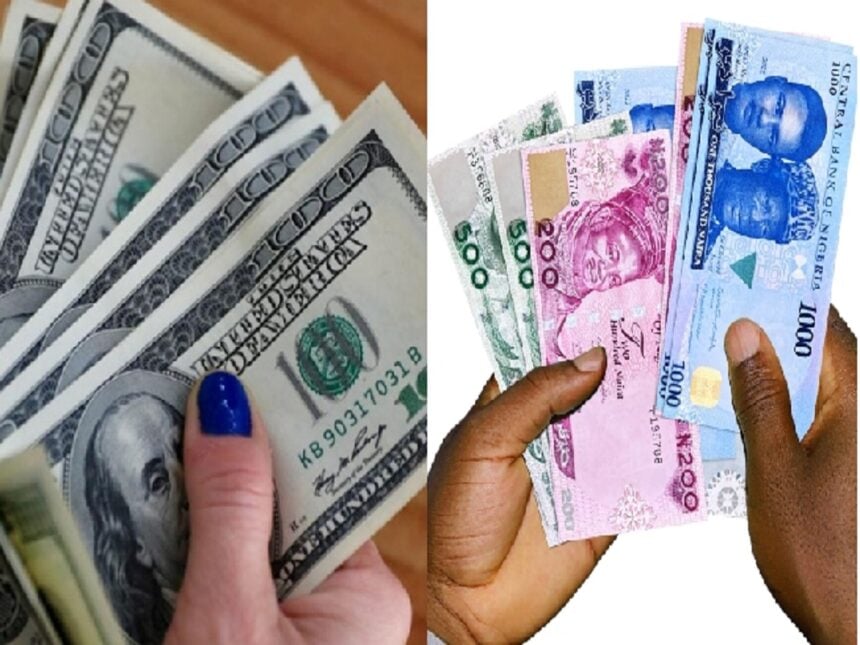
BLACK MARKET RATES
US Dollar (USD) Buy ₦1,405 Sell ₦1,410
Great British Pound(GBP) Buy ₦1,890 Sell: ₦1,915
EURO (EUR) Buy ₦1,590 Sell ₦1,610
Canadian Dollar (CAD) Buy ₦1,020 Sell ₦1,080
South African Rand (ZAR) Buy ₦75 Sell ₦90Ghana CEDI (GHS) Buy ₦95 Sell ₦110
West African CFA Buy ₦2, 300 Sell ₦2, 400
CENTRAL AFRICAN CFA Buy ₦2,150 Sell 2,250
CBN Exchange Rates
US Dollar (USD) ₦1,374.63
Great British Pound (GBP) ₦1,838.70
EURO (EUR) ₦1,574.97
Swiss Franc (CHF) ₦1,687.70
Chinese Yuan (CNY) ₦200.42
Japanese Yen (Yen) ₦8.49
West African CFA (XOF) ₦2.37
West African Unit Account (WAUA) ₦1,848.41
Saudi Riyal (SAR) ₦358.91
South African Rand (ZAR) ₦83.35


BREAKING: Veteran Nollywood Actor Taiwo Hassan ‘Ogogo’ Reportedly Dies at 66

NGE 2026 Conference: Onaiyekan, Mbah, Osigwe, Others to Speak in Enugu

Tinubu Names Yari, DG Presidential Campaign Council

Tech Expert, Zuckerberg trains with UFC champions, Adesanya, Alexander

Organ Trafficking: Ekweremadu bags 10 years in UK prison

SAINT OBI: Between his marriage and his death
-

 News3 days ago
BREAKING: ICPC Uncovers Another Fake Agency Operating Inside SGF’s Office (Video)
-

 News3 days ago
2027 Polls: INEC Fixes November For Nationwide Mock Accreditation Exercise
-

 News3 days ago
Enugu Air: NSIB releases preliminary report
-

 Politics3 days ago
Oyebamiji Meets Tinubu After Osun Poll
-
 Politics2 days ago
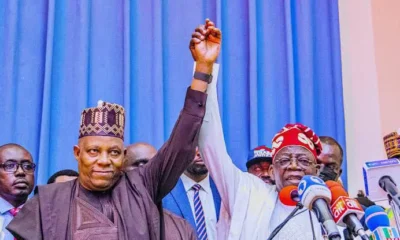
Tinubu chairs APC Presidential Campaign Council
-

 Politics1 day ago
APC Chair Dies After Collapse at Kogi Meeting
-
 News1 day ago
Tinubu Names Yari, DG Presidential Campaign Council
-
 News21 hours ago
NGE 2026 Conference: Onaiyekan, Mbah, Osigwe, Others to Speak in Enugu