
News
Building on Strong Foundation: Governor Ododo’s Fiscal Strategies for Kogi State

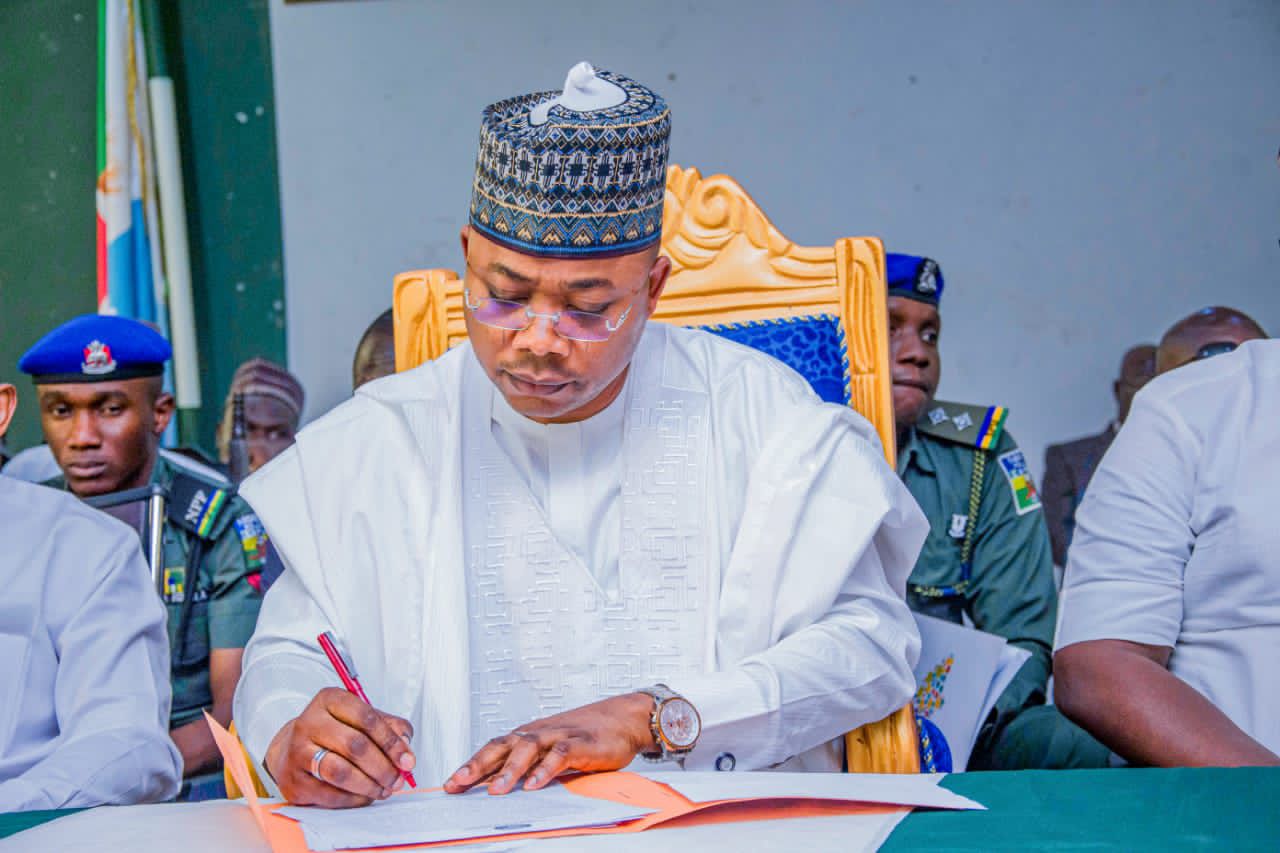
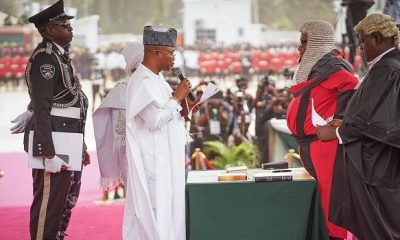
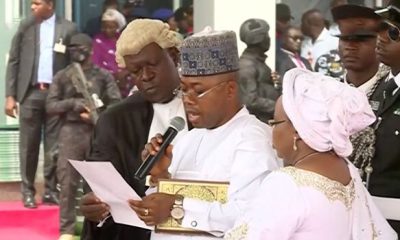
It was a historic and momentous occasion for the good people of Kogi State when His Excellency, Alhaji Ahmed Usman Ododo, took over the reins of leadership as the Executive Governor of Kogi State on January 27, 2024.
Governor Ododo assumed office from his esteemed mentor, His Excellency, Alhaji Yahaya Adoza Bello, after successfully serving out his eight years of unprecedented achievements that spanned various sectors of the state.
Ododo, having diligently served in the two terms of Yahaya Bello’s administration as the Auditor-General for Local Governments, is no stranger to the policy thrust and strategic focus of his predecessor and mentor.
Just like his predecessor, Ododo is not merely a thoroughbred accountant but also a Certified Public Accountant of notable repute and distinction.It is, therefore, not surprising that Governor Ododo, in the last seven months of his transformative leadership, has continued to sustain and build upon the gains Yahaya Bello’s eight-year tenure made in the areas of fiscal policy on debt servicing and boosting internally generated revenues (IGR) in the state.
Continuing the Legacy of Debt ServicingGovernor Yahaya Bello’s administration was marked by a rigorous and meticulous approach to debt management, having inherited a humongous and daunting debt from the previous PDP administrations. Recognizing the crippling effects of unchecked debt on economic development, Bello implemented forward-thinking policies that prioritized debt servicing to ensure the state did not fall into deeper financial distress.
This prudent approach not only stabilized Kogi State’s finances but also laid a solid and enduring foundation for sustainable economic growth.
Recall that in November 2022, Kogi State under Governor Yahaya Bello won the prestigious World Bank’s Awards of Excellence in three categories – Fiscal Transparency and Accountability, Debt Sustainability, and Domestic Revenue Mobilization.
These esteemed awards were conferred on the state at the Federal Government of Nigeria/World Bank States Fiscal Transparency, Accountability, and Sustainability (SFTAS) dinner with governors/award night held at Transcorp Hilton, Abuja.
The objective of the World Bank’s State Fiscal Transparency, Accountability, and Sustainability Programme is to promote the focus and attention of Nigerian states towards the improvement of their Public Financial Management (PFM) systems, processes, and institutions.
The then state’s auditor-general, Yakubu Okala, who spoke to journalists after the ceremony, attributed the success of the state in the areas of fiscal transparency and accountability to self-discipline, as well as the institution of a transparent and accountable governance system by Governor Yahaya Bello from the inception of his administration.
“The state is blessed with an incorruptible governor who also provides leadership from all fronts, a professional to the core that has surrounded himself only with persons that have the capacity to deliver”.
Governor Ododo has wisely chosen to uphold this illustrious legacy bequeathed by Yahaya Bello.
By continuing to prioritize debt servicing, Ododo ensures that the state maintains its financial credibility and avoids the pitfalls of excessive borrowing.
This unwavering commitment is evident in his administration’s careful and judicious allocation of resources towards meeting debt obligations promptly.
In doing so, Ododo is not only safeguarding the state’s financial health but also enhancing investor confidence, a crucial factor for attracting investment and fostering economic development.
Since assuming office and in line with his administration’s mantra of “continuity and consolidation”, Ododo has been prompt in the payment of salaries to workers at both local and state levels and also in meeting the contractual obligations to contractors handling various projects in the state.
According to the domestic debt data released by the Debt Management Office on September 30, 2020, the Kogi State government, through the astute leadership of former Governor Yahaya Bello, was able to reduce the state debt from a cumulative N132.5 billion in 2019 to N84.9 billion to N73,314,904,696.35.
The well-detailed data showed that the Kogi State government, under the stewardship of Ododo’s predecessor, through a well-structured fiscal policy and prudent management of the state’s scarce resources, reduced the state’s domestic debts by N59.15 billion.
Similarly, in the states’ domestic debt reduction data released by the Debt Management Office and published by one of the reputable online platforms, TheCable, on June 26, 2024, Kogi was among the top four states of the federation that have drastically reduced their domestic debt profile, bringing the state’s domestic debt figure from 121,808,350,345.34 in December 2023 to 38,552,462,453.80 as at June, 2024 In an effort to run a state free of debilitating debt, Ododo is showing his unwavering commitment to running a state that is not weighed down by burgeoning debts that could become an albatross for the development of the state.
With his eagle eye for detail and meticulous approach to public finances, Ododo has proved himself a formidable force to be reckoned with when it comes to the prudent management of state resources.
Enhancing Internally Generated Revenue (IGR)Governor Bello’s tenure saw significant strides in improving Kogi State’s IGR through innovative strategies and comprehensive reforms.
These efforts included expanding the tax base, improving tax collection efficiency, and leveraging technology to track and enhance revenue streams.
The result was a notable increase in the state’s IGR, providing a more stable financial base for developmental projects.
Before Bello’s emergence as Kogi Governor in 2016, the state was generating a paltry N350 million to N400 million as Internally Generated Revenue (IGRs) on a monthly basis.
The Bello administration, however, changed the narrative as the monthly IGRs of the state astronomically rose to over N1.3 billion before he left office.
Building on this solid foundation, Governor Ododo has also demonstrated a proactive stance in furthering IGR generation from what he met. Recent IGR posted by the state showed that the monthly average has risen significantly to N2 billion within just six months of his term in office.
This impressive increase is made possible through the prudent and transparent management of the revenue collection mechanism.
His administration has introduced a number of measures aimed at boosting local industries, supporting small and medium-sized enterprises (SMEs), and harnessing the state’s abundant natural resources.
By fostering an environment conducive to business growth and economic diversification, Ododo is driving Kogi State towards greater financial independence.
Moreover, Ododo’s focus on leveraging cutting-edge technology to streamline revenue collection processes is a testament to his forward-thinking approach.
The adoption of digital platforms for tax collection not only reduces leakages but also enhances transparency and accountability.
These measures are crucial in building public trust and encouraging voluntary compliance among taxpayers.
The Broader Economic ImpactGovernor Ododo’s steadfast dedication to sustaining and enhancing these key economic policies has far-reaching implications for Kogi State.
Effective debt servicing ensures that more resources can be allocated to critical sectors such as education, healthcare, commerce, agriculture, and infrastructure, driving overall development.
Simultaneously, increased IGR provides a stable revenue stream that can be reinvested into the state’s economy, creating jobs for the teeming youth, and improving the quality of life for its residents.
Additionally, by maintaining a stable and predictable economic environment, Ododo is positioning Kogi State as an attractive destination for both domestic and foreign investors.
This influx of investment is essential for the state’s long-term economic growth and development, paving the way for a more prosperous and vibrant future.
No doubt, Governor Usman Ahmed Ododo’s administration represents a continuation and enhancement of the economic policies initiated by Governor Yahaya Bello in the Kogi State 35-year Economic Roadmap.
By prioritizing debt servicing and aggressively pursuing strategies to boost IGR, Ododo is ensuring that Kogi State remains on a path of sustainable financial stability and growth.
With more funds being saved for the state, the Ododo administration has been able to embark on an ambitious infrastructural renewal effort at the local levels.
For instance, internal roads in major communities in the state are at various levels of completion.
These include roads in Egbe, (Yagba West); Aiyetoro-Gbedde, (Ijumu); Mopa (Mopamuro); Felele-Agbaja (Lokoja LGA); Oguma (Bassa LGA); Idah, (Idah LGA); Abejukolo, (Omala LGA), and Anyigba (Dekina LGA), among other projects.
Critical and capital projects such as infrastructure at the Kogi State University, Kabba, Confluence University of Science and Technology, Osara, and other host of inherited projects are not abandoned.
He is also making significant investments in the health, road infrastructure, and agriculture sectors of the state for the overall wellbeing of the citizens.
The governor has also been able to boost the security architecture of the state through the launch and funding of the Metropolitan Quick Response outfit in the state.
Ododo’s commitment to these policies not only secures the state’s economic future but also sets a benchmark for other states to follow.
In a region where financial prudence and innovative revenue generation are paramount, Governor Ododo’s approach stands as a beacon of effective governance and visionary leadership for others to emulate.





News
FG launches new digital postcodes
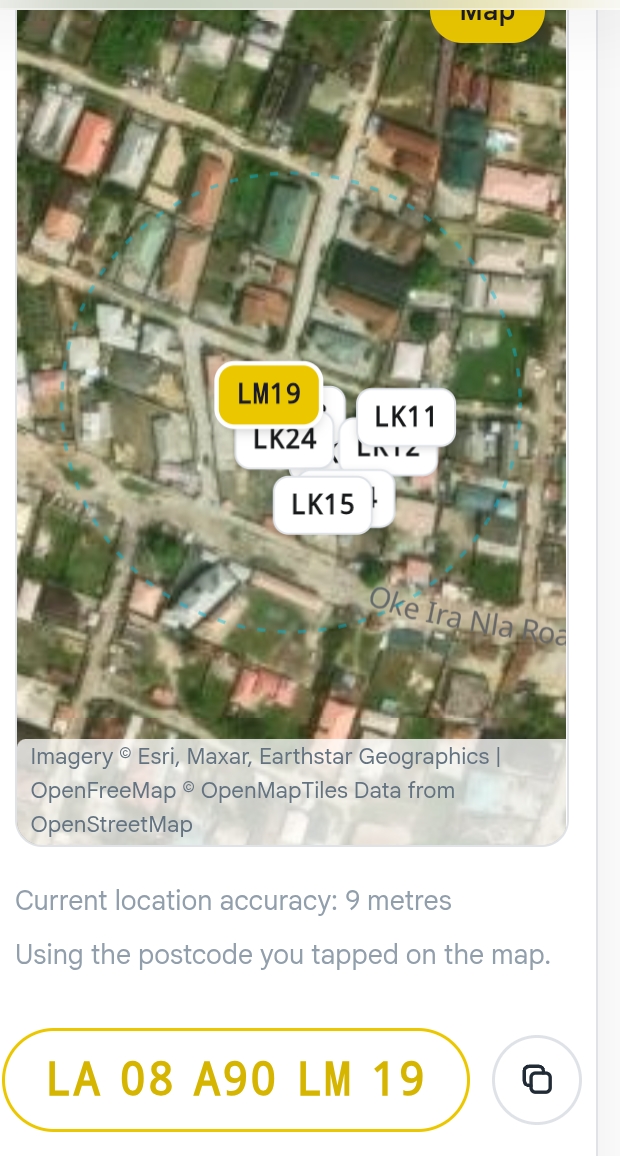
The code is designed to provide a precise, GIS-enabled reference for identifying locations.

• Image credit: NIPOST
The Federal Government has launched the National Digital Alphanumeric Postcode System, urging Nigerians to find and begin using their postcodes.
The National Digital Alphanumeric Postcode, operated by the Nigerian Postal Service, gives every addressable building a unique 11-character code — the code is designed to provide a precise, GIS-enabled reference for identifying locations.system. Easier to find, share and use.
The Minister of Communications, Innovation and Digital Economy, Bosun Tijani announced the launch in a post on X on Thursday.
Tijani described the system as a step towards making locations across the country easier to identify and connecting people and businesses to services and opportunities.
Tijani said the system could help businesses reach customers beyond their immediate neighbourhoods, enable families to provide accurate locations during emergencies and help government agencies reach communities with essential services.
The minister encouraged Nigerians to search for their postcodes through the official Digital Postcode website, postcode.gov.ng, and share them with family members, friends and businesses.
News
Nigeria @ 66: President Tinubu says next phase of reforms’ll cut cost of living
“Our reforms did not create the weaknesses in our economy. They confronted them,” he said, while warning against attempts to reverse the policies and return to what he described as the “abuse of addictive subsidies”.
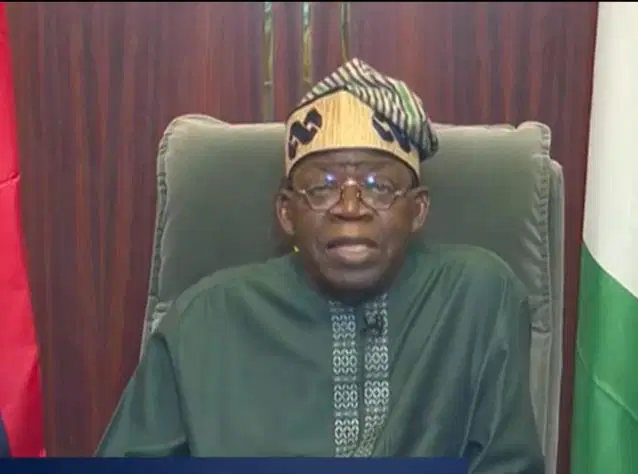
President Bola Tinubu has declared that the next phase of his administration’s reform will be focused on reducing the cost of living, creating jobs and ensuring that the benefits of economic growth were widely shared.
President Tinubu gave the assurance in his Independence Day address to mark Nigeria’s 66th anniversary, titled “From Reform to Prosperity”, in which he defended the economic policies of his administration and urged Nigerians to stay the course.
Tinubu said the reforms undertaken since his assumption of office had corrected the country’s economic direction, describing them as painful but necessary treatment for longstanding structural problems.
Using a cancer patient as an analogy, the President said Nigeria had for too long treated the symptoms of its economic problems rather than confronting their underlying causes.
“By 2023, poverty was rising, and hope was nearly gone. The country’s situation was darker than ever. We had no choice but to act,” he said.
Tinubu said previous administrations had chosen “morphine” by sustaining inefficient arrangements and postponing difficult decisions, while his administration chose to “excise the cancer”.
He acknowledged that the reforms had produced painful “side effects”, but argued that the hardship should not be confused with the underlying economic problems they were designed to address.
“Our reforms did not create the weaknesses in our economy. They confronted them,” he said, while warning against attempts to reverse the policies and return to what he described as the “abuse of addictive subsidies”.
The President’s speech came as some stakeholders and analysts regretted that, despite various reforms embarked upon by successive Federal Governments, the country was yet to come out of the woods economically and socially.

Former Vice President Atiku Abubakar has demanded the immediate release of five men arrested in Borno State for wearing T-shirts bearing the slogan “Tinubu Must Go.”
In a statement issued on Wednesday, the African Democratic Congress (ADC) presidential candidate condemned the arrests, describing the slogan as a legitimate political expression rather than a crime. He argued that wearing a T-shirt with a political message should not lead to detention in a democracy.
The five men — identified as Baba Aji Gremami, Mustapha Abba Yemen, Abacha Mohammed Ali, Adam Umar Gubio and Abdulhamid Mohammed — were reportedly arrested by the Borno State Police Command in Maiduguri and charged with offences including criminal conspiracy and inciting disturbance.
Atiku recalled that President Bola Tinubu had previously protested against the fuel pricing policies of the Goodluck Jonathan administration. He insisted that Nigerians must equally be free to express dissatisfaction with current government policies.
“‘Tinubu Must Go’ is a demand for political change. It is not a weapon, a threat or a crime,” Atiku said. “Tinubu was free to tell Jonathan that his policies were hurting Nigerians. Nigerians must be free to tell Tinubu that his policies are hurting them. Release these five citizens now.”
He called on the authorities to disclose the detainees’ whereabouts, grant them access to their families and lawyers, and free them if the political slogan was the sole basis for their arrest.


Naira Rates To Dollar, Pound ,Euro… Friday, October 2

Obafemi Hamzat promises to end ‘unauthorised levies’ in Lagos if he is elected

President Tinubu, Other Political Leaders Watch MKO Documentary

Tech Expert, Zuckerberg trains with UFC champions, Adesanya, Alexander

Organ Trafficking: Ekweremadu bags 10 years in UK prison

SAINT OBI: Between his marriage and his death
-
 Business2 days ago
Naira To Dollar, Pound, Euro… Rates Friday, October 1
-
 News2 days ago
Nigeria @ 66: President Tinubu says next phase of reforms’ll cut cost of living
-

 News3 days ago
Atiku Demands Release of 5 Arrested Over ‘Tinubu Must Go’ T-Shirts
-

 News3 days ago
FG Declares October 1 Public Holiday to Mark Independence Day Anniversary
-

 Business2 days ago
Court orders NMDPRA to continue issuing fuel import licences to Matrix Energy, AA Rano, AYM Shafa
-

 International3 days ago
Plane Makes Emergency Landing After Pilots Fight in Cockpit
-
 News2 days ago
FG launches new digital postcodes
-
 Business3 days ago
ON-GOING: Dangote $16 billion refinery groundbreaking holds in Kenya (Images)