
News
BREAKING: Supreme Court Dismisses Atiku, Obi’s Appeals, Affirms Tinubu As President

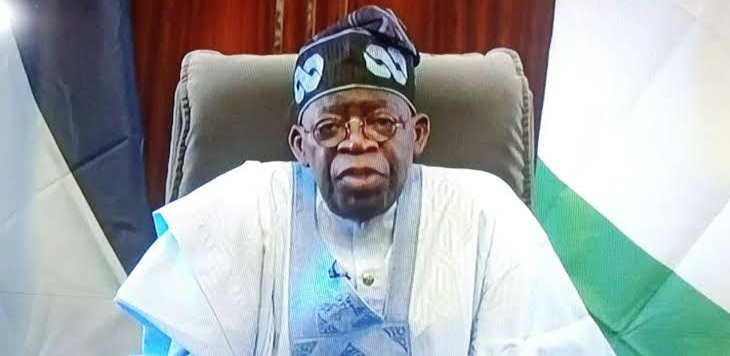
The Supreme Court on Thursday upheld the victory of President Bola Tinubu in the February 25 presidential election.
The apex court in its ruling dismissed the appeals by the presidential candidate of the Peoples Democratic Party (PDP) Atiku Abubakar and his Labour Party (LP) counterpart Peter Obi.
A seven-judge panel ruled as without merit the opposition appeals over claims of fraud, electoral law violations, and Tinubu’s ineligibility to run for president.
The apex court thrashed all the grounds of appeal of Atiku and PDP on qualification, non-compliance with the Electoral Act, the 25% votes in FCT, and electoral malpractices.
“On the whole, having resolved all the issues against the appellant, it is my view that there is no merit in the appeal and it is hereby dismissed,” Justice Inyang Okoro said in dismissing Atiku’s appeal.
“The judgment of the court below delivered on September 6th, 2023 affirming the election of the second respondent as the duly elected President of the Federal Republic of Nigeria is hereby affirmed.”
It listened to Obi’s appeal for about five minutes. In dealing with the LP’s presidential candidate on the issue of double nomination of Vice-President Kashim Shettima, the court held that the issue had been dealt with in its ruling on May 26.
“As for issue Number 4 which has to do with double nomination which was not in Atiku’s appeal, it is the view of this court that this issue having been dealt with by this court, this court cannot allow the matter to be re-litigated in this very court. There must be an end to litigation,” Justice Okoro held.
“For us to sit down now and talk about when this man resigned or did not resign when they did fresh primaries to replace him which we have done before, we are not going to do this again.
“This matter ought not to have come in. When this matter was pending at the trial court, this court delivered that judgment. If you read the judgment of the lower court, they mentioned that the Supreme Court has settled this matter and that should have been the end.
“You now bring this issue of double nomination for us to sit on it and write another judgment, this is not how it should be. This appeal lacks merit and is hereby dismissed.”
An election appeals court last month already rejected the two main opposition party petitions, including allegations of fraud, violations by the Independent National Electoral Commission (INEC), and claims Tinubu did not meet the constitutional requirements.
Along with its original claims, Atiku’s legal team had also sought to introduce new evidence, it claims shows Tinubu submitted a forged certificate from the Chicago State University as a qualification to the election commission when he applied to run for president.
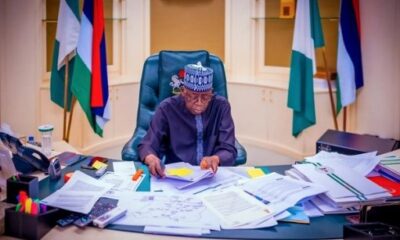
Vowing an agenda of “Renewed Hope”, Tinubu took office in May and has quickly introduced reforms his government says will help grow Africa’s largest economy and attract more foreign investment.





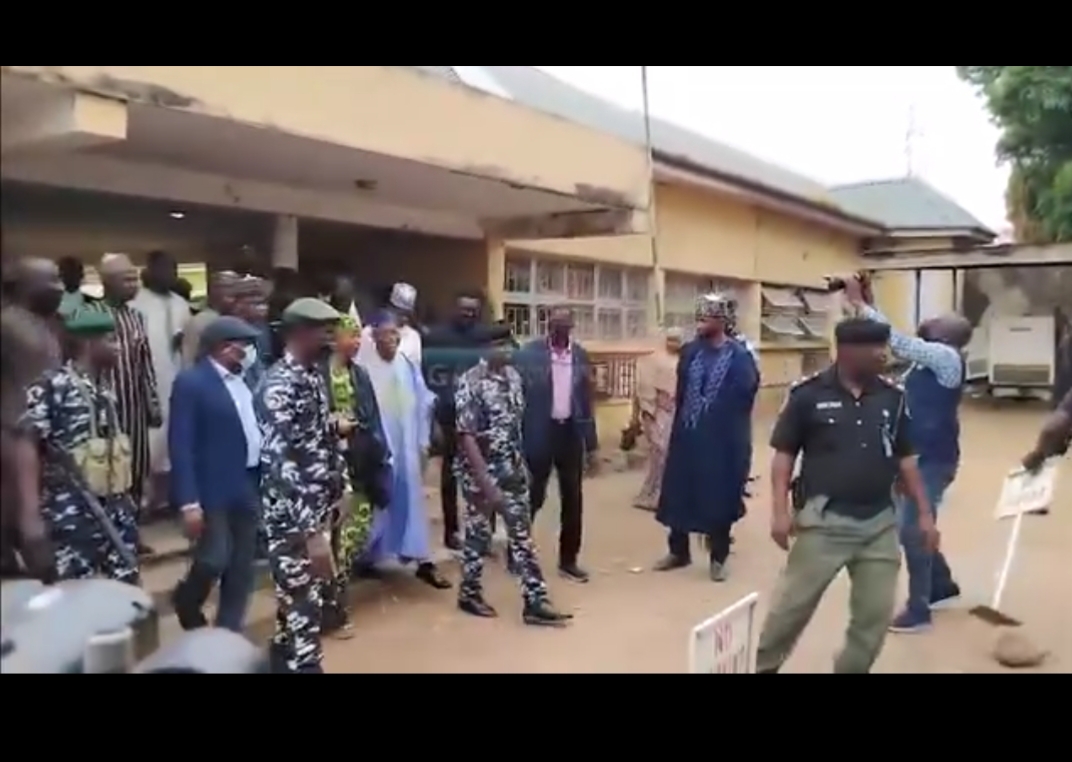
Former Kaduna State Governor, Nasir El-Rufai, has concluded proceedings at the State High Court in Kaduna and is now proceeding to the Federal High Court for the continuation of another suit.
El-Rufai, who was earlier present at the State High Court for the continuation of his trial, left the premises after the sitting ended.
He is expected to appear before the Federal High Court in Kaduna for further proceedings related to another case.
Security presence remained visible around both court premises as proceedings attracted attention from observers and supporters.
Details of the proceedings at the Federal High Court are expected to emerge as the matter continues.
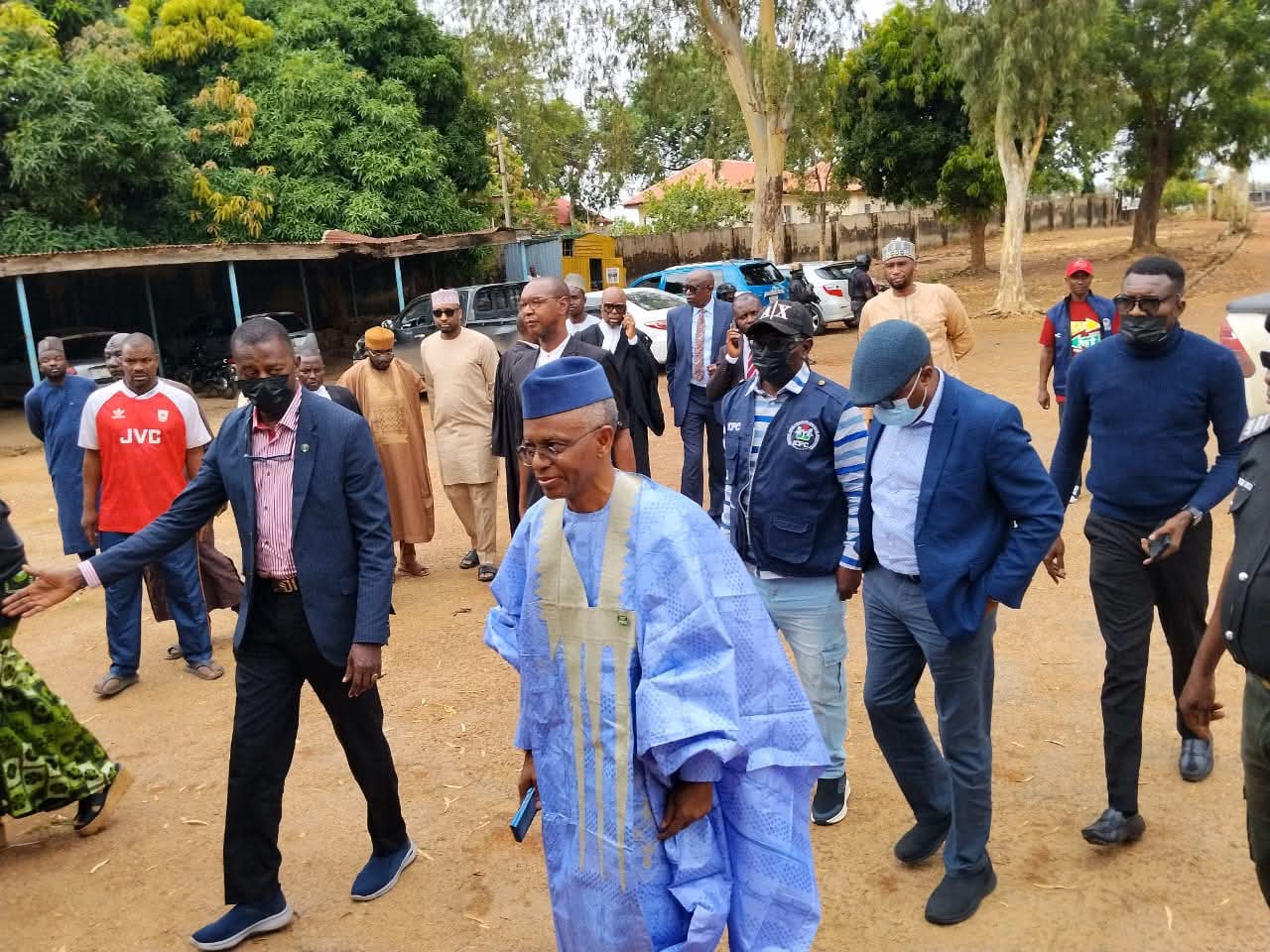
The former Kaduna State Governor, Nasiru El-Rufai, on Tuesday morning arrived at the Kaduna State High Court for the trial, and there after he is expected to proceed to the Federal High Courtfor continuation of his proceedings.
The former governor arrived at the Kaduna State High Court amid tight security presence, as legal teams from both sides prepare to continue hearing in the matter. El-Rufai is also scheduled to appear before the Federal High Court for continuation of related legal processes.
The case continues to attract significant public attention, with observers closely monitoring developments across both courts.
Details of the matters to be addressed in both courts have not been fully disclosed, but outcomes from the hearings are expected to influence the direction of the trial.
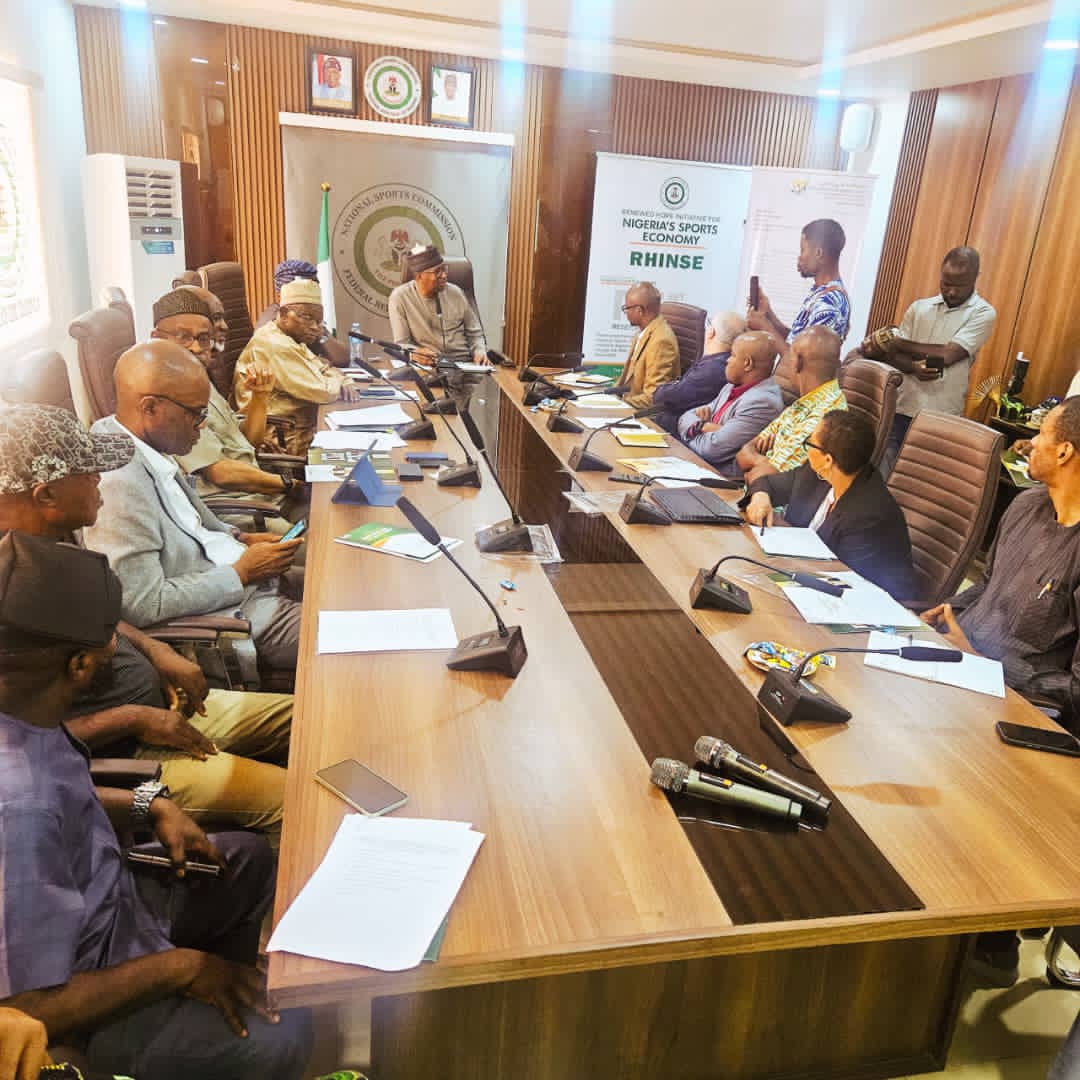
Nigeria officially welcomed the African Games Bid Evaluation Committee on Monday, marking a significant step in the nation’s quest to host the 2031 African Games.
The delegation, led by Dr. Decius Chipande, was received by top officials of the National Sports Commission (NSC) and treated to a comprehensive and compelling presentation showcasing Nigeria’s readiness, capacity, and vision to host a memorable Games.
Chairman of the NSC, Mallam Shehu Dikko, in his remarks, reaffirmed the solid support of the Federal Government for the bid.
He emphasized that hosting the African Games remains a national priority, backed by strong political will and a commitment to deliver world-class infrastructure, seamless organization, and a lasting legacy for African sports.
Director General of the Commission, Hon. Bukola Olopade, presented Nigeria’s strategic sponsorship and marketing framework, outlining innovative approaches to funding and commercial partnerships.
He noted that Nigeria’s large market, vibrant sports culture, and growing private sector interest provide a solid foundation for a financially successful Games.
Providing further depth to the bid, ace broadcaster and Bid Coordinator, Mainasara Ilo, delivered an engaging presentation on legacy, highlighting how the Games would catalyze youth development, infrastructure expansion, and community impact across the country.
On the technical front, former Director of Medicine at the Commission, Dr. Paul Onyedo, detailed Nigeria’s preparedness in sports medicine and its scientific approach to anti-doping, testing, and athlete health management, aligning with international best practices.
In addition, Dr. Emmanuel Igbinosa presented the country’s comprehensive welfare framework, assuring the Committee of Nigeria’s readiness to provide a safe, secure, and athlete-centered environment throughout the Games.
The Evaluation Committee commended Nigeria’s presentation, noting the clarity of vision, depth of planning, and strong alignment between government and private sector stakeholders.
The Committee commenced inspection of key facilities on Monday, with further assessments on Tuesday.
Nigeria remains confident that its compelling bid, backed by experience, infrastructure, and national commitment, positions the country strongly to host a historic and impactful African Games.


Afreximbank Leads $4bn Financing for Dangote Refinery with $2.5bn Commitment

JUST IN: El-Rufai Leaves State High Court for Federal High Court in Kaduna

El-Rufai Appear in State High Court, after Mother’s death, as Trial Continues

Tech Expert, Zuckerberg trains with UFC champions, Adesanya, Alexander

Organ Trafficking: Ekweremadu bags 10 years in UK prison

SAINT OBI: Between his marriage and his death
-

 Business2 days ago
Governor Otti Commissions Ultimum Manufacturing Plant in Aba
-
 Sports2 days ago
CAF appoints Nigeria’s Samson Adamu as acting secretary general
-
 Politics3 days ago
JUST IN: Kwankwaso Set to Join ADC on Monday
-
 News2 days ago
President Tinubu at 74, Donates Salaries to Armed Forces Welfare Fund
-
 Politics2 days ago
PDP will contest 2027 polls, says Wike
-

 Politics2 days ago
PDP Leadership Crisis: Faction Heads to Supreme Court as Tussle Deepens
-
 Business15 hours ago
BUA Foods Plc Reports Strong 2025 Performance with ₦1.77 Trillion Revenue, Proposes Record ₦28 Dividend per Share
-

 Business2 days ago
OPay launches new office in Jos