
News
BREAKING: Reps pass amended 2024 budget of N35.055trn

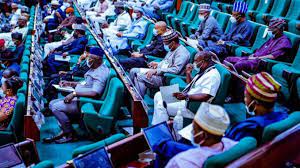
The House of Representatives recently made significant legislative strides concerning Nigeria’s fiscal and labor policies. Here’s a breakdown of the key developments:
- 2024 Appropriation Bill:
- The House passed a bill to increase the 2024 Appropriation from N28.7 trillion to N35.055 trillion. This adjustment was made during the consideration and adoption of Clauses 1 to 13, based on the recommendation of the House Committee on Appropriation.
- The breakdown of the proposed budget includes:
- N1,742,786,788,150 for Statutory Transfers
- N8,270,960,606,831 for Debt Service
- N11,268,513,380,853 for Recurrent Expenditure
- N13,773,275,994,384 for Capital Expenditure (Development Fund)
- Highlights of the Budget:
- The budget aims to support critical infrastructure projects across Nigeria, including road and rail developments such as the Lagos-Calabar and Sokoto-Badagry road projects, as well as various rail lines.
- It’s termed as a “budget of renewed hope” with a focus on funding legacy projects that are crucial for national development.
- National Minimum Wage Amendment:
- The House also passed a bill to amend the National Minimum Wage Act 2019, proposing to increase the minimum wage from N30,000 to N70,000. This amendment also seeks to reduce the review period from five to three years.
- The rationale behind the amendment is to address the rising cost of living and ensure that the minimum wage remains adequate for workers across Nigeria.
- Legislative Process:
- Both bills passed through Third Reading after thorough consideration and debate in the House, indicating a significant step towards implementing key fiscal and labor reforms.
These legislative actions reflect the House of Representatives’ commitment to addressing economic challenges and supporting infrastructure development while ensuring the welfare of Nigerian workers through appropriate wage policies.




News
BUK expels 171 students for admission frauds
The affected students cut across different departments and levels, describing the action as part of efforts to sanitise its academic records

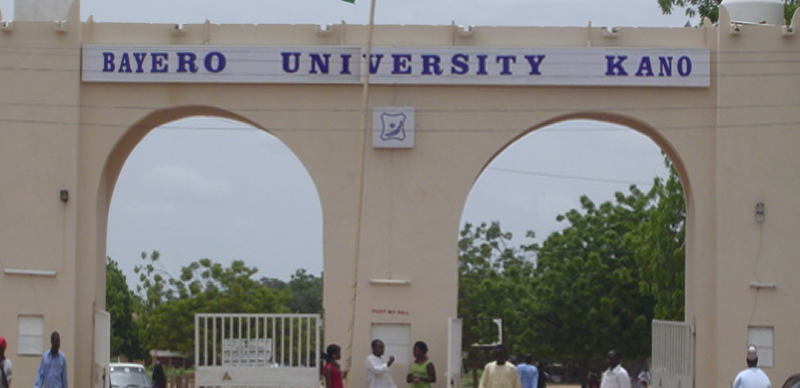
The Senate of Bayero University Kano has approved the expulsion of 171 students over falsification of admission entry qualifications.
In a statement published in the university’s weekly bulletin on Friday, said that the decision was taken during the Senate’s 433rd meeting held on March 4, 2026.
It said that following an investigation by the Senate’s Committee on Entry Qualification Irregularities, the affected students were found to have presented falsified credentials during their admission processes.
The university noted that the offence constitutes a violation of Section 20.7, Category A (vii) of its General Examinations and Academic Regulations, which prescribes expulsion for such misconduct.
It added that the affected students cut across different departments and levels, describing the action as part of efforts to sanitise its academic records.
News
Tinubu renews determination to conquer insecurity nationwide
Tinubu revealed that security cooperation formed a major part of his recent engagements abroad, particularly during his visit to the United Kingdom, adding that his government was prepared to leverage Nigeria’s goodwill and existing credit lines to acquire the needed support.
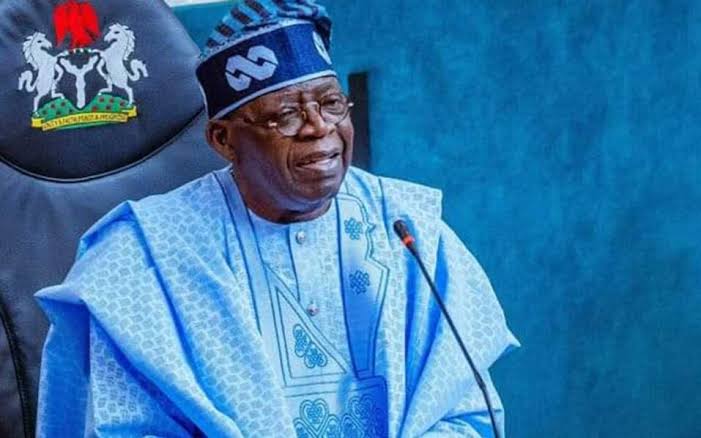
President Bola Ahmed Tinubu said on Sunday that his administration is intensifying diplomatic engagements with world leaders to secure critical equipment and training support for Nigeria’s security and intelligence agencies as part of a renewed push to end insecurity across the country.
He disclosed this while receiving state governors who paid him a courtesy visit his Ikoyi residence in Lagos, where he observed the Eid-el-Fitr holidays after returning from his two-day state visit to the United Kingdom.
President Tinubu said that the discussions with international partners, including recent talks with French President Emmanuel Macron, were already yielding prospects for collaboration in strengthening Nigeria’s security architecture.
Tinubu revealed that security cooperation formed a major part of his recent engagements abroad, particularly during his visit to the United Kingdom, adding that his government was prepared to leverage Nigeria’s goodwill and existing credit lines to acquire the needed support.
“One of the major discussions in the UK is equipment and support. I can report to you that yesterday again, I had a lengthy discussion with Emmanuel Macron on their collaboration with us for equipment and support,” the President said.
He added that efforts were ongoing to reach out to other countries willing to assist Nigeria in combating insecurity through provision of modern tools and capacity building for security personnel.
“If we have to spend our goodwill and line of credit, we have those who are willing to support us with equipment and training,” Tinubu stated.
Describing insecurity as a direct threat to national development, the President stressed that tackling the menace remained a top priority for his administration, calling for collective action by all levels of government.
“Insecurity is an enemy of development, progress and prosperity. The next phase of our struggle is staring us in the face, and it is the challenge of insecurity in this country,” he said.
News
Why I returned to school – Emir Sanusi
“A king who acquires education attains greater dignity, but a king without education—his entire kingship is worthless.”
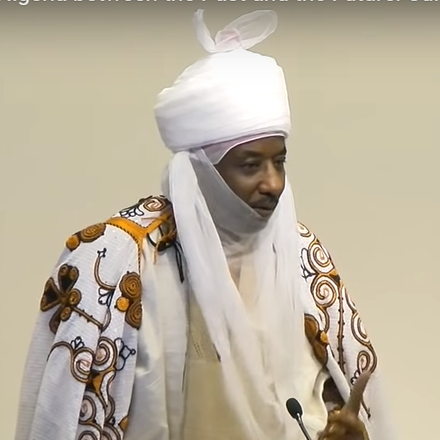
The 16th Emir of Kano, Muhammadu Sanusi II, has explained that his decision for returning to school to pursue an LL.B in Common Law and Shariah at Northwest University is aimed at inspiring others, rather than practicing law.
Emir Sanusi spoke during the traditional Sallah homage, Hawan Nassarawa, at the Kano Government House, emphasising that education should precede kingship.
“A king who acquires education attains greater dignity, but a king without education—his entire kingship is worthless,” he said.
The monarch praised the Kano State Government for prioritizing education, noting that 30 percent of the state budget has been allocated to the sector.
He also encouraged citizens to pursue further studies and support educational ambitions within their families, including those of their spouses.
” We appreciate the Governor for giving top priority to education. We have seen the impact through students’ performance in NECO, JAMB, and tertiary institutions. Whoever has not completed tertiary education should go back and do so,” he said.
Kano State Governor, Abba Yusuf, represented by Speaker Rt. Hon. Jibrin Falgore, commended Emir Sanusi for his support, describing him as a pillar of strength for the administration.


Terrorists Bomb Niger Bridge, Kill 8, Isolate Communities

JUST IN: Court jails ex-acting AGF Nwabuoku 72 years for fraud

Middle East War: IEA recommends options to ease oil price pressures on consumers, Motorists

Tech Expert, Zuckerberg trains with UFC champions, Adesanya, Alexander

Organ Trafficking: Ekweremadu bags 10 years in UK prison

SAINT OBI: Between his marriage and his death
-

 Sports1 day ago
FIFA orders representation of female coaches across all women’s tournaments
-

 Sports1 day ago
Odegbami: Why CAF should return AFCON 2025 trophy back to Senegal
-
 News21 hours ago
BUK expels 171 students for admission frauds
-

 News1 day ago
Why I returned to school – Emir Sanusi
-
 Entertainment21 hours ago
Papa Ajasco rebrands as Bondu Alaska
-
 Business20 hours ago
Moniepoint buys Orda to capture Africa’s $50bn restaurant economy
-
 Entertainment21 hours ago
AGN President Jetting to London for UK–Nigeria Creative Roundtable and Awards
-
 Politics20 hours ago
Peter Obi: I can govern from Kaduna if elected