
News
BREAKING: Kano Lawmaker Abdulmumin Jibrin Dumps NNPP, Rejoins APC, Endorses Tinubu for 2027

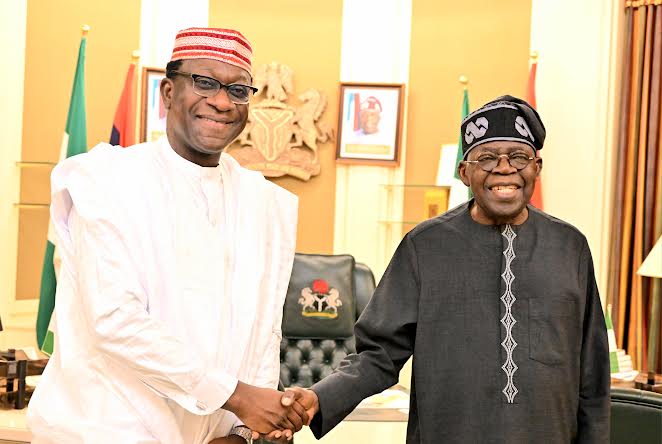
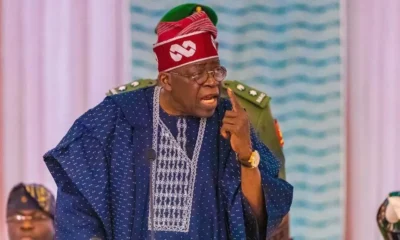
The lawmaker representing Kiru/Bebeji Federal Constituency in the House of Representatives, Abdulmumin Jibrin, has officially returned to the All Progressives Congress (APC) and declared his full support for President Bola Ahmed Tinubu’s 2027 re-election campaign.
Jibrin, who left the APC in May 2022, announced his defection during a political gathering held on Sunday in his hometown, Kofa, Bebeji Local Government Area of Kano State.
Confirming the move in a Facebook post on Monday, the lawmaker said his supporters had unanimously agreed to abandon the New Nigeria Peoples Party (NNPP) and the Kwankwasiyya Movement to align with the APC.
He wrote, “Today, in a show of solidarity, I was warmly received by thousands of my constituents in my hometown of Kofa, Bebeji. The gathering resolved to leave the NNPP/Kwankwasiyya, join the APC, and endorse President Bola Ahmed Tinubu, GCFR, for a second term in office. From the beginning, almost 2,000 scholars from my constituency have prayed special prayers for the President and sought peace, development, and progress for Kiru/Bebeji, Kano, and Nigeria altogether.”
Jibrin’s return to the APC comes just two months after his resignation from the NNPP, following his expulsion over alleged anti-party activities and non-payment of membership dues.
Reacting to his suspension at the time, the former Director-General of the Tinubu Support Groups described the party’s action as “shocking and unjustified,” arguing that the interview he granted, which was cited as the reason for his suspension, did not merit such a “harsh penalty.”
He accused the NNPP leadership of violating due process and the principles of fair hearing by expelling him without an opportunity to defend himself. Jibrin, however, said he accepted the decision in good faith and chose not to challenge it in court.
The lawmaker dismissed claims that he defaulted on his membership dues, insisting that he had always met his obligations. He also criticized the NNPP leadership for failing to value its members.
While expressing gratitude to the NNPP for the support he received during his time with the party, Jibrin called on his followers to join him in his “new journey,” urging them to maintain peaceful relations with those who choose to remain in the NNPP.
Jibrin’s defection is seen as a major boost for the APC in Kano, a state that remains a key battleground as political alignments intensify ahead of the 2027 general elections.





News
Police must pay transport fares, says AIG
” No police officer has the right to enter your vehicle without paying. We should assist one another willingly, not by force,” he said.

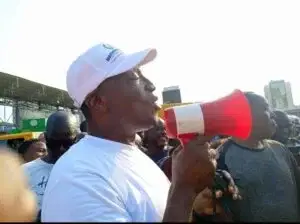
• The Assistant Inspector-General of Police(AIG) in charge of Zone 2 Command, Mr Olohundare Jimoh, speaking with transporters at Obalende garage, Lagos State, on Wednesday.
The Assistant Inspector-General of Police, Zone 2 Command, Mr Olohundare Jimoh, has declared that officers must pay fares before boarding commercial vehicles, warning against abuse of authority.
Jimoh spoke on Wednesday at Obalende garage during a sensitisation meeting with drivers and transport workers marking National Police Day 2026.
He stressed that relations between police and the public must be based on partnership, not coercion, urging both sides to support each other voluntarily.
“No police officer has the right to enter your vehicle without paying. We should assist one another willingly, not by force,” he said.
Jimoh called for stronger cooperation to maintain safety and order on roads, insisting there was no conflict between officers and transport unions.
“I don’t collect money from officers. We don’t arrest people arbitrarily. If you have issues with any officer, report directly to me,” he said.
(Vanguard)
President Bola Ahmed Tinubu will leave for Jos tomorrow to commiserate with the state government and residents over recent deadly gun attacks that lefts dozens dead.
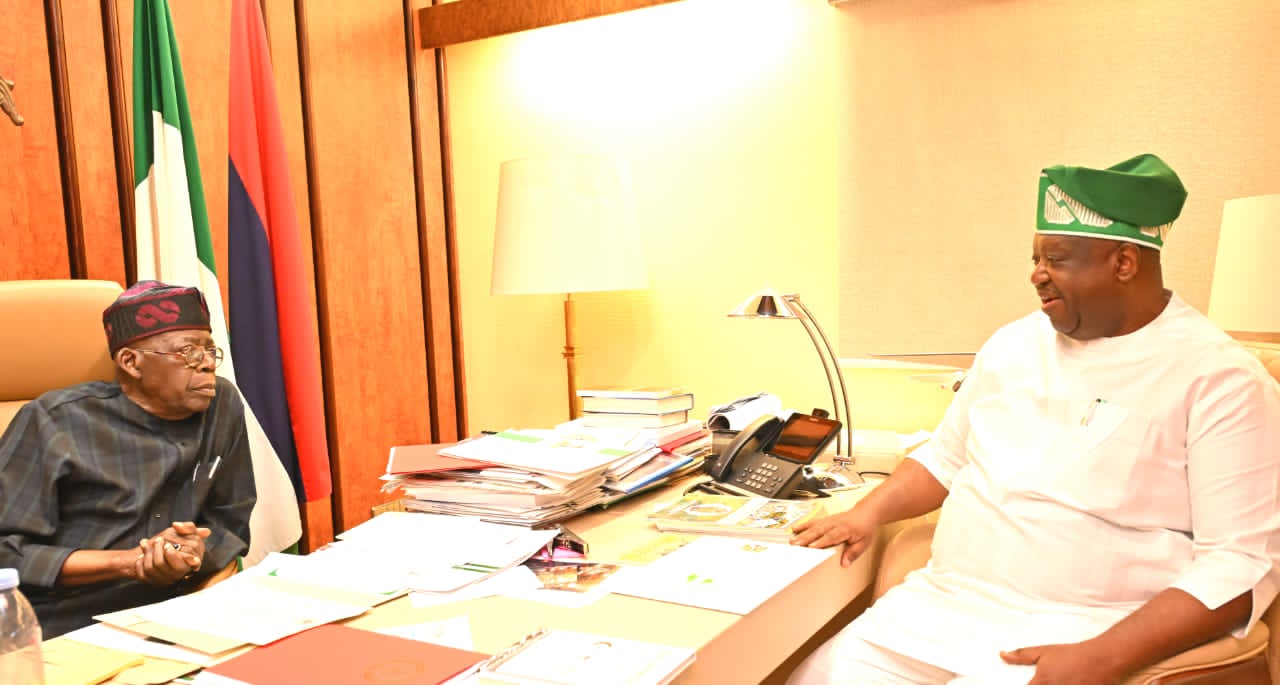
This was following Governor Caleb Mutfwang’s security briefing to the President on the recent violent attack in Angwan Rukuba, Plateau State.
During the meeting on Wednesday at the presidential villa in Abuja, Governor Caleb Mutfwang told Mr President that although security forces have restored calm after fresh disturbances involving looters on Wednesday morning, following the deadly Palm Sunday attack that left more than a dozen dead and many others injured.
He said that investigations are continuing to determine the identities or motives of the attackers who are yet to be apprehended .
Presidency source said that President Tinubu was initially scheduled for a planned trip to Ogun State to flag off operations at the Gateway International Cargo Airport on Thursday.
From Jos, the President will travel to Lagos to observe Good Friday.
On Saturday, April 4, he will visit Ogun State to commission projects including the cargo airport.
He will then return to Lagos during the Easter holiday to commission several state infrastructure projects, including the Ojota/Opebi Link Bridge.
Before heading back to Abuja, the president will visit Bayelsa State on April 10 to commission projects completed under Governor Duoye Diri.
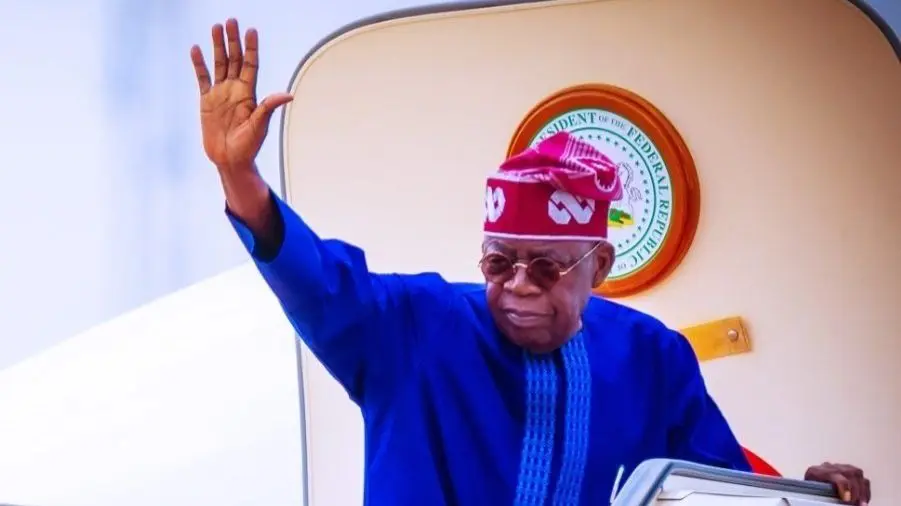
President Bola Ahmed Tinubu will tomorrow embark on a visit to Jos, Plateau State, as the first leg of a five-state tour across the country.
The Presidency announced that the President has postponed his scheduled trip to Ogun State to enable him to commence the series of official visits.
Details of the remaining four states in the tour are expected to be released by the Presidency in due course.
The development comes as President Tinubu continues nationwide engagements aimed at assessing development projects, interacting with stakeholders, and addressing key national issues in the respective states.
Further updates on the itinerary will be communicated as the visits progress.


INEC Dismisses Calls for Chairman’s Removal

Ebonyi: Gunmen Assasinate Another Traditional Ruler

From South Africa to US, ‘Cicada’ COVID-19 variant spreading

Tech Expert, Zuckerberg trains with UFC champions, Adesanya, Alexander

Organ Trafficking: Ekweremadu bags 10 years in UK prison

SAINT OBI: Between his marriage and his death
-
 Business2 days ago
33 Nigerian Banks Beat CBN’s Recapialisation with ₦4.65trn Combined Capital Base
-

 Sports2 days ago
FirstBank Sponsors Samuel Okwaraji U-16 Football Championship 2026
-
 Politics2 days ago
BREAKING: INEC Withdraws Recognition of David Mark’s ADC
-
 News2 days ago
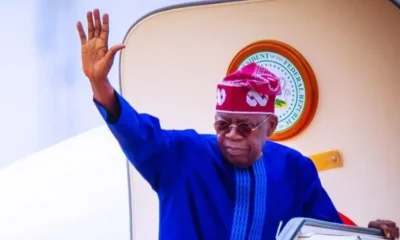
JUST IN: Tinubu Heads to Jos Tomorrow, Postpones Ogun Trip for 5-State Visits
-

 Business3 days ago
Afreximbank Leads $4bn Financing for Dangote Refinery with $2.5bn Commitment
-

 Entertainment2 days ago
Super Eagles Iwobi to launch music album ‘More To Life’
-
 News2 days ago
Easter: FG declares Friday, Monday public holidays
-

 Politics2 days ago
Arise News Anchor Ikokwu in Political Race for Reps Seat