
Politics
NNPP: Kwankwaso Never Negotiated APC Defection – ‘High Demands’ Claims Are Lies and Elite Plot


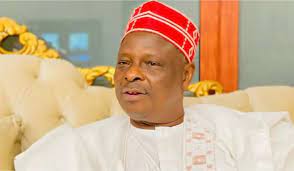
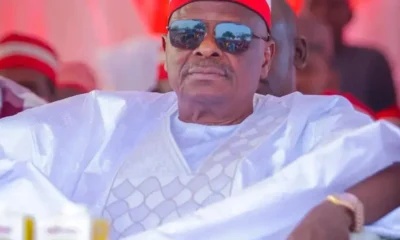
The New Nigeria Peoples Party has dismissed reports suggesting that the National Leader of the party, Rabiu Kwankwaso, overreached himself in purported negotiations for his defection to the All Progressives Congress.
Responding to the reports, the NNPP National Publicity Secretary, Ladipo Johnson, dismissed the claim that the former Kano State governor entered into any negotiation with the APC.
Ladipo, in an interview with Sunday PUNCH, stated that Kwankwaso never got to the stage where he contemplated defecting to the APC.
“It’s regrettable that such lies are not only being orchestrated by some individuals, purportedly sounding authoritative, but unfortunately, also published as lead stories in major newspapers!” Johnson stressed: “We wish to state categorically and for the record that at no time did Senator Rabiu Kwankwaso have any meeting with President Bola Tinubu or any of his proxies either in the APC or otherwise where issues of defection were discussed.”
“Just days ago, a newspaper carried a lead story about the “details” of why Senator Kwankwaso’s “defection” failed, predicated so shamelessly on account of his purported demands before joining the APC. It was all hogwash, as nothing like that ever took place. It could be assumed that the story was sponsored to discredit Senator Rabiu Kwankwaso. But they have failed in this monstrous campaign of calumny.
“This is the truth and nothing but the truth and to this extent, we call on Nigerians to disregard such media orchestrations either as news stories or those peddling the misleading information in their articles and columns. It’s all a hatchet job to tarnish Kwankwaso’s reputation but these mischief makers have failed woefully”.
Following the defection of the Kano State Governor, Abba Kabir Yusuf, to the APC, there were reports that the APC fell out with Kwankwaso due to what was described as his “high demands.” Indeed, the Group Chief Executive Officer of Global Investment and Trade Company, Baba Yusuf, in an interview with Arise TV on Friday, said Kwankwaso misjudged his political leverage in his reported negotiations with the APC. “I will agree with the second outcome you mentioned — that Senator Rabiu Musa Kwankwaso overreached,” Yusuf said.
“Again I stress that it is a blatant lie that Kwankwaso made demands or entered into negotiations with the APC or Tinubu for his defection to their party. That never happened. “The last time he sat with the President was in January 2024, and there was no discussion about defecting to the APC. Those spreading the defection rumours were probably those who wanted to move to the APC, and who have done so now!
“It is quite clear that there is a conspiracy by the political elite to discredit Senator Rabiu Musa Kwankwaso; one fueled by these lies and half-baked opinions and articles with warped conclusions. Some have even concluded that the Senator is a “local champion”, but time will tell. Obviously, some people are trying to preempt Senator Kwankwaso’s next political move and want to stop him from entering into any alliance that they feel would be detrimental to their continued hold on power.“Kwankwaso is a man of integrity and plays his politics well, having the interest of the general public at heart. It is rather heart warming that his political base and the talakawas are not swayed by what is contained in these elitist newspapers and television” Johnson said.






Politics
Exclusive: 2027 Presidential Election: APC, ADC, NDC Manifestos Compared– Who Is Offering What To Nigerians?
In summary : While the APC emphasises consolidating existing reforms, the ADC focuses on structural reforms and a living-wage economy, whereas the NDC places production, enterprise and domestic industrial capacity at the centre of its economic agenda.

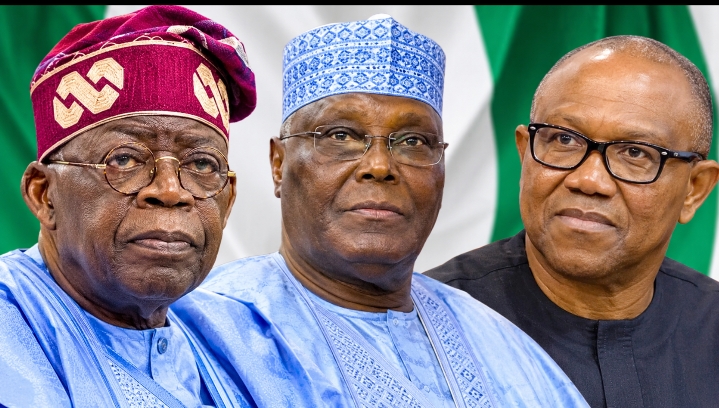
Image: President Bola Tinubu, Atiku Abubakar , and Peter Obi.
As Nigeria prepares for the 2027 presidential election, three political parties are presenting competing policy proposals to address the country’s economic difficulties, insecurity, unemployment, poverty, infrastructure deficits and declining living standards.
The governing All Progressives Congress (APC), the African Democratic Congress (ADC) and the Nigeria Democratic Congress (NDC) are seeking to convince Nigerians that their respective programmes offer a pathway to economic recovery and national development.
President Bola Tinubu is seeking another term under the APC, while former Vice-President Atiku Abubakar represents the ADC and former Anambra State Governor Peter Obi is the NDC presidential candidate.
Their manifestos reveal differences in economic philosophy, approaches to governance, social investment, security and industrial development.
Here is a breakdown of their policy positions based on APC’s 109-page 2027–2031 manifesto unveiled on November 10, 2026. The ADC manifesto unveiled in May 2026 and the NDC’s campaign policy blueprint.
ECONOMIC DEVELOPMENT: REFORM, RESTRUCTURING OR PRODUCTION?
APC – From Reform to Prosperity
The APC’s 2027–2031 manifesto, titled From Reform to Prosperity, seeks to consolidate the economic reforms introduced by the Tinubu administration since 2023.
Its economic priorities include:Sustaining foreign exchange reforms.Improving macroeconomic stability.
Achieving annual economic growth of six per cent.Increasing non-oil exports.
Attracting domestic and foreign investments.
Expanding infrastructure and industrial development.Improving household purchasing power.
The party argues that the first phase of economic reforms has laid the foundation for prosperity, while the next four years should translate those reforms into tangible improvements in living standards.
ADC – Production-Driven Economy
The ADC’s manifesto places emphasis on structural economic reforms and moving Nigeria away from a consumption-driven and oil-dependent economy.
Its proposals include:
Developing agriculture and manufacturing.
Promoting regional industrial value chains.Introducing a living-wage approach.Improving the business environment.
Addressing inflation and unemployment.
Protecting citizens’ purchasing power.Promoting productivity and private-sector investment.
The party also advocates a more humane implementation of economic policies, particularly those affecting vulnerable households.
NDC – From Consumption to Production
Peter Obi’s NDC campaign is built around transforming Nigeria from a consumption-oriented economy into a productive economy.
Its economic priorities include:Strengthening domestic manufacturing.
Supporting small and medium-sized enterprises.
Expanding agricultural production.Encouraging exports.
Reducing dependence on imports.
Promoting investment and enterprise.Reducing government waste.
Obi argues that Nigeria cannot achieve sustainable prosperity by importing most of what it consumes.
MANUFACTURING AND INDUSTRIAL DEVELOPMENT
This is particularly important given Nigeria’s struggling manufacturing sector.
The APC has specifically proposed establishing at least one flagship industrial hub in each geopolitical zone.
The ADC’s approach connects agriculture, manufacturing, logistics, technology and services through regional value chains.
The NDC’s position is that Nigeria must produce more of what it consumes and process more of its agricultural output locally.
The critical question for manufacturers: Which party will provide affordable electricity, accessible long-term financing, stable foreign exchange, competitive taxation and reliable infrastructure to make Nigerian industries competitive?
INFRASTRUCTURE AND ELECTRICITY
Electricity remains one of the biggest obstacles to industrial development in Nigeria.
The three parties recognise the importance of infrastructure, although their specific commitments differ.
APC: Plans to scale electricity generation towards 10,000MW, strengthen transmission and distribution, and expand clean energy access. It also proposes completing priority road, rail, port and airport projects.
ADC: Emphasises infrastructure development, energy-sector reforms and regional connectivity to support production and industrialisation.
NDC: Proposes expanding power generation and distribution, improving roads, railways and ports, and attracting private investment into infrastructure.
The NDC campaign blueprint specifically identifies an additional 10,000MW of power within four years as a target.
SECURITY AND NATIONAL SAFETY
APC
Recruit 50,000 additional police officers.
Recruit 28,000 additional military personnel.
Establish four additional Army divisions.
Expand community policing.
Introduce digital policing and body cameras.Strengthen border surveillance.
ADC
Strengthen intelligence gathering.
Promote decentralised policing under national standards.
Improve coordination among security agencies.
Introduce community-based security mechanisms.
Strengthen regional security cooperation.
Promote rights-based law enforcement.
NDC
Prioritise intelligence-driven security.
Strengthen coordination among security agencies.Improve border management.
Deploy technology to detect security threats.
Promote lawful community-based security arrangements.
Address poverty and unemployment as underlying contributors to insecurity.
GOVERNANCE, ACCOUNTABILITY AND CORRUPTION
APC
Strengthen public-sector accountability.
Improve digital governance.
Strengthen the justice system.
Publish allocations to all 774 local government councils.
Introduce measurable performance targets and public delivery tracking.
ADC
Promote independent electoral management.Strengthen the rule of law.
Establish a zero-impunity governance framework.
Introduce performance audits.
Promote transparency and fiscal responsibility.
NDC
Strengthen anti-corruption institutions.
Promote transparent procurement.
Reduce wasteful government expenditure.
Improve public-sector accountability.
Use technology to reduce corruption in public services.
In summary : While the APC emphasises consolidating existing reforms, the ADC focuses on structural reforms and a living-wage economy, whereas the NDC places production, enterprise and domestic industrial capacity at the centre of its economic agenda.
Politics
2027: APC To Introduce Public Dashboard For Tracking Tinubu’s Achievements
“Citizens should be able to see where delivery is succeeding and where it is falling short.”
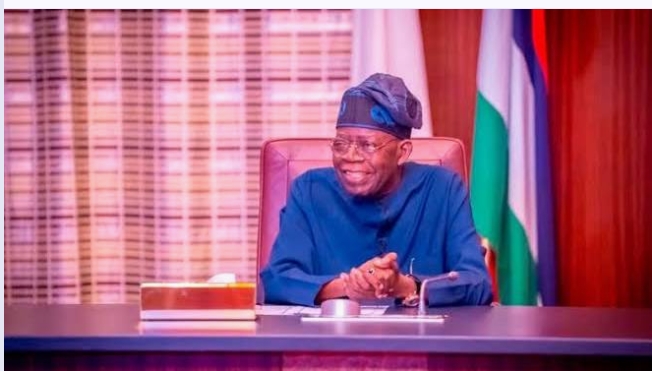
The Presidential Campaign Council, APC-PCC declared that they are going to introduce public dashboard for tracking President Bola Tinubu’s achievements , if he wins the January 16, 2027 presidential election.
APC-PCC also affirmed that the party has kept its current manifestos since 2023 when it assumed power, and still have more work to do to transform Nigeria into a prosperous and secured nation.
The declaration was made in Abuja, yesterday, during the unveiling of the APC manifesto, titled ’From Reforms to Prosperity‘, by the Chief of Staff to the President, Femi Gbajabiamila.
Gbajabiamila said that the manifesto would also expose the government’s own record to public inspection, noting that “the manifesto commits us to publishing targets, identifying those responsible and reporting progress to the public. Citizens should be able to see where delivery is succeeding and where it is falling short.’’
Gbajabiamila, who said the party would ask for the electorate’s mandate in 2027 and earn it, stated: “A party asking to continue in government must be prepared to answer to the people whose mandate it seeks.
According to him, the new manifesto rests on four pillars, including a secure and resilient nation; a better quality and more affordable life for every Nigerian; energy, infrastructure and economic growth; and effective and accountable governance.
He emphasised that the manifesto are tied to the eight priority areas of the Renewed Hope Agenda, which the document said would be carried out on four foundations – macroeconomic stability; the rule of law; institutional capability; and national cohesion.
By 2031, the document commits to power generation scaled towards 10,000 megawatts, annual economic growth of six per cent, and youth unemployment and out-of-school children, both halved.
It also promises 20,000 additional teachers and health insurance expanded from more than 23 million enrollees to 40 per cent of Nigerians.
Primary health centres will function in at least 90 per cent of facilities, up from the current 53 per cent.
It also promises 20,000 additional teachers and health insurance expanded from more than 23 million enrollees to 40 per cent of Nigerians. Primary health centres will function in at least 90 per cent of facilities, up from the current 53 per cent.
It further promises to work towards 200,000 homes under the Tinubu Mass Social Housing Scheme, Federal Mortgage Bank of Nigeria, FMBN, mortgages and licensed private developers, tracked on a public dashboard.
Gbajabiamila, who said the party would ask for the electorate’s mandate in 2027 and earn it, stated: “A party asking to continue in government must be prepared to answer to the people whose mandate it seeks.
In his remarks, the Minister of Budget and Economic Planning, Atiku Bagudu, who chaired the APC 2027 Manifesto Unveiling Committee, said the administration had made progress but noted that more remained to be done.
He cited the last Nigerian Economic Summit, where he said the private sector acknowledged that the President had delivered on his promises.
“But, as we all know, even before anybody tells him, Mr President acknowledges that we have done well. However, until we deliver and ensure that every Nigerian feels the impact of prosperity, especially hardworking Nigerians and those who need support, we still have work to do,” Bagudu said.
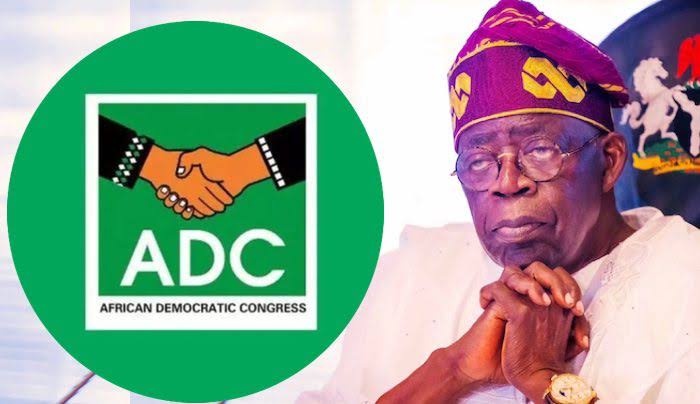
Accuses President of evading his scorecard, recycling failed promises and resorting to name-calling
The African Democratic Congress Presidential Campaign Council (ADC-PCC) has condemned President Bola Ahmed Tinubu’s re-election campaign, describing its messages as divisive, vague, uninspiring and devoid of any credible account of his administration’s performance.
In a statement signed by its Director of Media and Publicity, Kola Ologbondiyan, the Council said that rather than present a comprehensive scorecard of his three-and-a-half years in office, Tinubu had resorted to political tantrums, name-calling and verbal attacks against opponents.
It noted that Nigerians were expecting clear explanations on the administration’s massive borrowings, the gains of fuel subsidy removal, worsening insecurity, widespread hunger and the escalating cost of living. Instead, the President’s campaign outings in Kaduna, Rivers and Jigawa states were dominated by personal attacks and recycled promises, offering nothing new to the people.
The ADC-PCC particularly challenged Tinubu to account for his much-publicised electricity pledge: “If I don’t give you electricity, don’t vote for me for a second term.” According to the Council, the President has failed to fulfil that promise, even as millions of Nigerians continue to endure unreliable electricity supply, while he has reportedly invested in alternative power arrangements for his personal comfort.
It described Tinubu’s renewed promises on electricity during his Jigawa campaign as an attempt to repackage old, unfulfilled commitments as fresh electoral promises.
The Council also questioned the administration’s much-touted mechanised farming agenda, asking what had become of the 2,000 tractors reportedly imported from Brazil several months ago, which it alleged were yet to make any meaningful impact on agricultural productivity.
It further accused Tinubu of taking credit for projects initiated by the late President Muhammadu Buhari, arguing that the President had little of his own to showcase after nearly three and a half years in office.
The ADC-PCC described Tinubu as a leader whose public pronouncements frequently contradict his actions, noting that while he speaks about democracy, his administration has demonstrated tendencies that undermine democratic institutions. It alleged that the President had exerted undue influence over the National Assembly and was now seeking to compromise the independence of the Judiciary.
The Council identified Tinubu’s declaration that “all is fair in politics” as particularly troubling, arguing that the statement appeared to provide justification for political illegality, intimidation, violence, thuggery and other undemocratic practices. It said the opposition was increasingly confronted with what it described as unconstitutional conduct, judicial rascality, political intimidation and a compromised electoral environment under the APC administration.
The ADC-PCC also accused the President of deliberately deploying divisive rhetoric whenever confronted with questions about his administration’s performance, instead of providing verifiable answers to Nigerians.
Citing Tinubu’s recent campaign outing in Rivers State as a glaring example of political contradiction, the Council questioned the President’s decision to praise and promise to reward a political figure whom it accused of being illegally removed from office, denied political participation for six months and prevented from seeking re-election.
“Reward him for what?” the Council queried, describing the President’s actions in Rivers State as an affront to constitutional governance and the democratic rights of the people.
The ADC-PCC maintained that Nigerians deserve leadership anchored on accountability, competence, transparency and respect for democratic institutions, not recycled promises, political theatrics and divisive propaganda.
It therefore called on Nigerians to seize the opportunity of the 2027 general election to end APC’s rule and vote the African Democratic Congress (ADC) and its candidate, Alhaji Abubakar Atiku, into power, insisting that the country urgently needs a new direction.


BREAKING: DSS Seizes Arms Cache in Sokoto

Panic as Fully Loaded CNG Passenger Bus Explodes in Lagos

Dangote Cement Shelves $18 billion Listing On LSE

BREAKING: Lagos Govt Declares Today, Thursday Work-Free to Mark 2026 Ìṣẹ̀ṣe Day

Tech Expert, Zuckerberg trains with UFC champions, Adesanya, Alexander

Organ Trafficking: Ekweremadu bags 10 years in UK prison
-
 Politics23 hours ago
Exclusive: 2027 Presidential Election: APC, ADC, NDC Manifestos Compared– Who Is Offering What To Nigerians?
-
 Sports22 hours ago
BREAKING: Tinubu Rewards Flamingos with Massive Cash, Savings Certificates (Video)
-

 Business2 days ago
Domestic Flights Fare Surges Ahead of Christmas, New Year
-

 Business2 days ago
Naira Exchange Rates Tuesday,10 Nov 2026
-
 Politics3 days ago
INEC removes 1.6m invalid voter records
-

 Sports2 days ago
Senate Approves N100m For World Cup Winning Flamingos
-
 Sports3 days ago
Obi Alleges NFF Stops Him From Greeting The Flamingos At Airport, And Why
-
Politics3 days ago
Nigeria’s Election Campaigns: Is The Peace Accord Working?