
News
Africa’ Voice At The UNGA: Does It Resonate Globally ?

By Emeka Monye
As the United Nations General Assembly (UNGA) convenes at its headquarters in New York, world leaders gather to address pressing global issues, including climate change, conflict in the Middle East, hunger, the Palestinian crisis, and the implications of artificial intelligence.
These topics dominate the discourse, setting the stage for discussions that shape the future of international relations.
However, amidst the high-level talks and diplomatic maneuvering, a glaring paradox emerges: Africa, a continent of immense cultural, economic, and geopolitical significance, remains curiously peripheral to the global conversation.
The UNGA is a premier platform for world leaders to voice their perspectives and shape global policies.
Yet, when African leaders take the podium, the conference hall often appears half-empty, a stark contrast to the packed audiences that gather when their Western or Asian counterparts speak.
This disparity is more than just a visual observation; it reflects a deeper issue—the persistent marginalization of Africa in global affairs.
The UNGA prides itself on being a forum where all member states have an equal voice.
In theory, every nation, regardless of size or economic power, has the opportunity to contribute to global decision-making. However, reality tells a different story.
The most influential voices at the UNGA often belong to powerful nations like the United States, China, Russia, France, Japan, and Germany.
These countries not only set the agenda but also dictate the pace and direction of the discussions.
Their interests, priorities, and perspectives dominate the conversation, while the concerns of smaller or less economically powerful nations, particularly those in Africa, are frequently sidelined.
This dynamic raises a critical question: Does Africa really matter in world affairs?
Despite its vast natural resources, growing economies, and significant cultural influence, Africa’s role in shaping global policies remains limited.
African leaders may deliver impassioned speeches at the UNGA, but their words often fall on deaf ears.
The decisions made by global powers frequently disregard Africa’s interests, whether in matters of trade, security, or development.
Several factors contribute to Africa’s marginalization in global affairs. One major challenge is the continent’s fragmented political landscape.
Unlike the European Union, which speaks with a unified voice on many global issues, Africa’s 54 countries often have divergent interests and priorities.
This lack of unity weakens the continent’s collective bargaining power on the world stage.Another challenge is economic dependency.
Many African countries rely heavily on foreign aid, loans, and investment from Western nations and international financial institutions like the World Bank and the International Monetary Fund (IMF).
This dependency limits their ability to assert their interests independently and reduces their leverage in global negotiations.
Additionally, Africa’s potential is often overshadowed by narratives of poverty, conflict, and underdevelopment. While these issues are undeniably significant challenges, they do not define the entirety of Africa’s story.
The continent is home to vibrant economies, innovative entrepreneurs, and a youthful population that could drive global change.
Yet, these positive narratives rarely capture the attention of the international community in the same way that crises do.
Despite these challenges, there are opportunities for Africa to assert its influence on the global stage. One potential pathway is through regional integration and cooperation.
The African Continental Free Trade Area (AfCFTA), for example, aims to create a single, unified market for Africa, boosting intra-continental trade and economic growth.
By working together, African nations can strengthen their economic power and increase their bargaining position in global affairs.
Another avenue for change is through strategic partnerships. Africa can build alliances with emerging powers in the Global South, such as Brazil, India, and Southeast Asian nations, to amplify its voice on issues like climate justice, debt relief, and sustainable development.
These partnerships can help Africa play a more proactive role in shaping global policies that affect its interests.
For Africa to matter more in world affairs, both African leaders and the international community must rethink their approaches.
African leaders need to prioritize unity, economic self-reliance, and strategic engagement with global partners.
At the same time, the international community must recognize Africa’s potential and value its contributions to solving global challenges.
The UNGA provides a platform for this reimagining. By giving Africa a seat at the table—and not just a token seat but a meaningful one—world leaders can tap into the continent’s vast resources and perspectives.
Africa’s youthful population, entrepreneurial spirit, and cultural dynamism are assets that can drive global innovation and progress.
In conclusion, while Africa may currently occupy a peripheral role in global affairs, there is immense potential for change.
By working together, building strategic partnerships, and asserting its interests more forcefully, Africa can become a more influential player on the world stage.
The question is not whether Africa matters; it is how Africa can matter more.
The answer lies in the hands of African leaders and its global partners.
Emeka Monye Is A Journalist




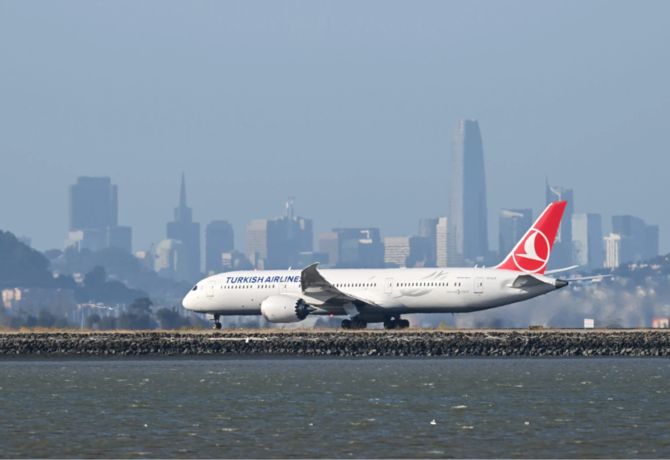
Airlines operating in Nigeria have issued a stern warning of an indefinite shutdown of flights if ongoing disruptions by aviation unions are not urgently resolved.
Industry operators cited repeated industrial actions, including strikes and work-to-rule tactics by union members, as severely impacting flight schedules, passenger movements, and operational costs. The threatened action could ground both domestic and international flights across major airports, including Lagos and Abuja.
Airline representatives stated that prolonged union-related interruptions have already caused significant financial losses and eroded passenger confidence. They called on the federal government and relevant labour authorities to intervene immediately to prevent a total collapse of commercial air travel.
No specific deadline for the proposed shutdown has been publicly announced, but stakeholders described the situation as “critical.” Passengers have been advised to monitor airline communications closely for any developments.
Authorities and union leaders have yet to issue detailed responses. Further updates are expected as talks continue.
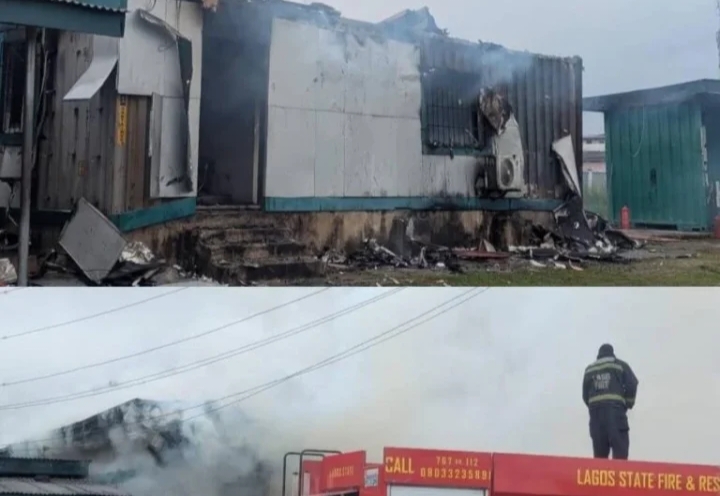
A fire has broken out at the Lagos Customs Command office, officials confirmed early Monday.
Emergency services were dispatched to the scene as thick smoke rose from the building.
The cause of the blaze and the extent of the damage remain under investigation.
No immediate reports of casualties have been released. Authorities have urged the public to avoid the area while firefighters work to contain the flames.
Further updates are expected as the situation develops.
News
Nigeria is 66, Thursday October 1
The citizens are expecting the details of the anniversary events by the Federal Government, through the Minister of Interior, Olubunmi Tunji-Ojo.

Since Nigeria gained independence on October 1, 1960, the country will mark its 66th Independence Anniversary on Thursday, October 1, 2026.
The citizens are expecting the details of the anniversary events by the Federal Government, through the Minister of Interior, Olubunmi Tunji-Ojo.


2027: Atiku, ADC Move to Amend Suit Challenging Tinubu’s Eligibility

BREAKING: Nigerian Airlines Threaten Indefinite Shutdown Over Union Disruptions

JUST IN: Fire Engulfs Lagos Customs Command Office

Tech Expert, Zuckerberg trains with UFC champions, Adesanya, Alexander

Organ Trafficking: Ekweremadu bags 10 years in UK prison

SAINT OBI: Between his marriage and his death
-
 Business9 hours ago
SEC Highlights Focus of National Capital Market Conference 2026
-
 Business9 hours ago
NGX Debuts Invest WhatsApp Channel
-
 Sports3 days ago
Manchester City Faces Expulsion For Breaching 114 EPL Financial Rules
-
 Business10 hours ago
Naira To Dollar, Pound, Euro …Today, September 28
-
 Sports9 hours ago
Flamingos win WAFU B U-17 women’s tournament
-
 International3 days ago
Congo military plane crash kills 13, including three officers
-
 Business10 hours ago
Ghana Moves to Cut Domestic Airfares as Ticket Prices Stay High
-
 News2 hours ago
JUST IN: Fire Engulfs Lagos Customs Command Office