
News
ADC Responds to Trump Over Designation of Nigeria as a Country of Particular Concern


In response to the action taken by U.S. President Donald Trump on October 31, 2025, designating Nigeria as a country of particular concern, the ADC has released its statement.
According to the statement signed by Bolaji Abdullahi, the National Publicity Secretary African Democratic Congress (ADC), the party stated as follows:
1. We are guided by the painful reality that what is really at stake on this issue are the thousands of human lives that have been lost to insecurity in Nigeria, irrespective of their tribe, religion or region.
We therefore seize this moment to pay tribute to the memory of all the victims and express our deepest sympathies to their families.
2. The statement by President Trump reminds us of the greater global concern about the sanctity of human life and the cardinal responsibility of national governments to protect the lives of people who live within their borders.
It reminds us that in the modern world, concern for human rights, for which right to life is the most fundamental, transcends national boundaries and that the dignity and respect of nations are no longer measured by their economic strength alone, but also by their willingness and capacity to protect their own citizens.
3. It is sad to note that it is in this most sacred mandate of government that this administration of President Bola Ahmed Tinubu has failed most. Available reports indicate that nearly 15,000 lives have been lost to sundry violent activities since this administration assumed office in 2023.
These deaths have occurred across regions and religions, underlining a national crisis that cuts across all divides and still endangers us all, regardless of tribe, region or religion.
Entire communities have been sacked, worshippers have been slaughtered in religious spaces, and bandits now control large territories in our country, waging war at will and levying taxes on citizens with impunity.
Boko Haram, once declared as “technically degraded,” is once again growing in strength, while another international terror group make open claims of carrying out successful attacks on Nigerian soil.
4. Under this administration, terror and violence have expanded their reach, from the extreme east and west of the north to its central part.
On October 31, 2025, the very day that President Trump announces his concern about Nigeria, another terror group, JNIM, an Al-Qaeda affiliate which had been active in the Sahel region, announced a successful attack in Kwara State, which serves as a gateway to the southern part of the country.
The crisis that we face is therefore not about any ethnic or religious group being targeted for killing; it is an existential crisis that imperils all Nigerians.
Quite significantly, it is also not about which region or religion has lost more lives; it is about every individual’s right to life. Life and death are absolutes and they must never be reduced to statistics.
The ADC believes that one life lost that could have been saved, is one death too many. 5. The problem of insecurity in Nigeria did not start with President Tinubu.
The problem is that President Tinubu has refused to acknowledge that the crisis has got worse under his watch and has refused to accept responsibility.
Instead, Nigerians have been met with excuses, cruel silence or utter indifference, and political posturing that mocks the tragedy of victims and their families.
7. The ADC will also like to draw attention to the structural and diplomatic failures that continue to deepen Nigeria’s vulnerability on the international stage.
We would like to ask, why has the Nigerian government failed to appoint ambassadors to key countries, more than two years into its term?
How can a government that has been boasting of unprecedented revenue success continue to give lack of fund as excuse for not appointing ambassadors?
Why has our foreign policy become so deeply personalised, focused on the image of the president and his interests, rather than the image of Nigeria and the interests of the Nigerian people?
Why are there still no unified national security strategy, no regional coordination, and no meaningful engagement with the communities most affected?
8. Under President Tinubu, Nigeria has declined both as a continental and a regional leader. Nothing underlines this decline more than the fracturing of the ECOWAS under his watch.
A region that once looked up to us for direction and leadership on issues of democratization and security now doesn’t think we matter anymore as smaller countries watch us fumble aimlessly with our own domestic crisis. These failures are not isolated.
They are all connected, pointing to a government that is so incompetent, so narrow-minded, and yet so blindly arrogant.
9. If this government had been less obsessed with politics, propaganda and self-celebration, it would have taken every single violent attack seriously.
It would have documented every single one of them, and in every single case, it would have demonstrated to Nigerians and to the world what it was doing to bring perpetrators to justice, it would have acknowledged its weaknesses, it would have asked for help; it would rallied Nigerians for the great challenge and it would have showed the world that it truly cared about every Nigerian life.
And perhaps, this situation would have been averted.
10. In conclusion, the African Democratic Congress would like to recommend the following:
i. A full overhaul of the national security apparatus, including an independent audit of operations, leadership, and strategy.
ii. Immediate appointment of qualified ambassadors, to restore Nigeria’s diplomatic presence and strategic influence.
iii. A reset of foreign policy, grounded in national interest, not personal promotion, with renewed engagement across ECOWAS, the AU, and the UN.
iv. Urgent economic reforms, focused on price stability, a credible plan to ease inflation, and verifiable social welfare system to ease the suffering of the poor across the country.
v. An end to the personalization of public institutions, and a return to accountable, citizen-focused governance.
11. We appreciate the American president and other world leaders for their concern about the security situation in our country.
We will however urge that such concerns should be translated into supporting Nigeria to grow her democracy and develop its capacity to solve its own problems.
We believe that mobilizing armed troops or even a mere threat of doing so would do more harm than good and ultimately prove counter-productive to our democratic aspiration and the long-term unity and stability of our country.
Nigeria is not beyond saving, but time is running out. We must act now, with courage, clarity, and a commitment to protect the lives and dignity of every Nigerian. Certainly, Nigeria can not continue like this.









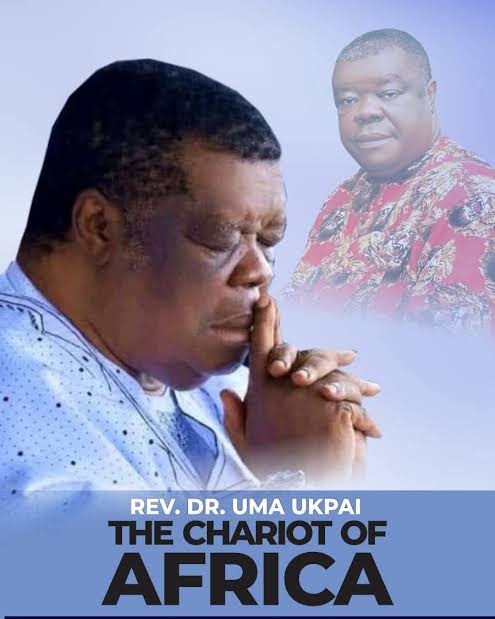
The Abia State Government on Thursday, March 26, 2026, organised a grand state burial service in honour of the late Rev. Dr. Uma Ukpai, one of Nigeria’s most influential Christian evangelists and founder of the Uma Ukpai Evangelistic Association.
The solemn ceremony took place at the International Conference Centre (ICC), Ogurube Layout, Umuahia, beginning at 10:00 a.m. It drew top government officials, religious leaders, and mourners from across Nigeria and beyond to celebrate the life and legacy of the cleric, who died on October 6, 2025, at the age of 80.
The remains of Rev. Dr. Uma Ukpai, a native of Asaga in Ohafia Local Government Area of Abia State, were earlier received with full honours at the Akwa Ibom-Abia state boundary before being conveyed to Umuahia for the state funeral service.
The body had previously lain in state in Uyo, Akwa Ibom State, where he resided for many years.
Governor Alex Otti’s administration described the late evangelist as a “towering figure” whose life of faith, leadership, and humanitarian impact left an indelible mark on Abia State, Nigeria, and the global Christian community.
The state burial was part of a week-long programme of funeral rites that culminated in the final interment on Friday, March 27, 2026, at his hometown of Asaga, Ohafia.
Rev. Dr. Uma Ukpai, born on January 7, 1945, was celebrated as an international preacher who ministered for nearly six decades. He was widely respected for his powerful crusades, teachings on faith and prosperity, and establishment of numerous charitable initiatives, including educational and medical outreach programmes.
Dignitaries in attendance included senior government functionaries, clergy from various denominations, and notable figures who paid glowing tributes to his spiritual legacy and contributions to nation-building through the gospel.
The state burial reflects Abia’s recognition of Rev. Dr. Uma Ukpai’s immense role in promoting moral values and spiritual development. Family members, while expressing gratitude for the honour bestowed on their patriarch, described his passing as a “glorious home-going.
”As the final interment proceeds today in Asaga, Ohafia, many have described the occasion as not just a farewell but a celebration of a life well-lived in service to God and humanity.
The Abia State Government has urged residents and visitors to observe the period with dignity and solemnity.
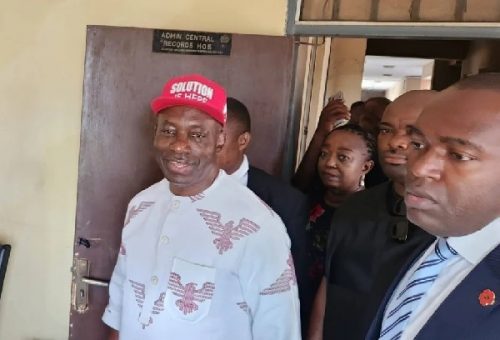
Governor Chukwuma Charles Soludo of Anambra State has directed the immediate suspension without pay of civil servants found absent from their duty posts during an unscheduled visit to the state secretariat in Awka on Thursday.
The governor stormed the secretariat around 10:30 a.m. on March 26, 2026, for an on-the-spot assessment of workers’ punctuality, conduct, and commitment to duty across various ministries and departments.
To his dismay, many offices were empty or sparsely staffed, with several departments recording only one or two workers or none at all well past the official resumption time.
Addressing journalists after the inspection, Governor Soludo issued a stern directive: any worker not found at their duty post by 10:00 a.m. should be suspended without pay.
He reportedly remarked that by 10 a.m., if staff are not in their seats, “we don’t need them,” signaling zero tolerance for lateness and absenteeism in the state civil service.
The surprise visit has sparked tension at the secretariat, with officials now compiling lists of present and absent staff for enforcement of the governor’s order.
Some reports indicate the suspension could last up to six months for those affected, though exact durations and the number of workers impacted are yet to be officially confirmed.
This move forms part of Soludo’s broader efforts to reform and reposition the Anambra civil service, emphasizing accountability, discipline, and improved public service delivery in his administration.
The governor has previously warned non-performing staff of potential disengagement and is pushing for a more efficient bureaucracy aligned with his development agenda.
Civil servants and political observers have reacted with a mix of surprise and support, with some describing the action as a necessary step to weed out ghost workers and enforce work ethics. Others have called for a holistic review of the civil service, including verification of attendance registers.
The Anambra State Government is yet to issue a formal statement detailing the full list of suspended workers or further sanctions.
The development comes amid ongoing reforms in the state’s public sector as Soludo continues his second term in office.
Members of the public and affected workers have been advised to await official communication from the relevant ministries regarding implementation.
News
UK revises visa fees upward from April
Under the new charges, the short-term visit visa will rise from £127 to £135, while the student visa will increase from £524 to £558.


The United Kingdom government will increase fees for Nigerians and other foreign nationals seeking to visit, study, work or settle in the country effectively from April 8, 2026.
The revised fee schedule, published by the UK Home Office on Thursday shows increases across nearly all categories of visa applications made both within and outside the UK.
The affected categories include visit visas, student visas, work visas, settlement applications and naturalisation fees.
The changes will take effect in less than two weeks, at a time when Nigeria remains one of the UK’s biggest sources of visa applicants, with hundreds of thousands of Nigerians applying each year for visit, student, and work visas.
Under the new charges, the short-term visit visa will rise from £127 to £135, while the student visa will increase from £524 to £558.
Applicants seeking permanent residency through indefinite leave to remain will now pay £3,226, up from £3,029, while those applying for British citizenship through naturalisation will pay £1,709, up from £1,605.
In a rare exception to the general increase, the fee for registering a child as a British citizen will be reduced from £1,214 to £1,000 — a drop of £214.
Some categories, however, remain unchanged, including the Tier 1 (Investor) visa at £2,000 and the High Potential Individual visa at £880.


Abia State Holds State Burial for Renowned Evangelist Rev. Dr. Uma Ukpai

Soludo Orders Suspension of Absentee Workers After Surprise Secretariat Visit

Vietnam Police Dismantle Multi-Billion Dollar Cryptocurrency Fraud Operation

Tech Expert, Zuckerberg trains with UFC champions, Adesanya, Alexander

Organ Trafficking: Ekweremadu bags 10 years in UK prison

SAINT OBI: Between his marriage and his death
-
 Sports2 days ago
Tributes To NRA President Sanni Zubairu
-

 Sports2 days ago
Int’l friendlies: 15 players open Eagles camp in Turkey
-

 Sports2 days ago
NBF Kida’s board to remain in office until October , says FIBA
-
 Business2 days ago
Dangote: Middle East crisis might take us back to ‘Work from home’ COVID era
-

 Sports2 days ago
Mohamed Salah quitting Liverpool after nine historic years
-
 News2 days ago
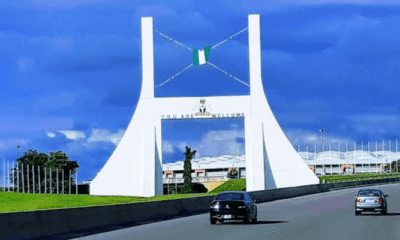
Nigeria partner Japan to redevelop Abuja Master Plan
-
 Business2 days ago
Niger Delta Chamber Investment Summit Targets $5bn, 500,000 Jobs
-
 Politics2 days ago
2027: Labour Party says Presidential flag bearer must be a southerner