
Business
CBN gives PoS operators one month to use aggregators


The Central Bank of Nigeria has directed that all Point of Sale operators (POS) must route transactions through licensed payment terminal service aggregators.
A circular posted on the CBN’s website on Thursday stated that the move was aimed at enhancing the tracking and management of electronic transactions in the country.
“As part of efforts to mitigate the concerns regarding channelling all Point of Sale transactions through a single aggregator, the CBN on April 19, 2024, granted a second PTSA licence to Unified Payment Services Limited.
“In furtherance of the above, the CBN hereby directs as follows: 1 Acquirers are henceforth required to route all transactions from PoS terminals at merchant and agent locations, whether on physical or electronic PoS terminals, through any CBN-licensed Payment Terminal Service Aggregator PTSAs are required to send PoS transactions to only Processors certified by the relevant Payment Scheme, nominated by the Acquirer and licensed by CBN,” the apex bank noted.
It noted that the Nigeria Interbank Settlement System Plc was granted a PTSA licence in 2011 to handle the aggregation of PoS transactions.
However, to address concerns about routing all transactions through one aggregator, the CBN granted a second PTSA licence to Unified Payment Services Limited earlier this year in April.
“To achieve the objectiveof tracking electronic transactions in Nigeria, the Central Bank of Nigeria in August 2011, granted a Payment Terminal Service Aggregator licence to Nigeria Interbank Settlement System Plc.
As part of efforts to mitigate the concerns regarding channelling all Point of Sale transactions through a single aggregator, the CBN on April 19, 2024, granted a second PTSA licence to Unified Payment Services Limited.
The CBN has instructed that all acquirers, the institutions responsible for processing payments from PoS terminals, must channel transactions through any of the two licensed aggregators.In addition, licensed processors are required to integrate with both PTSAs to give acquirers the flexibility to choose their preferred service providers.
It noted that payment terminal service providers, responsible for deploying and managing PoS terminals, must ensure their devices and applications are configured to work with any PTSA chosen by the acquirers.
According to the CBN, PTSPs are also required to submit monthly reports to the CBN, detailing the number of merchants and agents they manage, as well as the PTSA services used.
Similarly, the CBN has mandated that each PTSA submit monthly reports of all transactions processed through their platforms.
The apex bank ordered that the reports must be submitted to the director of the Payments System Management Department within seven days after the end of each month.
The CBN urged all PSPs to regularise their operations with the PTSAs within 30 days, warning that non-compliance with the directive would attract appropriate sanctions.


Business
12-years after, US clears Nigerian vessels to land at its ports
Oyetola said that removal of the restriction by the USCG followed years of effort by Nigeria to meet international maritime security standards, particularly through the Nigerian Maritime Administration and Safety Agency (NIMASA).
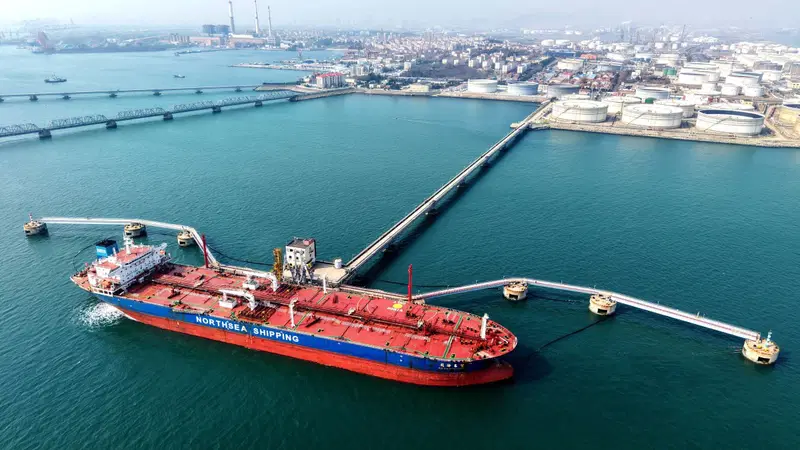
The Minister of Marine and Blue Economy, Adegboyega Oyetola, announced that the United States Coast Guard (USCG) has removed the Condition of Entry (CoE) imposed on Nigerian vessels from docking at its ports.
The CoE was first imposed in June 2014. Under the restriction, any vessel that had docked at designated Nigerian ports within its previous five port calls was required to meet additional security and documentation requirements before entering US waters.
Oyetola said that removal of the restriction by the USCG followed years of effort by Nigeria to meet international maritime security standards, particularly through the Nigerian Maritime Administration and Safety Agency (NIMASA).
The removal means those extra requirements no longer apply.Four USCG assessments between 2024 and 2026
He pointed to the country’s compliance with the International Ship and Port Facility Security (ISPS) Code as central to the case presented to US authorities.
The USCG carried out four separate assessments of Nigeria’s ports and maritime security framework between March 2024 and April 2026.
The inspections took place in March 2024, April 2024, March 2025 and April 2026. The government said each review recorded measurable progress.
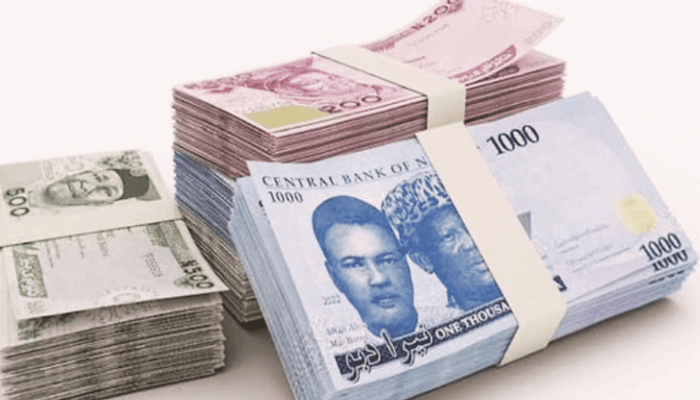
BLACK MARKET RATES
US Dollar (USD) Buy ₦1,404 Sell ₦1,410
Great British Pound (GBP) Buy ₦1,880 Sell: ₦1,900
EURO (EUR) Buy ₦1,585 Sell ₦1,605
Canadian Dollar (CAD) Buy ₦1,020 Sell ₦1,080
South African Rand (ZAR) Buy ₦75 Sell ₦90
Ghana Cedi (GHS) Buy ₦95 Sell ₦110
West African CFA Buy ₦2, 300 Sell ₦2, 400
CENTRAL AFRICAN CFA Buy ₦2,150 Sell 2,250
CBN Exchange Rates
US Dollar (USD) ₦1,350.41
Great British Pound (GBP) ₦1,839.13
EURO (EUR) ₦1,574.31
Swiss Franc (CHF) ₦1,681.92
Chinese Yuan (CNY) ₦200.61
West African CFA (XOF) ₦2. 37
West African Unit Account (WAUA) ₦1,836.21
Saudi Riyal (SAR) ₦359.65 South African Rand (ZAR) ₦83.71
Business
Oyede Tasks States To Look Beyond Federal Allocations For Economic Growth
Nigeria must move from an allocation dependent economy to one driven by production, investment and job creation,
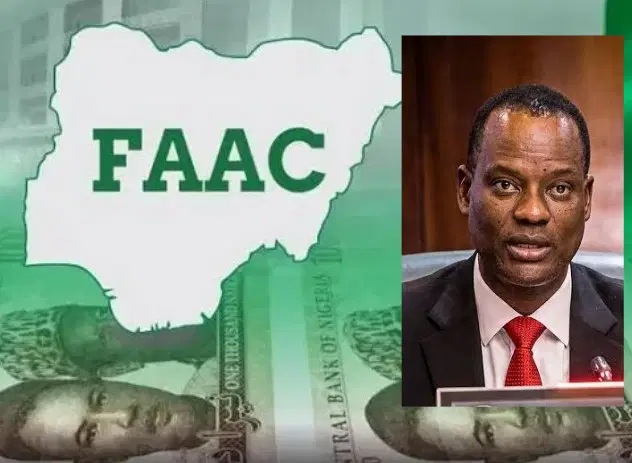
The Minister of Finance and Coordinating Minister of the Economy, Prof. Taiwo Oyedele, has said federal allocations alone cannot guarantee prosperity for states, urging them to develop sustainable sources of revenue and drive economic growth.
The Minister gave the advice during the 2026 National Council on Finance and Economic Development (NACOFED) conference in Owerri, Imo State, yesterday.
Oyedele emphasised the need for states to look beyond federal allocations and develop their productive capacities to achieve sustainable economic development.
He called for stronger fiscal federalism, improved revenue generation and economic diversification to strengthen Nigeria’s resilience to economic shocks.
“Nigeria must move from an allocation dependent economy to one driven by production, investment and job creation,” he stated.
According to him, recent economic reforms , including the removal of fuel subsidy and the unification of the foreign exchange market, have increased tremendously the revenue available for distribution through the federation account.
He said monthly federation account allocation, which was between N300 billion and N600 billion before 2023, is now above N2 trillion.


Atiku Vows to Restore Fuel Subsidy If Elected President in 2027

Boat Mishap Claims Lives in Goronyo (Photos)

Okorocha Sues Uzodinma Over Bid for Imo West Senatorial Seat

Tech Expert, Zuckerberg trains with UFC champions, Adesanya, Alexander

Organ Trafficking: Ekweremadu bags 10 years in UK prison

SAINT OBI: Between his marriage and his death
-

 Business3 days ago
CBN’s Sidi-Ali wins 2026 overall Spokesperson of the Year Award, courtesy of NSA
-

 News1 day ago
BREAKING: Tinubu Diverts EFCC Funds to NELFUND
-

 Business3 days ago
Naira Exchange Rates Tuesday,18 August
-

 Politics3 days ago
2Baba’s wife Natasha emerges Edo Assembly Minority Leader
-
 Sports3 days ago
NFF Sacks Madugu over WAFCON crashed out
-

 International3 days ago
Trump Annex Strait of Hormuz “New US Territory”
-

 Opinions22 hours ago
BREAKING: Lagos Govt Declares Today, Thursday Work-Free to Mark 2026 Ìṣẹ̀ṣe Day
-
 Politics2 days ago
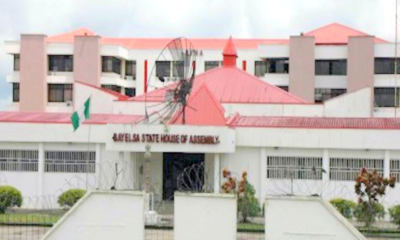
Bayelsa Assembly Approves Removal Of Sagbama Council Chairman, Vice