
International
BREAKING: ECOWAS to Lift Economic Sanctions On Niger, Mali, Guinea

by Wale Ewedimi
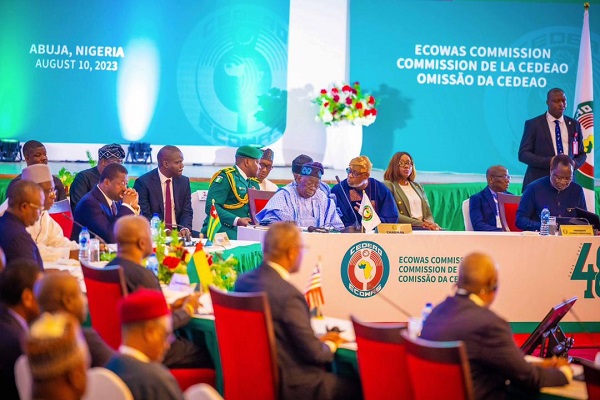
The Economic Community of West African States (ECOWAS) has resolved to lift some sanctions on Niger Republic, Mali and Guinea.
The resolution was taken at the extraordinary summit on the peace, political and security situation in the ECOWAS sub-region in Abuja on Saturday.
While the regional bloc said the political and targeted sanctions on Niger Republic remain, it lifted some financial and economic sanctions on Guinea and some targeted sanctions on Mali.
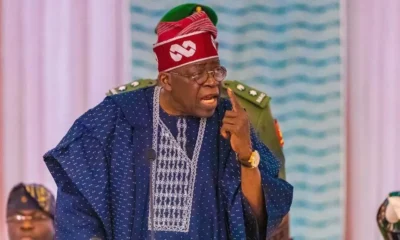
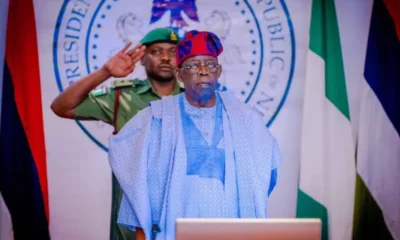
Meanwhile, President Bola Tinubu called for the suspension of economic sanctions imposed on Niger, Mali, Burkina Faso, and Guinea by ECOWAS.
President Tinubu, who is the Chairman of the Authority of Heads of State and Government of the organization made the call at the Extra-ordinary Summit of ECOWAS in Abuja on Saturday, saying that: “Everything we did was in hopes of persuading our brothers that there existed a better path, a path that would lead to genuine improvement of their people’s welfare through democratic good governance. And this was a path each of our nations had solemnly agreed with one another pursuant to formal regional treaty and protocol.
“However, the sanctions that we contemplated might help lead our brothers to the negotiating table have become a harsh stumbling block. In my mind and heart, that which is hurtful yet ineffective serves no good purpose and should be abandoned.
“ECOWAS was established for the unassailable objective of improving the lives of the people of this region through fraternal cooperation among all member states. This edifice was cemented on the strong foundation and apt conviction that, united as one, we can be the true masters of our destiny.”
The President further explained that ECOWAS took the steps it did based on the regional ideals of security, social stability; democratic governance, political freedom, broad-based prosperity, and sustainable economic development through fair opportunity for each and every one in West Africa.
He said neither hatred nor hidden motive influenced the steps taken and that there was never any intention to douse or undermine the legitimate political aspirations of any member state or to advance the interests of any outside party.
In calling for the suspension of sanctions, President Tinubu stressed that: “We must take note of the approach of the holy month of Ramadan and of Lent. Whether you pray in the mosque or in the church, this represents a time for compassion, hope, and harmony. It is a time that we must not only seek God but also a closer relationship with brother and neighbour.
“In the Spirit of the holy month and of the Lenten period, and with hearts bestirred by goodwill towards all our people, let us extend a hand as brothers and friends to those in Niger, Mali, Burkina Faso, and Guinea.
“What I suggest in real and practical terms is that we, my colleagues and fellow heads of state in ECOWAS, indefinitely suspend economic sanctions against Niger, Mali, Guinea and Burkina Faso and against the leadership of the military authorities in those nations.”
The President asked that ECOWAS facilitate the unfettered flow of foodstuffs, medicines and other humanitarian items to the people of these nations, especially to the most vulnerable, adding that for Nigeria, this will also mean the prompt resumption of export of electric power to Niger.
“In this vein, suspension of sanctions is an important but initial step. What we seek is more than the breaking of the diplomatic logjam. We must use this very moment when things seem tense and progress unavailing, to forge greater cooperation within our community.
“We not only reach out to our brothers. Today, we say unto them — let us begin to work more earnestly together for the economic development of our people and towards confronting those modern challenges that respect no borders or boundaries. Challenges ranging from climate change to violent extremism to illegal pilfering of our precious natural resources require that we join together in progress or we fail separately.
“As leaders of ECOWAS, we have accepted the honour and duty to draft the history of the region and its people during our tenure in office. We have also accepted the honour and duty to reach out to our brothers, letting them know this regional home belongs to us all. I shall do my utmost in this regard. I humbly beseech that you do the same.
“For these reasons, we must suspend sanctions and return to brotherly dialogue. I call on the leadership in Burkina Faso, Guinea, Mali, and Niger to embrace the hand extended,” the President stated.







The Kenyan government has given foreign nationals operating businesses in the country 90 days to regularise their immigration status, work permits, business registrations and licences, following remarks by President William Ruto that triggered panic in immigrant communities and fears of xenophobic violence.
State House Spokesperson Hussein Mohamed announced the “orderly regularisation exercise” on Tuesday, saying relevant government agencies would work with foreign embassies to facilitate compliance. “Every person conducting business in Kenya is required to comply with applicable immigration, work-permit, registration and licensing requirements,” Mohamed said. Requirements will be administered “fairly, consistently and without discrimination” during the period. After the 90 days, the rules will be enforced “firmly and strictly in accordance with the law and due process.”
The move comes after Ruto’s comments last week that foreigners should not operate as hawkers or run small shops, which were widely seen as responding to complaints from Kenyan traders about competition in the informal sector. The remarks sparked anxiety, particularly among Burundian nationals who dominate street vending in parts of Nairobi. Hundreds queued at the Burundi embassy seeking travel documents amid concerns of a crackdown and possible attacks similar to recent xenophobic violence in South Africa. There were reports of at least one shop attack and instances of harassment or intimidation.
Mohamed explicitly warned that no individual or group has authority to harass, intimidate, threaten or interfere with foreign nationals or their businesses, stressing that enforcement is the sole responsibility of authorised state agencies. “Legitimate concerns about economic opportunity can never justify discrimination, excuse lawlessness or sanction violence,” the statement said. Kenya would remain “an open, secure and welcoming country” while protecting opportunities for its citizens, especially in the micro and small-enterprise sector.
Citizens of East African Community countries are eligible for free work permits, though many have not completed formal registration. The government has also directed that the Local Content Bill currently before Parliament be expanded to create a clearer framework identifying activities that may be reserved for Kenyans while protecting the rights of foreigners lawfully entitled to work, invest or trade.
The 90-day window is intended to allow an orderly process rather than immediate closures, offering temporary relief to affected communities while signalling stricter future enforcement.
International
Global media leader Annecchino dies at 55
Widely recognised as a transformative figure in global media, he was known for his strategic vision, entrepreneurial drive and ability to steer major organisations through periods of sweeping change.


|•Raffaele Annecchino
Raffaele Annecchino, the former President and CEO of Paramount International has died at the age of 55.
Widely recognised as a transformative figure in global media, he was known for his strategic vision, entrepreneurial drive and ability to steer major organisations through periods of sweeping change.
His career spanned more than 25 years at Paramount and ViacomCBS, starting in a commercial role in Madrid before rising to lead the company’s international operations across Europe, the Middle East, Africa, Latin America and Asia.
As CEO of Paramount International, Annecchino oversaw the company’s pivot from broadcast to digital, spearheading the international rollout of Paramount+, the global expansion of Pluto TV, and the creation of the SkyShowtime joint venture with Comcast.
He also built long-standing partnerships with major industry players, including Sky, Canal+, MultiChoice and Viaplay, and helped grow networks such as MTV, Nickelodeon, BET and Channel 5 in the UK, while backing production hubs across Africa, Asia, Europe and Latin America.
International
Meet The highest paid world leader
Lawrence Wong will see an increase of 1.4 million Singapore dollars ($1.1m; £818,000) in his annual pay package. He has said he will donate this pay increase to charity over the next five years.

•Lawrence Wong / BBC
Singapore’s government says it will raise the annual salaries of its ministers and other office holders, including its prime minister who is the highest paid political leader in the world.
Lawrence Wong will see an increase of 1.4 million Singapore dollars ($1.1m; £818,000) in his annual pay package. He has said he will donate this pay increase to charity over the next five years.
Wong said that raising the pay of ministers was necessary to attract better talent.
The government has previously argued that paying ministers high salaries deters corruption.
But the move has attracted criticism in Singapore where there is deep concern about job security and the rising cost of living.
Even before his pay raise kicks in, Wong is still by far the highest paid world leader.
He currently receives an annual salary of S$2.2m and will now see his pay go up by more than 60% to S$3.6m ($2.8m).
Next is Hong Kong chief executive John Lee, who earns about $719,000, followed by Switzerland’s president Guy Parmelin with $606,000.
US president Donald Trump earns $400,000 a year, while British PM Andy Burnham takes in $230,000.
On Tuesday, Wong acknowledged that Singapore ministers’ salaries have attracted scrutiny given that they were much more than what most citizens earn. The median monthly income in the country is S$5,775.
(BBC)


Kara Bridge Repairs Cripple Lagos-Ibadan Expressway

Kenya Gives Foreign Traders 90 Days to Formalise Status Amid Xenophobia Fears

AfCFTA : Nigerian Goods In High Demand In Africa, says Minister

Tech Expert, Zuckerberg trains with UFC champions, Adesanya, Alexander

Organ Trafficking: Ekweremadu bags 10 years in UK prison

SAINT OBI: Between his marriage and his death
-

 Business1 day ago
NAFDAC Goes After Chinese Logistics Firms Over Products Counterfeiting
-

 Business2 days ago
Dangote Refinery Signs IPO Document Today
-
 Politics2 days ago
Obidient Connect Texas Plans Grand Rally for Obi-kwakwanso October 10
-
 News2 days ago
FG announces two-week traffic delays on Kara–Berger Bridge for repairs
-
 Politics2 days ago
Nigerians better off under military than democracy – Duke
-
 News2 days ago
JUST IN: Traffic Chaos Expected on Lagos-Ibadan Expressway From Tuesday
-

 Entertainment1 day ago
Ikenga becomes highest-grossing Igbo film of all time
-
 Sports2 days ago
Infantino To Seek Re-Election As FIFA President In 2027