
Business
The companies making billions from the Iran war – BBC
Here are some of the sectors and companies making billions while the Middle East conflict continues.

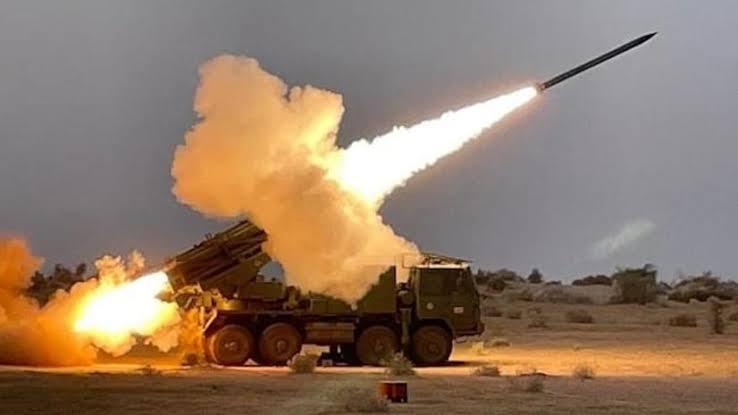
As households across the globe count the costs of the US-Israel war in Iran, some companies have been counting bumper profits instead.
The uncertainty sparked by the conflict, and Iran’s effective closure of the Strait of Hormuz, is driving up the cost of living and hitting the budgets of firms, families and governments.
But while some have been pushed to the brink, others, whose core businesses are more profitable in a war or who benefit from volatile energy prices, have seen record earnings.
Here are some of the sectors and companies making billions while the Middle East conflict continues.
1. Oil and gas
The biggest economic impact of the war so far has been a surge in energy prices. Around a fifth of the world’s oil and gas is transported through the Strait of Hormuz, but those shipments effectively ground to a halt at the end of February.
The result has been a rollercoaster of price movements on energy markets, with some of the world’s biggest oil and gas companies benefiting.
The main beneficiaries have been European oil giants, who have trading arms so have been able to gain from sharp price movements boosting profits.
BP’s profits more than doubled to $3.2bn (£2.4bn) for the first three months of the year, after what it called an “exceptional” performance in its trading division.
Shell also beat analysts’ expectations when it reported a rise in first-quarter profits to $6.92bn.
Another international giant, TotalEnergies, saw its profits jump by almost a third, to $5.4bn in the first quarter of 2026, driven by volatility in oil and energy markets.
US giants ExxonMobil and Chevron saw their earnings fall compared with the same period last year, due to supply disruption from the Middle East, but both beat analysts’ forecasts and expect their profits to grow further as the year goes on, with the price of oil still significantly higher than when the war broke out.
2. Big banks
Some of the biggest banks have also seen their profits boosted during the war in Iran.
JP Morgan’s trading arm made a record $11.6bn of revenue in the first three months of 2026, helping the bank overall to its second biggest ever quarterly profit.
Across the rest of the “Big Six” banks – which includes Bank of America, Morgan Stanley, Citigroup, Goldman Sachs and Wells Fargo, as well as JP Morgan – profits all rose substantially in the first quarter of the year.
Overall, the banks reported $47.7bn in profits for the first three months of 2026.
“Heavy trading volumes have benefited investment banks, in particular Morgan Stanley and Goldman Sachs,” Susannah Streeter, chief investment strategist at Wealth Club, said.
The major Wall Street lenders have been boosted by a surge in demand for trading, with investors rushing to drop riskier stocks and bonds and pile their cash into assets that are seen as safer. Trading volumes have also been lifted by investors seeking to capitalise on the volatility in financial markets.
3. Defence
One of the most immediate beneficiaries in any conflict is the defence sector, according to Emily Sawicz, senior analyst at RSM UK.
“The conflict has reinforced gaps in air defence capability, accelerating investment in missile defence, counter drone systems and military hardware across Europe and the US,” she told the BBC.
As well as highlighting the importance of defence firms, the war creates a need for governments to replenish weapons stocks, boosting demand.
BAE Systems, which makes products including F35 fighter jet components, said in a trading update on Thursday it expects strong growth in sales and profits this year.
It cited growing “security threats” around the world pushing up government defence spending, which has in turn created a “supportive backdrop” for the company.
4. Renewables
The conflict has also highlighted the need to diversify away from reliance on fossil fuels, Streeter said.
This has “supercharged interest in the renewable sector” even in the US, she said, where the Trump administration has popularised the “drill, baby, drill” slogan encouraging greater fossil fuel usage.
Streeter said the war has led to renewable investment being seen as increasingly important to stability and resilience to shocks.One firm that has been boosted is Florida-based NextEra Energy, which has seen shares surge by 17% so far this year as investors pile in on its mission.
Danish wind power giants Vestas and Orsted have also reported surging profits, highlighting how the fallout from the Iran war is also boosting renewable energy firms.
In the UK, Octopus Energy recently told the BBC the war had caused a “huge jolt” in solar panel and heat pump sales, with solar panel sales rising by 50% since the end of February.
The surge in petrol prices has also boosted demand for electric vehicles, with Chinese manufacturers in particular making the most of the opportunity.

Dangote Petroleum Refinery has strongly rejected allegations that its refined petroleum products are exported to Lomé, Togo, and later re-imported into Nigeria.
In a statement issued on Tuesday, the refinery described the claims as “a web of falsehoods,” “baseless,” and “unsubstantiated,” arguing they lack commercial logic and contradict its core business objectives of boosting local production and achieving energy self-sufficiency.
The refinery emphasized that its sales contracts and tender terms explicitly prohibit buyers from reselling or re-importing the products back into Nigeria. It further noted that available trade data and the high costs of round-trip shipping (estimated at US$68–90 per ton) make such a scheme economically unviable.
The allegations surfaced amid reports suggesting that a significant portion of Nigeria’s seaborne fuel imports between March and May 2026 originated from Dangote products rerouted through the offshore ship-to-ship trading hub in Lomé.
Some marketers claimed pricing differences made it cheaper to buy from foreign traders via Togo.
Dangote Refinery dismissed these assertions, insisting there is no evidence to support them and reaffirming its commitment to supplying high-quality fuels directly to the Nigerian market at competitive prices.
The development highlights ongoing tensions as the refinery continues to reduce Nigeria’s reliance on fuel imports.
Business
Afreximbank wooing Nigeria’s rising culinary stars for participation in 2026 CANEX Junior Chef Competitions
The competition invites Nigeria’s most promising junior culinary talents, aged 16 to 21, to showcase their creativity, technical skills, and cultural storytelling at the CANEX WKND 2026, set to hold from 5 to 8, November 2026, in Lagos, Nigeria.


Photo: Winners of the CANEX Junior Chef Competition display their prizes during IATF2025 in Algeria.
The African Export-Import Bank (Afreximbank), through its Creative Africa Nexus (CANEX) programme, has opened applications for the 2026 edition of the CANEX WKND 2026 Junior Chef Competition.
The competition invites Nigeria’s most promising junior culinary talents, aged 16 to 21, to showcase their creativity, technical skills, and cultural storytelling at the CANEX WKND 2026, set to hold from 5 to 8, November 2026, in Lagos, Nigeria.
Now in its second edition, the competition builds on the landmark debut in Algiers, Algeria, during IATF2025, with Fatma Zohra Bendjelida crowned the inaugural winner.
This year, the spotlight turns to Nigeria’s next generation of culinary talents.
Eight aspiring young chefs will earn their place on the live stage at CANEX WKND in Lagos, where they will transform African culinary heritage into bold, signature creations; making dishes that honour the flavours, traditions, and stories of the continent while presenting a fresh, fearless voice in African gastronomy.
Business
Tech giant Oracle cuts 21,000 jobs as it embraces AI
The software and cloud computing firm says it had around 141,000 full-time employees as of 31 May 2026, down from about 162,000 workers at the same time last year.

Photo: Oracle co-founder Larry Ellison/ Getty images
Oracle shed about 21,000 roles globally in the last year as the US technology giant reshapes its business around artificial intelligence (AI), the firm’s latest annual report shows.
The software and cloud computing firm says it had around 141,000 full-time employees as of 31 May 2026, down from about 162,000 workers at the same time last year.
The “deployment of AI technologies across our operations have resulted, and may continue to result, in reductions to our workforce,” the report says.
The cuts, which amount to about 13% of Oracle’s workforce, are part of a wider trend among tech firms as they spend hundreds of billions of dollars on building AI infrastructure like data centres.


NYSC announces 2025 Batch ‘B’ Stream I corps members passing-out date

Rowdy Scenes as Court sends Sowore To Prison Pending June 30 Ruling

Lagos Shuts Oshodi Market Over Attack on Sanitation Officers

Tech Expert, Zuckerberg trains with UFC champions, Adesanya, Alexander

Organ Trafficking: Ekweremadu bags 10 years in UK prison

SAINT OBI: Between his marriage and his death
-

 Business2 days ago
Naira Today Rates To Foreign currencies Monday, 22 June 2026
-

 Business2 days ago
Nigeria Customs Service to retire 1,516 officers
-

 Sports1 day ago
Lionel Messi becomes FIFA World Cup top goalscorer
-

 International2 days ago
Three killed in Philippines school shootings
-

 News2 days ago
JAMB Ends Degree Admissions Through Colleges of Education, Makes NCE Mandatory
-

 Entertainment1 day ago
Michelle hosts Tems at new Obama presidential centre
-

 Business1 day ago
Naira Exchange Rates To Foreign currencies Tuesday, 23 June 2026
-

 News1 day ago
PenCom gives MDAs deadline to submit retirees’ details