
Business
Disasters cost global agriculture $3.26 trillion over three decades – FAO
FAO discloses this in its new report released in November 2025, tagged ,’ The Impact of Disasters on Agriculture and Food Security 2025.’

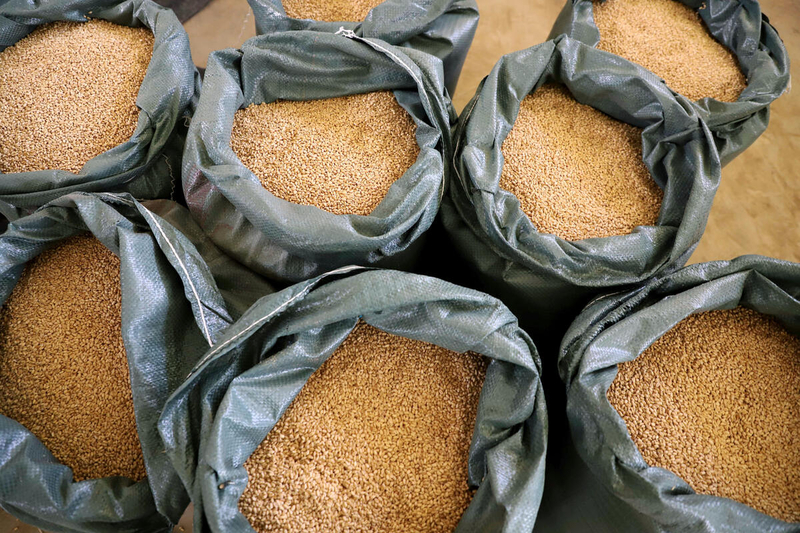
The Food and Agriculture Organization of the United Nations (FAO) says that disasters have inflicted an estimated $3.26 trillion in agricultural losses worldwide over the past 33 years – an average of $99 billion annually, roughly 4 percent of global agricultural GDP.
FAO discloses this in its new report released in November 2025, tagged ,’ The Impact of Disasters on Agriculture and Food Security 2025.’
The report highlights how digital technologies are transforming how farmers, governments and communities can monitor risks, anticipate impacts, and protect livelihoods.
The report provides the most comprehensive global assessment to date of how disasters – from droughts and floods to pests and marine heatwaves – are disrupting food production, livelihoods and nutrition.
It also demonstrates how digital innovations are shifting agrifood systems from reactive crisis management to proactive data-driven resilience-building.
“Digital technologies are already revolutionizing how we monitor risks, deliver early warnings and support farmers’ decision-making.
From the 9.1 million farmers now accessing parametric insurance through digital platforms to the communities using our early warning systems to evacuate 90 percent of at-risk populations before disasters strike, we are witnessing a fundamental shift from reactive response to proactive risk reduction.” said FAO Director-General QU Dongyu in the foreword to the report.
Heavy toll on global food security
Between 1991 and 2023, disasters wiped out 4.6 billion tonnes of cereals, 2.8 billion tonnes of fruits and vegetables, and 900 million tonnes of meat and dairy.
These losses translate to a daily per capita reduction of 320 kilocalories – 13–16 percent of average energy needs.
Asia accounts for the largest share of global losses of 47 percent, totaling $1.53 trillion, reflecting both the scale of agricultural production and the region’s high exposure to floods, storms and droughts.
The Americas represent 22 percent of global losses or $713 billion, driven by recurrent droughts, hurricanes, and extreme temperature events that heavily impact large commodity crop systems.
Africa, while recording lower absolute losses of $611 billion, suffers the highest proportional impacts, losing 7.4 percent of agricultural GDP to disasters – the largest relative burden of any region.
In economies where agriculture accounts for a significant share of employment and income, these losses have had severe consequences for food security and rural stability.Small Island Developing States (SIDS) remain among the world’s most vulnerable to disasters such as cyclones, floods, and sea-level rise.
Despite relatively small agricultural output, disaster-related losses represent a disproportionately high share of agricultural GDP.
The report also finds that marine heatwaves caused $6.6 billion in losses between 1985 and 2022, affecting 15 percent of global fisheries. Yet, losses in fisheries and aquaculture remain largely invisible in disaster assessments, despite supporting the livelihoods of 500 million people.
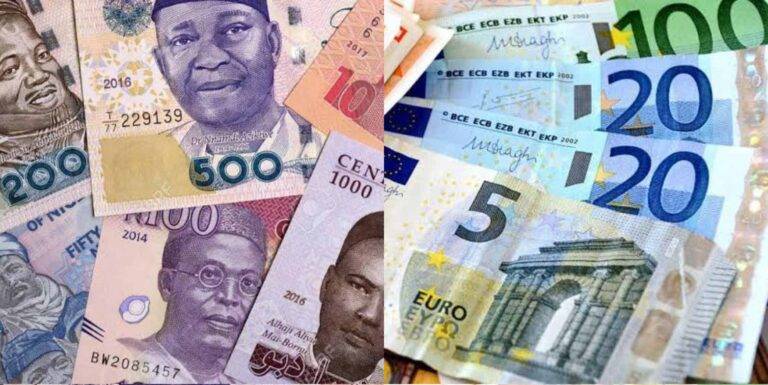
BLACK MARKET RATES
US DOLLAR (USD) Buy ₦1,405 Sell ₦1,410
GREAT BRITISH POUND (GBP) Buy ₦1,880 Sell: ₦1,900
EURO (EUR) Buy ₦1,580 Sell ₦1,600
CANADIAN DOLLAR (CAD) Buy ₦1,020 Sell ₦1,080
SOUTH AFRICAN RAND (ZAR) Buy ₦75 Sell ₦90
UAE DIRHAM Buy ₦350 Sell ₦370 CHINESE YUAN Buy ₦190 Sell ₦205
GHANA CEDI (GHS) Buy ₦95 Sell ₦110
WEST AFRICAN CFA Buy ₦2, 300 Sell ₦2, 400
CENTRAL AFRICAN CFA Buy ₦2,150 Sell 2,250
AUSTRALIAN DOLLAR Buy ₦800 Sell ₦900
CBN OFFICIAL EXCHANGE RATES
US DOLLAR (USD) ₦1,369.63
GREAT BRITISH POUND (GBP) ₦1,833.12
EURO (EUR) ₦1,563.03
SWISS FRANC (CHF) ₦1,685.08
JAPANESE YEN (JPN) ₦8.40
CHINESE YUAN (CNY) ₦202.21
WEST AFRICAN CFA (XOF) ₦2. 39
WEST AFRICAN UNIT ACCOUNT (WAUA) ₦1,867.90
SAUDI RIYAL (SAR) ₦366.36
SOUTH AFRICAN RAND (ZAR) ₦83.40
Business
President Tinubu Tasks Judicial Officers To Remain Abreast of Evolving Global Maritime Laws
President Tinubu made the call in Abuja during the 18th International Maritime Seminar for Judges, organised by the Nigerian Shippers’ Council (NSC), under the auspices of the Federal Ministry of Marine and Blue Economy, in collaboration with the National Judicial Institute (NJI).
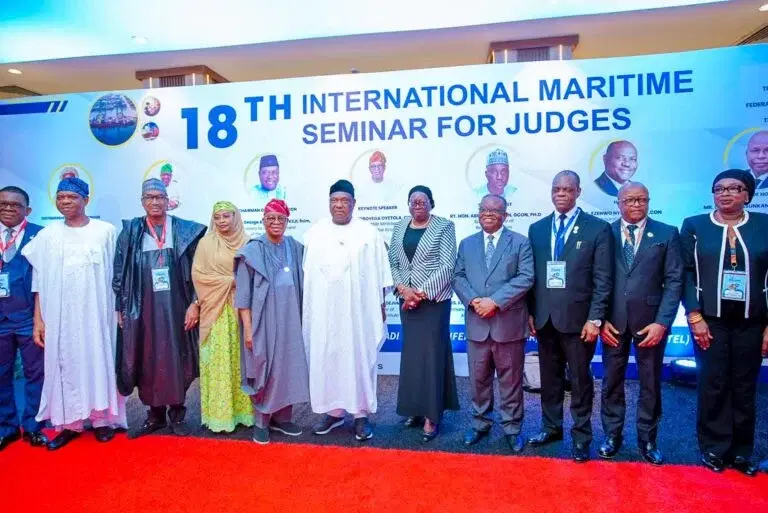
President Bola Tinubu on Wednesday urged judges to continually update their knowledge on autonomous vessels, digital shipping, artificial intelligence-driven maritime operations, maritime security and evolving international environmental regulations.
President Tinubu made the call in Abuja during the 18th International Maritime Seminar for Judges, organised by the Nigerian Shippers’ Council (NSC), under the auspices of the Federal Ministry of Marine and Blue Economy, in collaboration with the National Judicial Institute (NJI).
Represented by the Minister of Marine and Blue Economy, Adegboyega Oyetola, President Tinubu lauded the Nigerian Shippers’ Council for initiating and sustaining the international seminar for judges.
He described it as one of Nigeria’s foremost platforms for strengthening maritime jurisprudence, enhancing judicial capacity and promoting excellence in maritime justice.
According to Oyetola , rapid technological advancement is creating unprecedented legal questions relating to liability, navigational responsibility, insurance, collision regulations and allocation of responsibility when autonomous vessels malfunction.
He emphasised that the courts will increasingly adjudicate disputes involving decarbonisation, environmental compliance, blockchain-enabled cargo documentation, electronic bills of lading and other evolving international maritime legal frameworks.
“The emergence of autonomous vessels demands a judiciary equipped to resolve complex legal questions involving liability, insurance, navigation and technological accountability.
“Judicial officers must remain abreast of evolving international maritime law to ensure justice keeps pace with technological innovation,” he said.
BLACK MARKET RATES
US DOLLAR (USD) Buy ₦1,408 Sell ₦1,413
GREAT BRITISH POUND (GBP) Buy ₦1,885 Sell: ₦1,905
EURO (EUR) Buy ₦1,585Sell ₦1,600
CANADIAN DOLLAR (CAD) Buy ₦1,020 Sell ₦1,080
SOUTH AFRICAN RAND (ZAR) Buy ₦75 Sell ₦90
UAE DIRHAM Buy ₦350 Sell ₦370
CHINESE YUAN Buy ₦190 Sell ₦205
GHANA CEDI (GHS) Buy ₦95 Sell ₦110
WEST AFRICAN CFA Buy ₦2, 300 Sell ₦2, 400
CENTRAL AFRICAN CFA Buy ₦2,150 Sell 2,250
AUSTRALIAN DOLLAR Buy ₦800 Sell ₦900
Official CBN Exchange Rates
US DOLLAR (USD) ₦1,375. 31
GREAT BRITISH POUND (GBP) ₦1,841. 13
EURO (EUR) ₦1,569.78.
SWISS FRANC (CHF) ₦1,694.98
JAPANESE YEN (JPN) ₦8.45
CHINESE YUAN (CNY) ₦203. 25
WEST AFRICAN CFA (XOF) ₦2.40
WEST AFRICAN UNIT ACCOUNT (WAUA) ₦1,874. 32
SAUDI RIYAL (SAR) ₦366.36 SOUTH AFRICAN RAND (ZAR) ₦83.50


Google to allow users sign in with selfie video

Tinubu approves expanding Nigerian Army to 12 new divisions

FAAN evacuate 68 Passengers as Enugu Air crash-lands in Benin Airport

Tech Expert, Zuckerberg trains with UFC champions, Adesanya, Alexander

Organ Trafficking: Ekweremadu bags 10 years in UK prison

SAINT OBI: Between his marriage and his death
-

 News3 days ago
Ayo Fayose Gets Presidential Portfolio As REA Board Chairman
-

 News2 days ago
An alleged fake university discover in Lagos
-

 News2 days ago
Reps Knock heads of ONSA, MOFA over PFIPC
-

 Business3 days ago
Naira Exchange Rates At The Parallel/ Official Market Tuesday, 21 July
-

 International2 days ago
Zelensky sacks Ukraine’s top army commander after days of protests
-

 News2 days ago
Achimugu Seeks National, Global Protection Over Threats To Her Life and Businesses
-
 Business2 days ago
Naira Exchange Rates Wednesday, July 22
-

 Business2 days ago
Cardoso Urges Banks To Lend Out Idle Funds With CBN * Retains MPR at 26.5%