
Business
Five Hidden Dangers of Buying Inherited Land in Nigeria by Dennis Isong


Not every land deal in Nigeria is as straightforward as it looks.
In fact, one of the trickiest types of property transactions you can ever get involved in is buying inherited land.
It often comes with stories, long family histories, and sometimes, unexpected headaches.
While the price may be attractive and the land location desirable, buyers need to slow down and look deeper.
Understanding the 5 Hidden Dangers of Buying Inherited Land in Nigeria can save you from emotional stress, wasted money, and years of court battles.
Let’s take the case of Chidi, a businessman who returned from abroad with the dream of building his retirement home in Lagos.
A relative introduced him to a family selling their dead father’s land.
The documents looked convincing, the price was lower than the market rate, and everything seemed fine—until a year later when one of the late owner’s children sued him, claiming the land was sold without his consent.
What Chidi thought was a dream turned into a nightmare of endless court sessions.
Sadly, his story is not uncommon.This is why we need to unpack the hidden dangers behind inherited land transactions.
1. Family Disputes and Unresolved Ownership
One of the biggest dangers of buying inherited land is family disagreement.
In many Nigerian families, land is passed down without clear documentation of who truly owns what. Some children may feel entitled, while others may want to sell.
The problem arises when not all family members agree.Imagine buying a piece of land from three siblings only to discover later that their fourth brother, who lives abroad, never approved of the sale.
That brother can return anytime and challenge the transaction in court. Until the matter is resolved legally, the land remains under dispute, and your investment stays trapped.
This is why it’s important to confirm that all rightful heirs have agreed in writing before any transaction takes place.
2. Lack of Proper Documentation
Inherited land often lacks complete or updated documentation. Many times, the original owner may have bought the land decades ago without processing proper title documents like a Certificate of Occupancy (C of O), Governor’s Consent, or even a Deed of Assignment.
As the land passes down to the children, the paperwork becomes even more confusing.
Some families rely only on informal documents, such as old receipts or local chiefs’ notes, which are not recognized in court.
If you buy such land, you may spend years chasing documents or, worse still, discover that the land was never legally theirs to sell.
Without valid documentation, ownership becomes shaky, and as a buyer, your claim over the land may not stand when challenged.
3. Multiple Sales of the Same Land
This is a common trap with inherited property. Because different family members may see themselves as “owners,” they sometimes sell the same land to multiple buyers.
One sibling may sell to you today, another may sell the same plot to someone else tomorrow, and yet another may use it as collateral for a loan.
When this happens, the buyer with the strongest legal proof wins. If you’re unlucky, you may lose both the land and the money you invested.
In fact, many land disputes in Nigerian courts stem from this exact scenario.
To protect yourself, you need to investigate carefully, confirm the true heirs, and insist on a family agreement that is signed, stamped, and legally backed.
4. Pending Legal Cases or Government Encumbrances
Another hidden danger of buying inherited land in Nigeria is the possibility of hidden lawsuits or government interests. Sometimes, the land may already be under dispute in court between family members.
Other times, the government may have acquired the land for future development, but the family continues selling to unsuspecting buyers.
If you unknowingly buy such land, you automatically inherit the legal problems that come with it.
Court cases can drag for years, draining you financially and emotionally. Worse still, if the government has plans for the land, you may lose everything without compensation.
This is why land verification through proper search at the land registry and even community checks is not optional—it is essential.
5. Emotional Attachments and Delays
Again, many families selling inherited land struggle with emotional attachments. Even after they agree to sell, one family member may suddenly change their mind or refuse to sign the final documents.
Others may delay the process, hoping to renegotiate or back out.This often frustrates buyers who have already invested time and money into the deal.
Unlike buying land from a registered estate company, transactions involving inherited property tend to drag on unnecessarily, causing you to lose both opportunities and peace of mind.
Final Thoughts
Buying land in Nigeria can be one of the smartest investments you ever make, but it must be done with caution.
When it comes to inherited property, the risks are higher than most people imagine.
From family disputes and lack of documents to multiple sales and hidden court cases, these are the five Hidden Dangers of Buying Inherited Land in Nigeria that every buyer must be aware of.
If you ever consider buying such land, work with professionals—lawyers, surveyors, and trusted realtors who understand the system.
Cutting corners may look cheaper today, but it could cost you everything tomorrow.
And remember, you don’t have to walk this path alone.
• I’m Dennis Isong, a top realtor in Lagos. I help Nigerians in the diaspora own property in Lagos, stress-free.
If you have questions about safe property investment or need guidance on avoiding land scams, call or WhatsApp me at +2348164741041.










Business
Dangote Foundation Takes Over Aliko Dangote Skills Acquisition Centre Kano
Under the agreement, the Foundation will manage the multi-million naira facility for a number of years and operate programmes aimed at equipping young people with technical, digital and industrial skills.

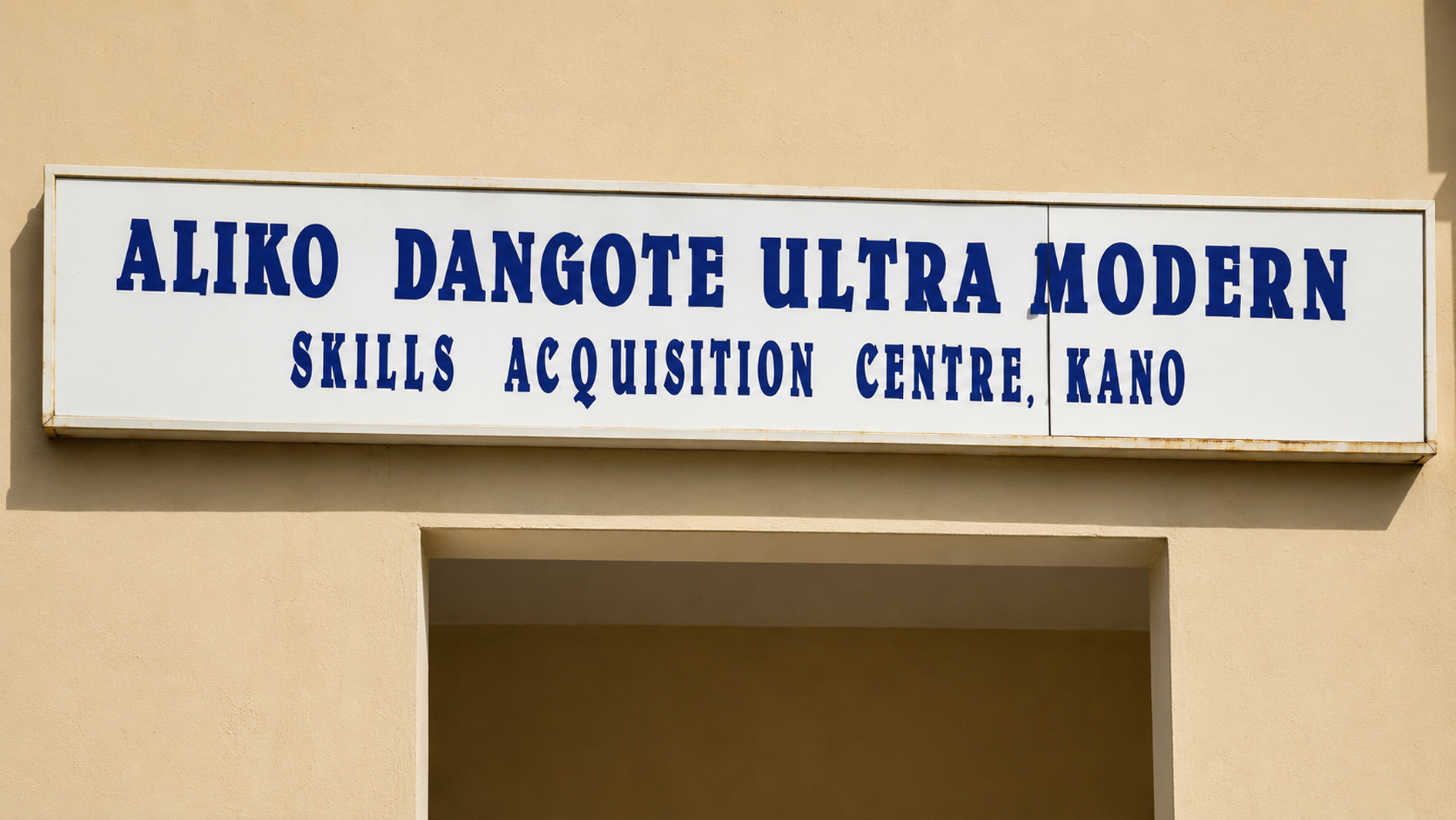
The Aliko Dangote Foundation has taken over the management of the Aliko Dangote Skills Acquisition Centre in Kano state.
The Memorandum of Understanding was signed between the Foundation and the Kano State Government, on Friday.
Under the agreement, the Foundation will manage the multi-million naira facility for a number of years and operate programmes aimed at equipping young people with technical, digital and industrial skills.
Chairman of the Manufacturers Association of Nigeria (MAN), Kano-Jigawa Branch, Muhammad Bello Isyaku Umar, described the intervention as “far-reaching and impactful,” saying skills acquisition remained one of the most effective ways of addressing youth unemployment in Nigeria..
“Programmes such as the Aliko Dangote Skill Acquisition Centre can equip young people with practical skills that enable them to become entrepreneurs, artisans or employees. The emphasis should increasingly be on modern technical, digital and industrial skills,” Umar said.
He described Kano as the economic and commercial hub of northern Nigeria and said the Foundation’s interventions across the region had extended to several sectors.
Business
Okin Biscuits Set For Comeback After 17 Years, Targets Revival Of Jobs, Local Manufacturing
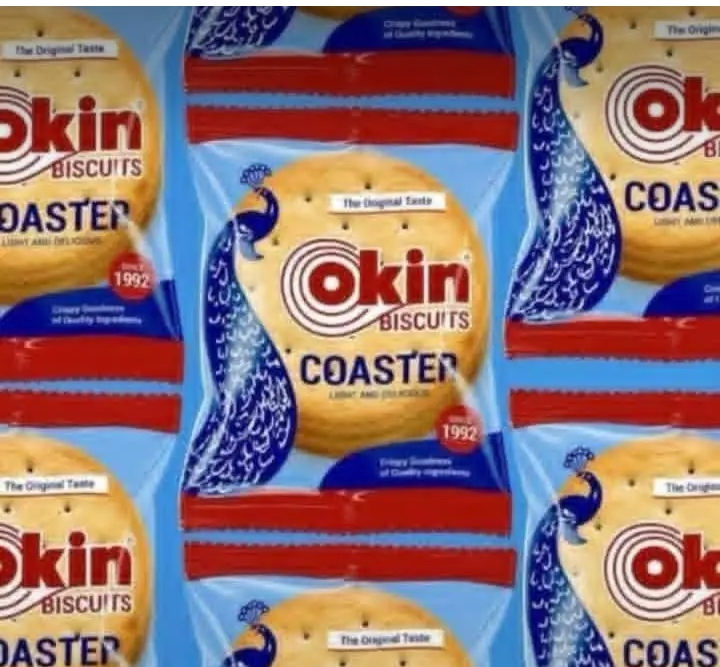
Founded in the 1980s by the late Chief Emmanuel Olatunji Adesoye, an illustrious son of Offa, Okin Biscuits grew into a household name with products including Okin Coasters, Shortcake and Okin Cabin Biscuits.
By Ochefa
After 17 years off the shelves, Okin Biscuits, one of Nigeria’s once-popular indigenous biscuit brands, is set to return to production as efforts intensify to revive the Ijagbo, Kwara State-based factory.
The planned comeback marks a significant attempt to restore one of the country’s old manufacturing brands while potentially reopening a major source of employment and economic activity in the community.
Founded in the 1980s by the late Chief Emmanuel Olatunji Adesoye, an illustrious son of Offa, Okin Biscuits grew into a household name with products including Okin Coasters, Shortcake and Okin Cabin Biscuits.
At its peak, the company provided direct and indirect employment to more than 2,000 people before production was eventually halted in 2009.
The shutdown reflected some of the structural problems that have continued to undermine Nigeria’s manufacturing sector, including harsh operating conditions, intense competition, inadequate infrastructure, vandalism and the theft of critical production equipment.
With the factory no longer producing, its products gradually disappeared from retail outlets and homes in Kwara, Lagos and other parts of the country.
Factory Undergoing Major Rehabilitation
However, the industrial facility is now showing signs of renewed activity.
A visit to the factory in Ijagbo showed that extensive rehabilitation work is underway across the complex.
The main factory building, which houses the production machinery, as well as the administrative block and other facilities, are undergoing comprehensive renovation.
The premises have already assumed a significantly different appearance, suggesting that the revival project has moved beyond plans and into physical reconstruction.
The management recently announced through its official Facebook page that production machinery was being test-run.
It said biscuits rolled off one of the rehabilitated production lines on August 25, 2026, marking the first production from the factory in 17 years.
The development is significant not merely as the return of a nostalgic consumer brand, but as an example of how the rehabilitation of abandoned industrial assets could contribute to renewed domestic production and employment.
For Nigeria, where manufacturers continue to contend with high energy and logistics costs, infrastructure constraints, foreign exchange pressures and strong competition from imported products, the reopening of an existing manufacturing facility could offer a potentially faster route to industrial capacity expansion than building an entirely new factory.
Community Backs Revival
…biscuits rolled off one of the rehabilitated production lines on August 25, 2026, marking the first production from the factory in 17 years.
The planned resuscitation has also attracted strong support from the Offa community.
The Aare Bobaselu of Offa, Chief Abdulatif Adekunle Ajeigbe, described the development as “heartwarming,” linking it to the broader Offa Mega City project championed by the Olora of Offa, Oba Muftau Mohammed Gbadamisi, Esuwoye II.
According to him, members of the community had made several efforts to revive the moribund factory, including exploring the possibility of group financing.
“We did our best to see that the factory came back to life, but it was the children of the late Asiwaju of Offa and the founder of the factory, Chief Emmanuel Olatunji Adesoye, who insisted on carrying on their father’s legacy through the factory,” he said.
Ajeigbe commended the founder’s children for their determination to preserve the family’s industrial legacy and bring the factory back into operation.
More Than A Brand Revival
The return of Okin Biscuits also highlights the wider economic value embedded in Nigeria’s abandoned industrial assets.
The company’s earlier success created employment not only within the factory but across its supply and distribution networks, including raw-material suppliers, transporters, distributors, retailers and other service providers.
A successful reopening could therefore have an economic impact extending beyond the factory gates, particularly if production eventually returns to significant capacity.
The bigger test, however, will be whether the revived company can operate sustainably in an increasingly competitive Nigerian consumer market.
The new investors will have to contend with production costs, energy supply, distribution challenges, consumer purchasing power and competition from both established domestic manufacturers and imported brands.
For Okin, the challenge is therefore not simply to restart the machines, but to build a commercially viable manufacturing operation capable of sustaining production, protecting jobs and reclaiming market share.
If successful, the return of Okin Biscuits could become more than a nostalgic homecoming for Nigerian consumers.
It could provide a practical demonstration that some of the country’s dormant industrial assets can be rehabilitated, modernised and returned to productive use.
After 17 years of silence, the sound of Okin’s production lines running again may therefore signal the beginning of a new chapter for one of Nigeria’s forgotten manufacturing brands.
Business
Dangote to launch Refinery’s IPO September 14 or 16
Dangote disclosed this on Thursday while speaking to investors and analysts in Botswana.

Aliko Dangote, chief executive officer (CEO) of the Dangote Group, says the initial public offering (IPO) of Dangote refinery will open in the next 10 to 12 days.
Dangote disclosed this on Thursday while speaking to investors and analysts in Botswana.
The refinery had announced plans to launch a Pan-African IPO, offering at least 10 percent of its refining business to fund a $40 billion expansion objective.
On August 18, the refinery said it had completed a $1 billion underwriting programme ahead of the planned IPO.
Speaking during his visit to the southern African country, Dangote said his ambition was to double the refinery’s capacity.“So our dream is that we want to make sure we double the capacity of the refinery… which will take us to 1.4 million barrels per day. The IPO will open in the next 10 to 12 days,” he said.


MKO Abiola’s Documentary to hit Cinemas in October

Trump sends envoys to Russia, Ukraine with new peace plan

BREAKING: JAMB releases underage UTME results, clarifies admission conditions

Tech Expert, Zuckerberg trains with UFC champions, Adesanya, Alexander

Organ Trafficking: Ekweremadu bags 10 years in UK prison

SAINT OBI: Between his marriage and his death
-

 Business2 days ago
Okin Biscuits Set For Comeback After 17 Years, Targets Revival Of Jobs, Local Manufacturing
-
 Business3 days ago
Forest Sector Employs 42m People Globally – FAO
-

 News2 days ago
BREAKING: FG Harmonizes Workers’ Salaries
-

 Business2 days ago
Entrepreneurship: “How I Made N10m Monthly From Akara Burger” – Gov Eno
-

 News2 days ago
Toxic fumes kill 37 in Okrika oil tragedy
-

 Politics2 days ago
Nduka Obaigbena Challenges Tinubu, Atiku, Obi on 2027 election campaigns
-
 News2 days ago
FG Announces Two Weeks Closure of First Niger Bridge for Repairs
-

 International2 days ago
Uber introduces robotaxi services in London after exiting Nigeria