Business
CBN, Bank of Industry Partner with CEAN to stabilize Nigeria’s creative sector Post-Covid

In a bold and strategic move to rescue Nigeria’s creative industries from the lingering economic shocks of the COVID-19 pandemic, the Central Bank of Nigeria (CBN) and the Bank of Industry (BOI) have officially partnered with the Creative Entrepreneurs Association of Nigeria (CEAN) to design and implement a nationwide intervention targeting vulnerable creative businesses.
The collaboration, launched in mid-2022, marks a milestone in the recognition of Nigeria’s creative economy as a critical pillar of national development—and affirms CEAN’s position as a trusted stakeholder in industry policy and infrastructure development.
Responding to a Sector in Crisis
The partnership was galvanized by CEAN’s early post-pandemic whitepaper, “Creating Through Crisis: The Future of Nigerian Creativity Post-COVID,” which presented compelling data and policy recommendations that influenced federal strategy. While other sectors received initial support under the government’s economic recovery plans, it was CEAN’s persistent advocacy and detailed sector mapping that brought national attention to the creative industries’ urgent needs.
“From day one of the pandemic, we understood that Nigeria’s cultural workforce—millions strong—was at risk of collapse,” said Adebowale Ewedemi, CEAN founding executive and veteran media entrepreneur. “We didn’t just lobby for change; we brought the tools, the structure, and the roadmap.”
From Blueprint to Implementation
The result was a landmark intervention program backed by BOI and regulated by CBN, with CEAN serving as the official implementation partner. The program delivers targeted support to struggling sub-sectors including independent film, performance art, fashion, radio, music, design, and digital content production.
Highlights of the program include:
• Access to low-interest working capital for creative entrepreneurs
• Training grants and accelerator programs for skill development
• Support for studio and performance infrastructure
• Technical assistance for digital transformation and business retooling
CEAN’s nationwide rollout has seen the training of over 2,000 creative entrepreneurs, advisory support to more than 500 micro-businesses, and the establishment of regional Creative Recovery Hubs in Lagos, Abuja, and Enugu.
Sustained Leadership in Nigeria’s Creative Economy
This intervention is only the latest in CEAN’s long record of national impact. During the peak of the COVID-19 lockdowns, the association served as a frontline support system—offering emergency relief, transitioning training programs online, and shaping portions of the Federal Government’s Survival Fund.
For more than a decade, CEAN has played a vital role in connecting Nigeria’s informal creative workforce to structured policy, funding, and formal economic opportunities. Through this work, the association—under Ewedemi’s leadership—has consistently introduced original models, innovative frameworks, and institutional partnerships that define sustainable creative sector governance in Africa.
Architects of a New Creative Economy
This partnership with CBN and BOI reflects a broader understanding that Nigeria’s future is tied to the creative ingenuity of its people—and that long-term development requires strategic institutions with deep insight, trust, and capacity.
“We’re proud to move beyond advocacy into implementation,” said Ewedemi. “This is not a moment—it’s a movement. We are helping to reshape the creative industry into a nationally recognized economic force.”
As the creative sector continues to recover and rebuild, CEAN remains committed to ensuring that no artist, content creator, or cultural innovator is left behind.
About CEAN
The Creative Entrepreneurs Association of Nigeria (CEAN) is a national platform committed to advancing the business of creativity through advocacy, education, access to finance, and sustainable ecosystem development. CEAN represents creative professionals across music, media, fashion, film, design, performance, literature, and emerging creative technologies.
About Adebowale Ewedemi
Adebowale Ewedemi is a leading media and cultural entrepreneur with over 20 years of experience in broadcasting, creative industry leadership, and innovation policy. He is the founder of multiple FM radio stations in Nigeria and serves as Executive Director of CEAN, where he has led numerous national and international creative inte






Business
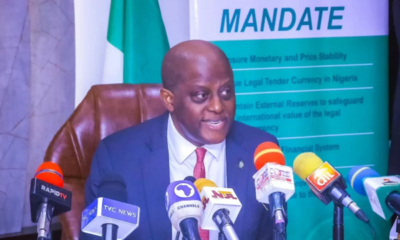
Allawee shutting down operations by December 1, warns customers must withdraw by November 30
Allawee warned that payments sent to its account numbers from December 1, 2026 will fail, while its cards will also stop working, regardless of the expiry dates printed on them.


• Allawee logo
Nigerian card-issuing fintech Allawee is shutting down its business and personal account services from December 1, 2026.
This follows its acquisition by Pay Stack.
Accordingly, customers have been given until November 30 to withdraw their funds and make alternative arrangements.
The company disclosed the decision in emails sent to customers, according to TechCabal, explaining that its technology now operates within Paystack following the latter’s acquisition of Allawee in 2025.
Allawee warned that payments sent to its account numbers from December 1, 2026 will fail, while its cards will also stop working, regardless of the expiry dates printed on them.
Customers have been advised to withdraw their balances before the deadline, provide new bank details to people or businesses that regularly pay them, and replace saved Allawee card information on subscriptions and other recurring payments.Allawee said customers would not lose their money because of the shutdown. “Your money will remain yours,” the company said.
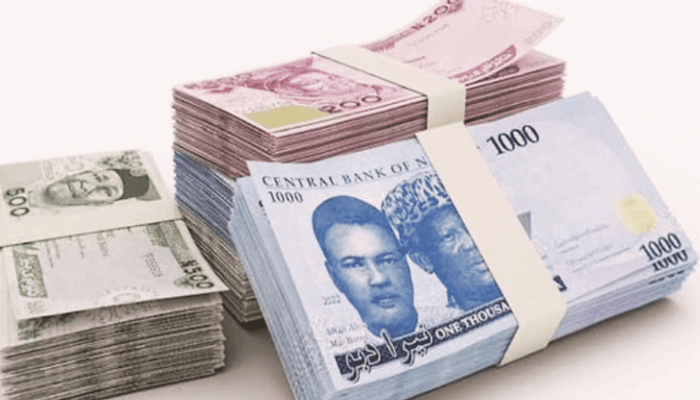
BLACK MARKET RATES
US Dollar (USD) ₦1,400
Great British Pound(GBP) ₦1,890
EURO (EUR) ₦1,580
Canadian Dollar (CAD) ₦1,020
South African Rand (ZAR) ₦75
Ghana CEDI (GHS) ₦95
West African CFA Buy ₦2, 300
CENTRAL AFRICAN CFA Buy ₦2,150
CBN Exchange Rates
US Dollar (USD) ₦1,329.43
Great British Pound (GBP) ₦1,800.18
EURO (EUR) ₦1,542. 01
Swiss Franc (CHF) ₦1,637.63
Chinese Yuan (CNY) ₦197.79
Japanese Yen (Yen) ₦8.31
West African CFA (XOF) ₦2.36
West African Unit Account (WAUA) ₦1,823.95
Saudi Riyal (SAR) ₦354.08 South African Rand (ZAR) ₦82.47
Business
Dangote, NMDPRA Clash Over Refinery’s Free Zone Status
The case has been adjourned until September 9, 2026, when the court is expected to hear the motion on notice.
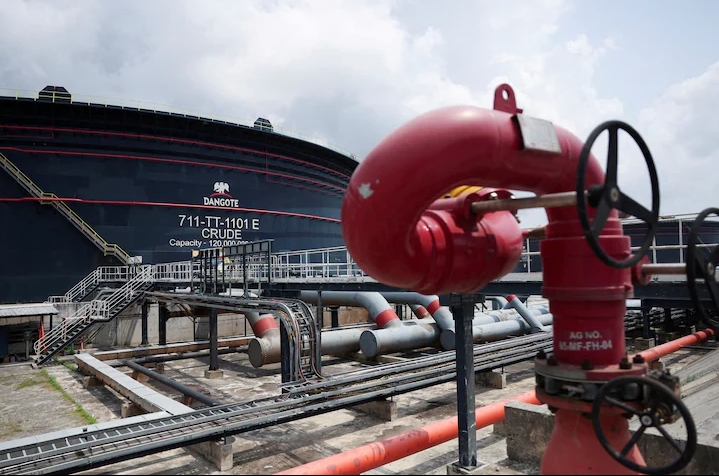
A fresh regulatory battle between Dangote Petroleum Refinery and the Nigerian Midstream and Downstream Petroleum Regulatory Authority (NMDPRA) has erupted into a major legal confrontation over the extent of government’s regulatory powers within Nigeria’s free zones.
A Federal High Court in Lagos yesterday restrained NMDPRA from enforcing its directive suspending the loading and truck-out of petroleum products from the Dangote Refinery, effectively stopping the regulator from taking enforcement action against the facility pending the determination of the substantive application.
Justice Akintayo Aluko, in an interim ruling, also barred NMDPRA, its officers, agents and representatives from entering, sealing, shutting down, restricting access to, obstructing, suspending, disrupting, inspecting, supervising, sanctioning or otherwise interfering with the refinery’s operations at the Lekki Free Zone.
The order followed an ex-parte application filed by Dangote Petroleum Refinery and Petrochemicals FZE in Suit No. FHC/L/CS/1174/2026.
At the heart of the dispute is NMDPRA’s August 24, 2026 directive suspending the loading and truck-out of petroleum products from the refinery.
But the case is rapidly assuming significance beyond the immediate dispute over product evacuation.
It raises a fundamental question about the jurisdiction of Nigeria’s petroleum regulator over businesses operating within designated free zones.
Who Regulates the Refinery?
Dangote is challenging NMDPRA’s action on the ground that the regulator lacks the authority to exercise regulatory or oversight powers over operations within free zones, including the Dangote Industrial Free Zone.
Justice Aluko said the documents placed before the court raised “serious issues” requiring determination, particularly whether NMDPRA possesses the regulatory or oversight powers it sought to exercise over the refinery.
The judge also referred to a March 2, 2026 letter from the Attorney-General of the Federation which, according to the court, “clearly stated” that NMDPRA was not entitled to exercise regulatory powers or oversight functions over operations within free zones.The apparent conflict between that position and NMDPRA’s August 24 directive now forms one of the central issues before the court.
Justice Aluko said the critical question was whether NMDPRA should be allowed to exercise the disputed regulatory authority while the substantive issues remained unresolved.
High Stakes for Downstream Market
The dispute comes at a sensitive time for Nigeria’s downstream petroleum industry, where the Dangote Refinery has become a major source of locally refined petroleum products.
Any regulatory action capable of restricting the refinery’s ability to load and evacuate products has potential implications for petroleum distribution and supply across the country.
For Dangote, the legal battle is also about protecting the operational autonomy and investment framework of a refinery established within a free-zone environment.
For NMDPRA, the issue goes to the core of its mandate as the statutory regulator of Nigeria’s midstream and downstream petroleum sector.
The eventual substantive ruling could therefore have consequences well beyond the two parties.
It could establish a judicial precedent on how far petroleum-sector regulators can go in supervising or enforcing their mandates against businesses operating within free zones.
The case has been adjourned until September 9, 2026, when the court is expected to hear the motion on notice.


Eko Electricity blames Lekki-Ajah power outages on feeders disruption

Allawee shutting down operations by December 1, warns customers must withdraw by November 30

Naira Exchange Rates Wednesday, September 2

Tech Expert, Zuckerberg trains with UFC champions, Adesanya, Alexander

Organ Trafficking: Ekweremadu bags 10 years in UK prison

SAINT OBI: Between his marriage and his death
-
 Business2 days ago
Naira Exchange Rates Today, Monday August 31
-
 Business2 days ago
PZ Cussons Reports N45.2bn PAT, Proposes N2.50 Dividend
-

 News2 days ago
JAMB introducing facial scan to catch UTME impersonators
-

 Business1 day ago
Commercial Banks Borrowing From CBN Drops By 89% in August
-
 Business2 days ago
Emzor Pharma raises N26.7bn bond to boost local drug manufacturing
-

 Entertainment2 days ago
Dolly Parton Buried By Husband’s Grave In Private Cemetry
-
 Business2 days ago
Nigeria’s GDP grew 4.43% in Q2 2026, says NBS
-

 News2 days ago
JUST IN: Duke, Adebayo, Aliyu Arrive Abuja for Opposition Summit