
Business
JUST IN: IPMAN threatens shutdown in S’West as LASMA impounds 30 tankers

The Independent Petroleum Marketers Association, South-West Zone, has vowed that it will shut down operations across the region if the 30 tankers arrested by the Lagos State government are not released.
The Chairman, IPMAN Western Zone, Joseph Akanni, made this known on Monday, during an interview with newsmen in Ibadan, the Oyo State capital.
Akanni declared the association’s support for the Petroleum Tanker Drivers, as well as other stakeholders in the industry over the issue, saying “Injury to one is an injury to all.”
He disclosed that the 30 tankers bearing 45,000 litres of Premium Motor Spirit were towed out of Dangote Refinery at about 3:00am on Saturday, February 22, 2025.
“The vehicles and the drivers were arrested by the Lagos State Traffic Management Authority (LASMA) under the Ministry of Transportation in Lagos and were put at the LASMA yard in Oshodi.
“So, IPMAN is in solidarity with the PTD, National Association of Road Transport Owners (NARTO), and NUPENG is showing solidarity with the other stakeholders to take action against Lagos State governments, especially the Ministry of Transport.
“What the Ministry of Transport has done is against the law. It is dangerous. It is dangerous to keep tankers with petrol in a place because petrol is flammable.
And the information reaching us is that they have started siphoning petrol from the tankers, which implies that we won’t have the same quantity as when it was towed.
“And that we are ready if nothing is done, we are ready to shut down our stations; our petrol stations across Southwest, in solidarity with the tanker drivers,” Akanni said.
The South-West IPMAN chairman revealed that the product in the impounded tankers belongs to members of IPMAN, saying the association is in support of the actions of NUPENG over the incident.
Akanni added that under fire safety regulations, “even if a truck with petrol is arrested, the tanker is supposed to go and offload the petrol first, before anything.”
“So, now they took the tankers with about 45,000 litres of petrol, numbering about 30, which is very dangerous.
“We are giving stern warning that if there is any fire incident, Lagos State government is going to be responsible for the loss of products and the deaths,” Akanni said.





Business
AFC Backs Dangote Fertiliser With $600m Loan for Expansion
The loan facility to GreenView Fertilizer Corporation, the Dangote Fertliser Holding Company will part finance the expansion of its urea fertilizer production capacity in Nigeria and the development of the plant in Ethiopia.

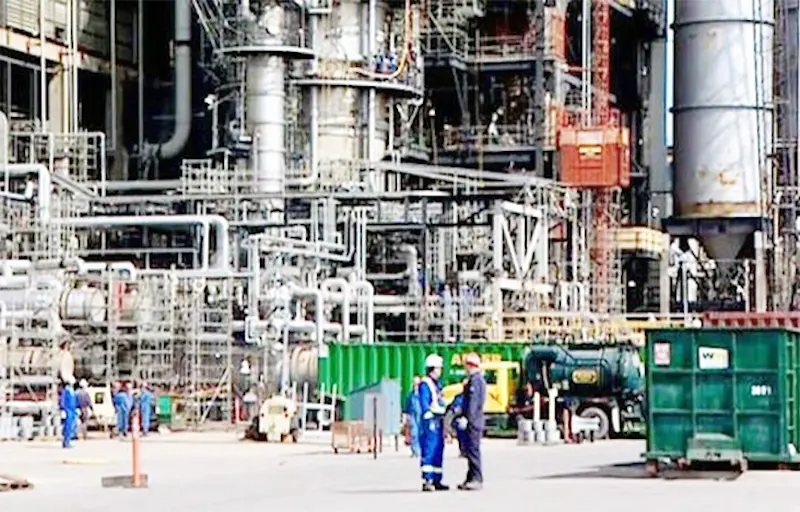
The Africa Finance Corporation (AFC) has signed a $600 million loan agreement to support the expansion of Dangote fertiliser production capacity.
The loan facility to GreenView Fertilizer Corporation, the Dangote Fertliser Holding Company will part finance the expansion of its urea fertilizer production capacity in Nigeria and the development of the plant in Ethiopia.
The investment forms part of Dangote Group’s broader $7 billion fertilizer expansion programme, which is expected to increase Dangote Fertilizer’s production capacity in Nigeria from three million metric tonnes per annum (MTPA) to nine MTPA, while also supporting the development of a new 3 MTPA urea fertilizer plant in Ethiopia.
The programme is expected to materially expand Africa’s fertilizer production capacity, strengthen regional food security, support agricultural productivity, and reduce the continent’s dependence on imported fertilizer.
Speaking on the transaction, president & CEO of Africa Finance Corporation, Samaila Zubairu, said, “this transaction demonstrates AFC’s capital recycling model in action.
Following the successful repayment of our earlier investment in Dangote Industries Limited, we are redeploying and doubling that capital into Dangote Group’s next phase of growth.
“By supporting the expansion of Dangote Fertiliser, AFC is backing a proven African industrial champion whose investments will strengthen food security, reduce import dependence, and create long-term economic value across the continent,” he said.
Business
Manufacturers Association Call for Suspension of NESREA’s Proposed Ban on Single-Use Plastics Below 80 Microns Pending Regulatory Impact Assessment
Kenya’s polybag industry, for example, remains significantly diminished years after the ban, and has left the industry sector uncompetitive.
The Manufacturers Association of Nigeria (MAN) has expressed deep concern over the proposed implementation of the National Environmental (Plastic Waste Control) Regulations 2026 by the National Environmental Standards and Regulations Enforcement Agency (NESREA).
The Regulations seek to prohibit the production and use of single-use plastic products below 80 microns in thickness pursuant to Section 26(1), impose taxes on shopping bags with wall thicknesses ranging from 30 to 50 microns under Section 26(2), and restrict a wide range of plastic products listed in the Eleventh Schedule.
Segun Ajayi-Kadir, MAN Director -General notes that the proposed measures could significantly disrupt industrial production, undermine investments in the plastics value chain, threaten thousands of direct and indirect jobs, and impose substantial socio-economic costs on manufacturers and consumers alike.
According to him, MAN, while recognizing the need to address environmental pollution and promote sustainable waste management practices, believes that the proposed regulation is premature, lacks sufficient empirical justification, and poses significant risks to Nigeria’s economy, industrial sector, employment landscape, and the livelihoods of millions of citizens.
NNPAP Plastic Circularity Roadmap
The Association notes that the Federal Government, through the National Plastic Action Partnership (NNPAP), developed a comprehensive Plastic Circularity Roadmap in 2024 in collaboration with the Federal Ministry of Environment.
The roadmap provided a strategic framework for achieving plastic waste reduction through enhanced collection systems, recycling infrastructure, Extended Producer Responsibility (EPR), circular economy initiatives, public awareness campaigns, and investments in waste management.
Unfortunately, many of the critical recommendations contained in that roadmap are yet to be fully implemented.
It is therefore difficult to understand why the government is proceeding with a new prohibition regime without first evaluating the effectiveness of existing measures and implementing the agreed roadmap designed specifically to address plastic pollution in a sustainable and inclusive manner.
More importantly, there has been no publicly available assessment of the impact of previously restricted single-use plastic products in Nigeria.
There is no evidence showing the extent to which earlier bans have reduced environmental pollution, improved waste collection rates, enhanced recycling performance, or changed consumer behavior.
Public policy should be driven by evidence, measurable outcomes, and stakeholder consultation rather than assumptions.
International Evidence:
A Critical Asymmetry
International experience shows that banning thin plastic bags and other thin plastic products without adequate recycling infrastructure rarely delivers the intended environmental outcomes.
Kenya’s 2017 ban led to factory closures and job losses, yet banned bags continue to circulate through smuggling. Bangladesh’s 2002 ban remains largely unenforced after two decades, while South Africa and India experienced only temporary reductions before usage rebounded.
By contrast, countries such as Germany, South Korea, and the Netherlands have achieved high recycling rates through Extended Producer Responsibility (EPR) systems without disrupting local industry or increasing the daily cost of living.
A critical lesson from these experiences is the asymmetry of the risks involved.
First, when enforcement weakens, plastic consumption returns.
Demand for affordable, lightweight packaging is structural, and thin bags inevitably re-enter the market through informal channels, imports, and cross-border trade.
The anticipated environmental gains are therefore short-lived.Second, the domestic industry does not recover as easily.
Closed factories, displaced workers, lost investments, broken supply chains, and abandoned export markets are not automatically restored when policies are relaxed.
Kenya’s polybag industry, for example, remains significantly diminished years after the ban, and has left the industry sector uncompetitive.
Third, the country becomes increasingly dependent on imports. Products once manufactured locally are sourced from abroad, consuming scarce foreign exchange while eroding domestic employment, tax revenues, and industrial capacity.
Economic Implications
The proposed ban raises serious concerns regarding its economic implications.
Nigeria’s plastic manufacturing industry remains one of the country’s largest and most significant light manufacturing sectors, supporting hundreds of manufacturing facilities, thousands of small and medium enterprises, and an extensive value chain that stretches from petrochemicals and packaging to food processing, pharmaceuticals, retail trade, agriculture, logistics, and recycling.
The implementation of an 80-micron threshold would require substantial changes in manufacturing processes, machinery configurations, and raw material consumption.
Such changes could render existing investments obsolete, increase production costs significantly, reduce competitiveness, and expose manufacturers to substantial capital losses.
The consequences extend beyond manufacturers. Increased production costs will inevitably be passed on to consumers, many of whom are already grappling with unprecedented inflationary pressures and declining purchasing power.
Small businesses, market traders, food vendors, and informal sector operators who rely heavily on affordable packaging solutions will face additional operational costs, with potentially severe implications for business sustainability and household welfare.
Furthermore, the proposed regulation may inadvertently accelerate deindustrialization by increasing dependence on imported alternatives and imported raw materials.
At a time when Nigeria is pursuing industrialization, job creation, import substitution, and export diversification, policies that undermine domestic manufacturing capacity should be carefully reconsidered.
The Association is equally concerned about the potential impact on government revenue.
Reduced industrial output, factory closures, declining investments, and job losses would inevitably affect tax revenues, customs duties, value-added tax collections, and other fiscal contributions generated by the manufacturing sector.
Environmental sustainability remains a shared objective.
However, international experience has consistently demonstrated that sustainable outcomes are achieved through effective waste management systems, recycling infrastructure, circular economy initiatives, and strong enforcement of anti-littering regulations, not through blanket prohibitions alone.Plastic pollution is fundamentally a waste management challenge.
The problem lies not in the material itself but in inadequate collection, sorting, recycling, and disposal systems.
Addressing these systemic deficiencies should remain the priority of public policy.
The Manufacturers Association of Nigeria, therefore, calls on NESREA and the Federal Government to:
Suspend the implementation of the proposed ban on single-use plastics below 80 microns pending a comprehensive Regulatory Impact Assessment (RIA);
Conduct an independent assessment of the environmental, economic, social, fiscal, and employment implications of the proposed regulation;
Evaluate the outcomes and effectiveness of previously implemented plastic restrictions before introducing additional prohibitions;
Fully implement the recommendations contained in the 2024 NNPAP Plastic Circularity Roadmap.
Strengthen the Extended Producer Responsibility (EPR) framework and accelerate investments in recycling and collection infrastructure;
Establish a broad-based stakeholder working group comprising government agencies, manufacturers, recyclers, academia, consumer groups, environmental organizations, and development partners to develop a practical and evidence-based transition strategy.
Nigeria must pursue environmental sustainability without sacrificing industrial growth, economic competitiveness, employment, and social welfare.
Effective regulation should strike a balance between environmental protection and economic development.
The Association remains committed to working collaboratively with government and all stakeholders to advance practical, science-based, and economically sustainable solutions to plastic waste management in Nigeria.
Plastic pollution should be addressed at its source through effective waste management and resource recovery systems.
The challenge lies not in the production of plastics, but in the inefficient collection, sorting, recycling, and disposal of post-consumer waste. Sustainable environmental outcomes will be achieved through stronger waste management infrastructure, expanded recycling capacity, enforcement of extended producer responsibility regulation, and greater public awareness, rather than through measures that restrict production without addressing the underlying causes of pollution.
Business
Naira Exchange Rates Monday, June15, 2026
Black Market Rates
CHINESE YUAN Buy ₦180 Sell ₦200
GHANA CEDI (GHS) Buy ₦95 Sell ₦110
WEST AFRICAN CFA Buy ₦2, 380 Sell ₦2, 460

Official CBN Exchange Rates
US DOLLAR (USD) ₦1,363. 83
GREAT BRITISH POUND (GBP) ₦1,821. 25
EURO (EUR) ₦1,572. 90
SWISS FRANC (CHF) ₦1,706. 49
JAPANESE YEN (JPN) ₦8.50
CHINESE YUAN (CNY) ₦201.20
WEST AFRICAN CFA (XOF) ₦2.40
WEST AFRICAN UNIT ACCOUNT (WAUA) ₦1,857. 45
SAUDI RIYAL (SAR) ₦363. 29
SOUTH AFRICAN RAND (ZAR) ₦82.61
BLACK MARKET RATES
US DOLLAR (USD) Buy ₦1,393 Sell ₦1,400
GREAT BRITISH POUND (GBP) Buy ₦1,845 Sell: ₦1,865
EURO (EUR) Buy ₦1,185 Sell ₦1, 605
CANADIAN DOLLAR (CAD) Buy ₦1,030 Sell ₦1,100
SOUTH AFRICAN RAND (ZAR) Buy ₦75 Sell ₦90
UAE DIRHAM Buy ₦350 Sell ₦370
CHINESE YUAN Buy ₦180 Sell ₦200
GHANA CEDI (GHS) Buy ₦95 Sell ₦110
WEST AFRICAN CFA Buy ₦2, 380 Sell ₦2, 460
CENTRAL AFRICAN CFA Buy ₦2, 220 Sell 2,300
AUSTRALIAN DOLLAR Buy ₦800 Sell ₦900


AFC Backs Dangote Fertiliser With $600m Loan for Expansion

FHC Abuja Okays Deregistration of ADC , four other parties • The Judgement Can’t Stand—David Mark

Manufacturers Association Call for Suspension of NESREA’s Proposed Ban on Single-Use Plastics Below 80 Microns Pending Regulatory Impact Assessment

Tech Expert, Zuckerberg trains with UFC champions, Adesanya, Alexander

Organ Trafficking: Ekweremadu bags 10 years in UK prison

SAINT OBI: Between his marriage and his death
-
 Opinions3 days ago
Democracy Still Struggling 33 Years After June 12, PDP Laments by Comrade Ini Ememobong
-

 Crime2 days ago
Bandits Kill 19 Farmers, Injure 12 Others in Fresh Attack in Zamfara
-

 Crime2 days ago
BREAKING: Retired General Dies in Kidnappers’ Captivity, Demand Release of Gang Members
-

 Sports2 days ago
Balogun: This is something I dreamed of for a long time
-

 Sports11 hours ago
World Cup: Sweden beats Tunisia 5-1
-

 Sports2 days ago
FIFA World Cup 2026 Day 3: Qatar draws Switzerland 1: 1
-

 Sports3 days ago
FIFA World Cup Day 2: Canada holds 1-1 Bosnia-Herzegovina
-
 International11 hours ago
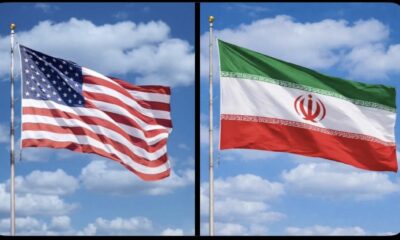
US and Iran to sign historic peace deal June 19 in Switzerland