
Health
WHO: United States membership withdrawal takes effect
Reacting to the development, WHO Director-General, Dr Tedros Adhanom Ghebreyesus, expressed regret over the decision and urged the United States to reconsider.

The United States’ withdrawal from the World Health Organisation (WHO) officially took effect on Thursday, exactly one year after President Donald Trump ordered the country to pull out of the global health body.
Under the terms governing WHO membership, a withdrawal becomes effective after a mandatory one-year notice period, which expired on Thursday 22 January, following the executive order signed by Trump shortly after he took office in 2025.
Although the agreement requires the United States to settle all outstanding financial obligations before withdrawal, that condition has not been met. However, the WHO has no legal mechanism to enforce payment or prevent a member state from exiting the organisation.
Reacting to the development, WHO Director-General, Dr Tedros Adhanom Ghebreyesus, expressed regret over the decision and urged the United States to reconsider.
“The withdrawal is a loss for the United States and also a loss for the rest of the world,” Tedros said, adding that the organisation remains open to the country’s return.
President Trump had justified the decision by accusing the WHO of mishandling the COVID-19 pandemic, which originated in Wuhan, China, as well as other global health emergencies.
He also cited the organisation’s alleged failure to implement necessary reforms and its inability to operate independently of political influence from member states.
Health
Health Workers Protest Against Regulatory Bill
They maintain that all health professions have their regulatory bodies, and that the new bill was seeking to make other health professionals second-class to medical doctors.

Health workers under the Joint Health Sector Unions and the Assembly of Healthcare Professional Associations are protesting against the proposed health sector regulatory bill, which is before the National Assembly.
They said that if allowed to pass, the law would subject every medical profession to the regulation of the Medical and Dental Council of Nigeria.
They maintain that all health professions have their regulatory bodies, and that the new bill was seeking to make other health professionals second-class to medical doctors.
The protesters plan to also go to the National Assembly, where they hope to present their case to lawmakers.
Health
UNIZIK nursing school to review fee hike after students protest
” As for the school fees, yes, there was an increment. We just had a new board and it decided to review the tuition to enable the institution provide the best for the students. They proposed N580,000 to us and we approved it, but there is still room to take another look at it and harmonise things.”

The management of the School of Nursing at the Nnamdi Azikiwe University Teaching Hospital, Nnewi, Anambra State, has pledged to engage the governing board and student leaders to address concerns over the recent increase in tuition fees.
The assurance followed a protest on Tuesday by students of the institution who decried what they described as an astronomical hike in their fees from N90,000 to N580,000.
The PUNCH, reported that the protesting students marched within the school premises carrying placards and chanting solidarity songs, including, “We no go gree, reduce the school fees, we no go gree,” to express their displeasure over the increase.
The fee increment reportedly followed an internal memo issued on January 23 by O.I. Ezejiofor, the Chairman of the Board and Chief Medical Advisory Committee of the NAUTH College of Nursing, announcing an upward review of tuition to facilitate improvements in the institution.
The Chief Medical Director of NAUTH, Prof. Joseph Ugboaja, said that he had been informed about the protest and promised that the management would meet with the relevant stakeholders to resolve the issue.
“I will return to the institution and we will sit with members of the board who proposed the new tuition and also with the students union leadership to sort things out,” Ugboaja said.
“As for the school fees, yes, there was an increment. We just had a new board and it decided to review the tuition to enable the institution provide the best for the students. They proposed N580,000 to us and we approved it, but there is still room to take another look at it and harmonise things.”
Health
Tinubu approves employment of 50 doctors, 100 nurses across correctional centres
The minister said that the president’s approval followed the dearth of medical personnel in some correctional centres.
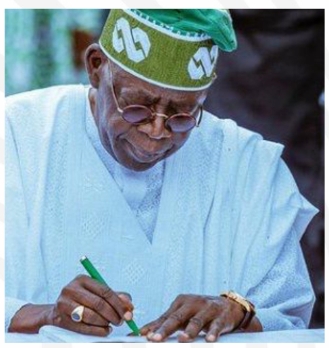
President Bola Tinubu has approved the employment of 50 medical doctors and 100 nurses across the nation’s correctional centres’ hospitals.
The Minister of Interior, Dr. Olubunmi Tunji-Ojo, disclosed this when the Minister of Information and National Orientation, Alhaji Mohammed Idris, paid him a courtesy visit in Abuja.
The minister said that the president’s approval followed the dearth of medical personnel in some correctional centres.
He said that the hospital in the correctional centre in River had no medical doctor to render service to the inmates.


Governor Otti Commissions Ultimum Manufacturing Plant in Aba

CAF appoints Nigeria’s Samson Adamu as acting secretary general

JUST IN: Kwankwaso Set to Join ADC on Monday

Tech Expert, Zuckerberg trains with UFC champions, Adesanya, Alexander

Organ Trafficking: Ekweremadu bags 10 years in UK prison

SAINT OBI: Between his marriage and his death
-

 Crime3 days ago
Vietnam Police Dismantle Multi-Billion Dollar Cryptocurrency Fraud Operation
-
 News2 days ago
Kano Deputy Governor Resigns
-
 News3 days ago
Soludo Orders Suspension of Absentee Workers After Surprise Secretariat Visit
-
 News3 days ago
Abia State Holds State Burial for Renowned Evangelist Rev. Dr. Uma Ukpai
-
 News2 days ago
El-Rufai’ loses mother, Hajiya Umma
-
 Politics19 hours ago
JUST IN: Kwankwaso Set to Join ADC on Monday
-
 Sports7 hours ago
CAF appoints Nigeria’s Samson Adamu as acting secretary general
-
 Business6 hours ago
Governor Otti Commissions Ultimum Manufacturing Plant in Aba