
News
UPDATED: Tinubu Announces Death Of Chief Of Army Staff Taoreed Lagbaja

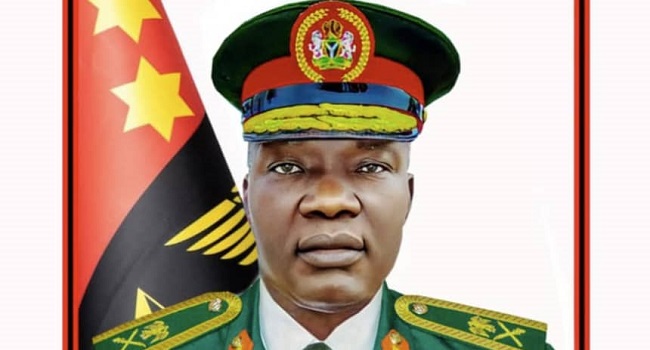
President Bola Tinubu has announced the passing of the Chief of Army Staff, Lt. General Taoreed Abiodun Lagbaja, at age 56.
According to a statement released by the President’s spokesperson, Bayo Onanuga, on Wednesday, Lagbaja passed away on Tuesday night in Lagos after a period of illness. He, however, did not disclose the illness.
President Tinubu expressed his heartfelt condolences to the family and the Nigerian Armed Forces during this difficult time.
He wished Lt. General Lagbaja eternal peace and honours his significant contributions to the nation.
Born on February 28, 1968, Lagbaja served as the Chief of Army Staff for one year and four months following his appointment to the position by President Tinubu in June 2023.
His military career began when he enrolled in the Nigerian Defence Academy in 1987. On September 19, 1992, he was commissioned as a Second Lieutenant in the Nigerian Infantry Corps as a member of the 39th Regular Course.
FILE: The Chief of Amy Staff, Lieutenant General Taoreed Lagbaja, addresses troops in Plateau State on January 27, 2024.
Lt. General Lagbaja also served as a platoon commander in the 93 Battalion and the 72 Special Forces Battalion.
He played pivotal roles in numerous internal security operations, including Operation ZAKI in Benue State, Lafiya Dole in Borno, Udoka in Southeast Nigeria, and Operation Forest Sanity across Kaduna and Niger States.
An alumnus of the prestigious U.S. Army War College, he earned a Master’s degree in Strategic Studies, demonstrating his dedication to professional growth and excellence in military leadership.
Lt. General Lagbaja is survived by his beloved wife, Mariya, and their two children.
Death Rumours
Earlier in late October, there were rumours that the Chief of Army Staff had died in an undisclosed hospital abroad. However, the Defence Headquarters quickly dispelled the rumours, insisting that the CAS was on annual leave.
Also in a statement on October 20, Army spokesman, Onyema Nwachukwu, while insisting that there was no leadership vacuum in the Army, noted that the Chief of Policy and Plans (Army), Major General Abdulsalami Ibrahim, had been positioned to act on behalf of the COAS during his absence.
He had emphasised that Lagbaja’s absence was not affecting the operations of the service.
“There have even been insinuations that there is a leadership vacuum, with officers confused about what to do. Nothing could be further from the truth,” Nwachukwu had said.
“To be very clear, the Nigerian Army is a highly structured establishment with well-laid-out procedures and processes for dealing with different circumstances.
Before proceeding on leave, necessary protocols were put in place for the Chief of Policy and Plans (Army), Major General Abdulsalami Bagudu Ibrahim, to act on behalf of the COAS while he was away.
“This is not peculiar to the NA, as there have been instances where unforeseen human frailty kept service chiefs away for about three months, and their Chiefs of Policy and Plans held sway in their absence.
Claims of a leadership vacuum in the NA at present are therefore mere speculation, as all routine and scheduled activities of the service are on course.
”Oluyede appointed as Acting COASMeanwhile, as Lagbaja’s absence lingered, President Tinubu on October 30, appointed Major General Olufemi Olatubosun Oluyede as the Acting Chief of Army Staff.
He said Oluyede will hold sway as the COAS pending the return of Lt. General Taoreed Abiodun Lagbaja, who at the time was said to be indisposed and is receiving treatment abroad.








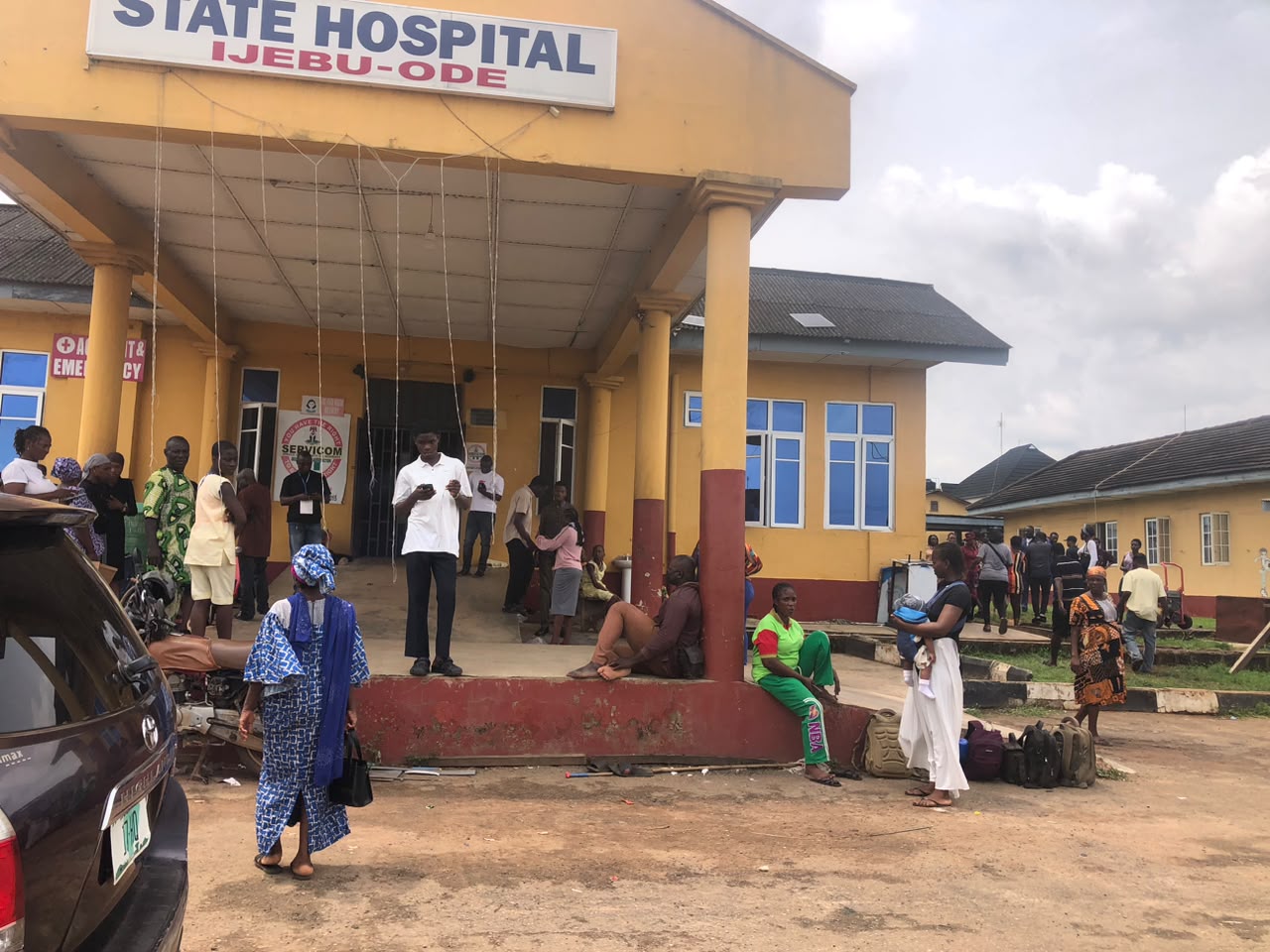
Hundreds of students were hospitalised on Wednesday morning after fresh gaseous emissions hit parts of Ogun State, including Ijebu-Ode, Ijebu-Igbo and Ago-Iwoye.
The incident affected pupils at Anglican Girls Grammar School, Obalende, Ijebu-Ode, and Ijebu-Igbo Girls Grammar School. Several schools in Ago-Iwoye suspended academic activities and sent students home as a precaution.
Kehinde Bello, General Manager of the Ogun State Environmental Protection Agency (OGEPA), visited the affected areas and linked the emissions to underground gas previously recorded in Ijebu-Ode since April 2026. He said the situation was under control and attributed the releases to natural geological and tectonic fault lines, ruling out sabotage or a gas pipeline leak.
Bello assured residents that the state government was working on a lasting solution. He advised anyone exposed to the odour to cover their noses and mouths with wet handkerchiefs.
The recurring emissions have renewed concerns about the safety of students and residents in the affected communities.

Former Delta State Governor Dr. Emmanuel Eweta Uduaghan is dead. He passed away on the morning of Monday, October 19, 2026, at the age of 71, after a period of illness.
A family statement announced his death, describing it as a devastating loss. Uduaghan, a medical doctor, served as Delta State Commissioner for Health (1999–2003) and Secretary to the State Government (2003–2007) before becoming governor from 2007 to 2015. He was known for contributions to infrastructure and human capital development in the state.
Delta State Governor Sheriff Oborevwori has expressed deep sadness over the passing. In a condolence message, he described Uduaghan as a detribalised leader whose service left a lasting mark on Delta State.
Oborevwori extended heartfelt condolences to Uduaghan’s wife, Roli, his children, the Uduaghan family, the Itsekiri nation, and the people of Delta State, praying for the peaceful repose of his soul.
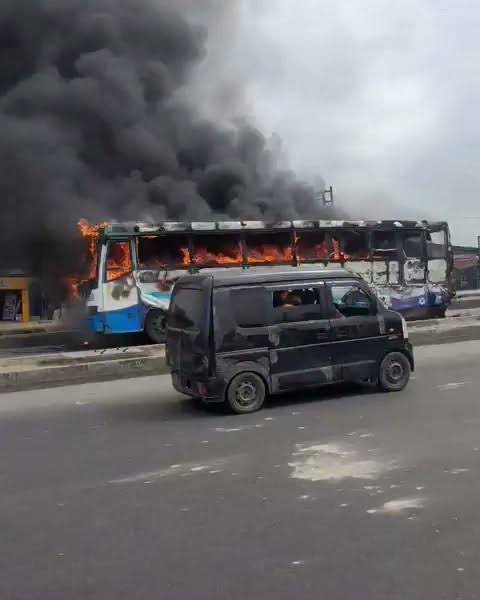
An angry mob has set a Bus Rapid Transit (BRT) bus on fire after it reportedly crushed a commercial motorcyclist to death at Ogolonto Bus Stop along Ikorodu Road in Lagos State.
The incident occurred on Friday, October 16, 2026. Eyewitness accounts and social media reports indicate that the motorcyclist was riding alone along the restricted BRT lane when the collision happened. He died at the scene.
Enraged residents and youths then attacked the bus driver and set the vehicle ablaze. Police officers and officials of the Lagos Neighbourhood Safety Corps (LNSC), who were nearby, intervened promptly and rescued the driver unharmed.
The identity of the deceased motorcyclist and the exact circumstances of the crash had not been officially confirmed at the time of filing this report. It was also unclear whether any arrests had been made in connection with the burning of the bus.


JUST IN: Gas Emissions Hit Ogun Schools, Hundreds of Pupils Hospitalised

Ebola In Nigeria: Symptoms, Spread and How To Protect Yourself

NDC Plans Fresh Congresses To Replace Defector Members

BREAKING: Lagos Govt Declares Today, Thursday Work-Free to Mark 2026 Ìṣẹ̀ṣe Day

Tech Expert, Zuckerberg trains with UFC champions, Adesanya, Alexander

Organ Trafficking: Ekweremadu bags 10 years in UK prison
-

 Sports2 days ago
Mbappé wins Onze d’Or award for 2025/26 season
-

 Business10 hours ago
Naira Exchange Rates Wednesday, October 21, 2026
-

 Business10 hours ago
Currency Words You Should Know
-

 News2 days ago
JUST IN: Ex-Delta Gov Uduaghan Dies at 71, Oborevwori Mourns
-

 Business9 hours ago
NCC, CBN To Warn Companies By Flagging Fraudulent Phone Numbers
-
 Sports2 days ago
Ronaldo Gets 30-Day Suspension For Portugal Camp Walkout
-
 Business8 hours ago
JPMorgan Eyeing Entry Into Nigeria’s Banking Industry
-

 Business9 hours ago
How I steal ATM users’ PINs, defraud them