
Business
Stakeholders Share Thoughts on What Nigeria Needs To Do For Thriving Manufacturing Sector

By: Ocheneyi Alli
‘Setting The Agenda for Competitive Manufacturing under the AFCFTA : What Nigeria Needs to Do ‘
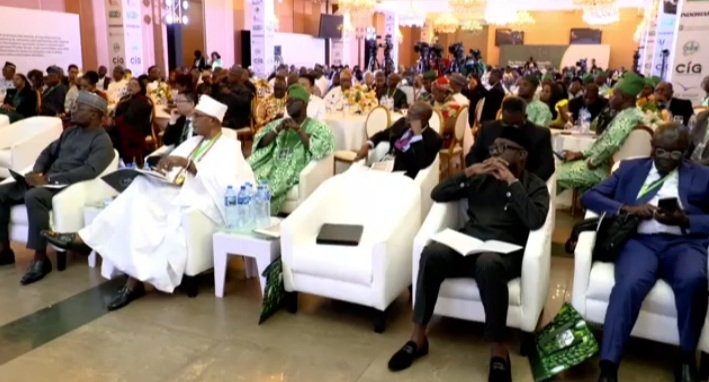
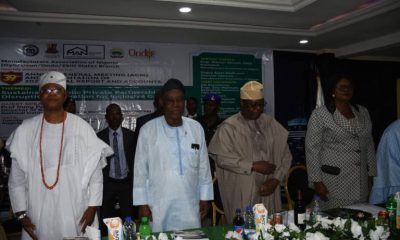
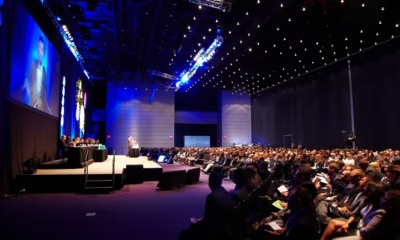
The above was the theme of the 3rd Adeola Odutola Lecture and Presidential Luncheon, organised by the Manufacturers Association of Nigeria (MAN), to mark its 51st Annual General Meeting (AGM).
At the event, held last week Thursday in Lagos, Otunba Francis Meshioye, the President MAN, said that the AGM theme was chosen to bring to the fore decades of the manufacturing sector’s successive low performance, and the promising growth trajectory and development opportunities that are embedded in the African Continental Free Trade Agreement (AfCFTA) for the Nigerian manufacturing sector.
AfDB and UNIDO Industrial Competitiveness Index
He cited the African Development Bank (AFDB)’s industrialization index, which reports that Nigeria is yet to perform impressively in Manufacturing outputs .
Also, the UNIDO’s industrial competitive performance index has shown that Nigeria’s industrial sector has a low competitive capacity.
“There is no better time than now to confront the challenge of low competitiveness and abysmal performance of this important sector,” said Meshioye.
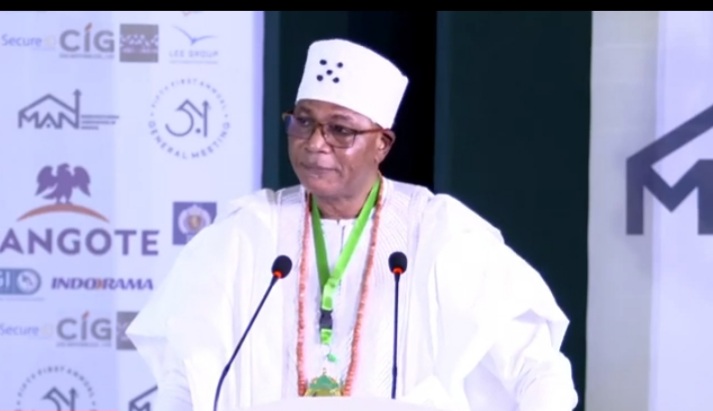
▪︎Francis Meshioye, MAN President
Global manufacturing outputs
Evidences from several parts of the world, including China, the United States, Japan, Germany, and South Korea, have shown the importance of the manufacturing sector in building a resilient economy.
“As an example, in 2021, average manufacturing output accounted for as high as 35 per cent of Ireland’s GDP growth; 27.44 per cent in the case of China, and 48 per cent of Puerto Rico’s economy.
Agenda For The Sector’s Transformation
He said said that though, the manufacturing sector is passing through hard and challenging times, setting a comprehensive agenda for the sector’s transformation will enhance its competitiveness and unlock its full potential.
Therefore, for the sector to do well, Meshioye, called on the Federal Government to ensure strict enforcement of local content laws in the manufacturing sector of the economy.
Meshioye, observed that Nigeria has a low local content adoption and patronage of made in Nigeria products, and therefore, urged the government to ensure effective enforcement of local content and patronage regulations.
He said this can be achieved by strict enforcement of local content laws, giving incentives for local sourcing of raw materials, and innovation in the manufacturing sector.
He also said that the government should also compel its ministries, departments and agencies at all levels to , as a matter of national importance, step up their compliance with existing government directive on patronage of made-in-Nigeria products, including the Executive Orders 003 and 005.
In 2021, average manufacturing output accounted for as high as 35 per cent of Ireland’s GDP growth; 27.44 per cent in the case of China, and 48 per cent of Puerto Rico’s economy
* Manufacturing Outputs
Sectoral Linkages and backward integration
In addition he said the manufacturing sector is one of the sectors of the economy with wide sectoral interlinkages.
“However, the low level of development of auxiliary sectors is disentangling the manufacturing sector from the rest of the sectors.
This is more so in agriculture, iron and steel and mining sectors.
“This has resulted in a limited supply of raw materials and other input for the manufacturing sector,” he said .
Therefore, it is essential to encourage backward integration and sectoral linkages to promote a more sustainable manufacturing sector in Nigeria.” he advised.
Government and manufacturers roles
The Minister of Industry Trade and Investment, Dr. Doris Uzoka-Anite, expressed the readiness of the Minister of Industry to collaborate with MAN for the resuscitation of industrialization, emphasising the pivotal role of manufacturing in enhancing economic competitiveness of the country.
She maintained that there are four areas of collaboration between the government and manufacturing sector’s operators.
Namely, robust public private partnership particularly in the area of research and development to enhance the strength of manufacturing, supporting Micro, Small and Medium Enterprises (MSME) with capacity and potential for exports and investment in infrastructure and technology.
“We also must enhance quality standards and performance and adhere to international quality standards,” she said.
She maintained that Government is willing to support the establishment of research and development centres across the nation to enhance innovation and manufacturers should be encouraged to create these centres.
The Minister called on manufacturers to promote regional value chains and industrial clusters particularly with the ongoing efforts to join the second phase of the guided trade initiative.
“Together, we can ensure that Nigeria’s manufacturing sector not only thrives but becomes a global benchmark for manufacturing, contributing to the growth of the continent and the globe,” she said.
Keynote speaker’s insights
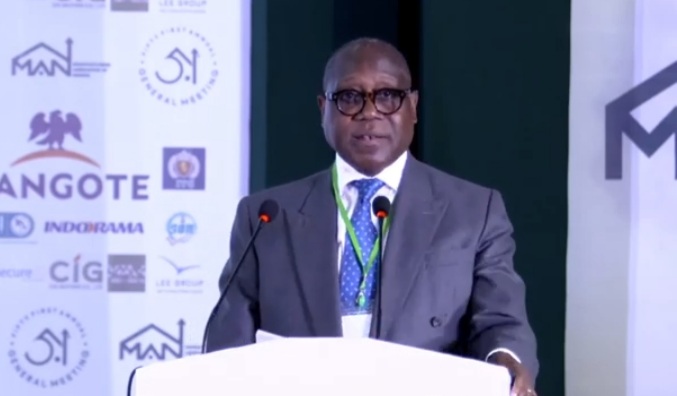
▪︎Olusegun Aganga
Olusegun Aganga, the Former Minister, Industry Trade and Investment, gave the keynote address.
Aganga offered insights into what Nigeria needs to do to harness the potential of AfCFTA and improve its manufacturing sector.
Aganga urged the federal government to declare the Industrial sector a national priority sector and back it with plans, policies and money.
The Former Minister pointed out that embracing competitive manufacturing under the AfCFTA is crucial for Nigeria’s economic growth and integration into the global marketplace.
“Nigeria may not be able to compete with China now, but by investing in infrastructure, innovation and skilled labour, while addressing trade barriers, the business environment and promoting market access, Nigeria can certainly position itself as the manufacturing hub in Africa.
Needs for National Competitiveness Council (NCC)
“Let us work together and seize this historic opportunity and create a prosperous and vibrant manufacturing sector that will benefit Nigerians and contribute to the economic development of the African continent as whole,” he said.
Moreover, Aganga underscored the significance of establishing a National Competitiveness Council (NCC) as an effective platform for constructive public-private dialogue on economic competitiveness.
NCCs, a proven global approach, help provide objective information on a nation’s competitiveness status and promote awareness of the correlation between national competitiveness, business performance, economic growth, and the overall prosperity of the population, he added.
The Former Minister also advocated the streamlining of the Customs procedures and regulations to simplify cross-border trade while reducing associated costs.
He urges Nigeria to harmonizing standards and norms to minimize non-tariff barriers and implementing the WTO Trade Facilitation Agreement were key steps for Nigeria’s progress.
Monitoring Progress and making adjustments
“We must continuously monitor and evaluate our progress, making necessary adjustments along the way,” he stated.
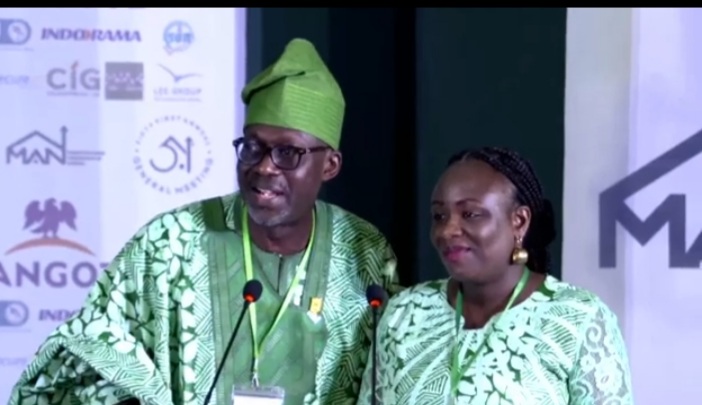
▪︎From left: Segun Ajayi-Kadir, MAN Director-General, and Omotayo Okewunmi, MAN PRO, anchor the event.


Business
Oil Rises As US Rejects Iran Proposal
Iran said it is waiting for a definitive US response to its seven-day proposal to reopen the strait and other demands, adding that it will not ease its conditions after Trump rejected Tehran’s latest plan.

Brent crude climbed above $106 per barrel on Monday, recovering losses from the previous session after President Donald Trump rejected Iran’s latest proposal to reopen the Strait of Hormuz, raising concerns that the restoration of oil flows through the critical waterway could face further delays.
Trump also said Tehran had overplayed its hand and expects negotiations to resume this week.
Meanwhile, Iran said it is waiting for a definitive US response to its seven-day proposal to reopen the strait and other demands, adding that it will not ease its conditions after Trump rejected Tehran’s latest plan.
Elsewhere in the Middle East, tensions remain high as Saudi Arabia intercepted Houthi drones heading toward Riyadh, along with a missile targeting Khamis Mushait in the south.
Alerts were also issued in Abha and Jazan, where Aramco operates energy facilities.
In the US, Trump is considering a ban on diesel exports as part of efforts to address elevated fuel prices.
Business
NGX Debuts Invest WhatsApp Channel
The channel provides investors with an additional, convenient way to participate in public offers.
Nigerian Exchange Group (NGX Group) has expanded access to its NGX Invest platform with the launch of a WhatsApp subscription channel.
The channel provides investors with an additional, convenient way to participate in public offers.
Investors can begin the subscription process by sending “Invest” to NGX Invest on WhatsApp at +234 812 731 9521.
They can then follow the prompts to view eligible offers and complete the required subscription steps without downloading a separate application.
As part of the process, investors will select a stockbroker through whom their application will be processed, ensuring that brokers remain an integral part of the investment journey.
(VANGUARD)
Business
SEC Highlights Focus of National Capital Market Conference 2026
The conference will be declared open by the Vice-President of the Federal Republic of Nigeria, Senator Kashim Shettima.
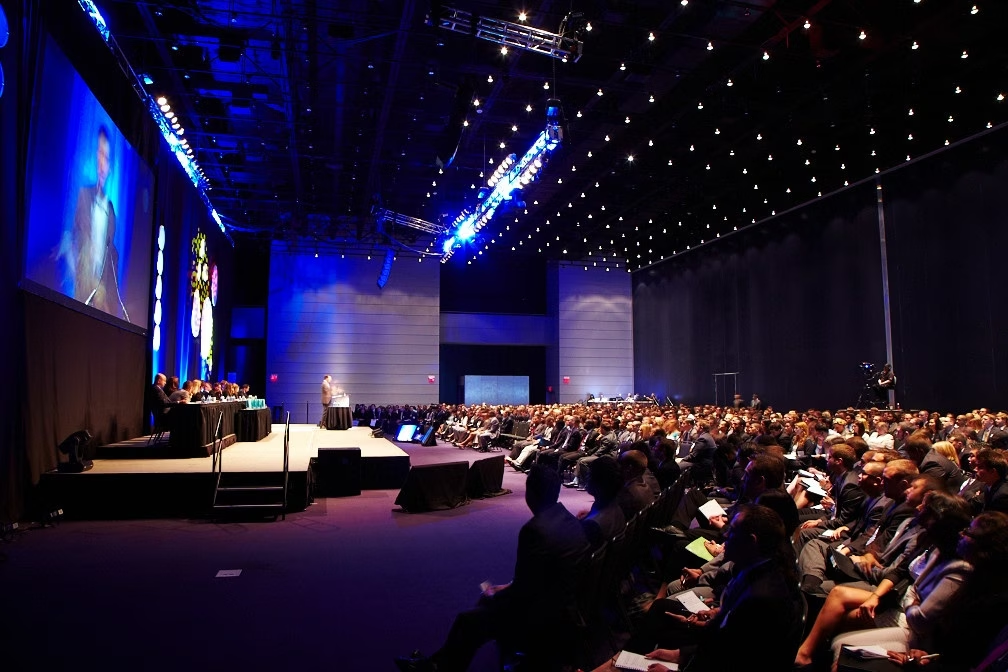
The Securities and Exchange Commission (SEC) says that its forthcoming National Capital Market Conference 2026 will be used to officially launch the Nigerian Capital Market Master Plan 2.0 (NCMMP), and the National Savings Scheme, among other activities.
The conference will be declared open by the Vice-President of the Federal Republic of Nigeria, Senator Kashim Shettima, and hosted by the Honourable Minister of Finance and Coordinating Minister of the Economy, Professor Taiwo Oyedele.
In a statement , SEC Director -General, Dr. Emomotimi Agama, disclosed that the conference scheduled for 19 October, in Abuja, will bring together key stakeholders from the public and private sectors to discuss strategic initiatives aimed at further deepening the Nigerian capital market, enhancing domestic resource mobilization, strengthening investor participation, and supporting sustainable economic growth and national development.


BREAKING: Tragic One-Way Crash Claims Tricycle Driver’s Life in Meiran Lagos

BREAKING: AAC sues Tinubu, NASS over Europe vacation

2027: Atiku, ADC Move to Amend Suit Challenging Tinubu’s Eligibility

Tech Expert, Zuckerberg trains with UFC champions, Adesanya, Alexander

Organ Trafficking: Ekweremadu bags 10 years in UK prison

SAINT OBI: Between his marriage and his death
-
 Business17 hours ago
SEC Highlights Focus of National Capital Market Conference 2026
-
 Business17 hours ago
NGX Debuts Invest WhatsApp Channel
-

 Sports17 hours ago
Flamingos win WAFU B U-17 women’s tournament
-

 Business18 hours ago
Naira To Dollar, Pound, Euro …Today, September 28
-

 Business18 hours ago
Ghana Moves to Cut Domestic Airfares as Ticket Prices Stay High
-

 News17 hours ago
Nigeria is 66, Thursday October 1
-

 News10 hours ago
JUST IN: Fire Engulfs Lagos Customs Command Office
-

 Entertainment16 hours ago
Madonna and Taylor Swift win big at the MTV VMAs