
International
South Korea Confirms New African Swine Fever Outbreak, Culls 20,000 Pigs in Swift Response

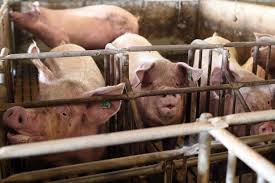
Authorities in South Korea have confirmed a fresh case of African Swine Fever (ASF) at a pig farm in Gangneung, Gangwon Province, marking the country’s first outbreak in nearly two months since November 2025.
The infection was detected after 32 pigs died at the facility on January 16, 2026, with laboratory tests confirming that 29 of them tested positive for the highly contagious and fatal virus.
The outbreak, reported by the Gangwon provincial government and covered by major outlets including Yonhap News Agency and The Korea Herald, prompted immediate quarantine measures.
In response, officials culled approximately 20,000 pigs at the affected farm to halt the spread of the disease.
A 48-hour standstill order was also imposed on pig farms across six neighboring cities and counties, restricting movements to prevent further transmission.
Prime Minister Kim Min-seok directed emergency containment efforts, including restricted site access, intensive disinfection protocols, and investigations into the outbreak’s origin.
The government is prioritizing rapid tracing and biosecurity enhancements to safeguard the nation’s pork industry.
ASF, a viral disease devastating to domestic pigs and wild boars, causes high mortality rates but poses no risk to human health or food safety when pork is properly cooked.
This incident in Gangwon Province — the first ASF case recorded in the region in about 14 months — underscores ongoing challenges in controlling the virus, which has affected South Korea since 2019 through both farm infections and detections in wild boars.
Officials continue monitoring nearby farms and wild populations as part of heightened national vigilance.
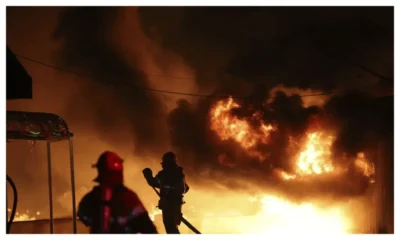



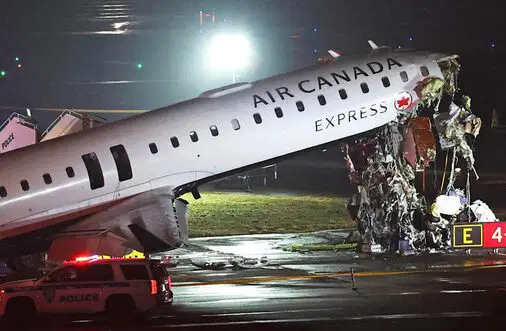
Two pilots were killed and at least 41 people were hospitalized after an Air Canada regional jet struck a Port Authority fire truck on a runway at LaGuardia Airport late Sunday night, officials said.
The incident occurred around 11:40 p.m. on March 22, 2026, when Air Canada Flight 8646 — operated by Jazz Aviation as an Air Canada Express service — was landing after departing from Montreal.
The Bombardier CRJ-900 aircraft, carrying 72 passengers and four crew members, collided with the airport’s Aircraft Rescue and Firefighting vehicle, which was crossing the runway in response to a separate incident.
Both the captain, identified as 30-year-old Antoine Forest, and the first officer, Mackenzie Gunther, died in the crash. The impact heavily damaged the cockpit area of the jet.
At least 41 passengers and crew were transported to area hospitals with injuries ranging from minor to serious, while additional people were treated at the scene. Two Port Authority workers in the fire truck were also reported injured.
Passengers described the collision as sudden and violent, with some crediting the pilots’ actions for helping mitigate a worse outcome.
CCTV and other video footage captured the moments leading up to and during the collision, showing the aircraft striking the emergency vehicle. Air traffic control audio reportedly included urgent calls of “Stop, truck 1. Stop” just before impact.
LaGuardia Airport was temporarily closed following the crash, causing widespread flight delays and cancellations across the New York area. It reopened on Monday at reduced capacity as investigators continued their work on the scene.
The U.S. National Transportation Safety Board (NTSB), along with Canadian aviation authorities and the Port Authority of New York and New Jersey, have launched a full investigation into the runway incursion and collision.
Preliminary reports suggest the fire truck had been cleared to cross the active runway.
Air Canada expressed condolences to the families of the deceased pilots and said it is cooperating fully with investigators.
“Our thoughts are with everyone affected by this tragic event,” the airline stated. This marks a rare fatal ground collision at a major U.S. airport in recent years, raising fresh questions about runway safety protocols and vehicle movements during active landings.
International
Middle East War: IEA recommends options to ease oil price pressures on consumers, Motorists
Work from home where possible. Displaces oil use from commuting, particularly where jobs are suitable for remote work.

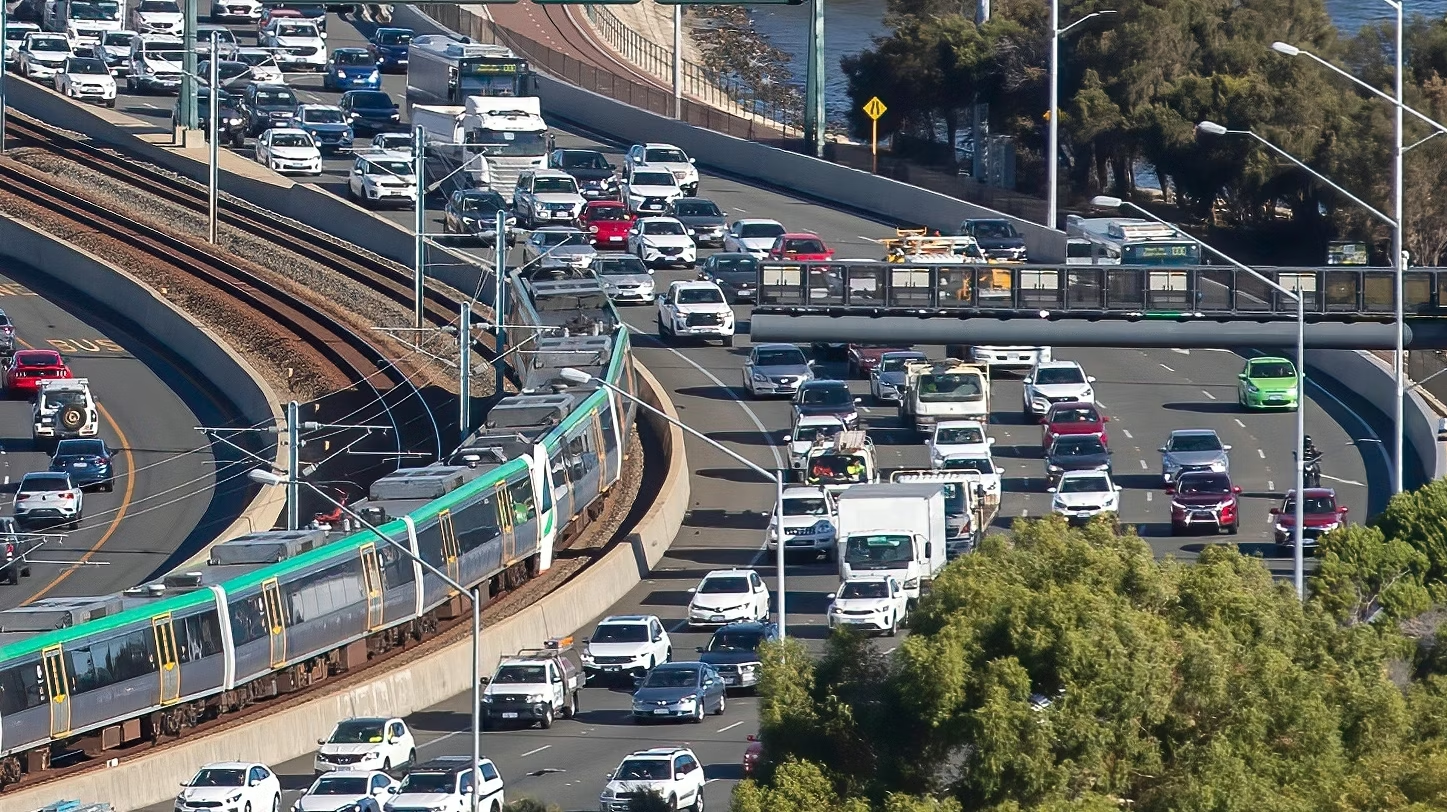
Image credit : Shutterstock
Immediate actions to reduce demand:
1. Work from home where possible. Displaces oil use from commuting, particularly where jobs are suitable for remote work.
2. Reduce highway speed limits by at least 10 km/h. Lower speeds reduce fuel use for passenger cars, vans and trucks.
3. Encourage public transport. A shift from private cars to buses and trains can quickly reduce oil demand.
4. Alternate private car access to roads in large cities on different days.
Number-plate rotation schemes can reduce congestion and fuel-intensive driving.
5. Increase car sharing and adopt efficient driving practices. Higher car occupancy and eco-driving can lower fuel consumption quickly.
6. Efficient driving for road commercial vehicles and delivery of goods
Better driving practices, vehicle maintenance and load optimisation can cut diesel use.
7. Divert LPG use from transport
Shifting bi-fuel and converted vehicles from LPG to gasoline can preserve LPG for cooking and other essential needs.
8. Avoid air travel where alternative options exist
Reducing business flights can quickly ease pressure on jet fuel markets.
9. Where possible, switch to other modern cooking solutions
Encouraging electric cooking and other modern options can reduce reliance on LPG.
10. Leverage flexibility with petrochemical feedstocks and implement short-term efficiency and maintenance measures
Industry can help free up LPG for essential uses while reducing oil consumption through quick operational improvements
International
Hong Kong police can now demand phone passwords under new national security rules
Those who refuse could face up to a year in jail and a fine of up to HK$100,000 ($12,700; £9,600), and individuals who provide “false or misleading information” could face up to three years in jail.

Image credit : Getty images
Hong Kong police can now demand phone or computer passwords from those who are suspected of breaching the wide-ranging National Security Law (NSL).
Those who refuse could face up to a year in jail and a fine of up to HK$100,000 ($12,700; £9,600), and individuals who provide “false or misleading information” could face up to three years in jail.
It comes as part of new amendments to a bylaw under the NSL that the government gazetted on Monday.
The NSL was introduced in Hong Kong in 2020, in wake of massive pro-democracy protests the year before.
Authorities say the laws, which target acts like terrorism and secession, are necessary for stability – but critics say they are tools to quash dissent.
The new amendments also give customs officials the power to seize items that they deem to “have seditious intention”.
Monday’s amendments ensure that “activities endangering national security can be effectively prevented, suppressed and punished, and at the same time the lawful rights and interests of individuals and organisations are adequately protected”, Hong Kong authorities said on Monday.
Changes to the bylaw was announced by the city’s leader, John Lee, bypassing the city’s legislative council
(BBC)


2027: Labour Party says Presidential flag bearer must be a southerner

FG to reopen Enugu–Onitsha expressway March 31

Niger Delta Chamber Investment Summit Targets $5bn, 500,000 Jobs

Tech Expert, Zuckerberg trains with UFC champions, Adesanya, Alexander

Organ Trafficking: Ekweremadu bags 10 years in UK prison

SAINT OBI: Between his marriage and his death
-

 Sports3 days ago
FIFA orders representation of female coaches across all women’s tournaments
-

 Sports3 days ago
Odegbami: Why CAF should return AFCON 2025 trophy back to Senegal
-

 News2 days ago
BUK expels 171 students for admission frauds
-

 News3 days ago
Why I returned to school – Emir Sanusi
-

 Entertainment2 days ago
Papa Ajasco rebrands as Bondu Alaska
-

 Entertainment2 days ago
AGN President Jetting to London for UK–Nigeria Creative Roundtable and Awards
-

 Business2 days ago
Moniepoint buys Orda to capture Africa’s $50bn restaurant economy
-

 Politics2 days ago
Peter Obi: I can govern from Kaduna if elected