
Business
Services are powering growth than manufacturing- UNCTAD

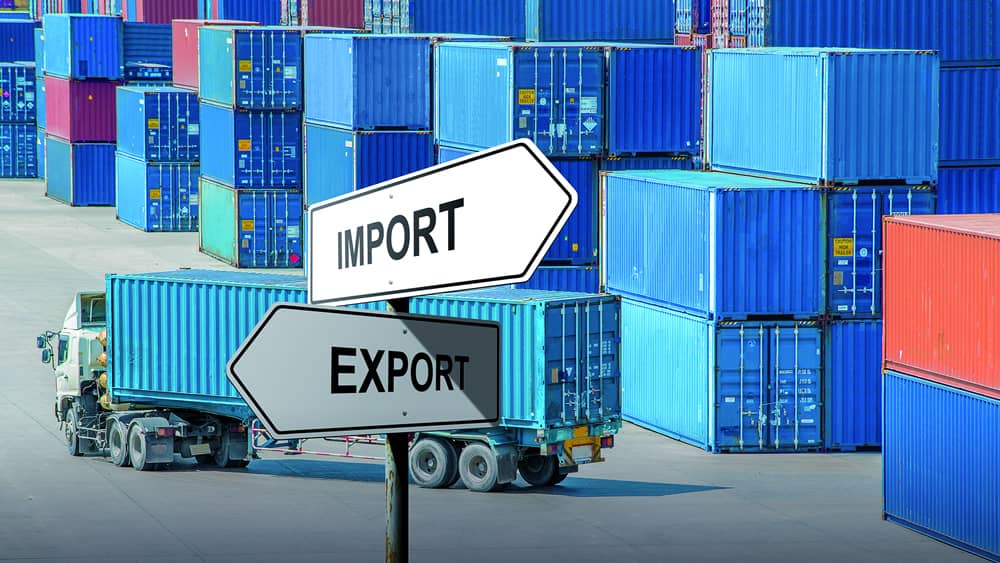
UN trade and development (UNCTAD) urges developing countries to look beyond manufacturing-led exports as services are gaining more traction than manufacturing.
UNCTAD in its 2024 review, noted: ” Service exports, now representing 25% of world trade, offer a bright spot amid a subdued global economic outlook.”
UNCTAD said that in 2023, trade in services expanded by 5% in real terms, contrasting a 1.2% contraction in merchandise trade, according to the Trade and Development Report 2024.
As a development strategy, services are gaining more traction than manufacturing, a longstanding growth engine for middle-income countries.
This is largely because the comparative advantage of cheaper, less-skilled labour no longer aligns with the reliance of modern manufacturing on skill- and capital-intensive production,” the report notes.
“Additionally, industrialization is increasingly scrutinized for its large ecological footprint and contributions to climate change.
” North-South gap risks widening The dawn of a service economy could be a game changer for developing countries, but not without challenges.
Currently, developing economies account for under 30% of global services export revenues and 44% of merchandise trade.
With services and intangible assets – such as brands, designs and patented technologies – getting prominence in global value chains, asymmetries between developed and developing regions could worsen.
Market concentration in the creative services trade is a case in point. In 2022, creative services were valued at $1.4 trillion, four fifths of which came from developed countries.
The predominance also manifests in the geography of multinational firms providing international services. In 2022, 70% of these companies were headquartered in developed regions, compared to just 10% in developing ones excluding China.
Recalibrating development strategies Current trade in services cannot generate enough quality jobs in developing countries, urging an ambitious policy mix towards green transition and promoting labour-absorbing activities, especially in the non-tradable services sectors.
Some examples can be construction, retail, various types of care work as well as the personal and public sectors that provide services consumed locally in the country or region where they are produced.
A three-pronged strategy could focus on:
• Encouraging lower-skill job creation by larger firms in non-tradable services.
• Providing public inputs and access to productivity-enhancing investments for smaller enterprises.
• Investing in technologies that complement, rather than replace, low-skilled workers in the services sectors.





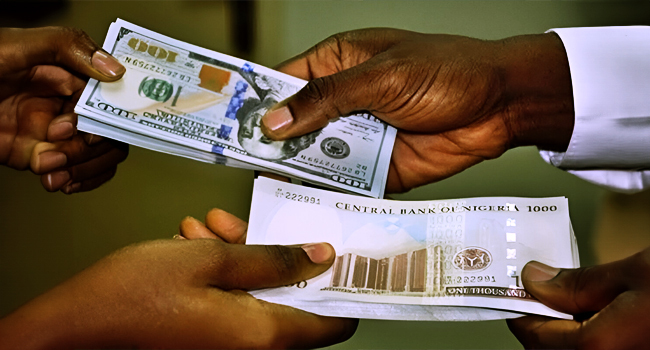
BLACK/ PARALLEL MARKET RATES
₦1370 DOLLAR (USD)
₦1800 POUND (GBP)
₦1510 EURO (EUR)
₦970 CANADIAN DOLLAR (CAD)
₦65 SOUTH AFRICAN RAND (ZAR)
₦350 UAE DIRHAM (AED)
₦190 CHINESE YUAN (CNY)
₦100 GHANAIAN CEDI (GHS)
₦2300 WEST AFRICAN CFA F.(XOF)
₦2200 CENTRAL AFRICAN CFA F.(XAF)
₦850 AUSTRALIAN DOLLAR AUSSIE (AUD)
CBN OFFICIAL RATES
DOLLAR (USD)₦1331.61
POUND (GBP)₦1764.26
EURO (EUR)₦1490.48
SWISS FRANC (CHF)₦1608.23
JAPANESE YEN (JPN)₦8.4
CFA FRANC (XOF)₦2.27
WEST AFRICAN UNIT OF ACCOUNT (WAUA)₦1802.33
CHINESE YUAN (CNY)₦199.01
SAUDI RIYAL (SAR)₦354.83
SOUTH AFRICAN RAND (ZAR)₦80.49
Business
WEF could appoint Lagarde as its next chair, sources say
The WEF’s Board of Trustees, which includes Lagarde herself, was due to meet on November 2 and could elect her as its next chair, said the people close to the organisation, who spoke on condition of anonymity due to the sensitivity of the matter.

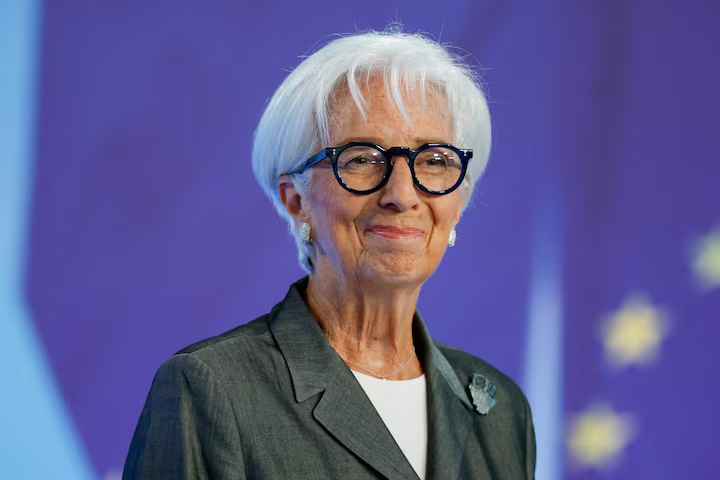
•European Central Bank President Christine Lagarde
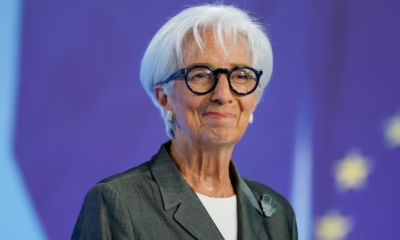
The World Economic Forum could appoint Christine Lagarde as its next chair as soon as next month, four people close to the organisation told Reuters, meaning she would step down early as European Central Bank chief and trigger a wider reshuffle at the top of the ECB.Lagarde’s ECB term is scheduled to end in October 2027.
Leaving early would give European Union leaders a chance to pick a new ECB President before France’s spring presidential election, which opinion polls suggest the far-right could win, and could pave the way for a deal involving two other senior ECB roles.
The WEF’s Board of Trustees, which includes Lagarde herself, was due to meet on November 2 and could elect her as its next chair, said the people close to the organisation, who spoke on condition of anonymity due to the sensitivity of the matter.
No final decision has been taken yet, they said.
A spokesperson for the WEF said the forum could not confirm when the next full Board of Trustees meeting would take place, but that the aim was to hold one before the end of the year.
Business
Germany plans tax on sugary drinks
The tax is expected to generate additional revenue for the federal government of €690 million in 2027 and €925 million in 2028.
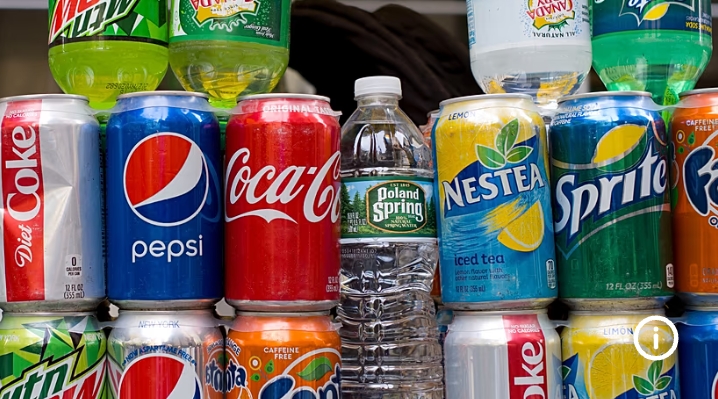
The German cabinet has approved draft legislation to tax sugary drinks in Europe’s biggest economy.
If passed by the German Bundestag, the tax will take effect on 1 July 2027.
The coalition aims to raise revenue for the federal budget while encouraging manufacturers to reduce sugar content and offer healthier products.
The levy is intended to ease pressure on the healthcare system, which faces costs of more than €2 billion every year linked to the high consumption of sugary drinks, which contributes to obesity, diabetes and tooth decay.
According to the federal government, Berlin is using the tax to implement “what associations from the fields of health, science, child protection, and consumer protection have long been demanding.”
The tax is expected to generate additional revenue for the federal government of €690 million in 2027 and €925 million in 2028.


JUST IN: Mob Sets BRT Bus Ablaze After Motorcyclist’s Death in Lagos

BREAKING: DSS Arrests Fugitive Maina Son, Hands Him to EFCC

BREAKING: 5 Arrested Over Imo NYSC Abduction

BREAKING: Lagos Govt Declares Today, Thursday Work-Free to Mark 2026 Ìṣẹ̀ṣe Day

Tech Expert, Zuckerberg trains with UFC champions, Adesanya, Alexander

Organ Trafficking: Ekweremadu bags 10 years in UK prison
-

 Business3 days ago
Naira Exchange Rates For Thursday, October 15
-

 News3 days ago
ASCON To Be Rebranded “National School Of Government”
-
 Sports3 days ago
CAF Increases Annual Funding for Member Federations to $700,000
-
 Business2 days ago
Germany plans tax on sugary drinks
-
 Business2 days ago
WEF could appoint Lagarde as its next chair, sources say
-
 International2 days ago
“Mother of all bombs,” Trump Plans To Hit Iran
-
 Business2 days ago
Naira Exchange Rates Friday, October 16
-
 Crime1 day ago
BREAKING: 5 Arrested Over Imo NYSC Abduction