
Business
Satchets Alcohol Manufacturers Cry Out to Tinubu to Overide “NAFDAC’s Ban
The Senate, in its own wisdom, did not hear from other parties before the present situation we find ourselves in. This is, therefore, not a regulation; this is calculated economic suffocation.

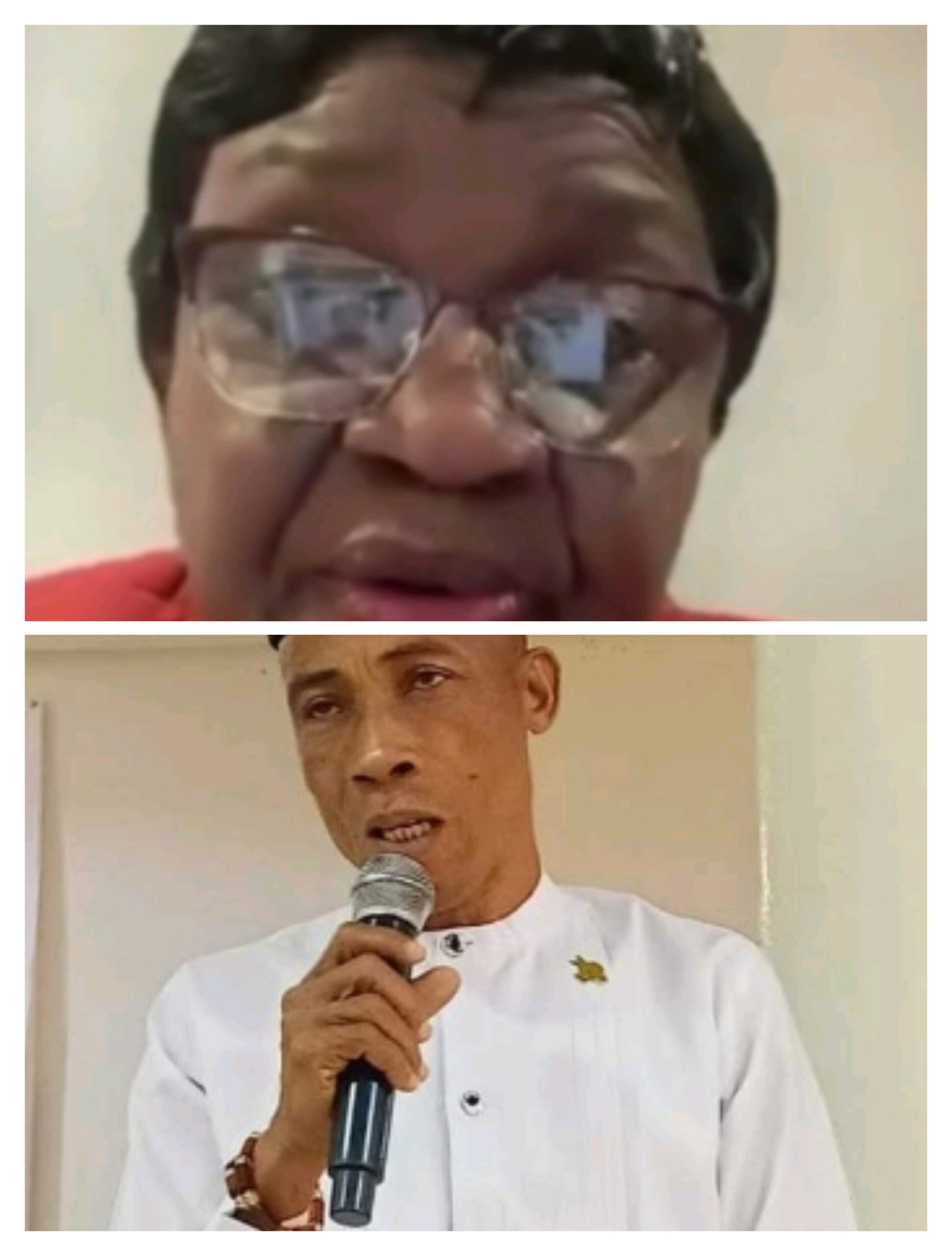
• Collage : NAFDAC DG, Prof Mojisola Adeyeye; FOBTOB President, Jimoh Oyibo.
THE National Agency for Food and Drug Administration and Control (NAFDAC) ban on local production and distribution of sachets alcohol and 10cl PET bottles have started telling on the economy, according to the Food and Beverage Producers union- FOBTOB., prompting their calls for intervention by President Bola Ahmed Tinubu , his cabinet and other well meaning Nigerians, to :
“Let the factories be reopened.Let the warehouses be unsealed.Let the depots be reopened.Let regulation replace repression.Let dialogue replace destruction.Let policy replace punishment.”
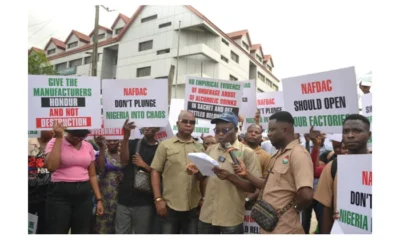
Jimoh Oyibo, President of FOBTOB, at a press conference in Lagos, paints the grim pictures of the ban , barley in its two months :
” Across the country, indigenous manufacturing companies, especially factories are being shut down. Depots are being closed. Warehouses are being locked including those that contain multiple other lawful products not connected to the targeted items.
“The consequences are already visible because workers are losing their jobs daily. Families have started to loose their income, businesses collapsing, supply chains breaking, tax revenues to the Federal Government reducing,” he said.
He emphasised that above all, local investment confidence is being destroyed, and that an economy cannot survive when industries are shut down instead of regulated.
Read Also: Are The Ministers of industry Leaving Manufacturers To Face Challenges?

The speech reads:
” Gentlemen and Ladies of the press and fellow Nigerians, we address you today February 26, 2026 with deep pain, growing fear, and a heavy sense of injustice over the ongoing actions of under the leadership of Professor Mojisola Adeyeye, the Director-General.
This approach is creating widespread confusion, fear, and economic paralysis and we are compelled to ask Professor Mojisola Adeyeye the following questions.
What is her real motive behind this method of enforcement?
Why are entire facilities being shut down instead of applying controlled, targeted regulation?
Why are lawful businesses, workers, transporters, retailers, and suppliers being collectively punished?
The fact is undeniable that all stakeholders met including the House committe on alcohol of the House of Representatives, Honorable Minister of Health, Professor Mojisola Adeyeye,
The Nigerian Police, Customs, Immigration, Federal Road safety corps, manufacturers, Road transport Unions and many other representatives where this issue of alcohol intake by underaged was discussed and the general resolution was access control, massive enlightenment and educational sensitisation drive amongst other resolutions and not total ban as been carried out by Professor Mojisola Adeyeye.
While a policy document which was to serve as a National guide was being awaited, Professor Mojisola Adeyeye rushed behind everyone to approach the Senate for total ban.
The Senate, in its own wisdom, did not hear from other parties before the present situation we find ourselves in. This is, therefore, not a regulation; this is calculated economic suffocation.
children whom she claimed to be protecting are being forced out of school and embracing uncontrolled vices including forced labor or prostitution, with signs of increase in poverty and without doubt, crime risks will rise and this can be a security problem to Nigeria.
We reject the idea that total bans and mass shutdowns are solutions.
Access control is better than total prohibition.
Regulation is better than destruction.
Enlightenment is better than force.
Structured policy is better than blanket punishment.Cutting off a head is not the cure for a headache.
Dialogue is always stronger than destruction.Reform is better than repression.
Control is better than collapse.Factories are not just buildings, they are ecosystems that revolve round – Transporters who are into haulage- Raw material suppliers- Distributors- Retailers- Market women- Artisans- Warehouse operators- Support services- Logistics workers All of them are now suffering because of this policy direction.
We are therefore making this national appeal:
To the Federal Government of Nigeria
To the conscience of leadership
To the defenders of democracy
To the guardians of the economy
Please intervene and prevail on Professor Mojisola Adeyeye for a rethink
Please speak to the conscience of leadership. Stop Professor Mojisola Adeyeye before she destroy Nigeria and Nigerians.
We have no other country to call ours. 2027 elections are fast approaching and this is not the time to loose jobs.We are not criminals.
We are not kidnappers.We are not robbers.We are not extremists.We are not enemies of the state.We are workers.
We are producers.We are parents.We are taxpayers.We are citizens.
We are Nigerians.The only work we know is factory work.
The only livelihood we have is production.The only dignity we have is honest labor.We therefore appeal strongly and respectfully: .
Total bans are not the way forward.Controlled access is the way forward.Education is the way forward.Regulation is the way forward.
Partnership is the way forward.We bring this message before the press, please help circulate our pleas.
We bring it before the nation, this is a security crisis in the making.We bring it before the world, Nigeria is too volatile for another crisis.
This is our appeal.
This is our cry.This is our plea.
This is our stand.Let our industries and factories live.
Let our people work and contribute to the growth of the Nigerian economy.
Let our economy breathe, not to suffocate.”







Business
Supreme Court Overturns Appellate’s Ruling on $2bn Debt Recovery Battles Nestoil /Neconde Energy vs FBNQuest Merchant Bank
In the lead judgment read by Justice Mohammed Baba Idris, the five-member apex court panel held it was a “legal anomaly” to allow lawyers appointed by the Receiver/Manager to also represent the companies, citing a conflict of interest.

The Supreme Court of Nigeria on Friday ruled in favor of Nestoil and Neconde Energy, overturning a previous appellate court decision that disqualified their legal counsel, including Wole Olanipekun (SAN) and Muiz Banire (SAN).
The court upheld the companies’ right to appoint their own lawyers to challenge the ongoing receivership.
The apex court ruled that despite the receivership initiated by a consortium of banks, Nestoil and Neconde retain the right to appoint their own legal counsel to challenge that very receivership.
Nestoil Limited (an oil services firm) and its affiliate Neconde Energy Limited (which holds interests in Oil Mining Lease 42) are embroiled in a multi billion-dollar debt recovery suit filed by lenders, primarily FBNQuest Merchant Bank Limited and First Trustees Limited.
The lenders allege that Nestoil, Neconde, and their promoters (Ernest Azudialu-Obiejesi and Nnenna Azudialu-Obiejesi) owe over $2 billion (plus N430 billion in related liabilities) under financing arrangements, including a Common Terms Agreement.
In the lead judgment read by Justice Mohammed Baba Idris, the five-member apex court panel held it was a “legal anomaly” to allow lawyers appointed by the Receiver/Manager to also represent the companies, citing a conflict of interest.
The judgment affirms that the boards of the companies retain the authority to act in defense of the companies’ interests.
A receiver/manager was appointed over the companies’ assets and interests, leading to disputes over who controls the companies and who can represent them in court.
In January 2026, the Supreme Court sent related appeals back to the Court of Appeal to resolve the preliminary issue of legal representation before proceeding on the merits.
On January 23, 2026, the Court of Appeal disqualified senior advocates Wole Olanipekun (SAN) (for Neconde) and Muiz Banire (SAN) (for Nestoil), ruling that the Ernest Azudialu-Obiejesi-led boards lacked authority to appoint counsel once the receiver/manager was in place. It allowed counsel appointed by the receiver to represent the companies instead.
Nestoil/Neconde and their promoters appealed this disqualification to the Supreme Court (one key appeal being SC/CV/48B/2026 by Neconde).
The apex court had reserved judgment after hearing arguments from a five-member panel.
In Friday’s ruling, the Supreme Court upheld the appeal by Nestoil and Neconde (and their promoters).
It set aside the Court of Appeal’s judgment disqualifying the companies’ chosen counsel.
Their boards (led by Ernest Azudialu-Obiejesi) retain the authority to appoint counsel of their choice to defend their interests, particularly since the validity of the receivership itself is being challenged.
Allowing the receiver/manager’s counsel (appointed by the lenders) to represent the companies would create a serious conflict of interest and undermine fairness and independence in legal representation.
The arrangement involving the lenders (FBNQuest and First Trustees) as appointors of the receiver was deemed fundamentally flawed.
The appointments of Wole Olanipekun (SAN) and Dr. Muiz Banire (SAN) (along with their teams) as counsel for Neconde and Nestoil are restored.
The companies are now free to proceed with their preferred lawyers in the ongoing debt recovery proceedings.
The ruling is procedural (focused solely on representation) and does not decide the merits of the underlying debt claims or receivership.
Those substantive issues will now continue in the lower courts with the restored counsel.

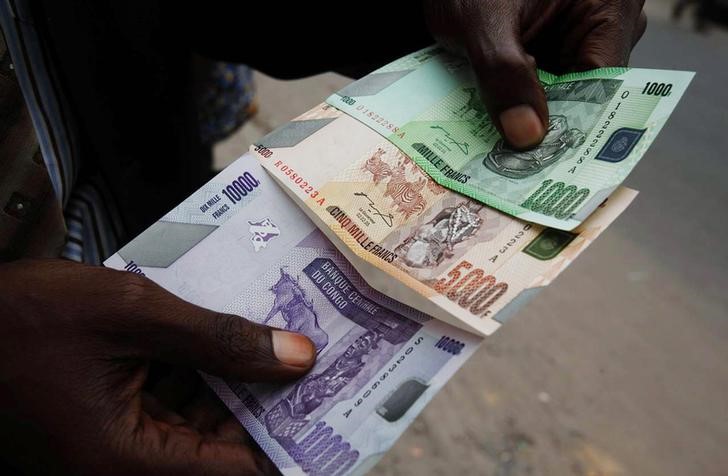
The Central Bank of the Democratic Republic of Congo (BCC) has announced plans to prohibit cash transactions in foreign currencies, including the US dollar, starting April 9, 2027, in a fresh attempt to promote the use of the local Congolese franc (CDF) and reduce dollarisation in the economy.
In a statement issued on Thursday, April 9, 2026, the BCC declared that from the effective date, “no person will be authorised to carry out cash transactions in foreign currencies,” and commercial banks will no longer be allowed to import or distribute physical foreign banknotes.
Under the new measure, payments in dollars, euros or other foreign currencies will still be permitted, but only through electronic means such as bank transfers, cards, or mobile money platforms. Cash dealings must be conducted exclusively in Congolese francs.
The BCC’s move aims to strengthen the national currency, enhance monetary sovereignty, and curb the widespread use of the US dollar, which dominates many business transactions in the country despite official policies favouring the CDF.
The Congolese economy has long been heavily dollarised, with foreign currency widely accepted even in everyday dealings.
This is not the first attempt by the BCC to limit dollar use. Previous efforts to ban or restrict foreign currency have largely failed to take full effect, as the dollar remains deeply entrenched in commerce, mining, and daily life across the vast Central African nation.
The announcement comes amid broader initiatives by the central bank, including interventions in the foreign exchange market and efforts to build gold reserves, to support the Congolese franc and reduce reliance on the US dollar.
Analysts and businesses are watching closely to see how the policy will be enforced, given past challenges in implementing similar restrictions in a country where cash remains king and banking penetration is relatively low.
The BCC has urged the public and financial institutions to prepare for the transition and to rely increasingly on formal banking and electronic payment systems.
Further details on implementation guidelines and penalties for non-compliance are expected in the coming months. The public is advised to monitor official communications from the Banque Centrale du Congo for updates.
Business
Crude Oil Prices Drop Below $95 After US-Iran Ceasefire
Earlier, crude prices had surged above $110 per barrel amid fears of supply disruptions as tensions escalated in the Middle East.

Crude oil prices fell below $95 per barrel in early trading on Wednesday following a ceasefire agreement between the United States and Iran.
The global oil benchmark fell by about 13% to around $94–$95 per barrel, marking one of the steepest single-day declines in recent years after weeks of war-driven price spikes.
The dramatic selloff came after U.S. President Donald Trump announced a conditional two-week ceasefire, pausing military operations in exchange for the reopening of the Strait of Hormuz—a critical route for global oil shipments.
West Texas Intermediate (WTI), the U.S. benchmark, also dropped significantly to around $95–$96 per barrel, reflecting a broad easing of geopolitical tensions and a rapid unwinding of the war risk premium in oil markets.
Earlier, crude prices had surged above $110 per barrel amid fears of supply disruptions as tensions escalated in the Middle East.
However, the ceasefire has restored some confidence that oil flows will resume, triggering a sharp correction in prices.


Ex-senatorial candidate jailed 10 yrs for selling petrol to Boko Haram

Breaking: INEC postpones voter revalidation exercise till after 2027 elections

Supreme Court Overturns Appellate’s Ruling on $2bn Debt Recovery Battles Nestoil /Neconde Energy vs FBNQuest Merchant Bank

Tech Expert, Zuckerberg trains with UFC champions, Adesanya, Alexander

Organ Trafficking: Ekweremadu bags 10 years in UK prison

SAINT OBI: Between his marriage and his death
-
 Politics2 days ago
Atiku, Obi, Kwankwaso, Aregbesola, Storm INEC Hqtrs in Protests
-
Politics2 days ago
Coalition Leaders Rouse Nigerians to Reject ‘One Party ‘Rule’, Warning INEC “Don’t kill Democracy”
-

 Business2 days ago
Crude Oil Prices Drop Below $95 After US-Iran Ceasefire
-

 International2 days ago
Iran reopens Strait of Hormuz following two-week cease-fire agreement with Trump
-

 Politics2 days ago
Rep Dasuki Joins ADC, says INEC Chair Becoming Threat to Nigeria’s Multi-party Democracy
-

 News2 days ago
INEC releases updated voters registration figure nationwide
-

 News14 hours ago
CBN Debunks Viral Fake News of ₦5,000 Banknote Featuring President Tinubu’s Image
-
 News2 days ago
US Declares 23 Nigerian States High-Risk for Citizens