
Business
“Only 37% of Nigerian roads are in good condition ” – MAN
The Nigerian government holds the primary responsibility for creating an enabling environment to unlock the manufacturing sector’s potential.

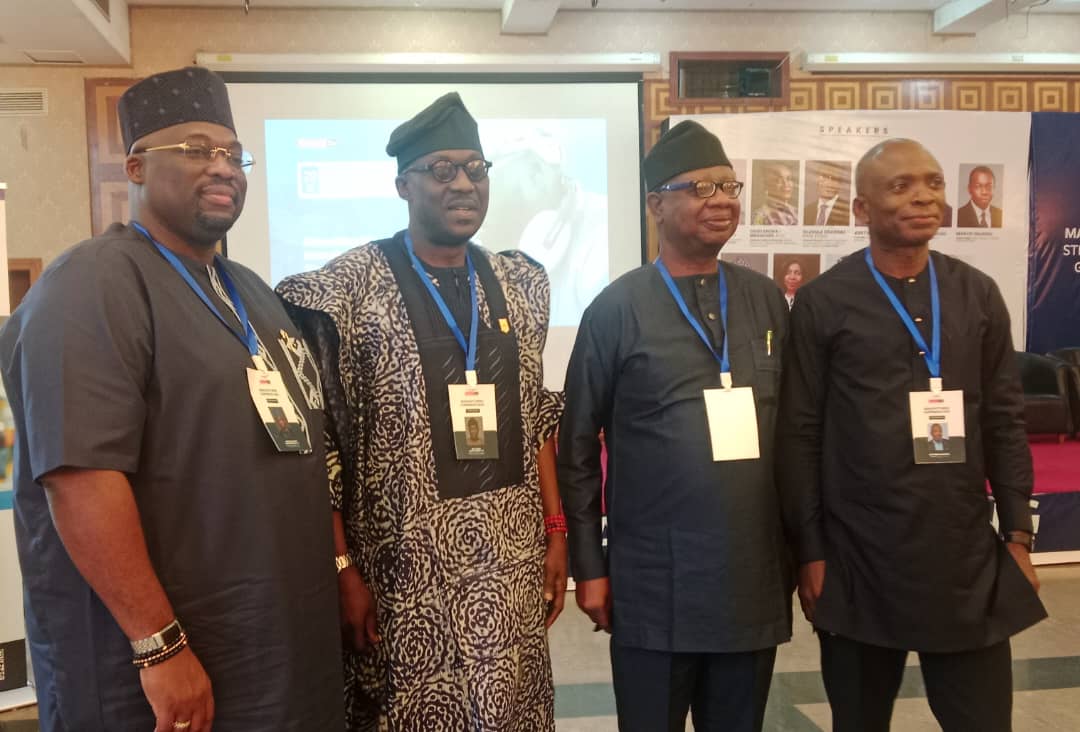
L-R: MD Coleman Wires and Cables industries limited, Mr. George Onafowokan, DG MAN, Mr. Segun Ajayi-Kadir, and Mr. Adetunji Aderinto, founder Zetamind consulting limited at a conference organized by Business Day in Lagos on Thursday.
“Only 37 percent of Nigerian roads are in good condition, which continues to increase production and transportation costs, making Nigerian products less competitive.”
“Segun Ajayi-Kadir, the Director – General of the Manufacturers Association of Nigeria (MAN), gave this statistics during the 2025 Manufacturing Conference organized by BusinessDay in Lagos, with the theme: “Unlocking Nigeria’s Manufacturing Potential: Strategies for Sustainable Growth Amid Economic Turbulence.”
Ajayi-Kadir noted that while recent improvements in infrastructure is commendable, there’s need for investing significantly in critical transport infrastructure — roads, ports, and industrial corridors — to reduce logistics bottlenecks and improve market access.
He stated, “The Nigerian government holds the primary responsibility for creating an enabling environment to unlock the manufacturing sector’s potential.
This requires strategic action across infrastructure, fiscal policy, and regional integration.”
Ajayi-Kadir acknowledged the passage of four tax reform bills aimed at streamlining the tax system and praised the government’s “Nigeria First Policy.”
However, he emphasized the need for swift and effective implementation.
He further recommended making the Nigeria First Policy a binding law, with penalties for violators, to ensure transparency, public awareness, and enforcement.
Ajayi-Kadir further called for establishing structured platforms for regular consultations with manufacturers to align policies with industry needs.
“There is need for setting up systems for timely and relevant export data sharing through embassies, trade attachés, and relevant agencies to help manufacturers access global markets.
Also ensuring consistent and transparent policy-making to boost investor confidence and foster long-term growth.”
The Managing Director of Coleman Wires and Cables Industries Limited, Mr. George Onafowokan, noted that more foreign investors are entering Nigeria to establish businesses despite prevailing economic challenges, even as some local businesses continue to complain about the operating environment.
He urged Nigerian manufacturers to look inward and explore the abundant opportunities within the country to boost their enterprises.
In the same vein, Adetunji Aderinto, founder of Zetamind Consulting Limited and a fellow panelist, remarked that foreign investors often recognize prospects in the Nigerian market that many local manufacturers overlook.
He advised manufacturers to reduce costs through technology adoption and data utilization.
“Some manufacturers shut down operations because they don’t understand what their customers need. They need to increase market share and strengthen their supply chains,” Aderinto added.
The Director -General of the Nigerian Association of Chambers of Commerce, Industry, Mines and Agriculture (NACCIMA), Mr. Olusola Obadimu, called on the Federal Government and the Central Bank of Nigeria (CBN) to take urgent steps to curb inflation.
He also urged state governments to focus more on people-centric development rather than internally generated revenue alone.
The panelists collectively encouraged Nigerians to patronize locally made products and commended the Federal Government’s efforts in promoting the “Buy Nigeria” campaign.




Business
33 Nigerian Banks Beat CBN’s Recapialisation with ₦4.65trn Combined Capital Base
The recapitalisation programme has strengthened the capital base of Nigerian banks, reinforcing the resilience of the financial system and ensuring it is wellpositioned to support economic growth and withstand domestic and external shocks.”
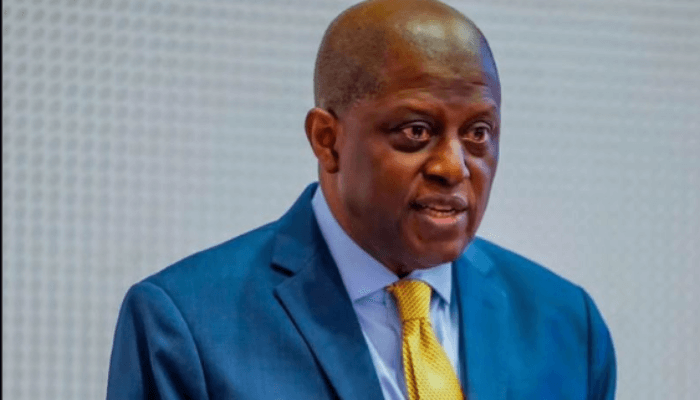
•Governor of CBN, Olayemi Cardoso
The Central Bank of Nigeria (CBN) has wrapped up the banking sector recapitalisation programme it introduced two years ago (March 2024-March 31, 2026) with 33 banks successfully met the requirements deadline.
The banks raised a total of ₦4.65 trillion in new capital, according to a statement signed by Olubukola A. Akinwunmi, the Director, Banking Supervision and Hakama Sidi Ali (Mrs.), the Ag. Director, Corporate Communications.
It said that the recapialisation exercises recorded strong participation from both domestic and international investors, with 72.55% of capital sourced locally and 27.45% from international markets, reflecting sustained confidence in the Nigerian banking sector.
The statement noted that the Governor of CBN, Olayemi Cardoso said “the recapitalisation programme has strengthened the capital base of Nigerian banks, reinforcing the resilience of the financial system and ensuring it is wellpositioned to support economic growth and withstand domestic and external shocks.”
“The CBN confirms that 33 banks have met the revised minimum capital requirements established under the programme.
A limited number of institutions remain subject to ongoing regulatory and judicial processes, which are being addressed through established supervisory and legal frameworks.
“All banks remain fully operational, ensuring continued access to banking services for customers.
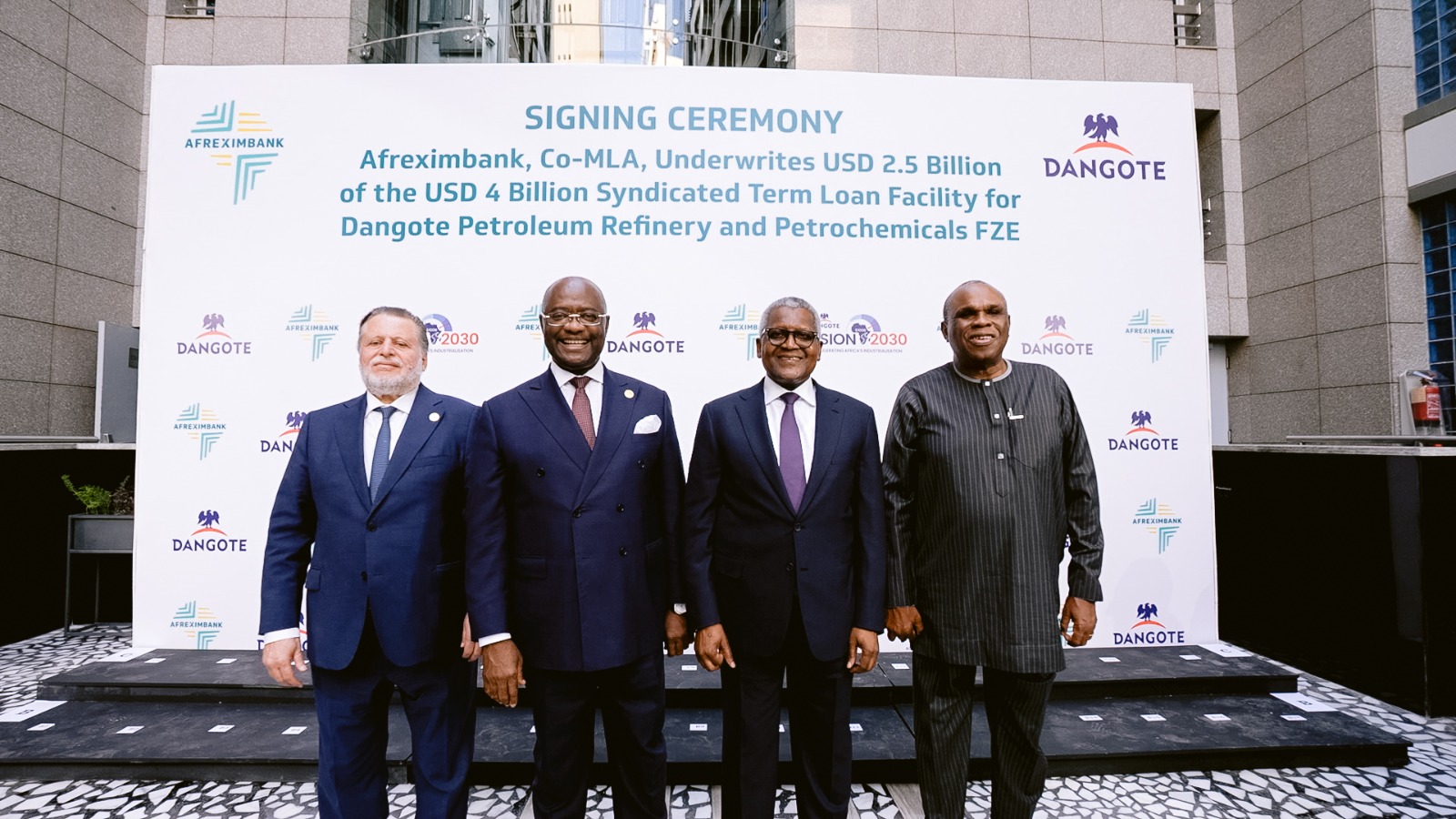
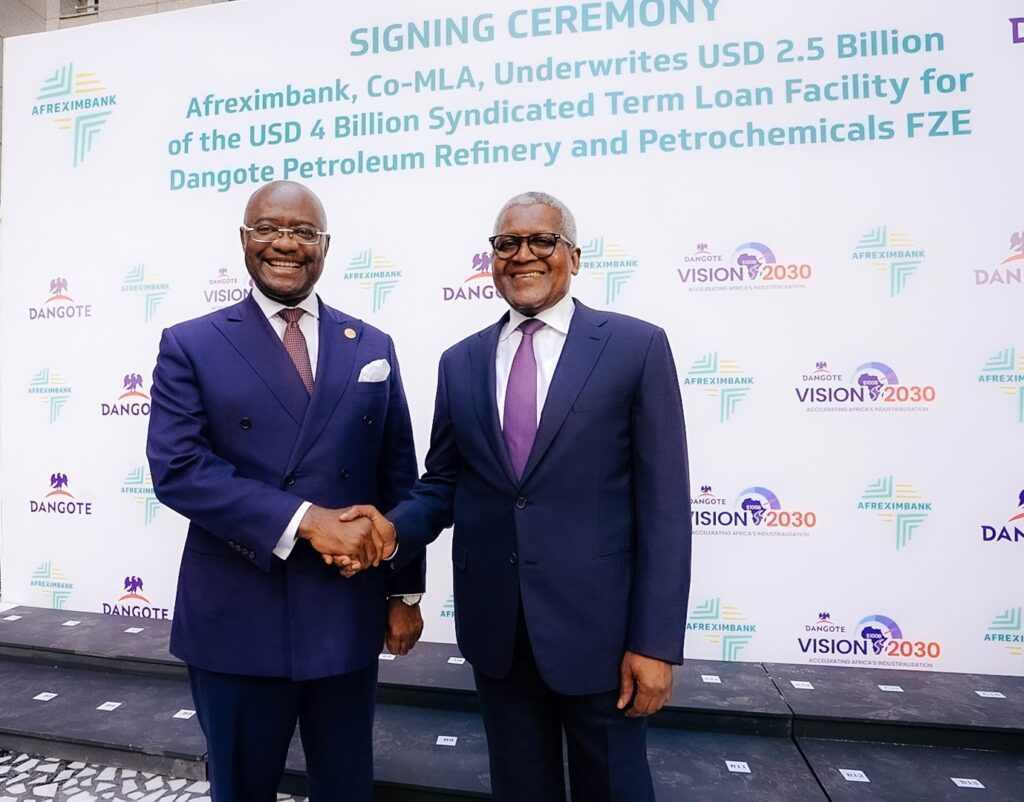
African Export-Import Bank has underwritten $2.5 billion in a $4 billion senior syndicated term loan for Dangote Petroleum Refinery and Petrochemicals, in a move aimed at strengthening the refinery’s financial position and supporting its long-term growth and expansion strategy.
The five-year facility, arranged alongside Access Bank as co-Mandated Lead Arrangers, is designed to consolidate existing debt, optimise the refinery’s capital structure and align its financing with current operational realities.
The transaction marks a significant milestone for the Dangote Refinery, Africa’s largest refining and petrochemical complex with a capacity of 650,000 barrels per day.
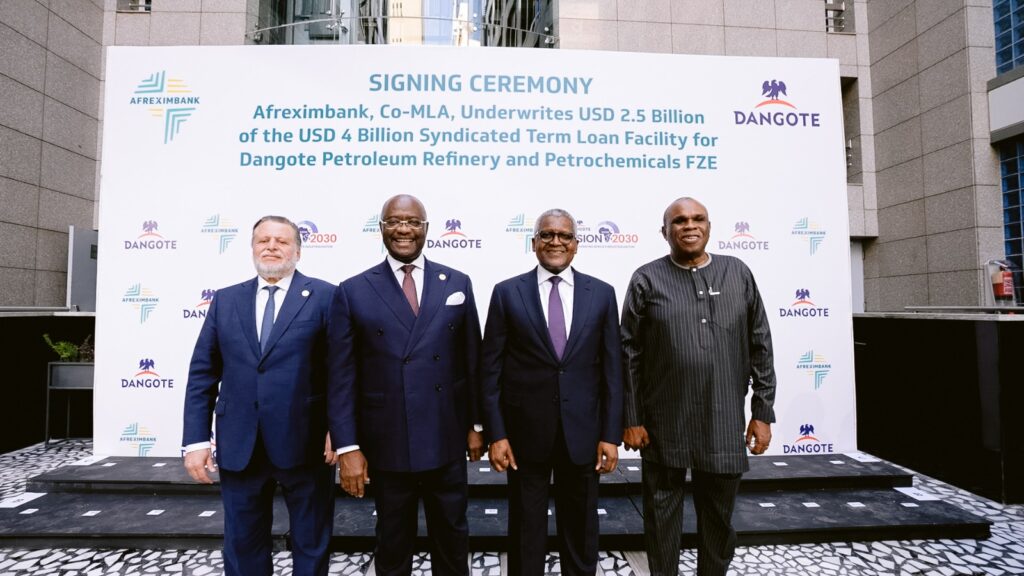
Afreximbank’s $2.5 billion participation represents the largest share of the syndicate, underscoring its strategic role in mobilising capital for industrial projects across the continent.
The bank said the financing aligns with its mandate to promote industrialisation, reduce reliance on imported petroleum products and deepen intra-African trade.
Since refining operations commenced in February 2024, Afreximbank has played a key role in supporting the project, including providing a $1 billion working capital facility and acting as financial adviser on the Naira-for-Crude initiative, which facilitates crude procurement and product sales in local currency.
Speaking during a strategy session in Cairo, Egypt, President and Chairman of the Board of Directors of Afreximbank, George Elombi, said the bank’s continued backing reflects confidence in indigenous African enterprises.
“We take immense pride in being the single largest provider of financing to the Dangote Group. We do so primarily because Dangote is African,” he said.
“When we invest in ourselves, we do more than create jobs and wealth or expand government revenues; we build a secure and resilient future for our continent”
Elombi disclosed that Afreximbank has committed about $15 billion to Dangote Group since 2015, highlighting the scale of its long-term partnership with the conglomerate.
President and Chief Executive of Dangote Industries Limited, Aliko Dangote, described the financing as a critical step in positioning the refinery for its next phase of expansion.
“This financing marks an important step in strengthening the financial foundation of Dangote Petroleum Refinery & Petrochemicals and positions the business for the next phase of its growth,” he said.
“We appreciate Afreximbank’s continued support and confidence in our vision to build world-class industrial capacity that serves Nigeria, Africa and global markets.”
The syndicated loan attracted strong participation from a mix of African and international financial institutions, reflecting sustained investor confidence in the refinery as a transformative industrial asset in advancing Africa’s energy security, reducing import dependence and supporting the continent’s broader industrialisation agenda.
Business
BUA Foods Plc Reports Strong 2025 Performance with ₦1.77 Trillion Revenue, Proposes Record ₦28 Dividend per Share

Leading Nigerian food manufacturer BUA Foods Plc has announced robust full-year 2025 audited results, with revenue climbing 16% to ₦1.77 trillion from ₦1.53 trillion in 2024.
The growth was driven by sustained consumer demand for the company’s core staples sugar, flour, pasta, and rice alongside higher sales volumes and strategic pricing amid a challenging economic environment marked by inflationary pressures on households.
Profit after tax nearly doubled, rising 95% to ₦518.4 billion, while gross profit surged to ₦737.3 billion from ₦540.8 billion the previous year.
Operating profit also increased significantly to ₦656.6 billion.In a strong signal of confidence in its outlook and commitment to shareholder value, the Board of Directors has proposed a final dividend of ₦28 per ordinary share of 50 kobo.
This represents a 115% increase from the ₦13 per share paid in 2024, translating to a total payout of approximately ₦504 billion, subject to approval by shareholders at the company’s 2026 Annual General Meeting.
Chairman Abdul Samad Rabiu highlighted the results, stating that the substantial dividend hike underscores the company’s dedication to rewarding investors while continuing to invest in business expansion and operational efficiency.
BUA Foods, a major player in Nigeria’s food processing sector controlled by billionaire Abdul Samad Rabiu, has continued to benefit from scale advantages, market expansion, and resilient demand for essential food products despite broader economic headwinds.
The company’s shares have reacted positively in recent trading, reflecting investor optimism over the strong earnings and generous dividend proposal.
Full details of the financial statements were filed with the Nigerian Exchange (NGX) on Monday.
Analysts view the performance as a testament to BUA Foods’ robust business model and ability to navigate Nigeria’s macroeconomic challenges through volume growth and cost discipline.


Onyejeocha resigns as Minister of State for Labour

No force can defeat Tinubu in 2027 –Umahi

Labour Party to hold presidential primary April 28

Tech Expert, Zuckerberg trains with UFC champions, Adesanya, Alexander

Organ Trafficking: Ekweremadu bags 10 years in UK prison

SAINT OBI: Between his marriage and his death
-
 Business3 days ago
33 Nigerian Banks Beat CBN’s Recapialisation with ₦4.65trn Combined Capital Base
-

 Sports3 days ago
FirstBank Sponsors Samuel Okwaraji U-16 Football Championship 2026
-
 Politics2 days ago
BREAKING: INEC Withdraws Recognition of David Mark’s ADC
-
 News2 days ago
JUST IN: Tinubu Heads to Jos Tomorrow, Postpones Ogun Trip for 5-State Visits
-
 News2 days ago
Easter: FG declares Friday, Monday public holidays
-

 Entertainment3 days ago
Super Eagles Iwobi to launch music album ‘More To Life’
-
 News2 days ago
Gas Leak in Ogun School: 30 Students, Teacher Hospitalised
-

 Politics3 days ago
Arise News Anchor Ikokwu in Political Race for Reps Seat