
Business
USSD Charges: Telcos threaten to withdraw services over banks’ misinformation
“If you do not wish to continue using USSD banking under this new model, you may choose to discontinue use of the USSD channel.”


The telecom operators in Nigeria, including MTN Nigeria, Airtel, Globacom and 9Mobile have threatened to withdraw network support for banks’ Unstructured Supplementary Services Data, USSD.
This follows what they described as gross misinformation of subscribers on the mode of deduction for transaction fees.
USSD, commonly known as ‘bank transfers’, is done through shortcodes on mobile phones.
Yesterday, the banks issued a notice to their customers that the Nigerian Communications Commission (NCC) has directed them to stop deducting charges for USSD transactions directly from customers’ accounts, and that telecoms will now deduct charges from users’ mobile airtime.
The notice from the banks read in part:
“In line with the directive of the Nigerian Communications Commission (NCC), please be informed that effective June 3, 2025, charges for USSD banking services will no longer be deducted from your bank account.
Going forward, these charges will be deducted directly from your mobile airtime balance in accordance with the NCC’s End-User Billing (EUB) model.
“Under this new billing structure, each USSD session will attract a charge of ?6.98 per 120 seconds, which will be billed by your mobile network operator.
“You will receive a consent prompt at the start of each session, and airtime will only be deducted upon your confirmation and availability of the bank to fulfil this service.
“If you do not wish to continue using USSD banking under this new model, you may choose to discontinue use of the USSD channel.”
However, in a swift reaction, the telcos under their umbrella body, the Association of Licensed Telecom Operators of Nigeria, ALTON said the banks’ notice is a gross misinformation deliberately hatched to suit their selfish interests.
Hence they threatened to withdraw network support to the banks’ USSD services.
Chairman of ALTON Engr Gbenga Adebayo told Vanguard: ” I don’t understand why the banks are twisting agreements and distorting information just to favour their selfish interests.
In the first place, the information wasn’t a directive from the NCC but a joint regulatory agreement between the NCC and the Central Bank of Nigeria, CBN witnessed by the telcos and the banks.
The agreement was that if the banks finally cleared all USSD debts owed to the telcos by June 2, 2025, they would be free to migrate to the end-user billing method, so long as the model of migration is transparent and agreed upon by the telcos.
Source: Vanguard
Business
TIME Names Moniepoint CTO Felix Ike Among 50 Global Executives of the Year
In its citation, TIME said Ike “has helped to establish the business as one of Africa’s leading financial platforms.


TIME magazine has named Felix Ike, co-founder and Chief Technology Officer of Nigerian fintech Moniepoint, to its inaugural Executives of the Year: Tech and Data list.
Ike is the only executive representing an African company among the 50 leaders selected for the 2026 list.
The list, unveiled on Tuesday, September 22, recognises chief information officers, chief technology officers, chief data officers and chief product officers whose decisions are shaping how major organisations deploy technology and use data.
Moniepoint is also the only African company represented on the inaugural list.
Ike was named alongside executives from Netflix, CrowdStrike, Dell, Duolingo, AT&T, OpenAI, Anthropic, Shopify and Reddit, among others.
In its citation, TIME said Ike “has helped to establish the business as one of Africa’s leading financial platforms.
“The recognition follows Moniepoint’s inclusion in TIME’s 2025 list of the 100 Most Influential Companies, giving the Lagos-founded fintech another global distinction.
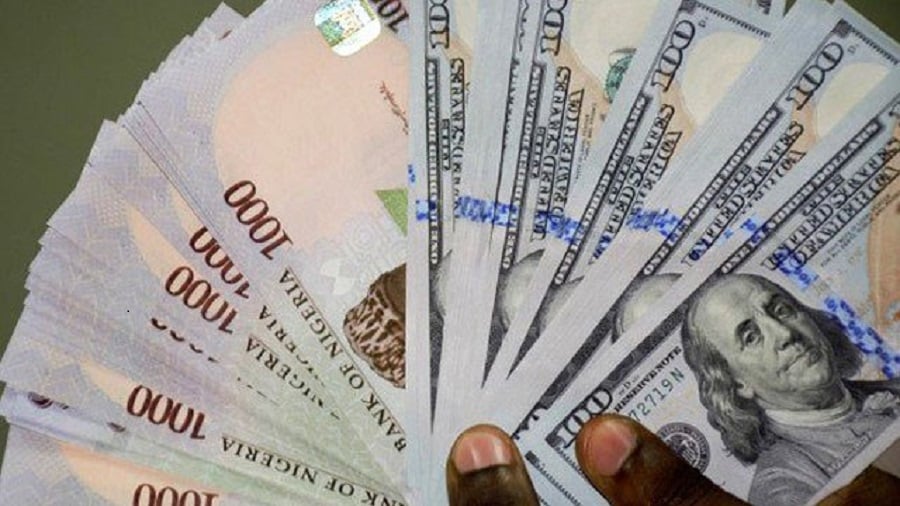
Black Market Rates
₦1382DOLLAR (USD)
₦1855POUND (GBP)
₦1545EURO (EUR)
1000 DOLLAR (CAD)
₦70 RAND (ZAR)
370DIRHAM (AED)
190YUAN (CNY)
₦100G.CEDI (GHS)
₦2350 CFA F.(XOF)
₦2250 CFA F.(XAF)
₦850 AUSSIE (AUD)
Official CBN Exchange Rates
DOLLAR (USD)₦1328.67
POUND (GBP)₦1758.36
EURO (EUR)₦1511.63
SWISS FRANC (CHF)₦1605.45
JAPANESE YEN (JPN)₦8.38
CFA FRANC (XOF)₦2.31
WEST AFRICAN UNIT OF ACCOUNT (WAUA)₦1808.03
CHINESE YUAN (CNY)₦197.92
SAUDI RIYAL (SAR)₦353.86
SOUTH AFRICAN RAND (ZAR)₦81.09
Business
Djibouti, Ethiopia and Dangote to build $660 million petroleum pipeline
In Kenya, Dangote and the government are due to break ground on a new 700,000-barrel-per-day crude oil refinery in Lamu next week.
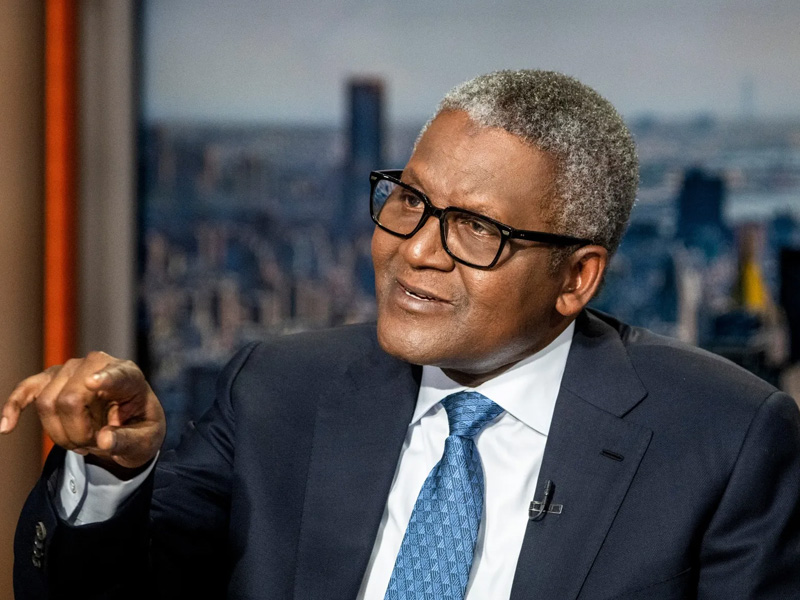
Ethiopia, Djibouti and Nigerian billionaire Aliko Dangote plan to build a $660 million refined petroleum pipeline that will connect Ethiopia and Djibouti, a spokesperson in Ethiopian Prime Minister Abiy Ahmed’s office said on Thursday.
The project will include a 120-km (75-mile) pipeline, as well as approximately 375,000 cubic metres of storage capacity at Damerjog in Djibouti and 800,000 cubic metres at Dewele in Ethiopia, the spokesperson told Reuters, adding it should become operational within 18 months.
Abiy said on his X account the project will be developed through a partnership between Ethiopian Investment Holdings and the Dangote Group, which separately is already building a $4 billion fertiliser pipeline and power plant, and a polypropylene packaging facility, in Ethiopia.
The project aims to reduce logistics costs and delays along the Ethiopia-Djibouti transport corridor, Abiy said.
Developers say the infrastructure will strengthen energy security and improve supply chain resilience for the two countries, he said.
Abiy is on a visit to Djibouti and made the announcement alongside its president, Ismail Omar Guelleh, and Dangote.
In Kenya, Dangote and the government are due to break ground on a new 700,000-barrel-per-day crude oil refinery in Lamu next week.


Congo military plane crash kills 13, including three officers

Manchester City Faces Expulsion For Breaching 114 EPL Financial Rules

TIME Names Moniepoint CTO Felix Ike Among 50 Global Executives of the Year

Tech Expert, Zuckerberg trains with UFC champions, Adesanya, Alexander

Organ Trafficking: Ekweremadu bags 10 years in UK prison

SAINT OBI: Between his marriage and his death
-

 News3 days ago
South African kills Nigerian bar worker
-

 International3 days ago
At UN, 80 countries demand reopening of Hormuz, condemn Iran, Houthi attacks
-

 Business2 days ago
Naira Exchange Rates, Friday September 25
-
 Business3 days ago
Djibouti, Ethiopia and Dangote to build $660 million petroleum pipeline
-
 Business2 days ago
TIME Names Moniepoint CTO Felix Ike Among 50 Global Executives of the Year
-
 Sports2 days ago
Manchester City Faces Expulsion For Breaching 114 EPL Financial Rules
-
 International2 days ago
Congo military plane crash kills 13, including three officers