
Business
Nigeria First Policy: Customs Championing Made-in-Nigeria Vehicles Procurements
In terms of aesthetics, I am satisfied with what I see here. In terms of functionality, we have been assured by the manufacturers that the vehicles are quite efficient.”


The Comptroller-General of Customs (CGC), Adewale Adeniyi has assured members of the Nigeria Automotive Manufacturers Association (NAMA) that the Service would champion the procurements of locally assembled vehicles from the auto manufacturers inline with the government’s Nigeria First Policy Directive.
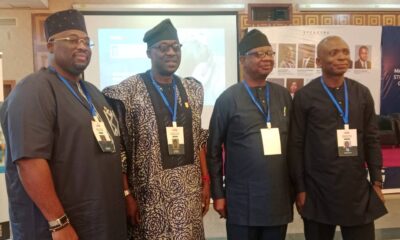
CGC Adeniyi gave the assurance when he inspected vehicles produced by members of the Nigeria Automotive Manufacturers Association (NAMA) at the Service’s headquarters, Maitama, Abuja.
After the inspection, the CGC commended the association for turning up in full strength and expressed satisfaction with the quality of the vehicles.
He remarked, “In terms of aesthetics, I am satisfied with what I see here. In terms of functionality, we have been assured by the manufacturers that the vehicles are quite efficient.”
“What gives me joy is that in all the vehicles I have seen today, there is an imprint of Nigeria, which shows that they are fully assembled here. It gives me joy that Mr President’s policy is on the right course,” he added.
He further praised President Bola Tinubu’s Renewed Hope Nigeria First policy initiative in the automobile industry.
He pledged that the Nigeria Customs Service would continue to patronise and support the sector for the growth and well-being of the nation’s industrial economy.
In response, Ilekuba Anslem Chairman, Chief Executive Officer of Cedric Masters Group, commended the CGC for his unwavering support for the automobile industry.
Also, Oluwatobi Ajayi, Chairman and Chief Executive Officer of Nord Automobile Limited, praised the CGC.
“Even before this policy was announced, you had been championing made-in-Nigeria vehicles.
With Mr President’s announcement, we are confident that you will be the first CEO of a government parastatal to fully champion this policy,” he said.
He assured the CGC that the company would not abandon its vehicles after sales.Similarly, Jonas Ojukwu, a Director at Innoson Vehicle Manufacturing Company Limited (IVM), assured the Nigeria Customs Service of the company’s commitment to delivering the best to the Service.
Other stakeholders who spoke at the event included representatives from Mikano Motors Nigeria and Stallion Motors Nigeria.




Business
Bank of Ghana launches new Cedi notes
The aim is to make cash transactions more convenient and strengthen confidence in the cedi.
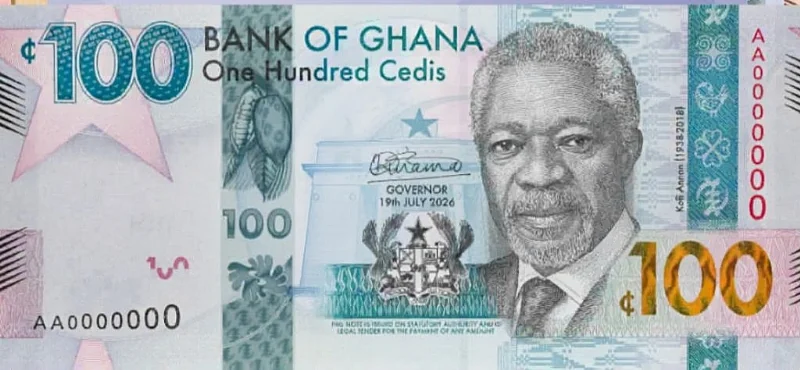
The Bank of Ghana has launched the Ghana Cedi Heritage Series, a new set of smaller banknotes with enhanced security features, as part of efforts to modernise its currency.
The notes will enter circulation on December 1, 2026, replacing the existing designs.
The central bank officially launched the series on Thursday, November 12, 2026.
It said the redesigned notes have improved durability, more portable sizes and stronger security features.
The aim is to make cash transactions more convenient and strengthen confidence in the cedi.
A close examination of the new Heritage Series shows that only Dr Nkrumah retained a place on the new banknotes, while the other five members are absent.
The new series features other prominent Ghanaian personalities whose contributions span politics, religion, education, public service, culture and international diplomacy.
The Heritage Series, however, adopts an individual-portrait approach, recognising personalities whose contributions helped shape Ghana’s political, educational, cultural and diplomatic history.
Here are prominent Ghanaian personalities featured on new Ghana cedi notes:
On the GH¢1 note is Agnes Oforiwa Tagoe-Quarcoopome, who is said to be the first Makola woman to open a bank account with the then Standard Bank of West Africa (now Standard Chartered Bank).
Cardinal Peter Porekuu Dery, a revered Catholic priest from Zimuopare (Ko), near Nandom in the Upper West Region of Ghana back in the 1950s, features on the GH¢2 denomination.
James Emmanuel Kwegyir-Aggrey is featured on the GH¢5 note, with Justice Annie Jiagge, the first woman in Ghana and the Commonwealth of Nations to become a judge, appearing on the GH¢10 banknote.
The GH¢20 note features Dr Ephraim Amu, the composer of the Twi version of the Ghana national anthem, Yɛn Ara Asaase Ni, while Theodosia Salome Okoh, the designer of the Ghana flag, is on the GH¢50 denomination.
Former United Nations Secretary-General Kofi Annan features on the GH¢100 note, while Ghana’s first President, Dr Kwame Nkrumah, appears on the GH¢200 banknote.
Dr Nkrumah’s appearance on the GH¢200 note represents a change from the existing series, where his portrait appeared on the ceremonial GH¢2 denomination as part of the collective image of the Big Six.
The Big Six became prominent figures in Ghana’s independence struggle following their arrest by the British colonial authorities in 1948 after disturbances in Accra.
Business
Naira Exchange Rates Friday,13 Nov 2026
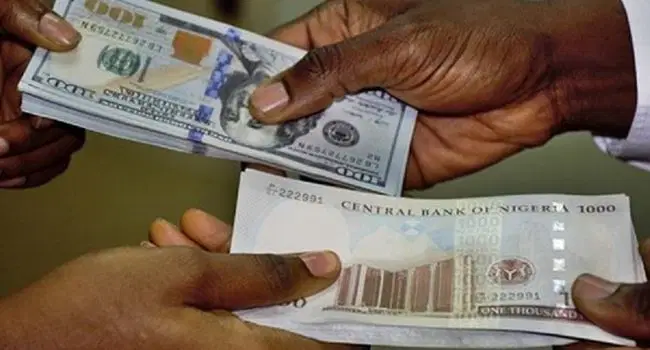
The black market (parallel market) exchange rates is the most searched forex query in Nigeria.
BLACK MARKET RATES
₦1435 DOLLAR (USD)
₦1870 POUND (GBP)
₦1540 EURO (EUR)
₦950 CANADIAN DOLLAR (CAD)
₦70 SOUTH AFRICAN RAND (ZAR)
₦350 UAE DIRHAM (AED)
₦100 GHANAIAN CEDI (GHS)
₦190 CHINESE YUAN (CNY)
₦2240 WEST AFRICAN CFA F.(XOF)
₦2180 CENTRAL AFRICAN CFA F.(XAF)
₦820 AUSTRALIAN DOLLAR (AUD)
By Ochefa
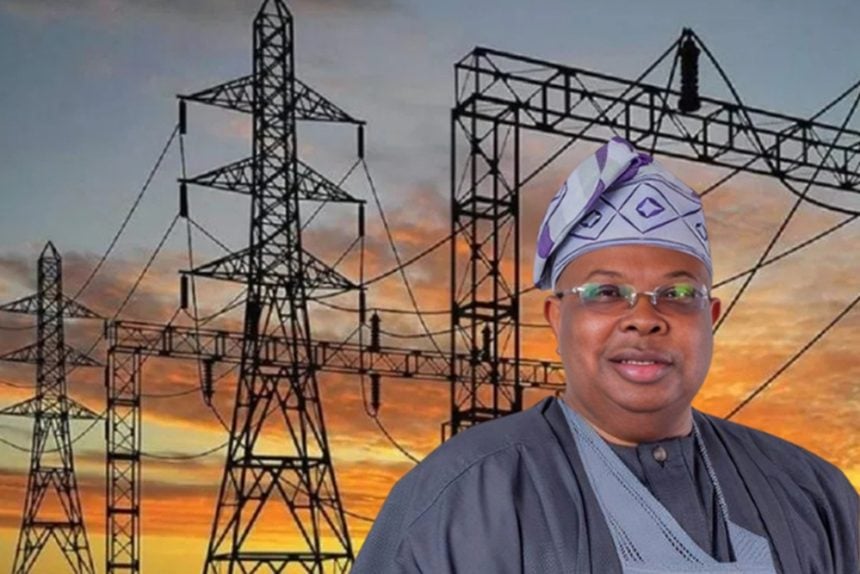
•Minister of Power Chief Olasunkanmi Joseph Tegbe
The Federal Government past and present has spent nearly two decades pursuing essentially the same 10,000MW electricity benchmark.
This is understandable given that electricity remains one of the biggest obstacles to industrial development in Nigeria.
That’s why in the ongoing 2027 election campaigns , the top three parties – APC, ADC, and the NDC recognise the importance of electricity to the economy, although their specific commitments differ.
APC: Plans to scale electricity generation towards 10,000MW, strengthen transmission and distribution, and expand clean energy access.
ADC: Emphasises energy-sector reforms and regional connectivity to support production and industrialisation.
NDC: Proposes expanding power generation and distribution. The NDC campaign blueprint specifically identifies an additional 10,000MW of power within four years as a target.
However, checks by Ohibaba.com shows that successive administrations have set the 10,000MW as a goal but achieving the target has remained elusive.
Here are the records:
Nigeria’s 10,000-megawatt (MW) electricity generation target dates back to the electricity expansion programme of the Olusegun Obasanjo administration (1999–2007), although successive governments adopted, modified and repeatedly renewed the target.
1. Obasanjo administration:
The original 10,000MW ambition (2005–2008).The roots of the 10,000MW target can be traced to the Federal Government’s efforts to expand electricity generation through the National Integrated Power Projects (NIPP).
Following the failure of private investment to deliver sufficient electricity, the government began directly funding new power plants from 2002.
In 2005, construction commenced on several NIPP power stations, including:
Alaoji
Geregu
Omotosho
Olorunsogo
Ihovbor
Egbema
Gbarain.
The government’s ambition was to push installed generation capacity beyond 10,000MW by the end of 2008.
An earlier policy document, however, had already established a more specific target of achieving 10,000MW of operable generation capacity by the end of 2011.
2. Yar’Adua administration: 10,000MW by 2011
The Umaru Musa Yar’Adua administration inherited the NIPP projects and retained the 10,000MW ambition.
A 2009 African Development Bank report on Nigeria’s Economic and Power Sector Reform Programme confirmed that the Federal Government expected to achieve 10,000MW of operable generation capacity by the end of 2011.
The strategy involved rehabilitating existing power stations and completing new plants under NIPP.
3. Jonathan administration: Target raised to 16,000MW
President Goodluck Jonathan’s Transformation Agenda (2011–2015) went beyond the 10,000MW benchmark.
The administration set the following targets:5,000MW by 2011.6,000MW by 2012.16,000MW by 2015.
However, by December 2012, actual generation had reached approximately 4,500MW, falling short of the 10,000MW target for that period.
4. Buhari administration: 10,000MW distributable electricityIn March 2016, President Muhammadu Buhari publicly announced a target of delivering 10,000MW of distributable electricity within three years.
He also promised to add 2,000MW to the national grid in 2016.
This was against the backdrop of the APC’s 2015 campaign manifesto, which promised to expand electricity generation and distribution to 40,000MW within four to eight years.
The distinction is important: Buhari’s 10,000MW promise referred to distributable power, not merely installed generation capacity.
5. Subsequent administrations.
The 10,000MW ambition continued under subsequent governments.
In 2021, Vice-President Yemi Osinbajo said investments exceeding $3 billion in generation, transmission and distribution infrastructure would put Nigeria on the path to achieving 10GW of electricity.
The National Development Plan 2021–2025 also incorporated a 10,000MW electricity target.
The historical significance: Why has 10,000MW remained elusive?
The recurring 10,000MW target exposes a fundamental problem with Nigeria’s electricity policy: successive administrations have announced ambitious generation targets without resolving the structural constraints affecting the entire electricity value chain.
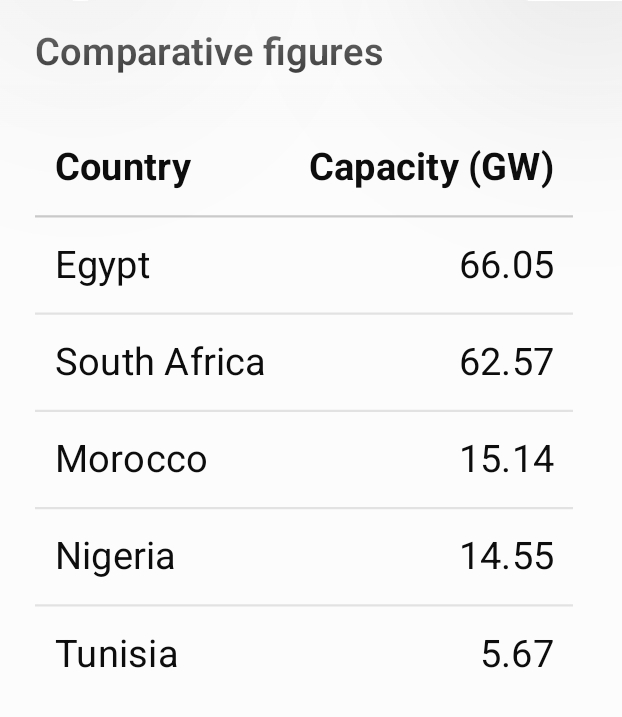
The bigger question is how did countries like Egypt, South Africa, and Morocco attained energy security? Nigerian leaders can borrow a leaf from their strategy.
These include:
- 1. Gas supply constraints: Inadequate gas supply to thermal power stations.
2. Transmission limitations: Inability of the national grid to evacuate all available generation.
3.Distribution bottlenecks: Insufficient distribution infrastructure to deliver electricity to consumers.
4. Funding challenges: Persistent liquidity problems across the electricity market.
5 . Infrastructure deficits: Poor maintenance and inadequate investment in power infrastructure.
According to the Nigerian Electricity Regulatory Commission (NERC), as of October 2026, Nigeria’s installed electricity generation capacity is approximately 13,625 MW, but the amount of electricity actually available for generation is significantly lower.
What does this mean?
Nigeria has a significant gap between installed capacity and actual electricity generation.13,625 MW:
What the installed generating infrastructure can theoretically produce.4,744 MW:
What was available for dispatch in October.4,047 MW: Average electricity actually generated per hour.
This means Nigeria generated only about 30% of its installed generation capacity on average during October 2026.
Major challenge
1.The gap is associated with:Inadequate natural gas supply to thermal power plants.
2. Ageing generation infrastructure.
3.Poor maintenance and equipment failures.
4. Transmission infrastructure limitations.
5. Financial and operational challenges in the electricity market.
The big question is how did African countries like Egypt, South Africa, and Morocco attained energy security? Nigerian leaders can borrow a leaf from their strategy.
Electricity Generation Capacity of Five African Countries – 2026
Source: Afreximbank Power Industry Report 2022.


ADC-PCC Urges Tinubu To Restrain APC governors and party officials against campaigns violence

Tinubu Condemns Attack on Opposition Campaigners
APC is ‘merchant of violence’ behind attacks on opposition, ADC-PCC says

BREAKING: Lagos Govt Declares Today, Thursday Work-Free to Mark 2026 Ìṣẹ̀ṣe Day

Tech Expert, Zuckerberg trains with UFC champions, Adesanya, Alexander

Organ Trafficking: Ekweremadu bags 10 years in UK prison
-
 News2 days ago
Seven UNN Pharmacy Graduates Die After Private Sign-Out Ceremony (Photos)
-
 Business2 days ago
Naira Exchange Rates Friday,13 Nov 2026
-
News2 days ago
UNN Mourns 4 Students Dead After Party
-
 Politics2 days ago
BREAKING: Party Supporters Fight Back as Thugs Break into NDC Townhall in Lagos
-
 International2 days ago
Nvidia CEO Jensen Huang Resigns; CFO Colette Kress Named Interim Leader
-
 Politics2 days ago
UPDATE: NDC Condemns Lagos Attack, Vows Not to Be Intimidated
-

 Sports2 days ago
Ronaldo launches TV football drama series titled Day 1s
-
 Politics1 day ago
APC is ‘merchant of violence’ behind attacks on opposition, ADC-PCC says