
News
Oil Exploration: Daniel Congratulates Gov. Abiodun, Ogun people


The media office of His Excellency, The Senator, Otunba Engr. Gbenga Daniel, celebrates with His Excellency, Governor Dapo Abiodun, and indeed all Ogun State citizens over the declaration of the state as a frontier state for oil exploration by Nigerian National Petroleum Corporation Limited (NNPCL).
The recognition of Ogun State oil production status by NNPCL is especially heart-warming as it signposts the fulfilment of the vision kickstarted by the establishment of the Gateway Oil and Gas Development Limited in 2003 by the Daniel Administration, with immense support from former President Olusegun Obasanjo.
In pushing for the recognition of Ogun State as an oil producing state, the Daniel Administration undertook three-dimensional seismic study of oil and other minerals deposits in the state.
The seismic survey covered a vast stretch of the water body in Ode Omi in Ogun Waterside Local Government, all through the Laogo Island, Imobi, Itasin riverine areas in the Ijebu East Local Government and Tongeji Island in Ipokia Local Government Area.
The study then sparked a $50 million investment pledge by PGS Exploration Nigeria Limited in April, 2004. Also, a large deposit of Phosphate was also discovered around Olusosun in Ifo Local Government area which necessitated the siting of the Gateway Fertilizer Company at Olusosun. The Ogun State Agro-Cargo Airport in Iperu/Ilishan and the Kajola FTZ in Ifo were conceived to provide Transport logistics hubs to support all these initiatives.
The arguments of the Ogun State Government then was that it is the only littoral state on the Benin Trough (that is now referred to as Dahomey Basin) that was yet to be recognized as an Oil Producing State. Several strategies were deployed to drawing the attention of the Federal Government to Ogun State with a view to establishing it as an Oil Producing State. Part of the strategies included the hosting of then-NNPC Group Managing Director, Engr. Funsho Kupolokun and other top officials of the oil corporation at a colourful event held at the Valley View Auditorium of the Government House, Oke Igbein, Abeokuta, leveraging the event to get Ogun listed as an oil producing state.
In 2007, a formal Memorandum of Understanding (MoU) on a multibillion-dollar Olokola Liquefied Natural Gas (OK LNG) project between Ogun and Ondo State governments (joint owners of the Olokola Free Trade Zone) and the Nigerian National Petroleum Corporation, as it then was; Chevron, Shell and British Gas (who were the promoters of the project), was signed. The Olokola Free Trade Zone was also billed to host petro-allied establishments such as the Dangote Refinery (now relocated to Lagos). Those in attendance at the signing of the MoU include the Group Managing Director of NNPC, Engr. Funso Kupolokun who also served as the Chairman of the Project’s Steering Committee; the Managing Director of the Nigeria Export Processing Zone Authority (NEPZA), Mr. Shina Agboluaje and a host of others.
Otunba Gbenga Daniel, as the Governor of Ogun State then, at the event, described Ogun State as ” _a veritable factory of skilled manpower that would be readily available for the different players in the FTZ. With ten higher institutions, our state is regularly turning out a considerable number of available manpower that are waiting to be trained further and engaged for productive activities”_ . In order to leverage this skilled manpower base, the administration of Otunba Daniel established the Gateway Industrial & Petro-Gas Institute (GIPI) in 2006, to train technical and professional personnel to support the maintenance of the proposed refinery, petrochemical and allied industries with the aim of creating substantial employment opportunities for the youth and citizens of Ogun State. It is worthy to note that some students of the Gateway Industrial & Petro-Gas Institute then got sponsorship to study in Qatar for the needed skills on Underwater Welding in the oil & gas sector. Furthermore, four ICT Polytechnics (Ijebu Igbo, Igbesa, Saapade and Itori) were also established to create major technical and manpower feed for all three specialised Free Trade Zones (Ogun/Guangdong in Igbesa, Olokola and Kajola) for which Ogun State had obtained licenses to operate. As of 2011 over 60 Chinese companies had started operations at the Ogun/Guangdong Free Trade Zone and in fulfilment of the Agreement duly signed with the Ogun State government, sponsored no fewer than 10 citizens of the state on full scholarships to various technical universities and institutions in China.
We wish to thank Governor Abiodun for seeing through this great vision for which he was first appointed by Governor Daniel in 2009 to succeed Otunba Alex Onabanjo, as Chairman, Gateway Oil and Gas Committee alongside other eminent individuals such as Chief Bode Mustapha (Vice Chairman), Mr. Femi Babalola (Secretary), Mr Idowu Togun, Mr. Wemmy Osude, Mr. Femi Mafe, Late Chief Engr. Femi Tetede.
May we also seek this opportunity to appeal to Governor Abiodun to kindly revisit the situation of GIPI and support its revitalisation in order to take advantage of these underutilized developments.
We also wish to draw the attention of the governor to pending construction of the Makun Omi Bridge via Efire, which was planned by the OGD administration but could not be realised due to the turbulent politics of that time.
We are certain that with the right political will and sincerity of purpose, Ogun State is on its way to economic prosperity as contained in the 25-year development master plan emplaced by the Daniel administration.








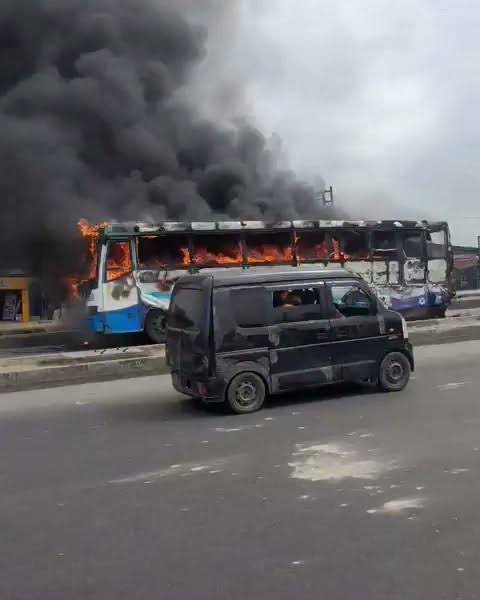
An angry mob has set a Bus Rapid Transit (BRT) bus on fire after it reportedly crushed a commercial motorcyclist to death at Ogolonto Bus Stop along Ikorodu Road in Lagos State.
The incident occurred on Friday, October 16, 2026. Eyewitness accounts and social media reports indicate that the motorcyclist was riding alone along the restricted BRT lane when the collision happened. He died at the scene.
Enraged residents and youths then attacked the bus driver and set the vehicle ablaze. Police officers and officials of the Lagos Neighbourhood Safety Corps (LNSC), who were nearby, intervened promptly and rescued the driver unharmed.
The identity of the deceased motorcyclist and the exact circumstances of the crash had not been officially confirmed at the time of filing this report. It was also unclear whether any arrests had been made in connection with the burning of the bus.
News
ARISE News Wins Seven Honours At Nigerian Broadcasters Merit Awards
The awards recognised the network’s achievements in television journalism and programming, with ARISE News winning the Best TV Channel (Viewer’s Choice) category.


• ARISE News Anchor and host of What’s Trending Ojy Okpe was named Best Newscaster (TV – Female)
ARISE News has emerged as one of the major winners at the just ended Nigerian Broadcasters Merit Awards (NBMA).
ARISE News won seven honours across television broadcasting, news reporting, presentation and production during the ceremony.
The awards recognised the network’s achievements in television journalism and programming, with ARISE News winning the Best TV Channel (Viewer’s Choice) category.
The network’s flagship breakfast programme, The Morning Show, also won the Best TV Talk Show award, further strengthening its recognition in television broadcasting.
ARISE News Anchor and host of What’s Trending Ojy Okpe was named Best Newscaster (TV – Female).
Rufai Oseni was named Nigerian Broadcaster of the Year (Male), while Vimbai Mutinhiri-Ekpeyong received the Nigerian Broadcaster of the Year (Female) award.
The recognition extended to the network’s newsroom, with Ovieteme George winning Best TV News Reporter (Male) for his contributions to television news reporting.
Behind the camera, Sam Adeyemi received the Best Camera Operator/Cinematographer award, recognising his work in television production and visual storytelling.
News
Meta removes 3.7 million accounts in West Africa scam crackdown
The joint operation led to 28 arrests, identified more than 30 suspected scam centres and rescued 117 people allegedly trafficked and forced to work in scam compounds in Ghana.
Meta, the parent company of Facebook and Instagram, has removed more than 3.7 million Facebook and Instagram accounts, pages and groups linked to suspected scam networks operating in West Africa.
The joint operation led to 28 arrests, identified more than 30 suspected scam centres and rescued 117 people allegedly trafficked and forced to work in scam compounds in Ghana.
The company announced the crackdown in a statement on Tuesday, October 13, 2026. It involved 14 technology companies and law enforcement agencies from 10 countries.
The United Kingdom’s National Crime Agency coordinated the operation with the US Department of Justice, the Federal Bureau of Investigation and other agencies. Nigerian authorities were involved.
Other countries included Ghana, Australia, Canada, New Zealand and India.Tech companies that took part included Google, Microsoft, OpenAI, Coinbase, Starlink and Adobe.
Meta said the partnership let participants share intelligence across digital platforms, countries and financial systems to identify criminal networks.


JUST IN: Mob Sets BRT Bus Ablaze After Motorcyclist’s Death in Lagos

BREAKING: DSS Arrests Fugitive Maina Son, Hands Him to EFCC

BREAKING: 5 Arrested Over Imo NYSC Abduction

BREAKING: Lagos Govt Declares Today, Thursday Work-Free to Mark 2026 Ìṣẹ̀ṣe Day

Tech Expert, Zuckerberg trains with UFC champions, Adesanya, Alexander

Organ Trafficking: Ekweremadu bags 10 years in UK prison
-
 Business2 days ago
Naira Exchange Rates For Thursday, October 15
-
 Sports2 days ago
CAF Increases Annual Funding for Member Federations to $700,000
-
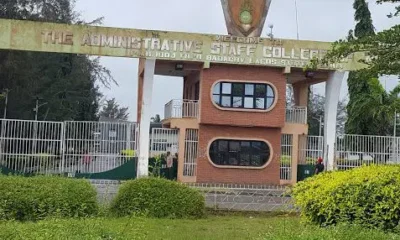
 News2 days ago
ASCON To Be Rebranded “National School Of Government”
-
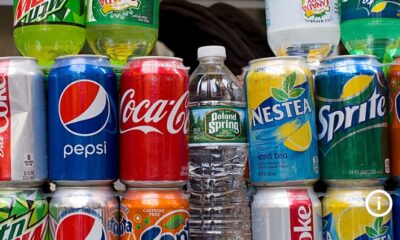
 Business2 days ago
Germany plans tax on sugary drinks
-

 News3 days ago
Sanwo-Olu Appoints Olatunbosun Ogunbanwo, 5 Others as Perm Secs
-
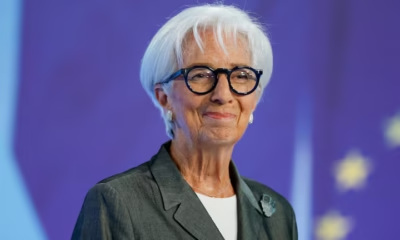
 Business2 days ago
WEF could appoint Lagarde as its next chair, sources say
-
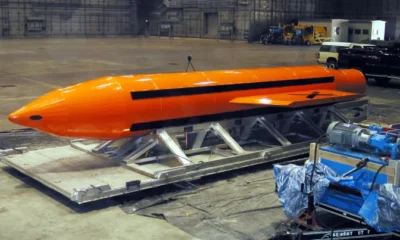
 International2 days ago
“Mother of all bombs,” Trump Plans To Hit Iran
-

 Business1 day ago
Naira Exchange Rates Friday, October 16