
Opinions
BREAKING: Lagos Govt Declares Today, Thursday Work-Free to Mark 2026 Ìṣẹ̀ṣe Day


The Lagos State Government has declared Thursday, August 20, 2026, a work-free day for public servants, political appointees and others to mark this year’s Ìṣẹ̀ṣe Day celebration.
The announcement was made by the Special Adviser to the Governor on Tourism, Arts and Culture, Idris Aregbe, in a statement on Wednesday. He described Ìṣẹ̀ṣe as “not a relic” but “a living expression of our traditions and a celebration of Yoruba spirituality as an important part of Nigeria’s cultural and religious landscape.”
Authorities expect the event to draw more than three million residents and traditional worshippers in what is billed as one of the largest gatherings of its kind. Celebrations will feature prayers, rituals, processions, drumming and cultural displays dedicated to the Òrìṣà, coordinated by the Association of African Traditional Religion Nigeria and Overseas.
Ìṣẹ̀ṣe Day has been observed as a work-free day in Lagos since 2023, following a request by the Lagos State Council of Obas and Chiefs. Governor Babajide Sanwo-Olu has maintained the practice annually as part of the administration’s commitment to indigenous values and religious inclusiveness under the THEMES+ Agenda.
Normal government activities are expected to resume on Friday, August 21. Residents have been urged to celebrate peacefully and respectfully.
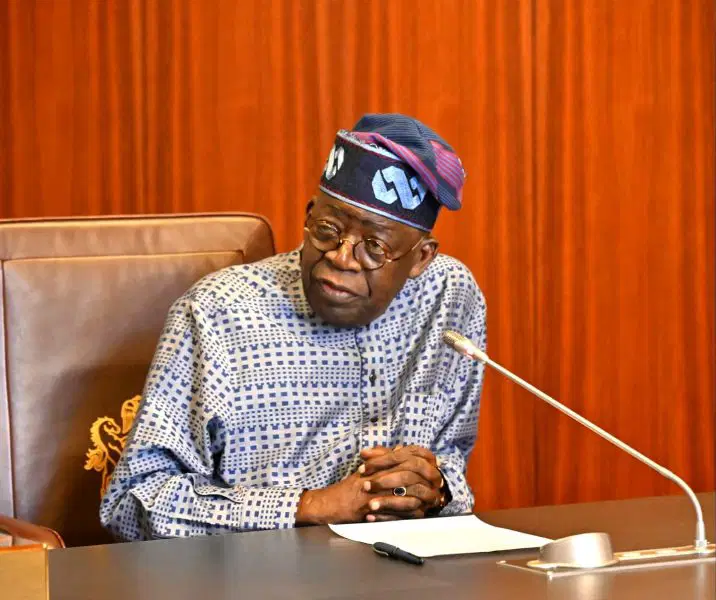
The African Democratic Congress Presidential Campaign Council (ADC-PCC) has described as an insult to Nigerians the statement credited to President Bola Ahmed Tinubu, through his Special Adviser on Information and Strategy, Bayo Onanuga, declaring that “The Question Is What We Build, Not How Much We Borrow.”
In a statement issued in Abuja by its Director of Media and Publicity, Kola Ologbondiyan, the ADC-PCC challenged President Tinubu to identify what his administration has actually built with the mountain of loans accumulated since assuming office in 2023. The council insisted that Nigerians have seen little or no tangible returns on the country’s growing debt burden.
Ologbondiyan said it was particularly disturbing that Mr Onanuga would attempt to dress the President in borrowed garments by speaking about infrastructure and development when the administration has failed to demonstrate commensurate achievements despite unprecedented borrowing.
He alleged that the only visible project associated with the administration’s concern for electricity is a solar farm installed to guarantee power supply within the comfort of the Presidential Villa, while millions of Nigerians continue to grapple with unreliable electricity.
“For three and a half wasted years, the Tinubu government has borrowed without restraint and built nothing. No value, no legacy, no impact,” Ologbondiyan stated.
“Except for projects inherited from the late President Muhammadu Buhari, many of the projects being advertised by the Tinubu administration are nothing but audio projects. They exist only on paper, as conceptual designs or as announcements on newspaper pages and television screens. Under Tinubu, virtually every project exists in a press statement.
“Where is the Lagos-Calabar Coastal Highway? Audio. Where is the Sokoto-Badagry Superhighway? Audio. Where is the Trans-Sahara Superhighway? Audio. Where are the promised electricity grid upgrades? All propaganda, no commensurate progress, just media hype from Bayo Onanuga and his team.
“Even the Abuja-Kaduna-Kano Highway, awarded more than eight years ago, remains a source of concern to motorists. Its prolonged construction and delays tell the story of APC governance.
“Mr President must wake up and confront the reality facing Nigerians, if there is still time left between now and January 16. Citizens are hungry and enduring excruciating hardship. People are dying from hunger, insecurity and deprivation, while the government remains preoccupied with propaganda and self-congratulatory statements. These are the real signposts of what the Tinubu administration has built in almost four years.
“Today, ministries are barely functioning, agencies are struggling, and critical directorates are failing to deliver. Nigeria is practically comatose.
“The Tinubu Presidency came into power without a convincing blueprint or workable ideas and, after almost four years, has offered Nigerians little beyond failure, hardship, poverty and insecurity.
“If borrowing is truly for development, let President Tinubu show Nigerians one tangible project his administration has delivered with its trillions of naira in loans, beyond the solar farm in the Presidential Villa. The only thing this administration has successfully built is hardship.
“We appeal to international donors, development partners and financial institutions to exercise greater scrutiny and insist on accountability, transparency and prudence before extending further loans to Nigeria.
“Borrowing is not inherently wrong when the benefits translate into improved living conditions for citizens. What is unacceptable is a situation in which the country continues to accumulate debts without corresponding benefits for the people.
“Nigerians must not be compelled to continue financing the luxury, profligacy and privileged lifestyle of those in power while ordinary citizens wallow in poverty. Future generations should not be burdened with debts incurred without demonstrable benefits to them.
“The National Assembly must rise to its constitutional responsibility and save the country from being mortgaged through indiscriminate borrowings. It must stop acting as a rubber stamp for every loan request and defend the economic future of Nigeria.
“History will not forgive the 10th National Assembly if it stands by while the country is plunged deeper into a cycle of unsustainable indebtedness.”
Opinions
Human Capital Africa Statement For International Day of the Girl Child 2026
UNICEFs 2026 estimates show that about one in five girls worldwide is married before 18.

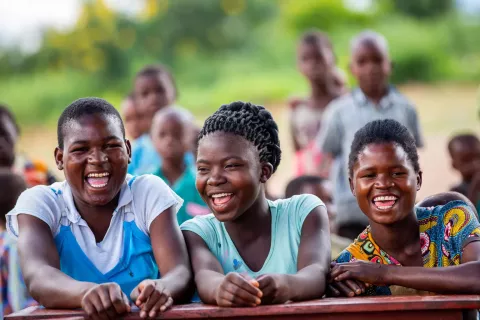
Image credit : UN
By Obiageli ObyEzekwesili
A girl who learns is a girl who is not a bride.
Today the world is asked to end child marriage and invest in girls rights.
I join that call wearing three hats: as a member of the advisory council behind Columbia University’s report Accelerating Efforts to End Child Marriage; as Civil Society Representative on the Steering Committee of the African Unions Decade of Accelerated Action for the Transformation of Education and Skills Development in Africa (20252034); and as the leader of Human Capital Africa, an organisation that has spent years arguing that Africas human capital crisis begins in the early-grade classroom.
The numbers are clear.
UNICEFs 2026 estimates show that about one in five girls worldwide is married before 18.
That adds up to roughly 650 million women and girls alive today who were married as children.
More than 12 million girls are still married each year, about one every three seconds, and sub-Saharan Africa has the highest prevalence at 31 per cent
.In Nigeria, 23.6 million women and girls were married before 18, the largest number in West and Central Africa.
In parts of the North the situation is a national emergency: in Jigawa, 78 per cent of women were first married before 18, and 63 per cent of women left school to marry.
The cost of inaction is high. Our Columbia report includes new analysis by the Center for Global Development.
It estimates losses of up to $175 billion a year, or almost $2.5 trillion by 2040, from lost productivity and higher health risks caused by child marriage.
The report also warns that aid cuts, weakening global commitment to womens rights, and rising conflict could slow or reverse progress.
Child marriage is not a side issue in development. It drains a nations human capital directly.Progress is possible.
An estimated 68 million child marriages have been averted over the past 25 years, through girls education, legal reform and social protection.
In parts of the North the situation is a national emergency: in Jigawa, 78 per cent of women were first married before 18, and 63 per cent of women left school to marry.
The evidence on what works is strong: Each year of secondary education lowers a girls chance of marrying before 18 by five percentage points or more.
In Niger, when the government removed the direct costs of middle school for rural girls, each additional year in secondary school was associated with a 19 percentage point lower probability of marriage.
If every African girl completed secondary education, child marriage could be almost eliminated.
Where HCAs mission and this campaign meet.
A girl cannot stay in secondary school if she never learned to read.
Today, 89 per cent of children in sub-Saharan Africa are in learning poverty, unable to read and understand a simple text by age ten.
A girl who cannot read by ten falls behind, then drops out.
Once she is out of school, she is at the greatest risk of marriage. That is why we say schooling is not learning.
Foundational literacy and numeracy are the first and cheapest protection a girl has.
At the Columbia launch I said that community programmes and advocacy are not enough on their own. Governments must lead.
On this Day of the Girl, Human Capital Africa calls on African governments to:
1. Make foundational learning a girl-protection policy. Every girl should be reading with comprehension by age ten, using proven methods such as structured pedagogy and Teaching at the Right Level.
2. Guarantee the move into secondary school. Remove fees, uniform and transport costs for girls, especially in rural communities with high rates of child marriage.
3. Enforce 18 as the minimum age of marriage in law and in practice, in every state and every community, with traditional and religious leaders as partners.
4. Fund this domestically. As foreign aid shrinks, African budgets and African philanthropy must take over.
5. Measure and publish.
Track girls learning, their transition to secondary school, and child marriage rates in national accountability systems.
The AU Decade of Education gives Africa ten years and a continental mandate.
As a member of its Steering Committee, I will press for girlslearning and retention to be at the centre of how the Decades success is measured.
A Decade that does not end child marriage will not have transformed African education.
The Columbia report sets a realistic target: cutting child marriage prevalence from one in five to one in seven within five years.
Africa can lead the way to that target, but only if we treat every girls classroom as the place where her childhood is protected.
Any girl-child should be a student, not a bride. She should learn, then lead.
• Obiageli ObyEzekwesiliFounder, Human Capital Africa | Former Nigeria’s Minister of Education and Vice President for Africa Region, World Bank.
Opinions
The Girl Who Was Almost Married at 10 Is Taking Her Story to the United Nations
On September 4 this week…Sierra Leone’s First Lady is expected to stand before the United Nations General Assembly with a proposal aimed at protecting millions of girls from the same fate.

• Sierra Leone’s First Lady, Fatima Maada Bio
By Ahmed Sahid Nasralla (De Monk)
AT about 10 years old, Fatima Maada Bio already knew who she was expected to marry.
She was a child, but an adult decision had been made about the direction her life should take. Somehow, she escaped that future.
On September 4 this week, many, many years after that little girl could have been sent into a marriage she did not choose, Sierra Leone’s First Lady is expected to stand before the United Nations General Assembly with a proposal aimed at protecting millions of girls from the same fate.
She is expected to present a draft resolution seeking the proclamation of November 27 as an ‘International Day for the Elimination of Child, Early and Forced Marriage’. The proposal is new.
The date is not yet an official UN observance. It is a call for the international community to give the issue a permanent place on its calendar and, with it, sustained attention and action.
There is something deeply personal about that journey.
According to briefing material from the Office of the First Lady of Sierra Leone, she knew at around the age of 10 who she was expected to marry and narrowly escaped child marriage.
That experience did not become a footnote in her life. It became part of the reason she has spent years speaking about the rights and protection of women and girls.
The First Lady’s public advocacy has taken her from communities in Sierra Leone to some of the world’s most important international forums.
Her flagship ‘Hands Off Our Girls’ campaign has focused on ending rape, early marriage and violence against women and girls, while her work has also extended into girls’ education, women’s health and other issues affecting vulnerable communities.
However, her return to the United Nations this time carries a particularly personal weight.
She is taking a subject that could have defined her own childhood and asking the international community to give it greater and lasting attention.
It is not her first attempt to put child protection on the UN agenda.
In 2022, she spearheaded the effort that led the General Assembly to proclaim November 18 as the ‘World Day for the Prevention of and Healing from Child Sexual Exploitation, Abuse and Violence’.
“She is expected to present a draft resolution seeking the proclamation of November 27 as an ‘International Day for the Elimination of Child, Early and Forced Marriage’. The proposal is new.”
UNAIDS describes her as having championed the adoption of that first-ever World Day.
The United Nations has also continued to strengthen its attention to child, early and forced marriage.
In December 2024, the General Assembly adopted a resolution addressing the issue.
Sierra Leone has been moving on the national front too. The country enacted legislation in 2024 prohibiting marriage involving anyone under 18.
So when Fatima Maada Bio walks into the General Assembly this week, she will be carrying a story that has travelled through several stages: from the experience of a young girl, to a national campaign, to legislation, and now to another attempt to secure a place for the issue on the global calendar.
The numbers behind the issue are sobering.
The United Nations and other international organisations have consistently described child marriage as a major barrier to girls’ education, health, economic opportunity and personal autonomy.
Behind every statistic, though, there is a girl whose childhood is being shortened.
There is a school she may leave, friends she may lose, choices she may never get to make, and a future that may be decided for her before she is old enough to understand what that future means. That is why the personal history of the woman making this proposal is important.
Fatima Maada Bio knows what it means for adults to imagine a future for a girl before she has had the opportunity to imagine one for herself. She also knows what it means to get away.
That gives her advocacy a particular human quality. The issue is something she encountered as a child and has carried into her public life as an adult.
The fight has also taken her beyond child marriage. Last week, OncoDaily named her among its 100 Influential Women in Oncology for 2026, recognising her work in women’s health and cancer prevention.
The publication highlighted her partnership with the Merck Foundation, which has supported specialist medical training in Sierra Leone, including scholarships that contributed to the development of the country’s cancer-care workforce.
It also noted her advocacy for breast cancer awareness and early detection and her participation in discussions around the WHO Global Breast Cancer Initiative.
It is another part of a public role that has increasingly stretched beyond the traditional image of a First Lady.
Then there is child protection, and women’s health.
There is girls’ education, and the wider question of how countries protect women and children who often have the least power over decisions affecting their lives.
The international recognition in oncology is significant for another reason.
It shows that her advocacy is being noticed in fields far removed from the political spotlight in which First Ladies are usually seen.
Nonetheless, the child-marriage campaign remains different. It brings her public work unusually close to her own childhood.
Sierra Leone, as a country, has its own reason to pay attention to what happens in New York this week.
The country has already taken the important step of outlawing marriage involving children under 18.
The First Lady has been one of the most visible voices pushing the protection of girls into the national conversation.
Her campaign has also received international recognition, including her appointment by UNAIDS as a champion for the empowerment and engagement of adolescent girls and young women.
Now she is taking the conversation back to the United Nations. The proposed international day would not, by itself, end child marriage.
A date on the UN calendar cannot keep a girl in school, or protect her from an abusive household or change the circumstances that make families vulnerable to marrying off their daughters.
Those things require laws, enforcement, education, economic opportunity, social protection and changes in attitudes that can take generations.But international days can keep issues alive.
They create opportunities for governments, schools, civil society organisations, communities and international agencies to return to a problem every year, measure progress and remind themselves of what remains unfinished. That is the opportunity behind November 27.
This may also be the reason why the story of the little girl who nearly became a child bride is worth remembering when Fatima Maada Bio enters the General Assembly. She is no longer that girl.
She got education and became a journalist, an actress, an advocate, a mother, and Sierra Leone’s First Lady. She also became the President of the Organisation of African First Ladies for Development.
She is now asking the world to give millions of girls something she was fortunate enough to have: the chance to grow up and become all of that and even more before someone else decides what their lives should become.
That is what, on behalf of Sierra Leone and the world, she is carrying into the United Nations on September 4.
Not a speech or a title. She is carrying a powerful story the General Assembly should listen and act on.
• Ahmed Sahid Nasralla is the Ex-Officio and Immediate Past President of the Sierra Leone Association of Journalists (SLAJ), and the Chairman of the Federation of African Journalists (FAJ) Working Group on Climate Change.


Nigeria Is Practically Comatose – ADC, Tasks NASS, Onanuga

Tinubu Built Nothing but Solar Farm for Aso Rock While Nigerians Suffer — ADC-PCC
NDC Tasks INEC to Remove Names of Deceased Nigerians From Voters’ Register

BREAKING: Lagos Govt Declares Today, Thursday Work-Free to Mark 2026 Ìṣẹ̀ṣe Day

Tech Expert, Zuckerberg trains with UFC champions, Adesanya, Alexander

Organ Trafficking: Ekweremadu bags 10 years in UK prison
-

 Business2 days ago
Exchange Rates Thursday October 29 2026
-

 Entertainment2 days ago
Davido, Kirk Franklin, to hit airwaves with new song ‘Hope In You’
-

 News3 days ago
FG Approves ₦70k Transport Allowance for Civil Servants
-

 Business2 days ago
Investors from 120 countries participate in Dangote Refinery’s IPO
-

 Sports2 days ago
Team Nigeria Braces For Historic Dakar 2026 Youth Olympic Games
-

 Sports2 days ago
Nigeria Thrash New Caledonia 7-0 In FIFA U15 World Cup Festival
-
 Entertainment2 days ago
Sultan of Sokoto to Honour Peter Igho as Kakakin Daular Usmaniyya
-

 International2 days ago
Luxury cruise passengers stranded in Cambodia due to soaring fuel costs