
News
Nigeria Slams $81.5bn fresh charges against Binance

The Nigerian government has pressed fresh charges against global cryptocurrency exchange, Binance, demanding $81.5 billion in damages and unpaid taxes.
A breakdown of the figure shows that the government was seeking $79.5 billion for alleged economic losses and $2 billion in unpaid taxes, covering 2022 and 2023. This total $81.5 billion.
In the lawsuit, filed by the Federal Inland Revenue Service (FIRS) at the Federal High Court in Abuja, Binance’s activities in Nigeria caused significant economic harm to the country.
Binance was also accused of evading taxes on its local earnings.
The case, marked FHC/ABJ/CS/1444/2024, accuses Binance and two of its executives, Tigran Gambaryan and Nadeem Anjarwalla, of failing to register with the FIRS for tax compliance and allegedly violating Nigerian financial regulations. This lawsuit marks the third legal action against Binance in Nigeria.
The FIRS and the Economic and Financial Crimes Commission (EFCC) have already charged the company with tax evasion, money laundering, and foreign exchange violations before Justice Emeka Nwite of the Federal High Court in Abuja.
Among the financial penalties in the lawsuit are a 10% penalty for non-payment of taxes for 2022 and 2023, a 26.75% annual interest rate, based on the Central Bank of Nigeria (CBN) lending rate and additional penalties for Binance’s failure to register its business activities in Nigeria.
News
NAF Jilli Airstrike: Bomb Don’t Know Who’re Terrorists
Multiple sources said that the fighter jet that carried out the operation was tracking a group of suspected insurgents believed to have visited the market to collect levies from traders and obtain supplies. However, the strike reportedly missed its intended target
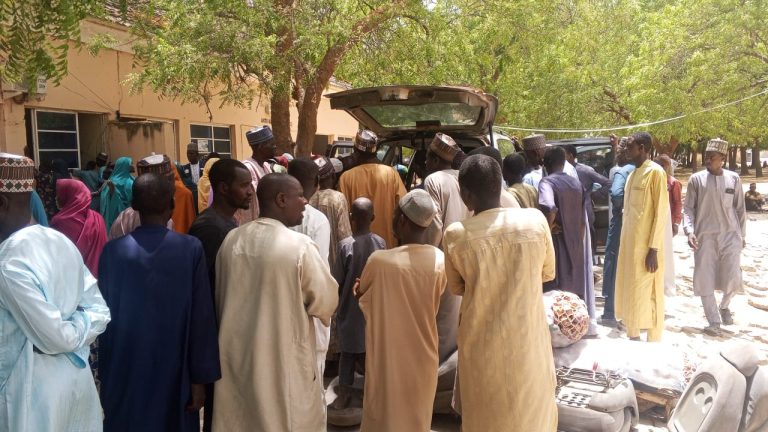
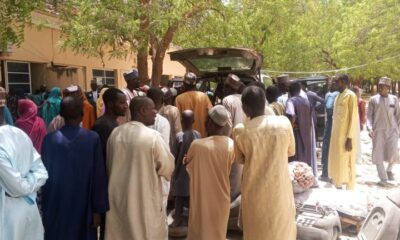
No fewer than 56 people, mostly traders, are feared dead, while 14 others have been hospitalized following an airstrike on a weekly market along the Borno–Yobe border.
The incident occurred at Jilli Market, located between Gubio and Geidam Local Government Areas of Borno and Yobe states, on Saturday.
The airstrike was carried out during a military operation targeting suspected Boko Haram insurgents.
The weekly market usually attracts traders and buyers from surrounding communities, including Gubio, Chiweram, and Benisheikh in Borno State, as well as Gurokayeya and Geidam in Yobe State.
Multiple sources said that the fighter jet that carried out the operation was tracking a group of suspected insurgents believed to have visited the market to collect levies from traders and obtain supplies. However, the strike reportedly missed its intended target
.An eyewitness said at least 56 people have been confirmed dead, while 14 others are receiving treatment at the Specialist Hospital in Geidam, Yobe State.
“The incident happened around 2:46 p.m. while business activities were ongoing. Four fighter jets carried out the attack, though the fourth jet was not clearly visible. We only heard the sound of explosions.
“I counted 56 corpses myself and helped rescue two injured people, taking them to the hospital. I believe the number of casualties may be higher, as more bodies are still being recovered,” the source said.
News
NUPENG Braces Up for Leaderships Change
Former National Chair of PTD-NUPENG and National Trustees of the union, Salimon Oladiti will be elected as president of NUPENG in Lagos.
The Nigeria Union of Petroleum and Natural Gas Workers (NUPENG) will, on April 24, elect a new president.
Incumbent President, Williams Akporeha, announced his exit date at the weekend during the Quarterly National Executive Council meeting of Petroleum Tanker Drivers Branch, PTD-NUPENG in Warri, Delta State.
Former National Chair of PTD-NUPENG and National Trustees of the union, Salimon Oladiti will be elected as president of NUPENG in Lagos.
The election of Oladiti will mark the first time in NUPENG a member of the PTD branch will be president.
During the meeting, Zonal Chair of PTD-NUPENG in Port Harcourt, Joseph Okafor, moved the motion for unanimous ratification of Oladiti for president, seconded by Adekunle Akinlaja of Lagos zone.
News
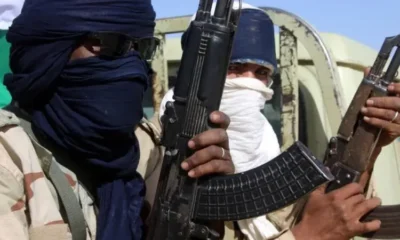
FG Unmasks 60 Persons and Corporates Behind Terrorism Financing, Order Banks To Freeze Their Accounts
The updated sanctions list is part of a crackdown on financial networks supporting extremist groups, particularly following investigations into Bureau De Change (BDC) operators and other entities.
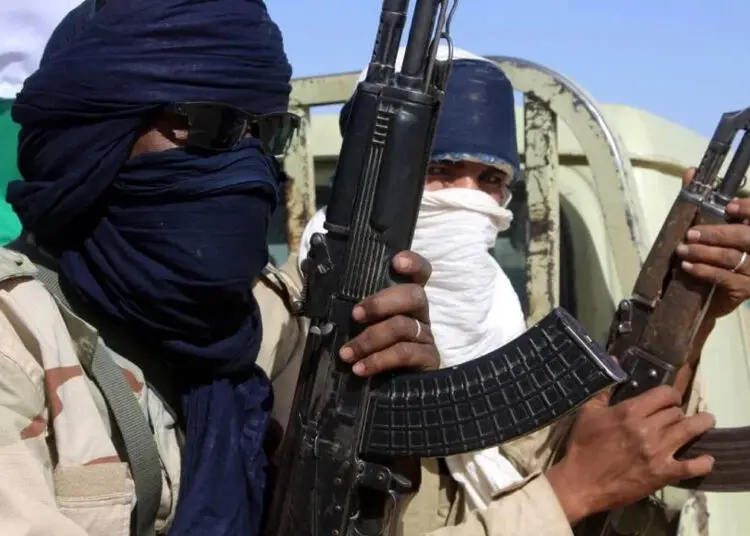
The Federal Government on Saturday released a list of 48 individuals and 12 corporate entities allegedly linked to terrorism financing in Nigeria, as part of ongoing efforts to curb the funding of extremist activities.
The Federal Government also directed financial institutions to freeze all accounts and assets associated with these individuals and firms.
The list, published on the website of the Nigeria Sanctions Committee (NIGSAC), disclosed the nationalities of those named, their specific roles, and the terrorist groups they were allegedly connected to.
The Nigeria Sanctions Committee (NIGSAC) operates under the authority of the Office of the National Security Adviser (ONSA), which coordinates its activities within the national security framework.
Its core mandates include the implementation of United Nations sanctions—particularly those targeting terrorism financing—ensuring compliance with international obligations, and facilitating coordination among agencies such as financial intelligence, defense, and foreign affairs.
Those named in the latest released include Abdulsamat Ohida, Mohammed Sani, Abdurrahman Abdurrahman, Fatima Ishaq, Tukur Mamu, Yusuf Ghazali, Muhammad Sani, Abubakar Muhammad, Sallamudeen Hassan, Adamu Ishak, Hassana Isah, Abdulkarim Musa, Umar Abdullahi, Abdurrahman Ado, Bashir Yusuf, Ibrahim Alhassan, Muhammad Isah, Salihu Adamu, Surajo
Mohammad, Fannami Bukar, Muhammed Musa, Sahabi Ismail, Mohammed Buba, Jama’atu Wal-Jihad, Ansarul Sudan (ANSARU), Islamic State West Africa Province (ISWAP), Indigenous People of Biafra (IPOB), Yan Group, Yan Group NLBDG, Adamu Hassan, Hassan Mohammed, Usman Abubakar, Kubara Salawu, Rabiu Suleiman, Simon Njoku, Godstime Iyare, Francis Mmadubuchi, John Onwumere, Chikwuka Eze, Edwin Chukwuedo, Chiwendu Owoh, Ginika Orji, Awo Uchechukwu, Mercy Ali, Ohagwu Juliana, Eze Okpoto, Nwaobi Chimezie, and Ogumu Kewe.
The entities listed include West and East Africa General Trading Co. Ltd, Settings Bureau De Change Ltd, G. Side General Enterprises, Desert Exchange Ventures Limited, Eagle Square General Trading Co. Ltd, Alfa Exchange BDC, Alin Yar Yaya General Enterprises, K. Are Nigeria Limited, Suhailah Bashir General Enterprises, Igwe Ka Ala Enterprises, Seficuvi Global Company, and Lakurawa Sect.


Despite Court, El-Rufai Eyes on ADC Convention

Dangote Refinery Targets $5bn from IPO

Bundesliga: Marie-Louise Eta Emerges First Woman To Coach Men’s Team

Tech Expert, Zuckerberg trains with UFC champions, Adesanya, Alexander

Organ Trafficking: Ekweremadu bags 10 years in UK prison

SAINT OBI: Between his marriage and his death
-

 Business3 days ago
Supreme Court Overturns Appellate’s Ruling on $2bn Debt Recovery Battles Nestoil /Neconde Energy vs FBNQuest Merchant Bank
-
 Politics3 days ago
NBA Cautions Lawyers Against Involvement in Political Party Disputes
-
 News2 days ago
FG Unmasks 60 Persons and Corporates Behind Terrorism Financing, Order Banks To Freeze Their Accounts
-

 Entertainment11 hours ago
Tuface, Laolu Gbenjo, others set to electrify Vanguard Personality of the Year Award
-
 News10 hours ago
NUPENG Braces Up for Leaderships Change
-
 News3 days ago
Plateau Community Laments ‘ No Security To Repel Attackers’
-
 News10 hours ago
NAF Jilli Airstrike: Bomb Don’t Know Who’re Terrorists
-
 News3 days ago
Breaking: INEC postpones voter revalidation exercise till after 2027 elections